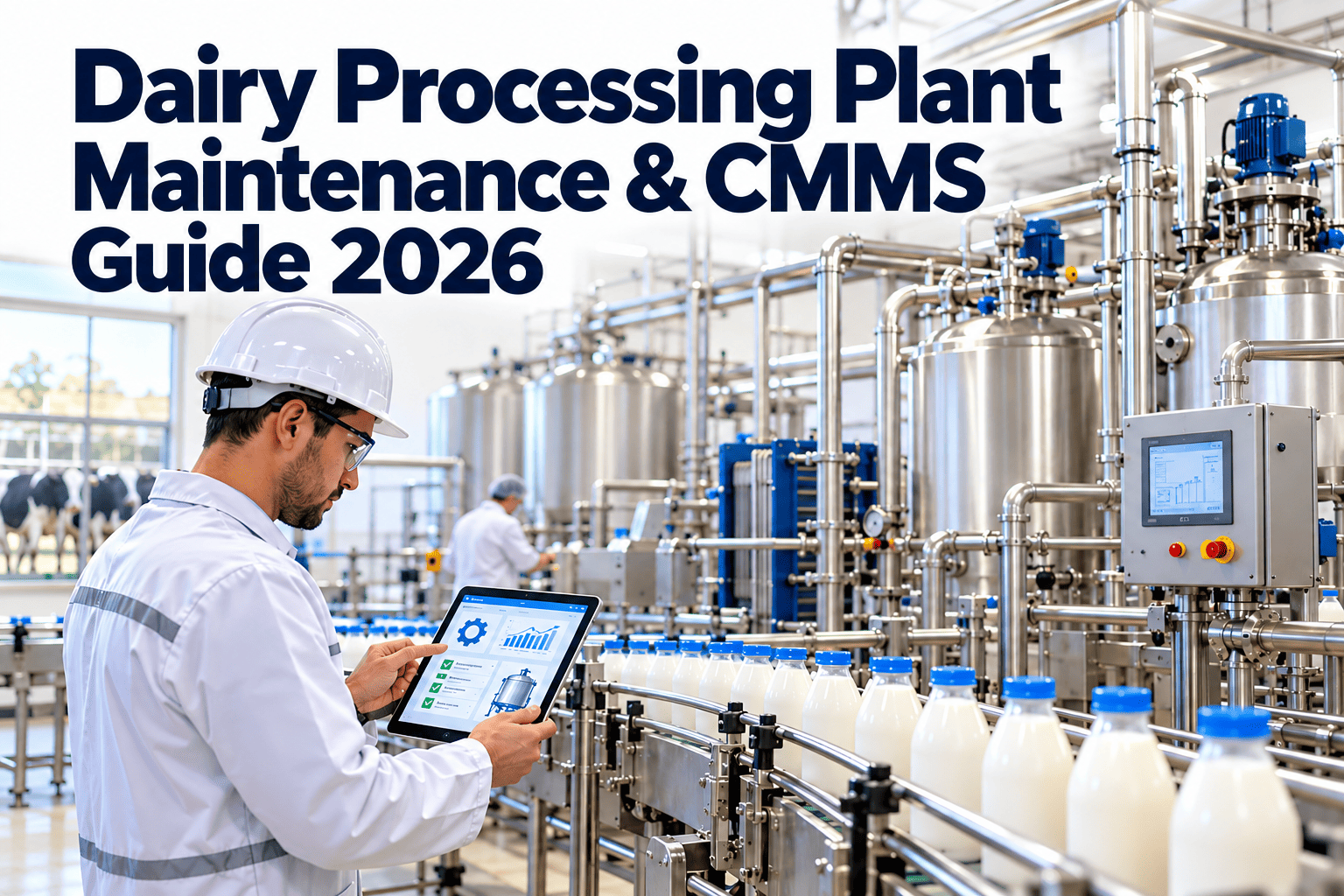
A dairy plant cannot pause for maintenance the way many factories can. Raw milk arrives on a schedule, shelf life is short, and every heat treatment, homogenization pass, and cleaning cycle has to be provable to an inspector. When equipment drifts, the cost shows up as temperature deviations, diverted product, and compliance gaps. This guide covers pasteurizer PM, homogenizer maintenance, CIP validation, and cold chain reliability, and shows how a CMMS built for plant maintenance teams keeps the records organized.
Dairy Processing Plant Maintenance and CMMS Guide
Why Dairy Maintenance Is Different From General Food Manufacturing
Dairy combines a perishable raw material, a legally defined heat treatment, and wet, corrosive cleaning chemistry. That mix changes what maintenance must prove.
Use a matrix like this as the starting point for assigning criticality in your asset register. Your own HACCP plan and regulator define the final ranking.
Pasteurizer Maintenance: Keeping Heat Treatment Verifiable
In HTST systems, milk is held at the required temperature for the required time, and a flow diversion valve protects the downstream line if either condition fails. Maintenance supports that guarantee.
- Check recorder chart or data log for deviations
- Verify indicating thermometer against the recorder
- Inspect for leaks around plates and fittings
- Confirm diversion alarms and signals respond
- Inspect pump seals and drives
- Check pressure differential across the regenerator
- Review alarm history and nuisance trips
- Verify steam or hot water control response
- Inspect plate surfaces for fouling and scaling
- Check gasket condition and compression points
- Test sensors and transmitters for drift
- Check air supply to pneumatic valves
- Safety device tests at the frequency set by your regulator
- Holding time verification after any pump or tube change
- Thermometer and recorder calibration records
- Seal and sealing-break documentation after repairs
Typical pasteurizer failure patterns
- Gasket hardening or displacement causing leaks and cross-flow risk
- Fouled plates that reduce heat transfer and force higher heating medium use
- Temperature sensor drift that hides real process conditions
- Booster or timing pump wear that changes holding time
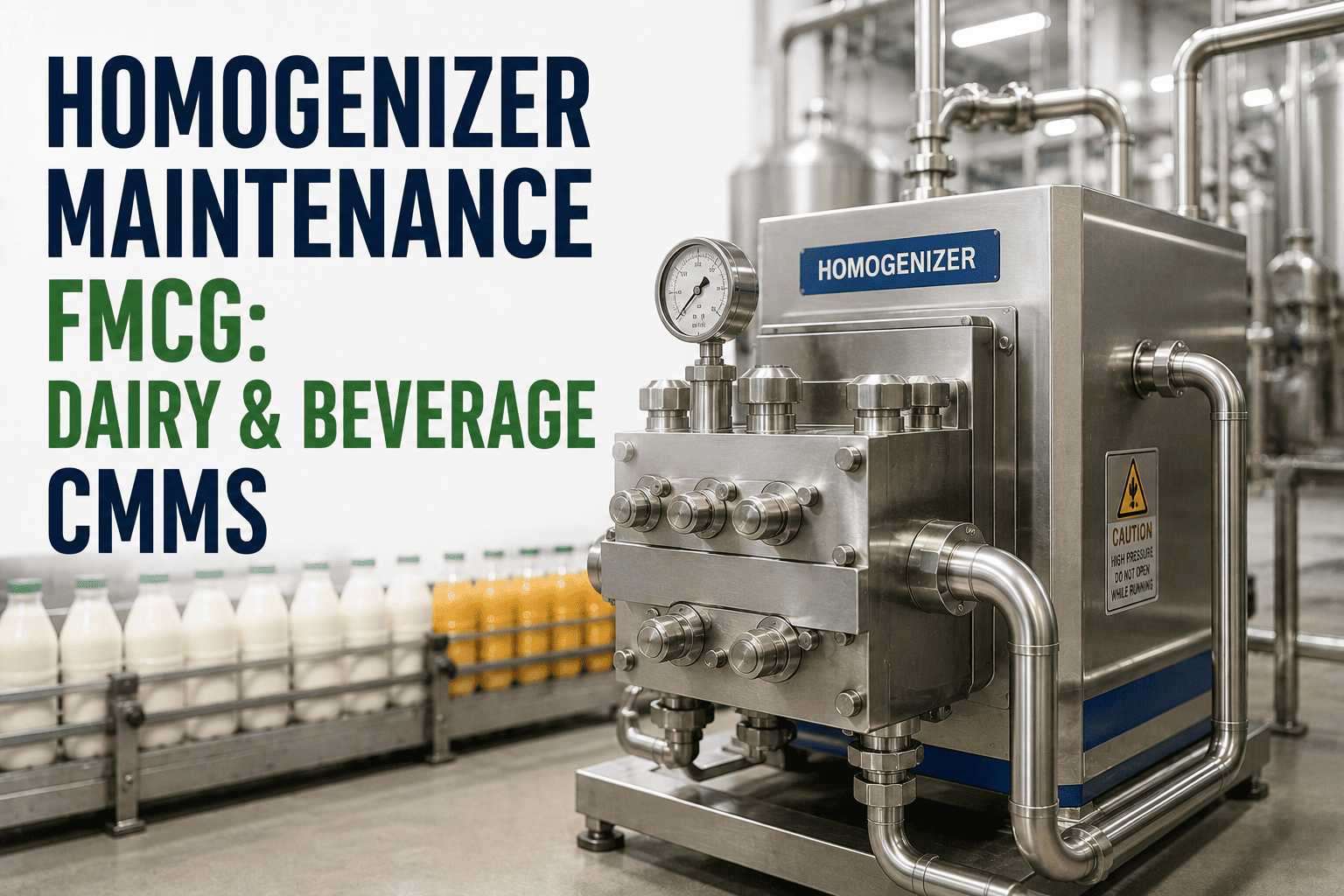
Homogenizer Maintenance: Pressure Machines That Wear Quietly
A homogenizer forces product through a narrow valve gap under high pressure. Worn parts reduce efficiency long before the machine stops.
| Observation | Probable cause | Maintenance action |
|---|---|---|
| Pressure will not hold or fluctuates | Worn valve seat or valve, damaged seals | Inspect valve assembly and replace worn components |
| Cream layering or inconsistent texture | Poor valve gap condition or incorrect pressure setting | Verify settings and inspect homogenizing valve surfaces |
| Product leaking at the pump block | Plunger seal or packing wear | Replace seals and check plunger condition |
| Rising vibration or knocking | Cavitation, loose parts, bearing or crankcase wear | Check suction conditions, tighten components, inspect crank drive |
| Oil contamination or low oil level | Seal failure in the drive end | Inspect lubrication system and change oil on schedule |
| Motor overload trips | Mechanical drag, valve blockage, electrical issue | Isolate cause, then inspect the motor and drive train |
Record running hours or operating cycles on the homogenizer asset so seal and valve replacement follows actual use.
Keep Pasteurizer and Homogenizer Records in One Place
CIP Validation: Four Variables That Must Be Maintained
Clean-in-place success depends on four interacting factors, often described as the Sinner circle. If one weakens, the others must compensate or the clean fails.
Time
Contact duration for each phase. Maintain timers, valve sequencing, and flow so the programmed time is the time delivered.Temperature
Solution temperature at the return line. Maintain heat exchangers, sensors, and steam or hot water control.Chemical concentration
Detergent and sanitizer strength. Maintain dosing pumps, conductivity probes, and chemical tanks.Mechanical action
Flow velocity and spray coverage. Maintain CIP pumps, spray balls, and pipework free of restrictions.CIP maintenance tasks worth scheduling
- Calibrate conductivity, temperature, and flow instruments
- Check dosing pump output against setpoint
- Inspect spray devices for blockage or damage
- Verify automated valve seat and actuator operation
- Review cleaning logs for repeated cycle failures
- Record ATP or verification results beside the asset history
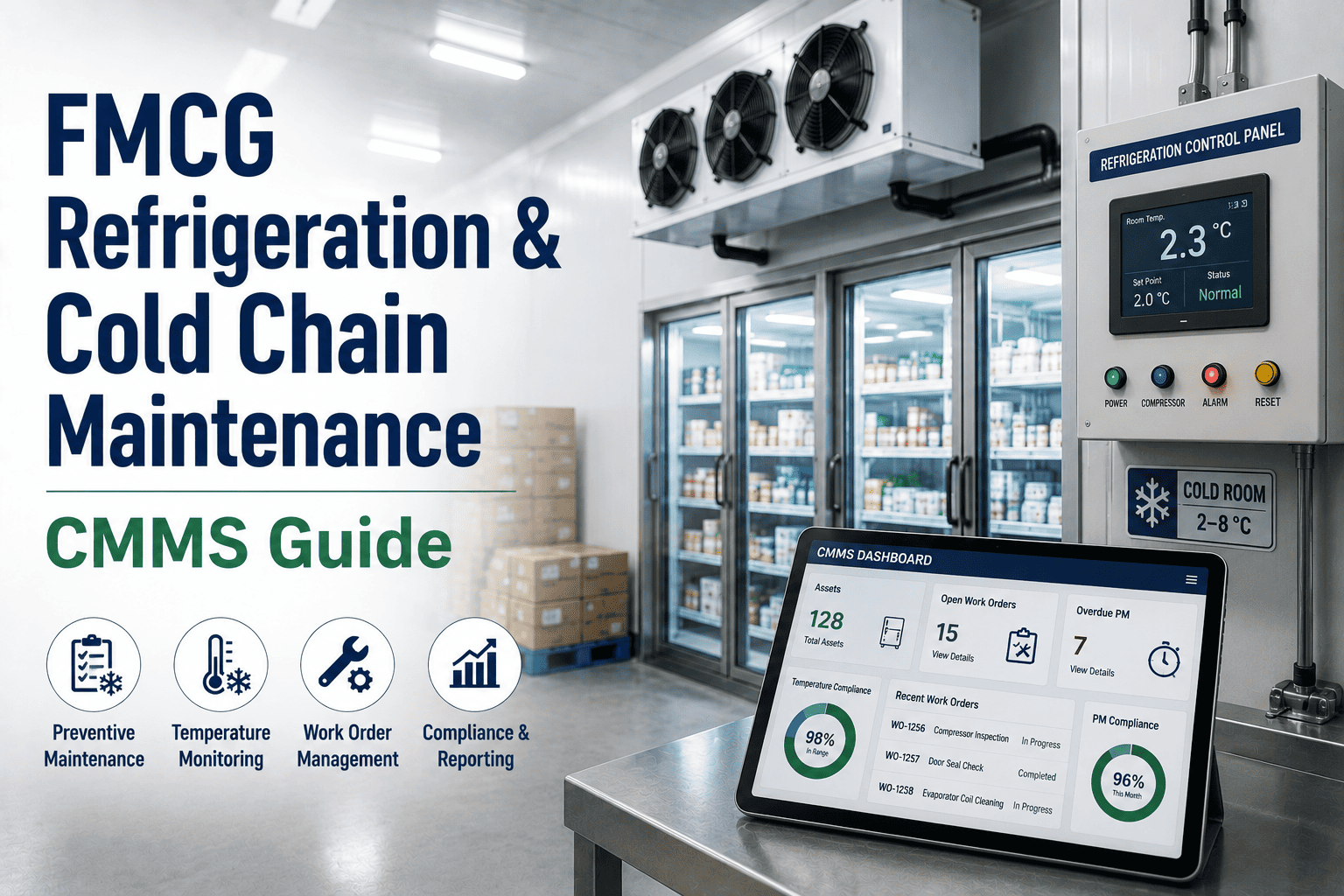
Cold Chain Reliability: Refrigeration as a Food Safety Asset
A temperature excursion in cold storage can write off finished product within hours. Refrigeration should be managed with the same discipline as the pasteurizer.
Reactive refrigeration care
- Compressor serviced after a high-temperature alarm
- Door seals replaced when frost is visible
- Probe calibration done irregularly
- Defrost faults found during stock checks
Planned refrigeration care
- Compressor oil, belts, and pressures checked on a schedule
- Door seals and curtains inspected weekly
- Probes calibrated and certificates attached
- Defrost cycles and evaporator condition reviewed routinely
Cold chain checks to include
- Evaporator fan motors and coils
- Condenser cleanliness and fan operation
- Refrigerant leak inspection and records
- Dock door seals, strip curtains, and air curtains
- Backup power or alarm notification testing
Separators, Pumps, and Fillers: The Supporting Cast
Many dairy stoppages come from rotating equipment, not the headline process units. Vibration and lubrication tasks catch these early.
Separators
- Vibration and bearing temperature trends
- Bowl and disc inspection at planned intervals
- Lubrication and gearbox oil analysis
Hygienic pumps
- Mechanical seal condition and leakage
- Impeller clearance and wear
- Motor and coupling alignment
Fillers and sealers
- Valve and nozzle wear on filling heads
- Seal jaw and ultrasonic horn condition
- Coder and sensor checks
Utilities Behind the Process: Steam, Water, Air, and Refrigerant
Dairy processing depends on utilities that rarely get the same attention as the process line. A weak utility shows up as a process deviation.
- Steam trap surveys and condensate return checks
- Control valve and actuator response testing
- Boiler inspections, water treatment, and blowdown logs
- Dryer and filter condition near product zones
- Leak surveys on pneumatic valve circuits
- Air quality checks where air touches packaging
- Compressor, condenser, and chiller performance
- Leak detection and refrigerant records
- Safety and alarm testing for ammonia systems where used
- Filter and softener maintenance
- Pump and valve checks on CIP supply
- Sampling and test records linked to the asset
A Maintenance Window Plan for a 24-Hour Dairy Operation
Because milk arrives daily, work must fit between production runs and cleaning cycles. Plan the window rather than wait for a breakdown to create one.
Before the clean
Complete mechanical tasks while equipment is empty and isolated, such as seal changes, belt checks, and lubrication.During the clean
Use CIP time for tasks outside the circuit, including utilities, conveyors, and packaging equipment.After the clean
Perform instrument verification and safety checks once the line is clean and before product is introduced.Start-up verification
Confirm temperatures, pressures, and alarms during the first production minutes and log the results.Responding to a Process Deviation Without Losing the Record
When a temperature, pressure, or cleaning deviation occurs, speed matters, but so does a clear sequence of actions.
- Secure the product and isolate the affected line according to your plan.
- Open a corrective work order against the exact asset and describe the deviation.
- Diagnose with the technician, quality, and production lead in the same record.
- Repair, replace, or recalibrate, then record the parts and instruments used.
- Verify the process before release and attach the evidence to the work order.
- Review the history for repeat deviations and add a preventive task if a pattern appears.
Seasonal Peaks, Product Changeovers, and Line Loading
Dairy volumes swing with seasons, holidays, and product mix. Maintenance should anticipate the load, not react to it.
- Complete major overhauls before peak intake periods
- Increase inspection frequency on equipment running extra shifts
- Check cultured or flavoured product lines for residue after changeovers
- Review fillers and packaging machines before promotional volume surges
- Pre-stage seals, gaskets, and sensors for the lines most likely to run hardest
How a CMMS Supports Dairy Compliance
Regulators and customers ask for evidence, not intent. A CMMS turns tasks into records that can be searched by asset, date, or technician.
Register assets with criticality
Mark pasteurizers, diversion valves, CIP systems, and refrigeration as critical so they receive priority.Schedule preventive tasks
Use calendar, running hours, or cycle-based triggers matched to each asset type.Capture inspections on mobile
Technicians record readings, results, and photos at the equipment.Link repairs to evidence
Attach calibration certificates, gasket lot details, and approvals to completed work orders.Report on performance
Use dashboards to review overdue tasks, repeat failures, and downtime by area.Maintenance KPIs for Dairy Plants
| KPI | What it shows | Why dairy cares |
|---|---|---|
| Planned maintenance percentage | Share of work that is scheduled rather than reactive | Reactive work in heat treatment and CIP raises risk |
| Diversion and deviation events | Frequency of process alarms and product diverts | Points to sensor, valve, or control faults |
| CIP cycle failure rate | Cleaning cycles needing repeat or manual intervention | Signals dosing, temperature, or flow issues |
| Mean time to repair | Average time to restore a failed asset | Short shelf life leaves little recovery time |
| Cold storage excursions | Temperature events outside limits | Directly linked to product loss and complaints |
| Overdue critical tasks | Safety and compliance tasks past due date | Shows audit exposure before an auditor finds it |
Common Dairy Maintenance Mistakes and Better Practice
| Common mistake | Better practice |
|---|---|
| Calibrating instruments only before an audit | Schedule calibration by instrument risk and keep certificates attached to the asset |
| Replacing gaskets only after a leak | Inspect on a schedule and replace based on age, condition, and failure history |
| Treating CIP as a production task only | Maintain dosing, flow, and temperature equipment as critical assets |
| Keeping paper logs in several offices | Use one searchable record by asset, date, and technician |
| Ignoring repeat minor alarms | Review alarm history weekly and convert patterns into preventive tasks |
| Running refrigeration to failure | Track compressor and evaporator condition before an excursion occurs |
Spare Parts and Gasket Management
Hygienic equipment has long lead-time parts, and gaskets age even when stored. Inventory control should reflect both facts.
- Keep critical seals, gaskets, and plates for pasteurizers and homogenizers in stock
- Track receipt dates and storage conditions for elastomer parts
- Link parts to the exact asset and model to prevent wrong-part installs
- Set reorder points based on lead time and failure history
- Record the part lot used in each repair for traceability
Technician Skills and Hygiene Discipline
Maintenance work in a dairy can introduce hazards if tools and parts are not controlled. Work orders can carry the hygiene steps with the task.
Before work
- Isolate and lock out equipment
- Confirm product-contact surfaces are clean
- Use designated tools for hygienic zones
During work
- Control fasteners, tape, and small parts
- Protect open lines from contamination
- Record parts and settings changed
After work
- Clean and sanitize before restart
- Verify operation and safety devices
- Sign off with date, name, and evidence
Dairy Maintenance FAQs
What dairy assets should be treated as critical first?
Start with pasteurization equipment, flow diversion, CIP systems, and refrigeration, because failures there affect food safety directly.
How often should a pasteurizer be inspected?
Combine daily checks with regulatory test intervals set by your authority, and record every result in Oxmaint.
Can a CMMS store calibration certificates?
Yes. Attach certificates and results to the instrument or work order so they are available during audits.
How do we reduce homogenizer downtime?
Track operating hours, inspect valves and seals on a schedule, and keep critical spares in stock before wear becomes a failure.
Can we see a dairy example?
Schedule a demo to review asset setup, inspections, and reports for a dairy workflow.