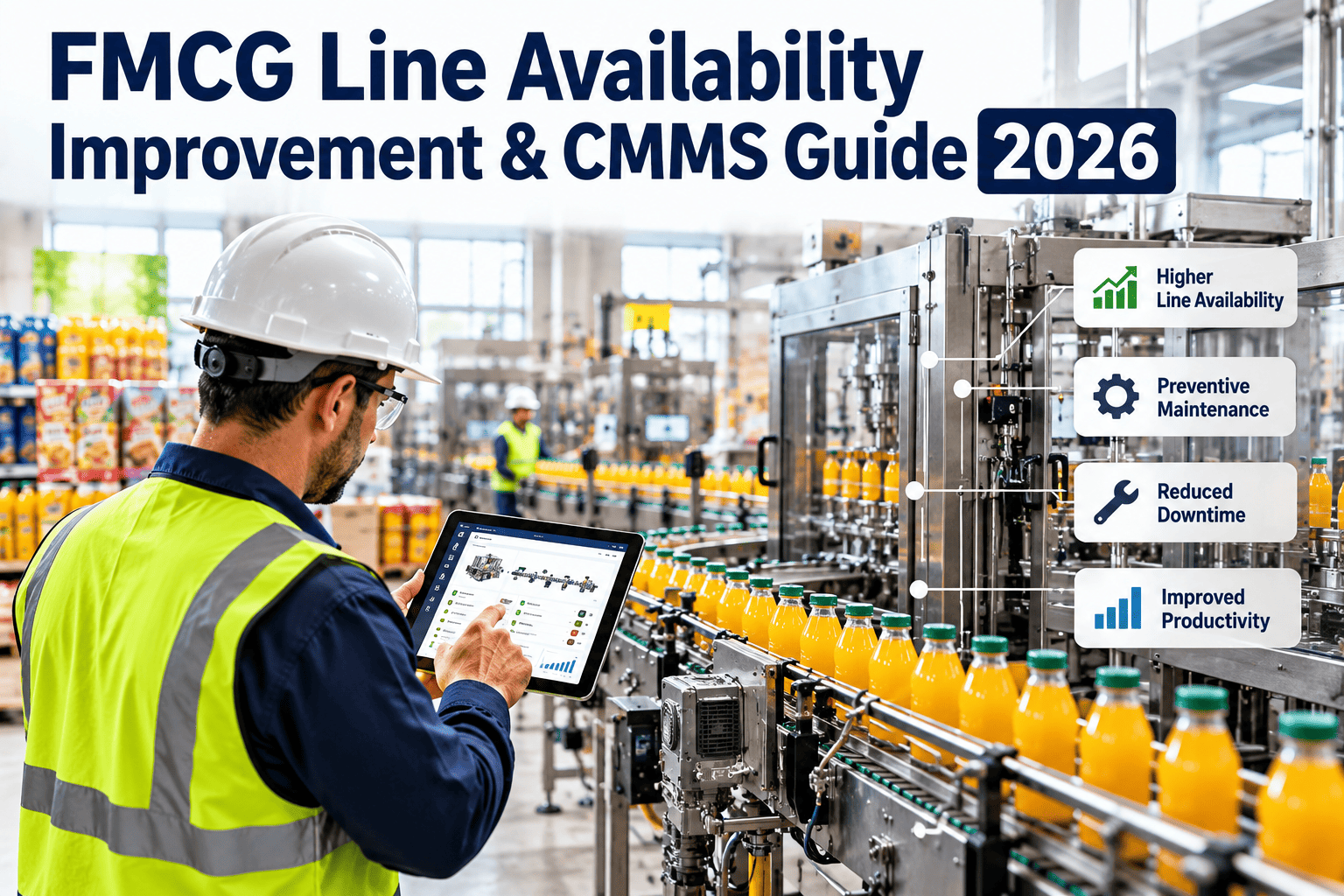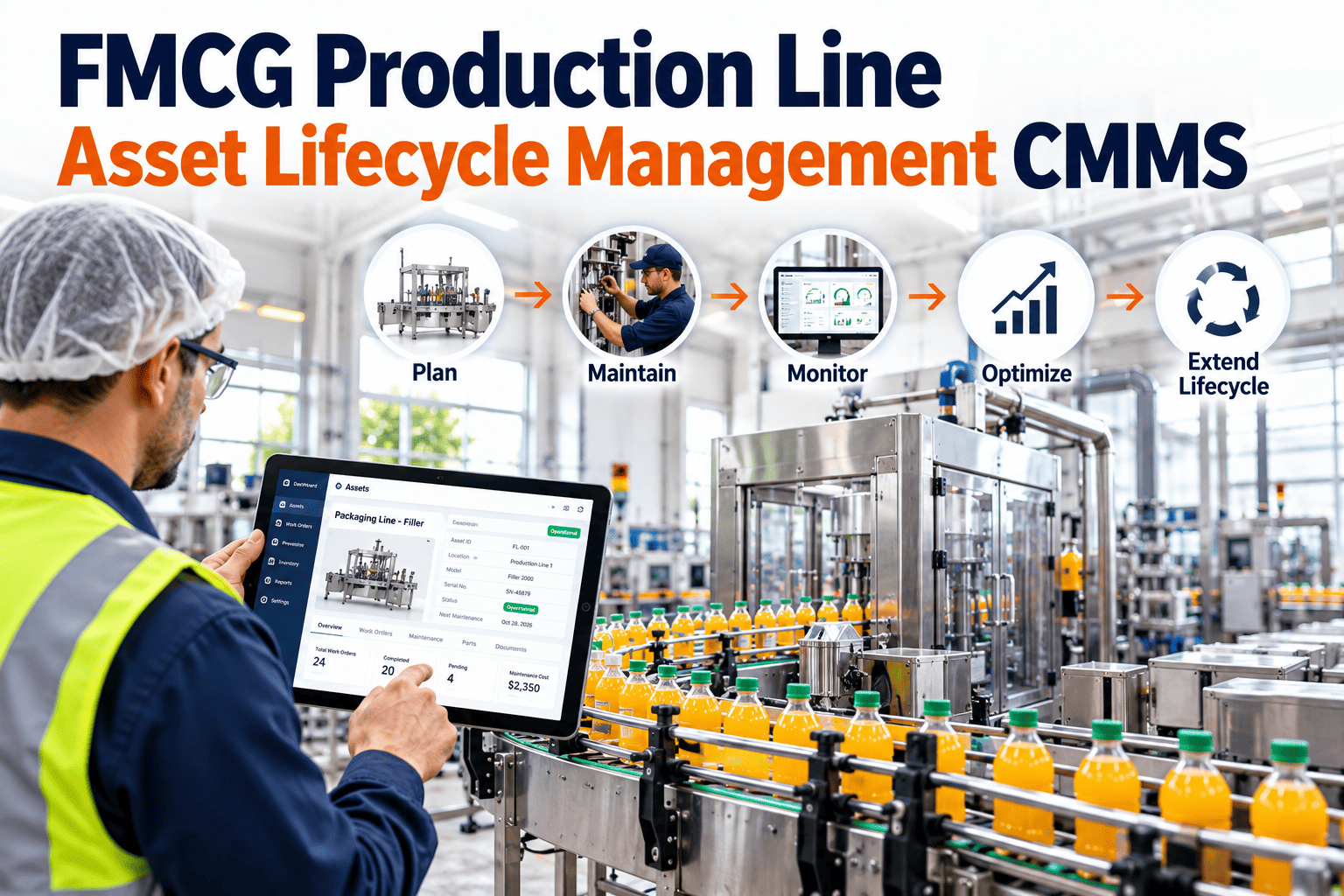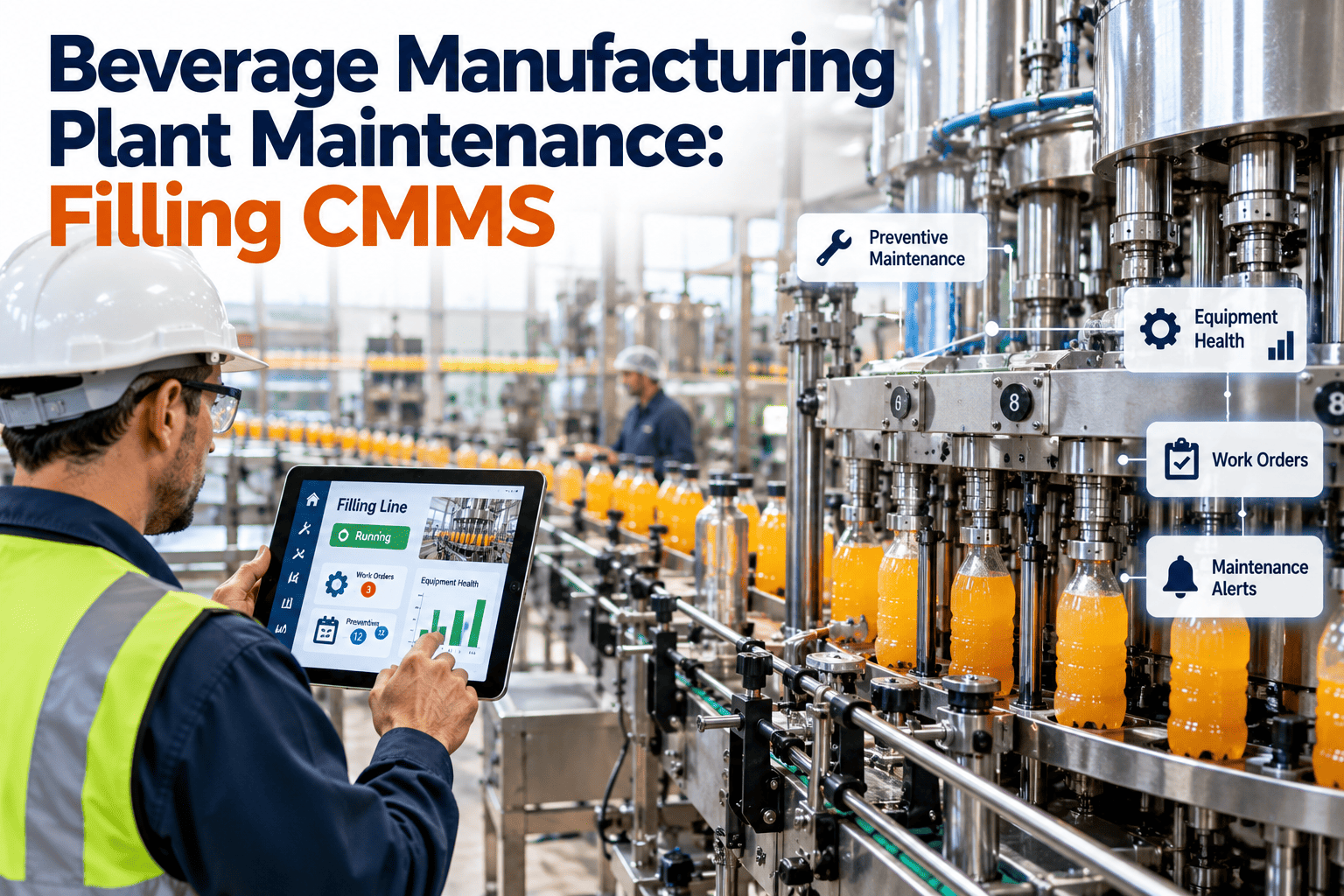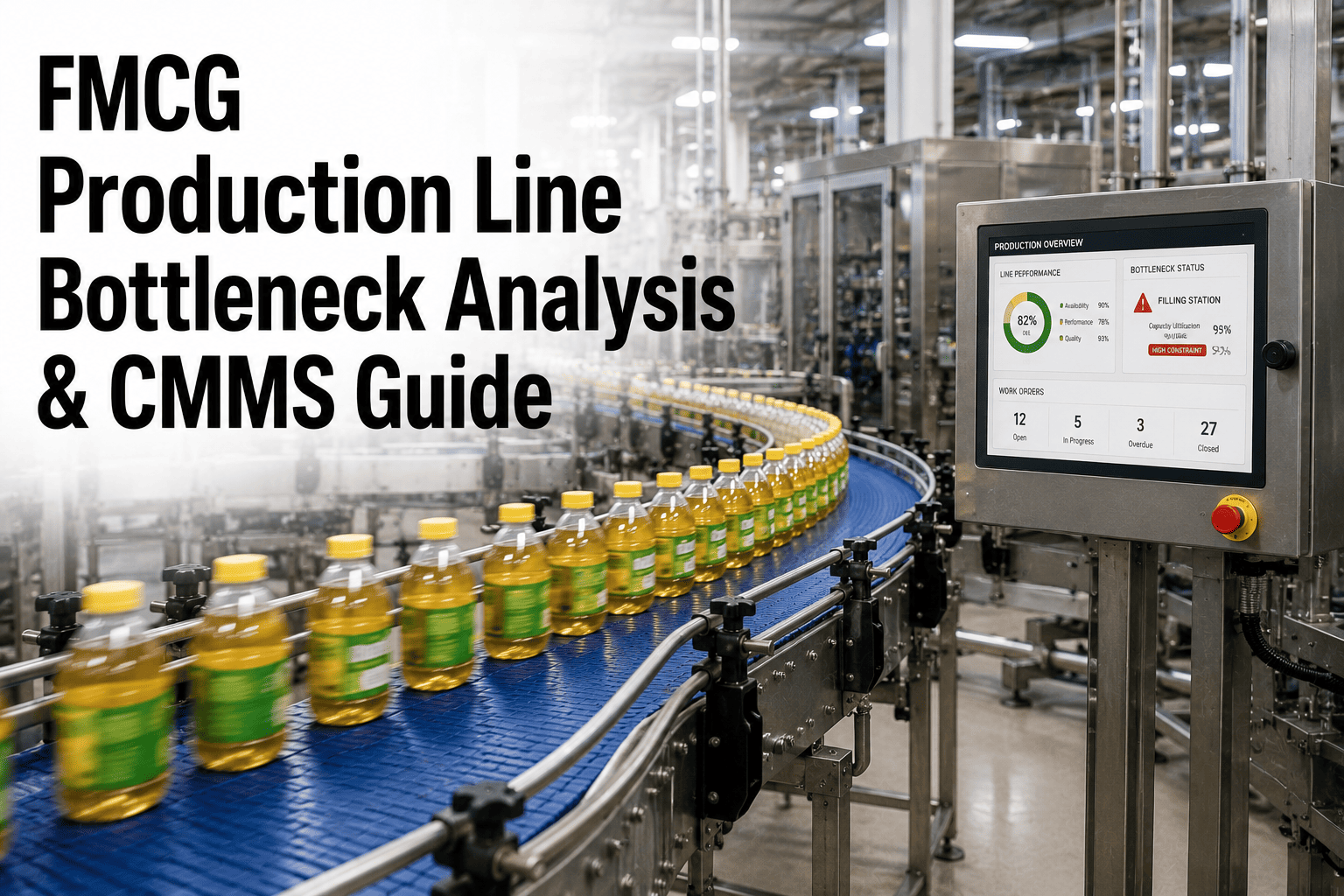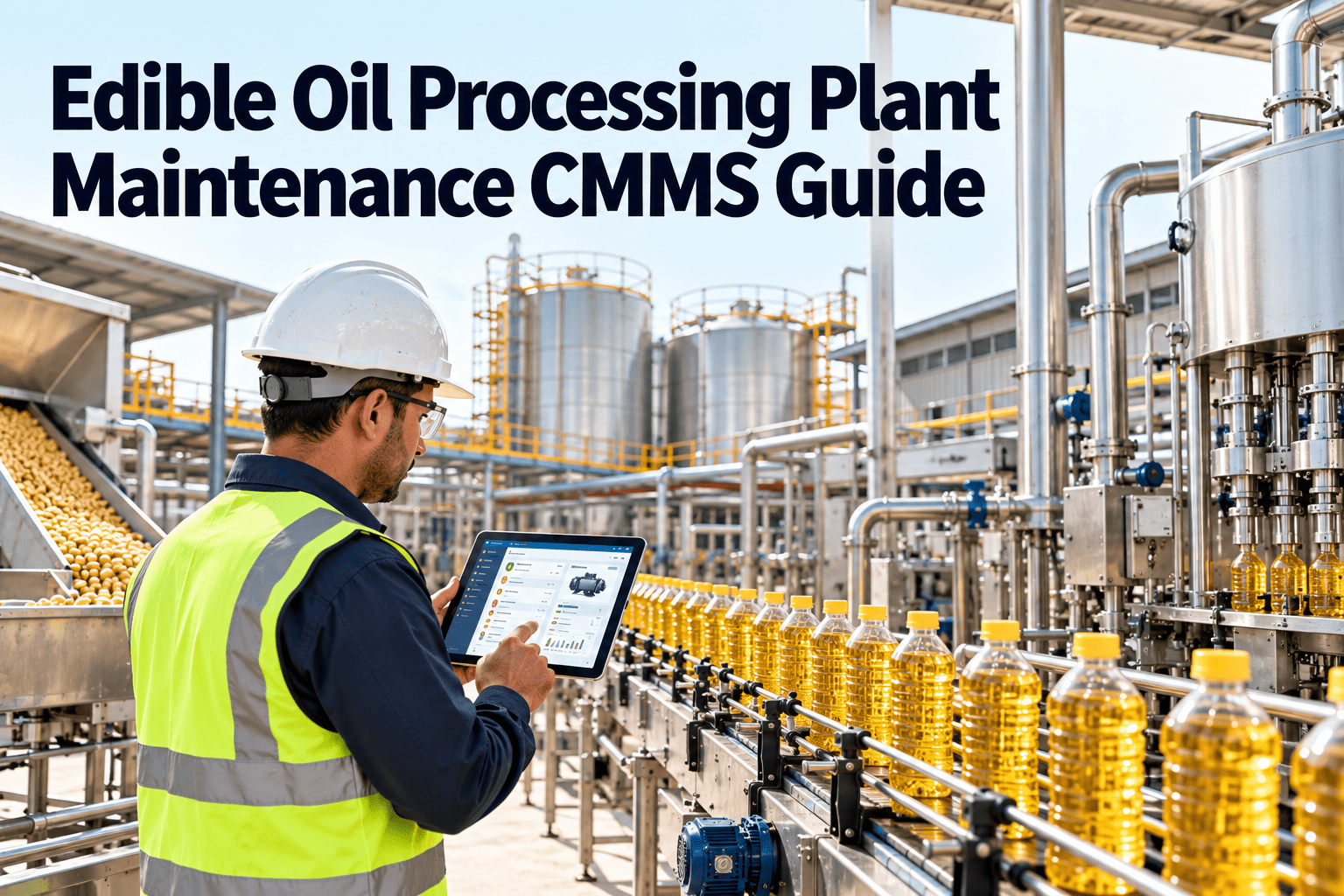
An edible oil plant runs on heat, vacuum, pressure, and clean product contact surfaces. When a thermal oil heater, vacuum system, or filling nozzle drifts out of condition, the result is lost throughput, off-spec oil, or an unplanned stop in the middle of a batch. Maintenance teams manage refinery equipment and high-speed filling lines in the same building, each with different failure modes. This guide explains the equipment, PM priorities, and safety requirements, and shows how Oxmaint CMMS keeps the work organized.
Edible Oil Processing Plant Maintenance: Refinery, Filling, and CMMS Guide
From crude oil receiving to bottled product, keep refinery equipment and filling lines reliable with structured PM, inspections, and traceable work orders.
Receiving and storage
Degumming
Neutralization
Bleaching
Deodorization
Filling and bottling
Packing and dispatch
Typical physical refining route. Exact steps vary by oil type and plant design.
Why oil plants fail differently from other food plants
Edible oil processing combines high temperatures, vacuum service, viscous fluids, and abrasive media. Each creates its own wear pattern.
Heat and fouling
Heat exchangers and thermal oil systems lose efficiency as deposits build up on surfaces.
Vacuum integrity
Leaks and worn ejector or pump components reduce deodorization performance.
Abrasive media
Bleaching earth wears pumps, valves, and filter components faster than clean oil service.
Viscous product
Cold or thick oil raises pump load and stresses seals, couplings, and motors.
Fast filling
Nozzles, cappers, and conveyors work at speed and need tight setup control.
Sanitation demands
Cleaning cycles and contact surface rules shape what maintenance can do and when.
Refinery equipment maintenance by process stage
Use this table as a starting point for building PM tasks. Always follow manufacturer guidance and your site risk assessment.
| Process stage | Key equipment | Maintenance focus |
|---|---|---|
| Receiving and storage | Tank farm, transfer pumps, heating coils | Pump seals, valve condition, level instruments, coil integrity |
| Degumming and neutralization | Mixers, centrifugal separators, dosing pumps | Separator bearings and vibration, dosing accuracy, gasket condition |
| Bleaching | Bleacher vessel, agitator, filters | Agitator drives, filter elements, abrasion wear, earth handling equipment |
| Deodorization | Deodorizer, vacuum system, heat exchangers | Vacuum leak checks, ejector condition, exchanger fouling, thermal oil heater |
| Utilities | Boiler, thermal oil heater, cooling water, compressed air | Burner tuning, safety devices, water treatment, filter and dryer service |
| Filling and bottling | Filler, capper, labeler, coder, conveyors | Nozzle wear, cap torque, sensor alignment, belt and chain condition |
Condition signals worth tracking
- Differential pressure across filters and exchangers, which points to fouling.
- Vacuum level trends, which show leaks before quality is affected.
- Motor current and vibration on separators, pumps, and agitators.
- Temperature deviation on thermal oil and process heating loops.
Risk view: where failures hurt most
Impact on production
Low likelihood
High likelihood
Line stops
Separator or deodorizer failure
Hold critical spares, use vibration and process trends.
Thermal oil or vacuum system faults
Tight PM, inspections, and clear escalation rules.
Quality or yield loss
Instrument drift
Calibrate on schedule and record results.
Filter and exchanger fouling
Condition triggers based on pressure drop.
The matrix is a prioritization aid. Rank your own assets using a criticality assessment that includes safety, quality, and downtime.
Filling line and bottling machine maintenance
Filling is where plant losses become visible. Small wear issues here turn into short stops, fill variation, and leaks.
1
Nozzles and fill valves
Inspect for drips, worn seals, and partial blockage. Fill accuracy drift is an early warning of wear.
2
Capping and sealing
Check torque settings, chuck wear, and cap feed. Leaking containers often start here.
3
Conveyors and transfer
Oil residue makes floors and chains slippery and attracts debris. Keep cleaning and lubrication separate and controlled.
4
Labeling, coding, and inspection
Verify sensor alignment, print quality, and reject systems at the start of every run.
5
Case packing and palletizing
Check grippers, belts, guards, and safety interlocks on a fixed schedule.
Thermal oil and steam systems: heating the process safely
Refining depends on steady heat. A weak boiler or thermal oil heater limits throughput and can create safety hazards.
Thermal oil heater
- Sample the heat transfer fluid on schedule and track degradation.
- Inspect burners, flame safeguards, and flue gas temperature.
- Check circulation pumps, seals, and expansion tank condition.
- Test temperature limits and safety trips and record the result.
Steam boiler and distribution
- Maintain water treatment and blowdown routines to limit scale.
- Inspect steam traps, which waste energy when they fail open or block.
- Check insulation, valves, and condensate return for leaks.
- Keep statutory inspection dates and certificates in the asset record.
Vacuum and deodorization: protecting oil quality
Deodorization runs under deep vacuum at high temperature. Small air leaks or ejector problems affect both energy use and product quality.
Leak sources
Flanges, manway gaskets, valve stems, instrument connections, and sight glasses.
Early symptoms
Rising vacuum pressure, higher steam use, longer cycle time, or changes in oil quality results.
Maintenance response
Scheduled leak testing, gasket replacement by condition, and ejector and condenser cleaning.
Record to keep
Vacuum readings, test results, parts replaced, and quality outcomes after the work.
Bleaching and filtration
- Track filter cycle length and pressure drop to detect media or element problems.
- Inspect valves and pumps handling bleaching earth for abrasion damage.
- Control dust and spillage around earth handling for safety and housekeeping.
Lubrication and contamination control in an oil plant
Food-grade lubricants, correct application, and clean storage reduce both machine wear and contamination risk.
| Practice | Why it matters | Record in the CMMS |
|---|---|---|
| Use approved food-grade lubricants near product | Limits risk from incidental contact | Lubricant type per asset and point |
| Color-code and label grease guns and containers | Prevents cross-use of lubricants | Lubrication route and task cards |
| Set quantity and frequency per point | Over-greasing damages seals and attracts dirt | Task with amount and interval |
| Oil analysis on gearboxes and hydraulics | Detects wear and contamination early | Sample date, result, and follow-up action |
Spare parts strategy for oil plants
- Hold critical spares for separators, vacuum pumps, and heater components with long lead times.
- Stock gasket and seal kits by size for frequent opening of vessels and exchangers.
- Keep filling line wear parts, such as nozzles and cap chucks, ready for each changeover.
- Review usage each quarter and remove items that never move.
Daily inspection rounds for a refinery and filling hall
Process area round
- Check pump seals and bearings for leaks, noise, and heat.
- Read pressure, temperature, and vacuum gauges against normal ranges.
- Inspect heat exchangers and filters for pressure drop changes.
- Look at insulation, steam traps, and hot surface guarding.
- Confirm emergency stops and alarms are clear.
Filling hall round
- Verify fill weight or volume checks and record any drift.
- Check nozzles for drips and cap torque against the standard.
- Inspect conveyor guides, chains, and floor condition for oil spills.
- Confirm coding and label verification equipment is working.
- Review reject bin contents for recurring defects.
Maintenance strategy by asset type
A single approach does not suit every asset. Match the strategy to the failure pattern and the cost of failure.
| Asset type | Best-fit approach | Reason |
|---|---|---|
| Separators and high-speed rotating equipment | Condition-based with vibration trends | Failures are costly and often give warning |
| Heat exchangers and filters | Condition-based on pressure drop | Fouling varies with oil quality and load |
| Filling line wear parts | Usage-based preventive | Wear follows cycles and running hours |
| Safety devices and instruments | Calendar-based inspection and calibration | Interval often set by regulation or standard |
| Low-risk auxiliary equipment | Run to failure with a spare available | Low impact and low repair cost |
Contractor and permit control
- Keep contractor induction, permits, and tool checks on record against each job.
- Require sign-off on lockout, hot work, and confined space permits before specialist work starts.
- Review completed contractor work orders with the same standard as in-house work.
Failure scenarios worth rehearsing
- Loss of steam or thermal oil during a batch: which equipment is protected first, and who decides?
- Vacuum loss during deodorization: how is product held or reprocessed?
- Filling line stop with finished product waiting: how does the team prioritize repairs?
- Pump seal leak of hot oil: what is the isolation and cleanup procedure?
Instrumentation and calibration in a refinery
Process control depends on accurate readings. A drifting sensor can waste energy or send oil out of specification without any alarm.
| Instrument | Typical risk if it drifts | Maintenance practice |
|---|---|---|
| Temperature sensors on heaters and deodorizers | Over- or under-heating, quality variation | Calibrate on schedule against a reference |
| Vacuum and pressure transmitters | Wrong view of leaks and ejector performance | Zero and span checks, replace failing units |
| Flow meters and dosing pumps | Wrong chemical dosing in neutralization and bleaching | Verify output and record adjustments |
| Level and weight systems | Overfill or inaccurate batch size | Check at fixed intervals and after repairs |
| Filling line checkweighers and detectors | Under-filled or out-of-spec packs reach customers | Daily verification with test pieces, recorded |
Audit-ready records to keep together
- Calibration certificates and as-found, as-left readings for each instrument.
- Pressure vessel and safety valve inspection dates and certificates.
- Lockout, hot work, and permit records linked to the work order.
- Sanitation clearance and verification after maintenance in product zones.
The first 60 days of a CMMS in an oil plant
- Weeks 1 to 2: load the asset register for utilities, refinery, and filling lines, and rank criticality.
- Weeks 3 to 4: convert existing PM, calibration, and statutory inspection schedules into recurring tasks.
- Weeks 5 to 6: start mobile rounds for process and filling areas, with fixed reason codes for stops.
- Weeks 7 to 8: review downtime, repeat failures, and parts usage, and adjust PM tasks.
Reducing changeover and cleaning losses on oil filling lines
Switching between bottle sizes, oil grades, and labels creates predictable stops. Maintenance can shorten them.
- Keep format parts, nozzles, and cap chucks in labeled kits, checked for wear before each changeover.
- Record actual changeover time against the standard, and review the longest events weekly.
- Use a changeover checklist that includes alignment, sensor teach-in, and a first-pack inspection.
- Plan filler seal and nozzle replacement for the same window to avoid a second stop.
- Control grade changes with cleaning and flushing steps that are written, signed, and linked to the work order.
Give refinery and filling teams one maintenance system
Schedule PM, track inspections, and keep spare parts and repair history connected from tank farm to dispatch.
Safety and compliance in oil plant maintenance
Maintenance work touches food safety and personnel safety at the same time. Records matter as much as the repair.
Food safety
- Use food-grade lubricants where incidental product contact is possible.
- Control tools, fasteners, and temporary repairs inside process areas.
- Document sanitation and clearance after maintenance, before restart.
- Keep calibration records for critical instruments and metal detection or inspection equipment.
Personnel and process safety
- Apply lockout and tagout to pumps, agitators, and conveyors.
- Control hot work and work on heated lines, steam, and thermal oil circuits.
- Follow hazardous area rules where solvent extraction or flammable atmospheres exist.
- Inspect pressure equipment and safety devices on the required cycle.
Requirements vary by country, site, and certification scheme. Confirm the standards that apply to your plant with your quality and safety teams.
Planned shutdowns: a checklist for refinery turnarounds
Before shutdown
- Build the task list from open work orders and inspection findings.
- Confirm spares, gaskets, and special tools are on site.
- Book contractors and confirm their permits and training.
- Agree on the sequence for lockout, draining, and cleaning.
After shutdown
- Close every work order with findings and parts used.
- Run leak and vacuum tests before bringing the process back.
- Record as-found and as-left readings for critical equipment.
- Review what ran over time and update the next plan.
Before and after: running an oil plant on a CMMS
Paper and spreadsheet routine
- Exchanger cleaning scheduled by habit, not by pressure drop
- Filling line stops recorded without cause
- Calibration and inspection records stored in separate files
- Spares ordered only after a failure
CMMS-based routine
- Condition readings guide cleaning and inspection timing
- Each stop linked to an asset, cause, and work order
- Compliance records attached to the equipment they cover
- Critical spares tracked against usage and lead time
How Oxmaint supports an oil plant
- Asset management for tanks, pumps, separators, heat exchangers, boilers, and filling equipment.
- Preventive maintenance based on calendar, running hours, or condition readings.
- Inspection checklists on mobile devices for rounds in process and utility areas.
- Work orders, inventory, and compliance records linked to each asset.
- Dashboards for downtime, PM completion, and recurring faults by line.
KPIs for an edible oil maintenance program
Filling line availability
Planned run time versus actual run time.
PM completion
On-time completion for critical equipment.
Repeat failures
Same fault on the same asset within a short window.
Reactive share
Proportion of labor hours spent on unplanned repairs.
Edible oil plant maintenance FAQs
Which equipment should get PM attention first?
Start with assets that stop the line or affect quality: separators, vacuum systems, thermal oil heaters, and fillers.
How often should heat exchangers be cleaned?
Base it on measured fouling, such as pressure drop and temperature approach, not a fixed date alone.
Can one CMMS cover both refinery and filling lines?
Yes. Organize assets by area and track both in Oxmaint with shared reports.
How do we track calibration and inspection records?
Attach them to the asset and schedule them as recurring tasks with a recorded result.
What is the best way to start?
Pilot one area, then book a demo to map the rollout across the plant.
Keep oil flowing and bottles filling
Bring PM, inspections, spare parts, and compliance records into one maintenance platform built for plant teams.