A packaging line running 8% below rated speed doesn't trip an alarm. A changeover taking twenty minutes longer than planned doesn't show up on any single work order. Throughput leaks away shift after shift, and the plan-versus-actual gap keeps widening until the quarterly review asks why. Sign up to track the maintenance data that feeds a digital twin, before line performance drift becomes a mystery no model can explain.
What This Guide Covers
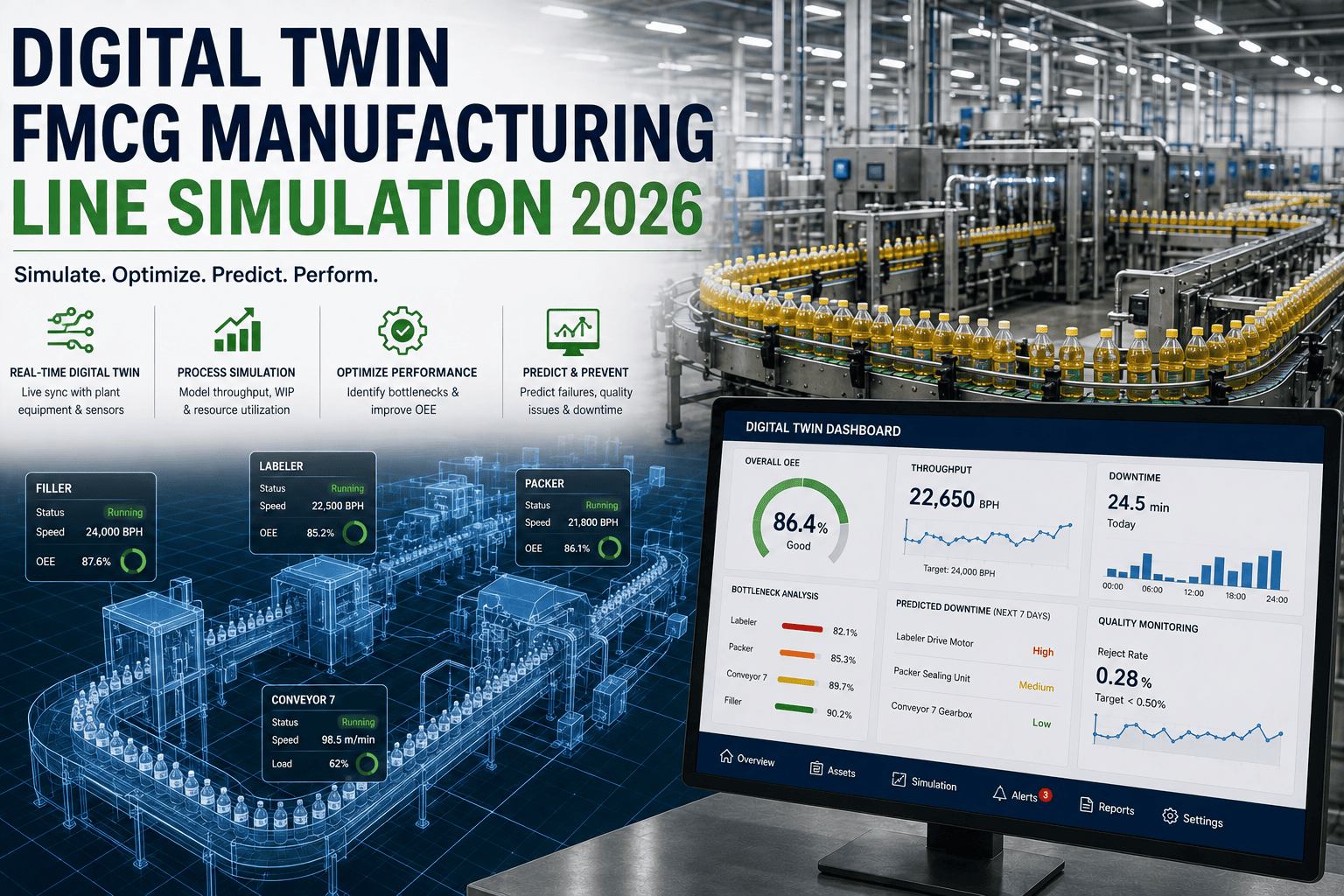
Digital twins for FMCG manufacturing lines are moving from concept to real production tool, combining line simulation, throughput modeling, and reliability planning in one platform. This guide covers digital twin scope, data integration, core use cases, and the incremental deployment approach that delivers value inside 12 months rather than as a multi-year project.
Why FMCG Lines Need A Digital Twin
| Challenge |
Why A Static View Falls Short |
| Frequent changeovers |
SKU proliferation means changeover sequencing decisions happen weekly, too often to justify a full offline study each time |
| Line bottleneck shifts |
The constraint on a filling and packaging line moves as speeds, formats, and wear change, so yesterday's bottleneck map goes stale fast |
| Equipment failure impact |
The real cost of a breakdown depends on buffer levels and upstream/downstream state at that moment, not just downtime hours |
| Capital planning |
Adding a buffer, a line, or a shift is expensive to test physically, so decisions often rely on gut feel instead of a model |
Four Ways FMCG Plants Are Using Digital Twins
1
Changeover Scenario Simulation
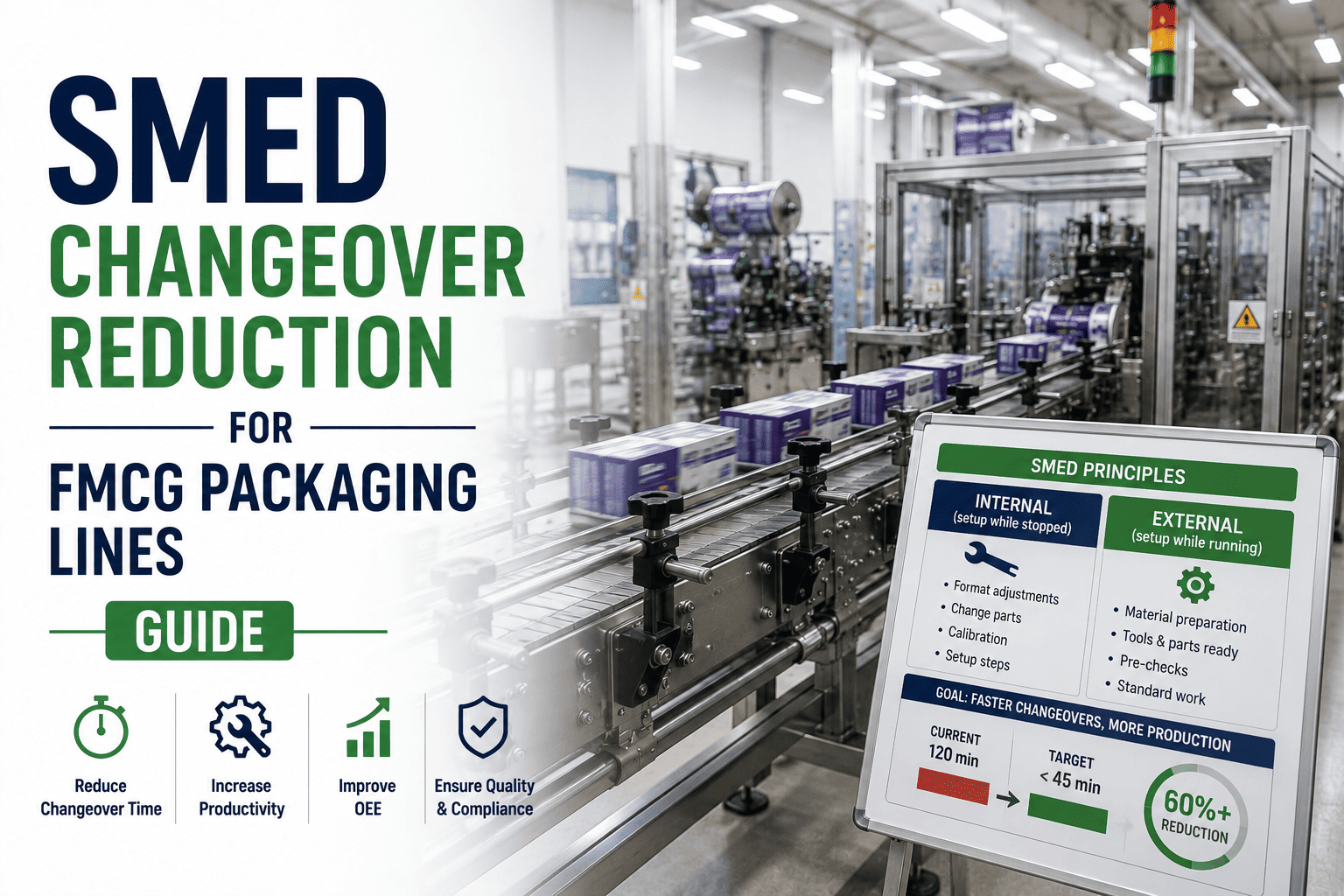
Testing changeover sequences virtually before committing them to the schedule reduces trial-and-error on the actual line
2
Throughput And Bottleneck Modeling
A live model of speeds, downtime, and buffer levels shows exactly where the current constraint sits, updated as conditions change
3
Equipment Failure Impact Simulation
Modeling how a breakdown ripples through buffers and downstream stations helps prioritize which failure modes matter most
4
Capacity And Layout What-If Testing
Testing a proposed buffer, line addition, or shift pattern in the model first de-risks the capital decision before spending
Feed Your Digital Twin With Real Maintenance Data
OxMaint captures failure history, downtime causes, and PM records as structured data your digital twin can actually use. Sign up for a free trial to start building that foundation, or book a demo to see how it maps to your lines.
The Incremental Path To A Working Digital Twin
Start With One Line, Not The Whole Plant
A single bottleneck line proves the model's value fast, before scaling the effort across the site
Clean Maintenance Data Before Modeling
Failure codes, downtime causes, and asset hierarchies need to be structured in a CMMS before a twin can trust them
Connect Live Data Feeds Gradually
PLC, SCADA, and CMMS integration can be phased in, starting with the signals that matter most to the first use case
Validate Against Real Outcomes
Comparing model predictions to actual shift results builds trust in the twin before it drives bigger decisions
A Twin Is Only As Good As Its Data
A digital twin built on inconsistent failure codes and unlogged downtime will simulate confidently and predict wrong. The FMCG plants getting real value from digital twins are the ones that structured their maintenance data first, not the ones that bought simulation software and hoped the data would catch up.
Frequently Asked Questions
Q
Does a digital twin project need to cover the whole plant to deliver value?
No — starting with a single high-impact line, usually the current bottleneck, lets a plant prove the model's accuracy and value quickly, then extend scope once the approach is validated rather than committing to a multi-year, plant-wide build.
Q
What maintenance data does a digital twin actually need?
Consistent failure codes, accurate downtime duration and cause, asset hierarchy, and PM history are the core inputs, since these are what let a model represent realistic breakdown frequency and impact instead of a generic assumption.
Q
How is a digital twin different from a standard line simulation study?
A one-time simulation study is a snapshot, while a digital twin is connected to live or regularly updated data, so it keeps reflecting the current state of the line as speeds, wear, and product mix actually change.
Build The Data Foundation Your Digital Twin Needs
OxMaint captures failure history, downtime causes, and PM records as structured data ready to feed a digital twin. Sign up for a free trial to get your maintenance data organized, or book a demo to see it built around your lines.