Ask five operators how long a changeover takes and you'll get five different answers, because on most FMCG lines it isn't a process, it's whoever's on shift improvising. SMED replaces that guesswork with a repeatable sequence, and plants that implement it properly routinely cut changeover time in half without buying new equipment. Sign up to start tracking your changeover times line by line.
SMED, In Plain Terms
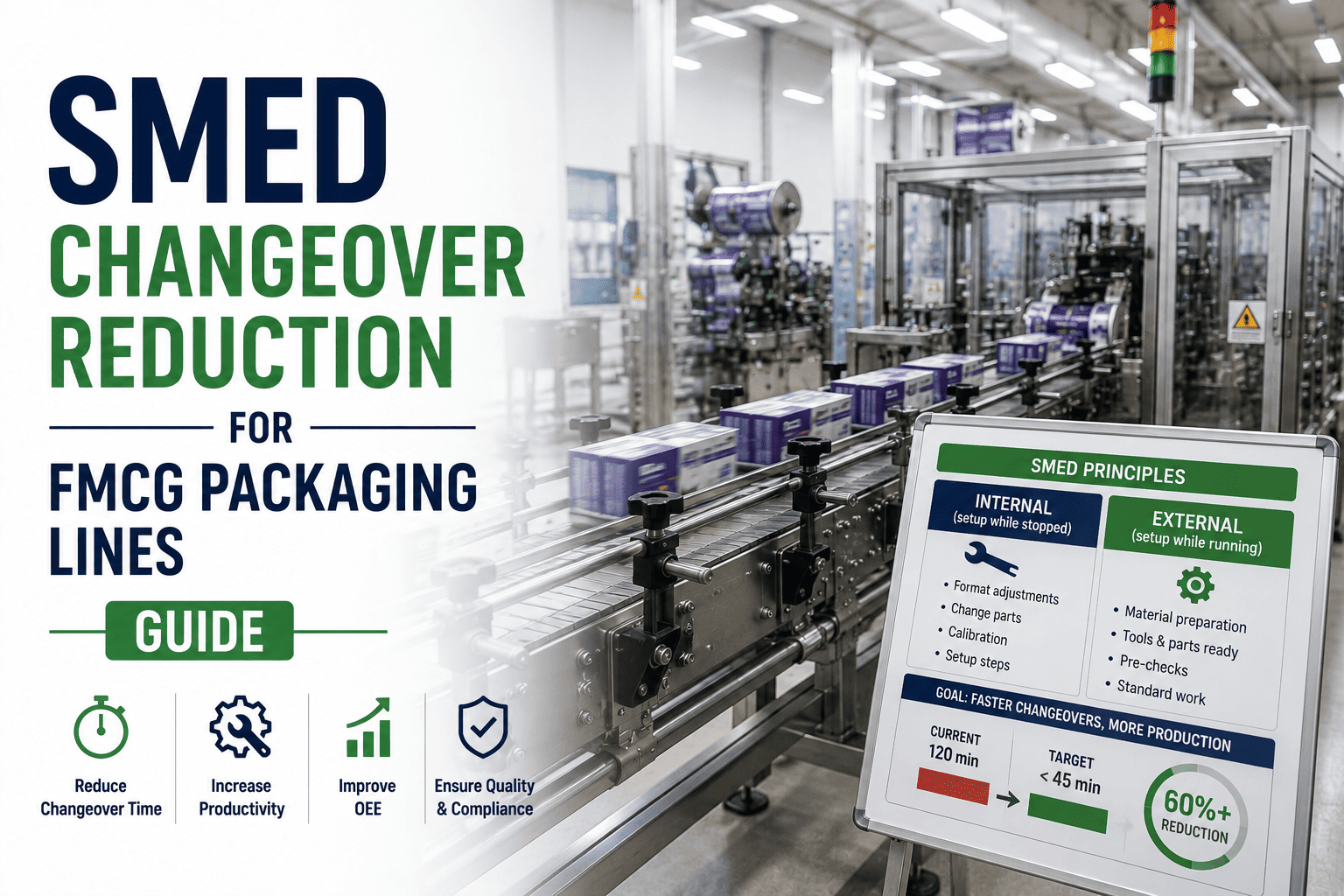
SMED stands for Single-Minute Exchange of Die, a methodology built around one core idea: separate what must happen while the line is stopped from what could happen while it's still running. Most plants discover that far more of their changeover was stoppable-time work than anyone assumed, simply because nobody had ever sorted the two apart.
Internal vs. External: The Split That Changes Everything
| Task Type |
Definition |
| Internal setup |
Work that can only be done while the line is fully stopped, like swapping a die or format part |
| External setup |
Work that can be prepared, staged, or completed while the line is still running the previous SKU |
| The typical finding |
A significant share of "internal" time in most plants is actually external work nobody moved out of the stopped window |
The Four SMED Stages
1
Observe And Document The Current Changeover
Film or time an actual changeover step by step before changing anything, since most plants underestimate how long individual tasks really take
2
Separate Internal From External Tasks
Sort every documented step into stopped-time or running-time work, this single step often reveals the biggest quick win in the whole process
3
Convert Internal Tasks To External Where Possible
Pre-stage tooling, pre-heat components, or pre-assemble format parts during the prior run so they're ready the instant the line stops
4
Streamline What's Left, Then Standardize It
Simplify remaining internal steps with quick-release fasteners and one-motion adjustments, then lock the new sequence in as the only accepted method
Prove The Gain Before You Chase The Next One
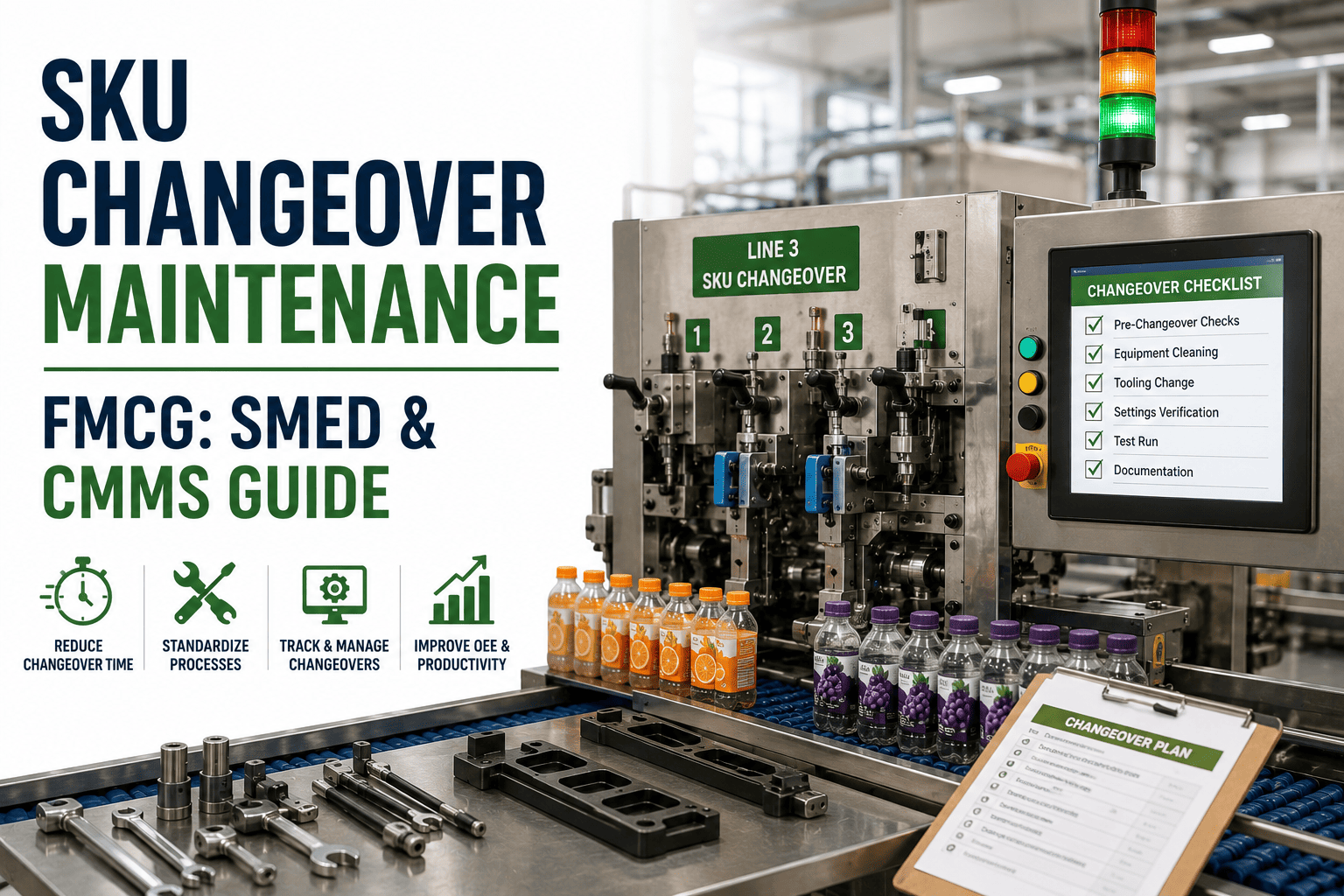
OxMaint logs every changeover automatically by SKU and line, so you can see exactly how much time SMED actually recovered instead of estimating it. Sign up for a free trial to start timing your real changeovers, or book a demo to see SKU-level changeover tracking on your own data.
Tools That Make The Gains Stick
Changeover Kits
Pre-assembled kits with every tool and format part for a specific SKU transition remove the time lost searching for parts mid-changeover
Quick-Release Fasteners
Replacing multi-turn bolts with cam locks or clamps turns a two-minute adjustment into a five-second one across dozens of changeover points
Visual Standard Work
A posted, timed sequence at the line prevents the process from quietly drifting back to old habits once the initial excitement fades
Parallel Task Assignment
Splitting internal tasks across two operators working simultaneously instead of sequentially cuts stopped time without adding any new steps
Why SMED Gains Decay Without A System
A new changeover procedure works beautifully for the first few weeks, then quietly slides back toward old habits once the improvement team moves on. A CMMS that logs actual changeover duration by SKU and line, shift after shift, is what catches that drift early, before six months of gains evaporate unnoticed.
Frequently Asked Questions
Q
Does SMED actually mean every changeover has to take under a minute?
No, the name is aspirational rather than literal. The real goal is converting as much stopped-time work as possible into running-time work, whatever the resulting duration ends up being for your specific line.
Q
What's the single biggest mistake plants make when starting SMED?
Skipping the observation step and jumping straight to solutions. Without an honest, timed baseline of the current process, it's impossible to know which internal tasks are actually worth converting first.
Q
How do you keep changeover times from creeping back up after SMED?
Track actual changeover duration continuously by SKU and line rather than checking in occasionally. Ongoing measurement is what turns a one-time improvement into a permanently lower baseline.
Turn SMED Into A Permanently Lower Baseline
OxMaint tracks every changeover by SKU and line automatically, so your SMED gains show up in the data and stay there instead of quietly decaying. Sign up for a free trial to start measuring your real changeover times, or book a demo to see how it fits your lines.

.png)


