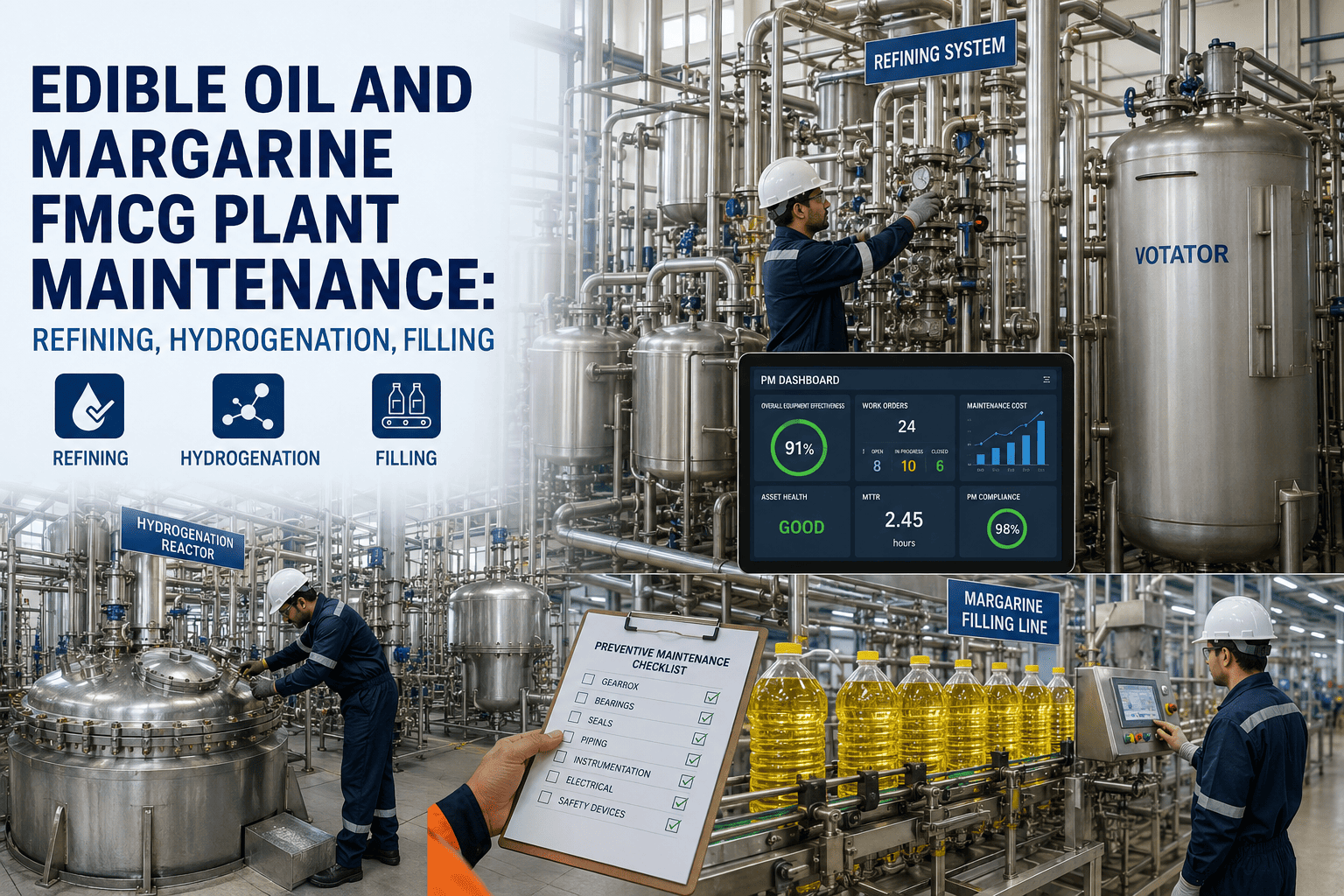
Edible Oil and Margarine FMCG Plant Maintenance: Refining, Hydrogenation, Filling
By Jack Edwards on May 22, 2026
Edible oil and margarine FMCG plants operate some of the most thermally aggressive and corrosion-prone process lines in food manufacturing — from crude oil degumming and neutralisation through hydrogenation reactors running at 180-220 degrees C under 3-5 bar hydrogen pressure, to votator scraped-surface heat exchangers crystallising margarine at precise temperature profiles. Equipment failure in these environments does not produce a slow decline — it produces a catastrophic event: a hydrogenation reactor gasket blow, a deodoriser vacuum pump seizure at 260 degrees C, a votator shaft failure mid-crystallisation that destroys an entire batch. The plants that maintain 95%+ uptime and pass BRCGS, SQF, and FSSC 22000 audits consistently share one operating discipline: every PM, every inspection, every corrective repair is scheduled, executed, and documented inside a single CMMS tied to the asset hierarchy. Start a free trial on Oxmaint to map your refining and hydrogenation assets into a structured PM programme, or book a demo and walk through your specific line configuration.
EDIBLE OIL + MARGARINE PLANT MAINTENANCE
Eliminate Unplanned Downtime Across Refining, Hydrogenation, and Filling
See how FMCG edible oil plants reduce reactive failures by 40%+ with structured runtime-based PM across every critical process stage.
global edible oil market by 2027 — scale demands zero unplanned downtime across refining and filling
180-260C
operating temperature range across hydrogenation, deodorisation, and interesterification — thermal stress drives accelerated wear
4.8X
cost of emergency reactor or votator failure vs. planned PM — a single hydrogenation shutdown can exceed $150K
38%
of FMCG food plant audit findings relate to incomplete maintenance records — the documentation gap that costs certifications
What Edible Oil and Margarine Plant Maintenance Covers
Edible oil plant maintenance spans six interconnected process stages — crude reception and storage, chemical and physical refining (degumming, neutralisation, bleaching, deodorisation), hydrogenation and interesterification, margarine/shortening crystallisation via votator scraped-surface systems, filling and packaging, and CIP/utilities. Each stage carries its own failure modes, PM cadences, and compliance documentation requirements under BRCGS, SQF, FSSC 22000, and FDA FSMA 117.
The maintenance challenge specific to edible oil is the combination of high-temperature corrosion, hydrogen atmosphere safety, and food-grade hygiene requirements operating simultaneously on the same equipment. A hydrogenation reactor PM must address gasket integrity under hydrogen pressure, catalyst bed condition, agitator seal wear, and post-maintenance hygiene clearance — all documented in one auditable record. Start a free trial on Oxmaint to structure this across your entire process, or book a demo for a walkthrough.
A single hydrogenation reactor gasket failure can cost $150K+ in lost product, cleanup, and emergency repair — Oxmaint prevents it with runtime-based PM triggers.
6 Critical Maintenance Zones in an Edible Oil Plant
Each zone carries unique failure modes and PM requirements. Oxmaint structures PM schedules, inspections, and corrective work orders around these six zones by default.
01
Crude Reception and Storage
Tank farm agitators, transfer pumps, heat tracing, level instrumentation, and corrosion monitoring on crude storage vessels.
02
Chemical and Physical Refining
Degumming reactors, centrifugal separators, bleaching earth dosing systems, and plate heat exchangers operating at 90-110C.
03
Deodorisation
Deodoriser columns operating at 240-260C under high vacuum — steam ejectors, vacuum pumps, structured packing, and thermal oil systems.
04
Hydrogenation and Interesterification
Pressurised hydrogen reactors at 180-220C, catalyst handling, agitator mechanical seals, pressure relief systems, and gas detection.
05
Votator and Crystallisation
Scraped-surface heat exchangers, pin workers, resting tubes, ammonia refrigeration circuits, and product texture control instrumentation.
06
Filling, Packaging, and CIP
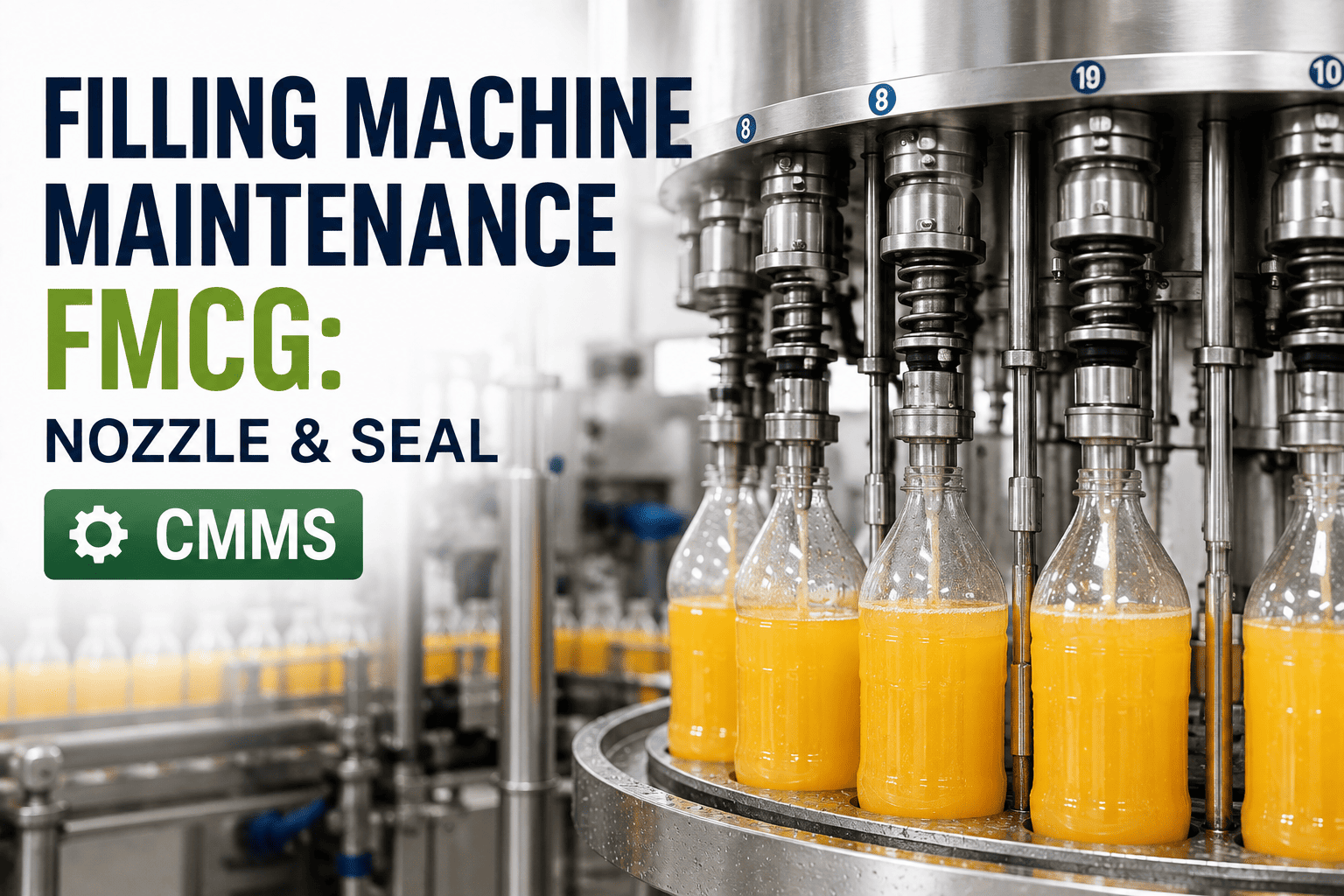
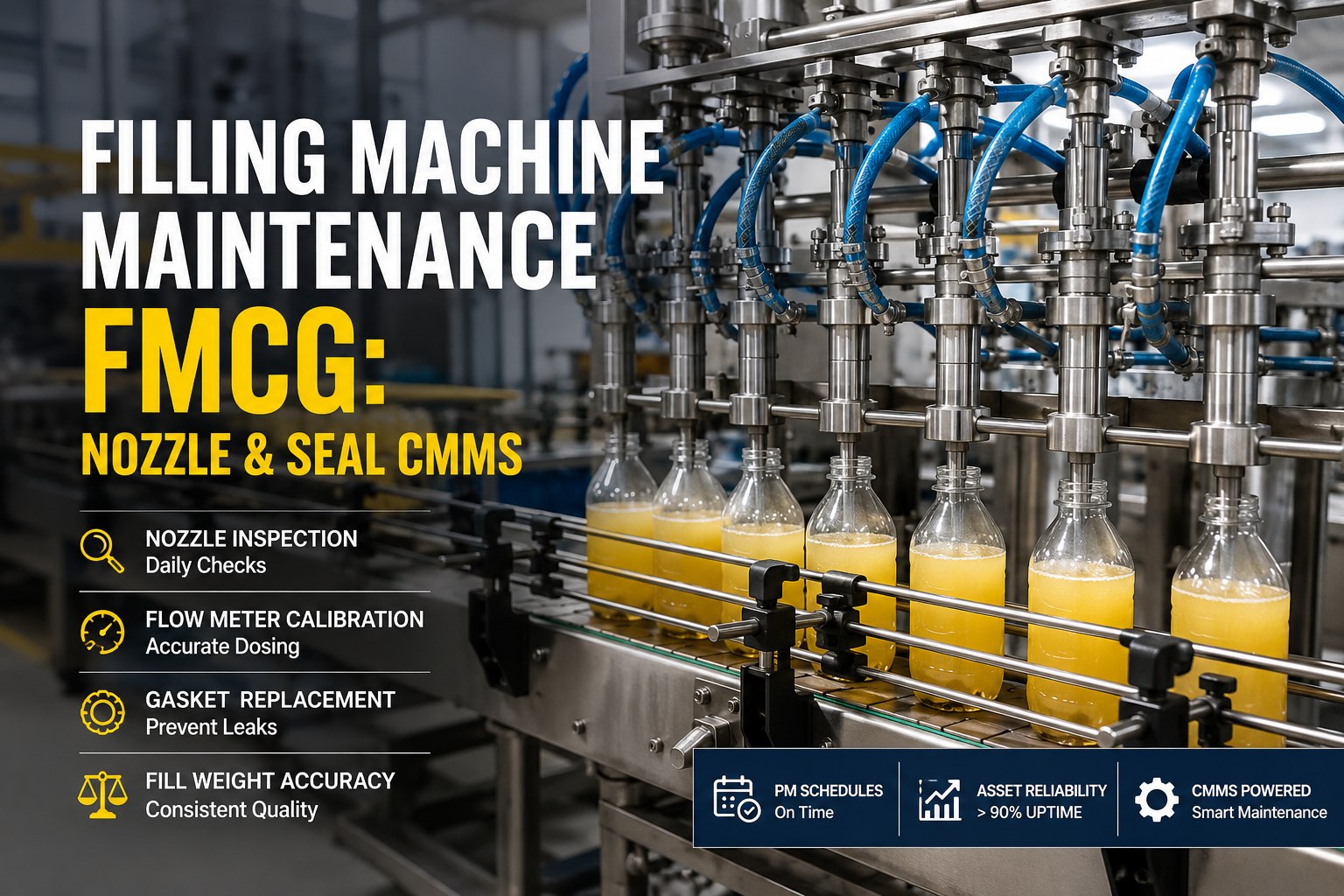
Filling machines, cartoners, case packers, CIP skids, and utility boilers — the final stage where uptime directly equals throughput.
Most edible oil plants lose 8-15% of available production time to unplanned equipment failures — structured CMMS reduces that to under 3%.
6 Maintenance Failures That Cost Edible Oil Plants the Most
These six failure patterns account for over 80% of unplanned downtime and audit findings in edible oil and margarine FMCG operations.
Hydrogenation Reactor Gasket Failure
Gaskets operating under hydrogen pressure at 180-220C degrade on a runtime curve. Calendar-based PM misses the actual wear. Oxmaint triggers PM on accumulated reactor hours.
Deodoriser Vacuum Pump Seizure
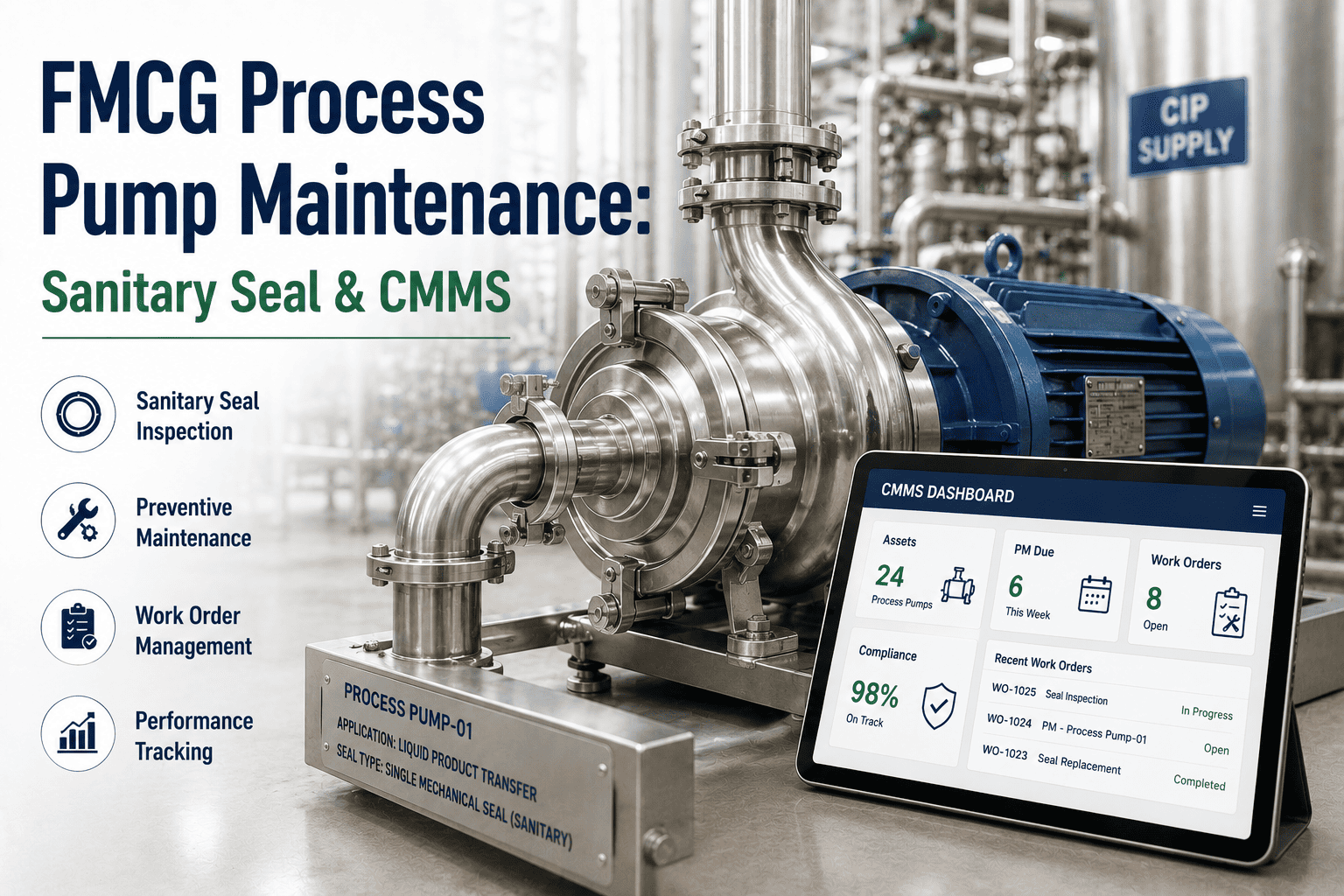
Vacuum pumps maintaining 2-5 mbar at 260C fail catastrophically when oil ingestion or bearing wear is not caught. Oxmaint tracks vibration trends and oil analysis schedules per pump.
Votator Shaft and Blade Wear
Scraped-surface crystalliser blades wear at different rates depending on product hardness and throughput. Replacement on calendar schedule either wastes blades or causes mid-batch failures.
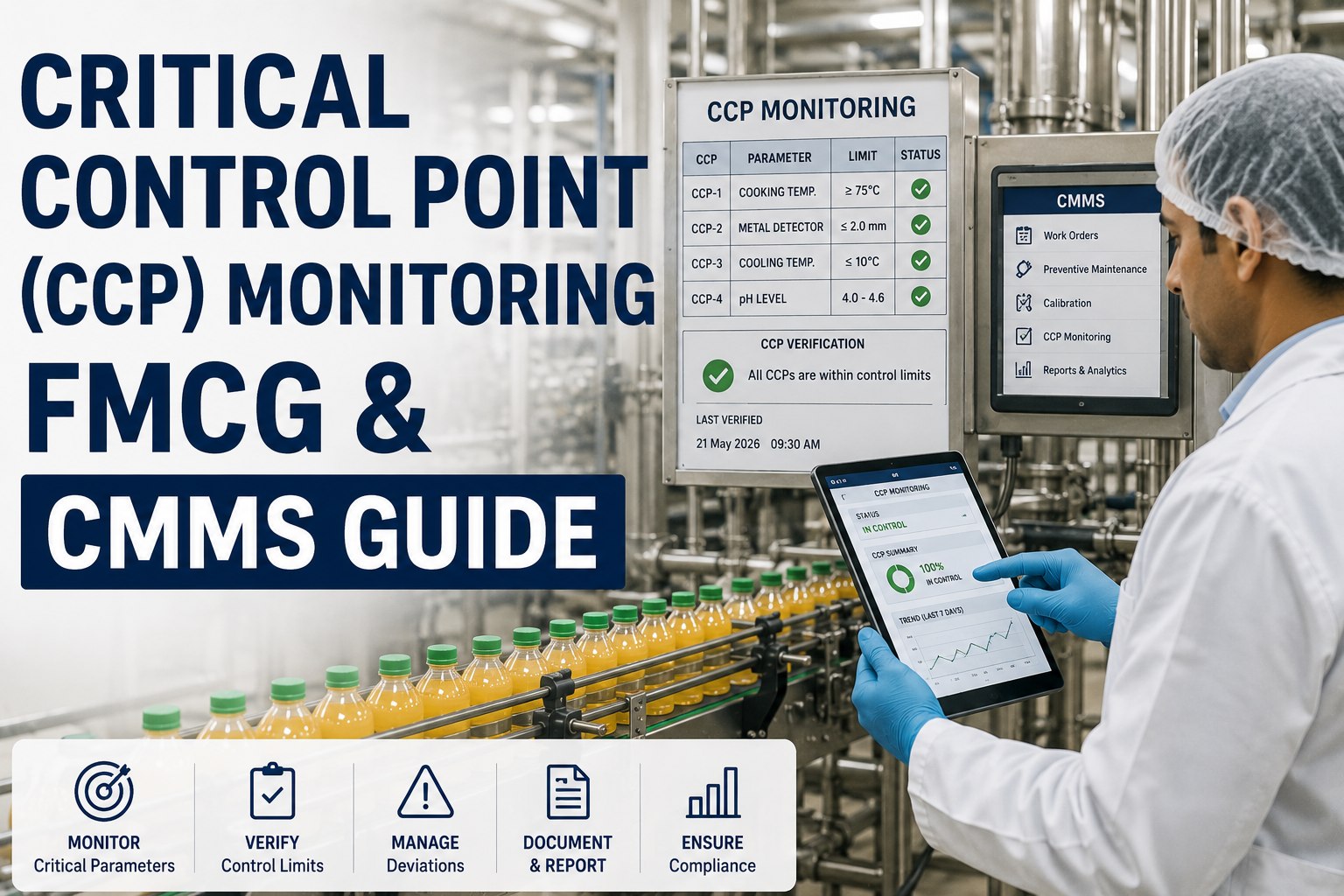
Missing Calibration on CCP Equipment
Thermometers, flow meters, and pressure gauges at critical control points must have in-date calibration. Oxmaint stores certificates against each asset with expiry alerts.
Ammonia Refrigeration Neglect
Ammonia compressors, condensers, and evaporators serving votator lines require PSM-compliant PM. Missed inspections create both safety and regulatory exposure.
No Post-Maintenance Hygiene Sign-Off
Equipment returned to food production without documented hygiene clearance is an audit finding under every major GFSI scheme. Oxmaint enforces mandatory sign-off on every food-contact WO.
These failures compound into the downtime and audit-readiness gap — start a free trial or book a demo to see how Oxmaint closes each one.
How Oxmaint Structures Edible Oil Plant Maintenance
Six Oxmaint modules combine to cover every process stage from crude reception through filling — with runtime-based PM, audit-ready documentation, and predictive failure alerts. Book a demo to see each module on your line layout.
PM triggers on accumulated reactor hours, votator cycles, or pump runtime — not fixed calendar dates. Each asset carries its own cadence based on actual operating conditions.
Vibration, temperature, and pressure trends from PLC/SCADA feeds trigger predictive work orders on hydrogenation reactors, deodoriser pumps, and ammonia compressors before failure occurs.
Digital inspection checklists for every critical control point with calibration certificate storage, expiry alerts, and automatic corrective WO generation on failed items.
Every food-contact equipment WO includes a mandatory post-maintenance hygiene clearance step — the WO cannot close until supervisor sign-off confirms the equipment is safe for production.
Hydrogenation gaskets, votator blades, pump seals, and CIP gasket sets tracked at part-number level with auto-reorder before minimum stock is breached.
PM compliance, corrective WO closure rates, and audit readiness rolled up across every edible oil plant in the portfolio — VP Operations sees hotspots before they become incidents.
Plants running structured CMMS-based PM on refining and hydrogenation lines see 40%+ reduction in unplanned downtime within 12 months.
Reactive Edible Oil Plant vs. Oxmaint-Managed Plant
The operational gap is structured, runtime-based PM captured in one platform every shift and every technician uses.
Operational Dimension
Reactive / Calendar-PM Plant
Oxmaint Runtime-Managed Plant
PM Trigger
Fixed calendar date
Runtime hours, cycles, condition
Hydrogenation Reactor PM
Annual regardless of hours run
Triggered at 2,000-hr reactor intervals
Votator Blade Replacement
Calendar or failure
Cycles-based with condition scoring
Calibration Compliance
Filing cabinet, risk of lapse
Asset-linked, expiry-alerted, instant retrieval
Post-Maintenance Hygiene
Verbal or skipped
Mandatory WO gate, supervisor-signed
Spare Parts Availability
Discovered at failure
Auto-reorder before minimum stock
Audit Evidence Trail
2-3 days reconstruction
One-click export, always current
Unplanned Downtime
8-15% of available time
Under 3% within 12 months
ROI and Outcomes From Structured Edible Oil Plant Maintenance
Runtime-based PM catches wear before failure across refining and hydrogenation
-65%
emergency repair spend
Planned replacement of gaskets, seals, and blades vs. catastrophic failure cost
100%
CCP calibration compliance
Expiry alerts and asset-linked certificates eliminate audit findings
+18%
equipment useful life
Condition-based PM extends votator, pump, and reactor service life
-80%
audit prep time
BRCGS, SQF, FSSC 22000 evidence exportable in minutes not days
60 days
typical payback
On single-plant Oxmaint deployment across refining and filling lines
Edible Oil and Margarine Plant Maintenance FAQ
Does Oxmaint support runtime-based PM triggers from PLC and SCADA systems
Yes. Oxmaint PLC/IoT Integration connects to major SCADA, DCS, and BMS systems so runtime hours, cycle counts, temperature, pressure, and vibration data flow into the asset record continuously. PM schedules trigger automatically when runtime thresholds are reached — no manual logging required.
How does Oxmaint handle PSM-regulated ammonia refrigeration maintenance
Oxmaint structures ammonia refrigeration PM under a dedicated safety-compliance module with inspection checklists aligned to OSHA PSM, IIAR, and local jurisdiction requirements. Compressor, condenser, evaporator, and relief valve inspections carry their own schedules with mandatory sign-off fields and automatic corrective WO generation on any failed item.
Can Oxmaint track hydrogenation reactor safety inspections separately from routine PM
Yes. Oxmaint allows multiple inspection types per asset. Hydrogenation reactors can carry a routine PM schedule (gaskets, agitator seals, catalyst), a safety inspection schedule (pressure relief, gas detection, emergency shutdown), and a regulatory inspection schedule (vessel certification) — each with its own cadence, checklist, and sign-off requirements.
How long does Oxmaint deployment take for an edible oil plant
A single edible oil plant is typically live in 10-14 working days using Oxmaint pre-built food manufacturing templates. Asset register populated in week one, first runtime-triggered PM completed inside week two, full team adoption and audit-ready evidence generation within 45 days.
EDIBLE OIL PLANT RELIABILITY
Stop Losing Production to Preventable Refining and Hydrogenation Failures
Turn every reactor, deodoriser, votator, and filling line into a runtime-tracked, predictably-maintained asset with Oxmaint. Used by FMCG operations teams managing 10,000+ assets.
Runtime-based PM across all 6 process zones
Predictive alerts on hydrogenation, deodorisation, and ammonia systems
BRCGS, SQF, FSSC 22000 audit evidence in one click
No heavy implementation. Live in days, not months. Works across multi-plant edible oil portfolios. Measurable results in 30 days.