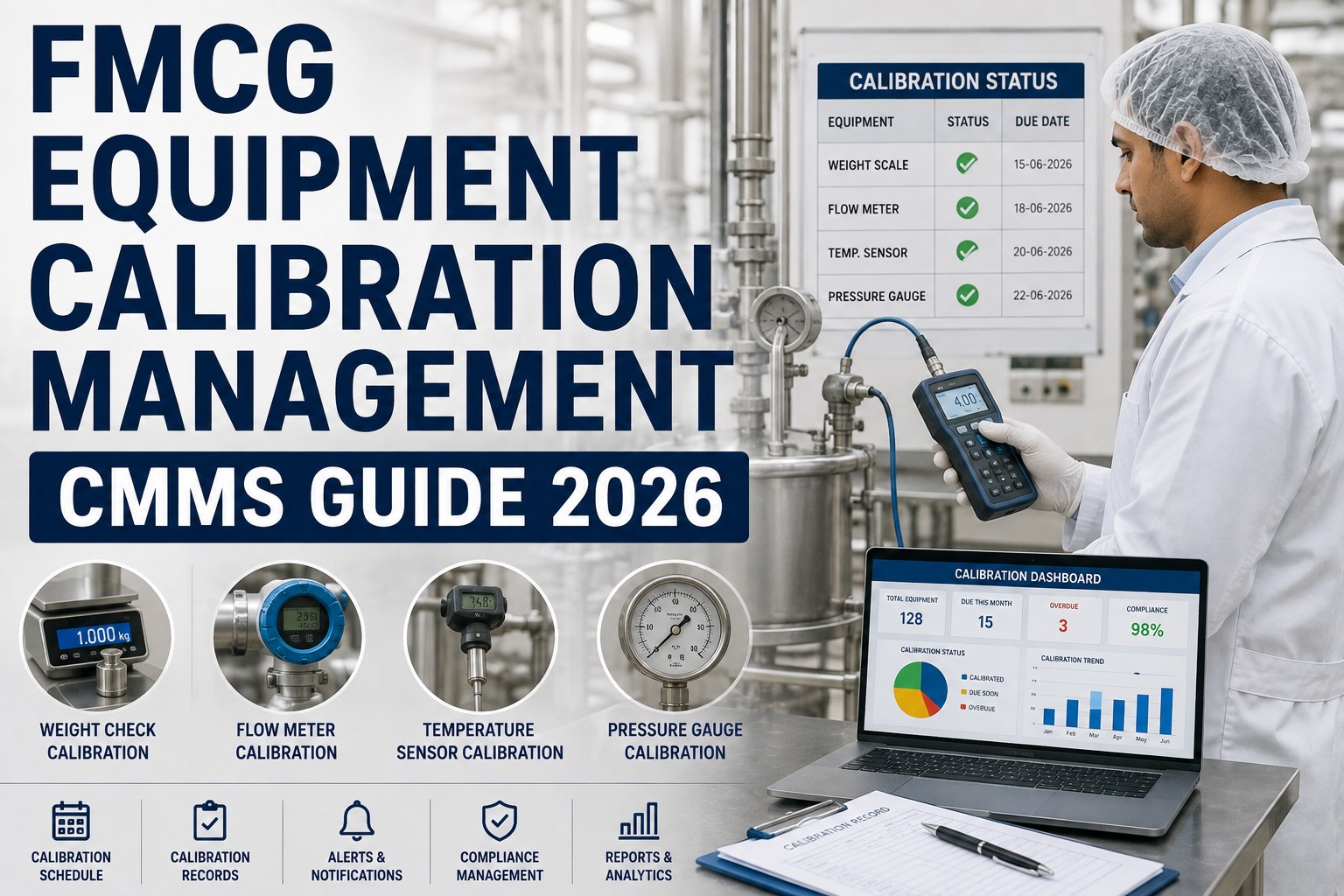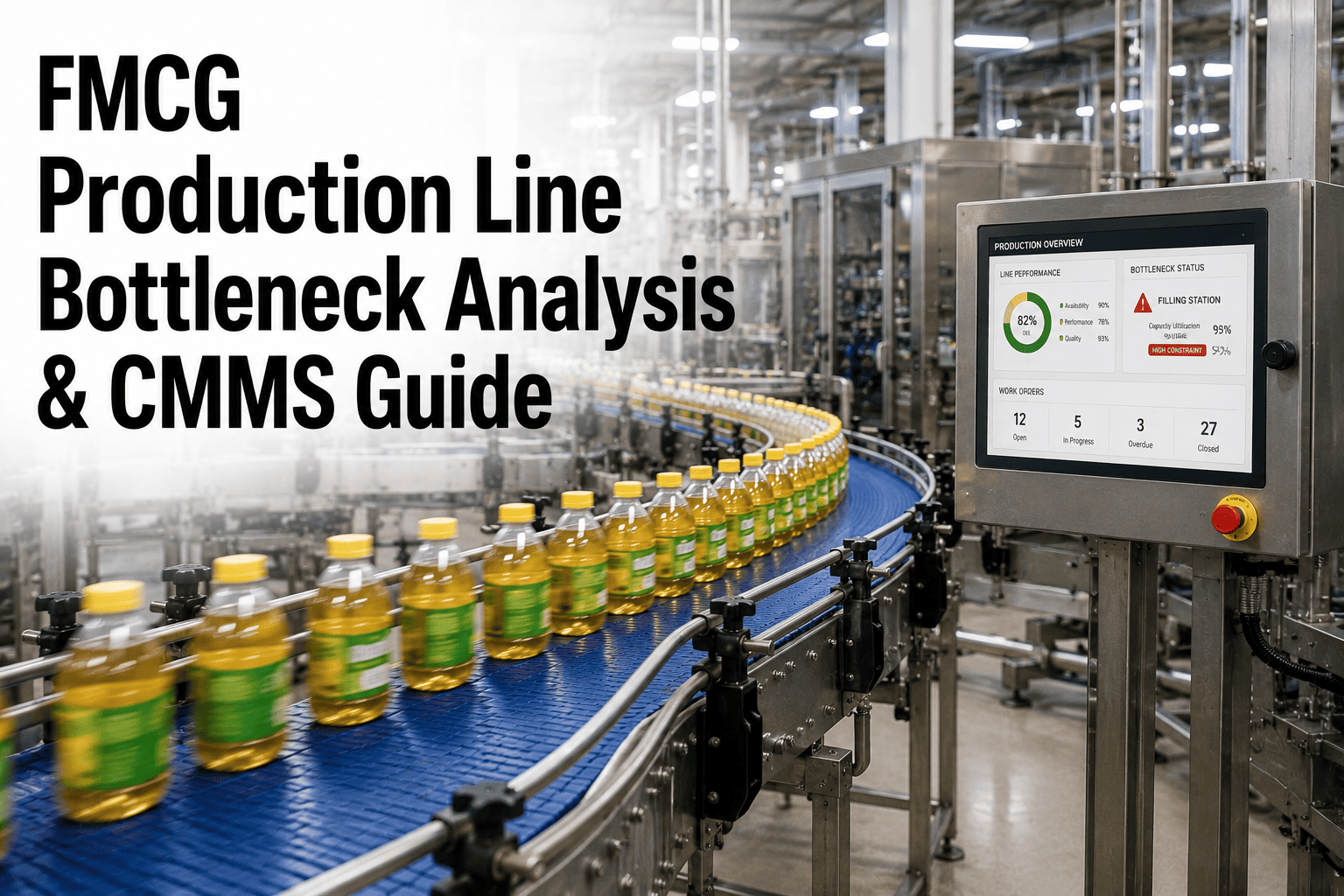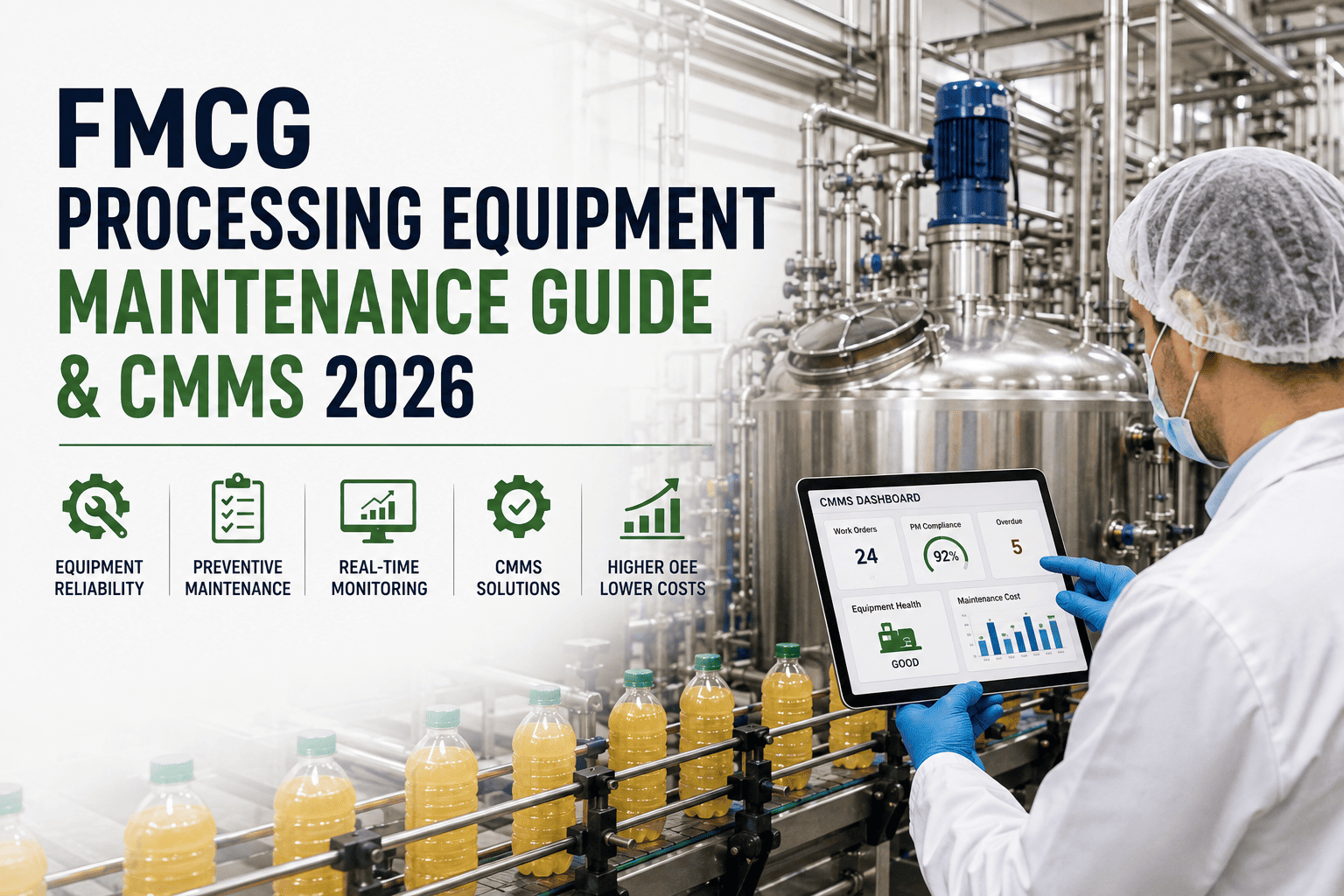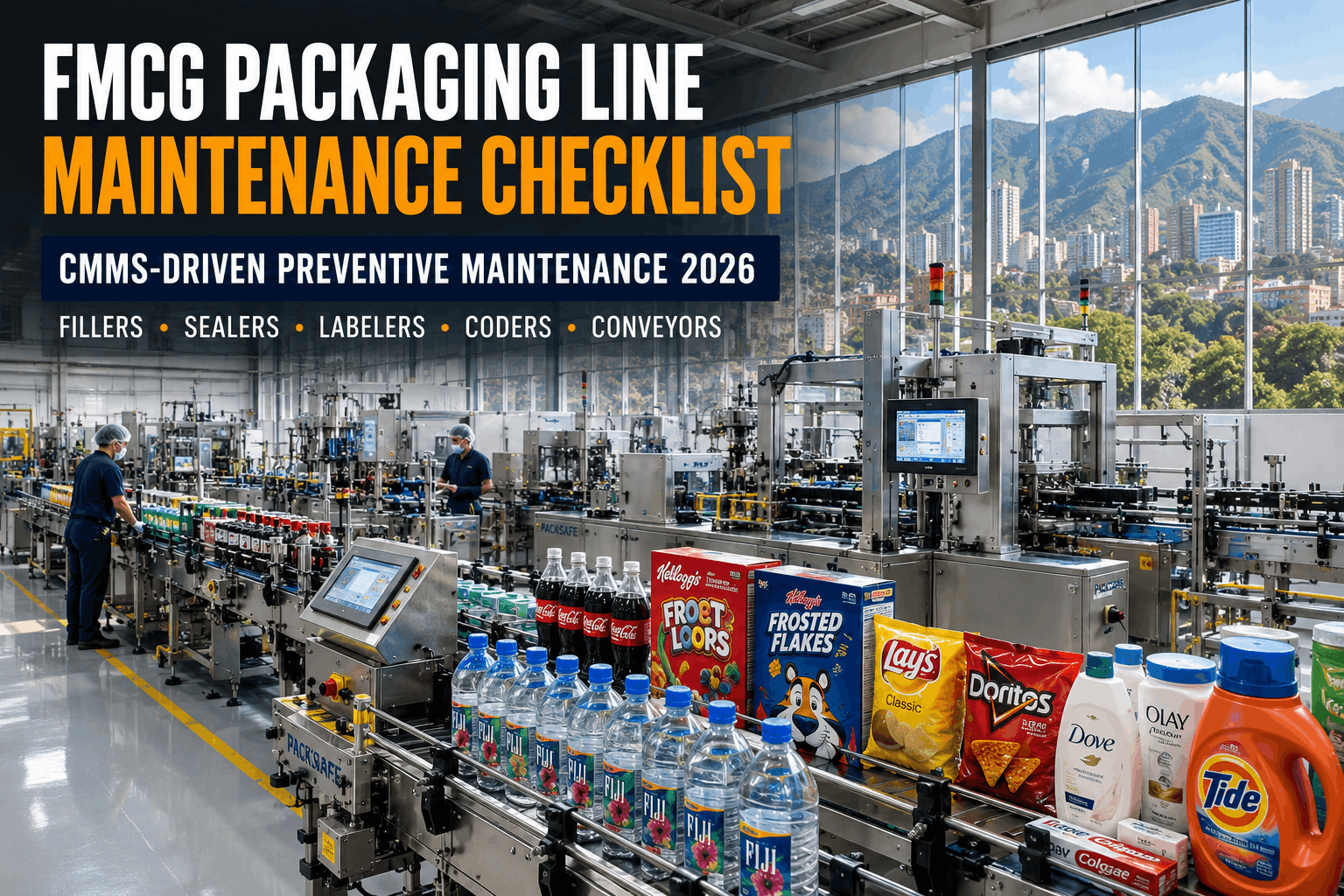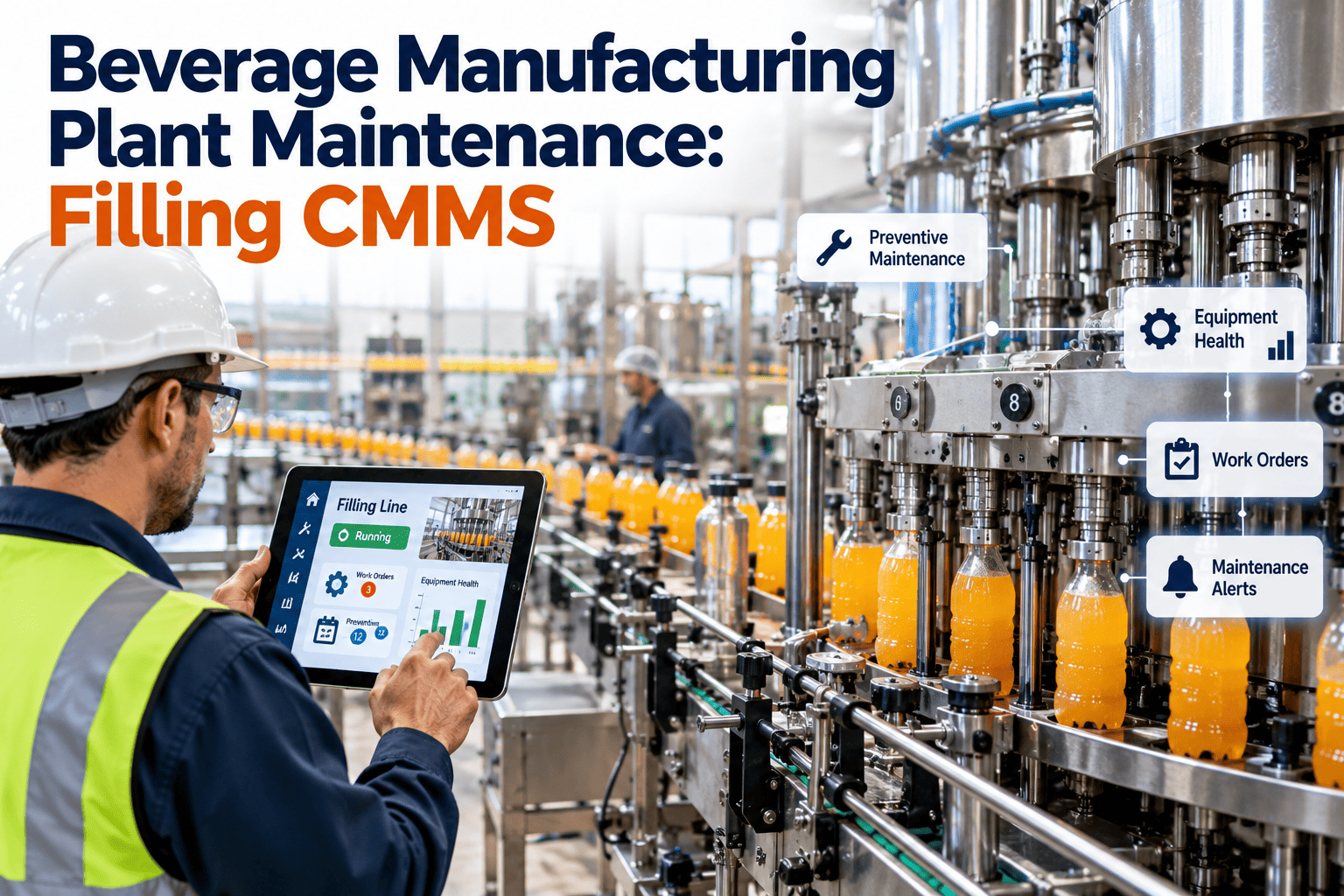
A beverage plant runs on a chain of machines that all have to agree: the water treatment, the syrup room, the bottle washer, the filler, the capper, the pasteuriser and the packer. When one link drifts, the filler pays for it with rejects, foam, leakers or stops. Beverage maintenance is therefore less about individual machines and more about protecting the flow between them. This guide covers filling line PM, carbonation, bottle washers, keg lines and CIP, with workflows built in Oxmaint maintenance management software.
Beverage Plant Maintenance: Keep the Filling Line Running and the Product Safe
Plan maintenance around the full line, from syrup room to pallet, so fill accuracy, carbonation and hygiene hold shift after shift.
Why Beverage Lines Are Maintenance Intensive
Beverage production combines high speed, wet conditions, sugar, pressure and strict hygiene. Each of those accelerates wear in a different way.
What downtime really looks like on a beverage line
- Micro-stops from sensor fouling, jams and container handling problems
- Changeover losses between sizes, formats and flavours
- Quality stops for fill level, closure torque or code verification
- Unplanned breakdowns from valve, seal, bearing or chain failures
- Waiting time for spares, clearance or cleaning verification
Filling Line Preventive Maintenance by Station
A station-based PM plan keeps tasks specific. Frequencies below are starting points to adjust using your own failure history and manufacturer guidance.
| Station | Key PM tasks | Typical failure if neglected | Starting cadence |
|---|---|---|---|
| Filler valves | Seal and spring inspection, fill accuracy check, leak test | Fill variation, dripping, product loss | Weekly check, seal change by condition |
| Filler bowl and product path | Surface and gasket inspection, level control check | Contamination risk, unstable fill | Each cleaning cycle |
| Capper or closer | Chuck wear, torque verification, cap chute cleaning | Loose or damaged closures, leakers | Weekly torque and chuck inspection |
| Container infeed and star wheels | Guide and wheel wear, alignment, lubrication points | Jams, container damage, glass fragments | Weekly visual, monthly alignment |
| Conveyors and air conveyors | Chain, belt and guide condition, lubrication, tracking | Falls, jams, contamination | Weekly inspection |
| Inspection devices and coders | Verification, cleaning, calibration, reject mechanism test | Undetected defects, illegible codes | Per shift check, scheduled calibration |
| Pasteuriser or warmer | Spray nozzles, temperature sensors, pumps, belt condition | Under-processing, scale buildup, breakdown | Monthly and per cycle verification |
| Packer and palletiser | Gripper, sensor, pneumatic and guarding checks | Misloads, jams, safety issues | Weekly inspection |
Carbonation Equipment: Stability Starts Upstream
Carbonation problems often show up at the filler as foaming, but the cause may be several steps earlier. Maintenance helps by keeping the process stable and measurable.
Bottle Washer Maintenance
Returnable container lines rely on bottle washers to remove soil and residue. A washer in poor condition quietly pushes problems to the filler.
- Chains, carriers and drive condition
- Spray nozzles checked for blockage and wear
- Pumps, filters and heat exchangers
- Lubrication of moving parts to the manufacturer plan
- Caustic concentration and temperature control
- Rinse water quality and flow
- Dosing pump calibration and sensor checks
- Records of cleaning verification and residue results
Signs a washer needs attention
- Visible residue or label fragments in washed containers
- Rising chemical consumption without a process change
- Scale buildup on spray bars or heating elements
- Frequent carrier jams or broken bottles inside the machine
Keg Line Maintenance
Keg lines combine mechanical handling with strict cleaning and sterilisation. Because kegs return in uneven condition, equipment must cope with variation.
| Keg line area | What to maintain | Why it matters |
|---|---|---|
| Keg washing and cleaning | Spray heads, chemical dosing, temperature control, valves | Residue or microbial carry-over to the next fill |
| Keg fillers and heads | Seals, probes, gas and product valves, leak checks | Fill accuracy, gas loss, contamination risk |
| Handling and conveying | Chains, pushers, turntables, sensors, guarding | Jams, damage and operator safety |
| Leak and pressure testing | Test equipment calibration and verification | Detecting faulty kegs before shipment |
| Steam and sterilisation | Steam traps, valves, temperature monitoring | Reliable sterilisation and energy efficiency |
CIP and Sanitary Systems on Beverage Lines
CIP is the control that lets a beverage plant run long without dismantling. Maintenance keeps the cleaning system capable and the evidence complete.
- Spray devices free of blockage
- Pumps delivering required flow
- Valves seating properly with no cross-leakage
- Return lines free of dead legs
- Conductivity and temperature sensors calibrated
- Dosing pumps verified against set values
- Cycle recipes protected from unauthorised change
- Alarms tested and responded to
- Cycle records stored per circuit
- Verification results linked to production
- Failed cycle follow-up recorded
- Repairs on the circuit logged to the asset
Managing Maintenance With Oxmaint
Oxmaint helps beverage teams schedule station-level PMs, standardise checklists, record changeover inspections and keep spare parts and calibration tasks in one place. Build your filling line PM plan and keep a clear history on every asset.
Micro-Stops: The Hidden Loss on Beverage Lines
Short stops of a few seconds rarely appear as breakdowns, yet they accumulate into a large share of lost time. Capturing them is the first step to fixing them.
| Typical micro-stop | Common root cause | Maintenance response |
|---|---|---|
| Container jam at infeed | Worn guides, misalignment, damaged containers | Inspect and replace guides, verify alignment each format |
| Sensor false trips | Fouling, loose mounting, moisture ingress | Clean, re-secure and protect sensors, review wiring |
| Cap feed interruptions | Chute wear, static, cap quality variation | Inspect chute surfaces, adjust feed, record cap batches |
| Label or coder faults | Dirty heads, adhesive buildup, worn rollers | Scheduled cleaning, wear part replacement |
| Fill level rejects | Valve wear, foaming, unstable product temperature | Valve service, review carbonation and cooling |
Lubrication and Food-Grade Controls
Lubrication is both a reliability and a food safety task. Over-greasing, wrong grade or drips into product zones create problems either way.
- Maintain a lubricant register that shows grade, application point and approved use for each asset
- Label grease guns and containers clearly, and store them to prevent mix-ups
- Specify quantity and interval, so technicians do not rely on habit
- Use food-grade lubricants wherever incidental contact with product is possible
- Record every application on the work order, so history is visible during audits
Glass, Plastic and Metal Foreign Material Controls
Beverage lines handle containers that can break or shed material. Maintenance supports foreign material control by keeping handling equipment in good condition and by controlling repairs.
- Replace worn guide rails and star wheels before they chip containers
- Keep line speeds and accumulation settings within design limits
- Check lighting and cameras on inspection devices
- Maintain rejection mechanisms and test them routinely
- Stop and clear the affected area, following the glass breakage procedure
- Inspect adjacent equipment, covers and drains for fragments
- Record the event and the clearance sign-off on a work order
- Review the cause and any worn parts that contributed
Seasonal Peaks and Planning Maintenance Around Demand
Many beverage categories peak in warm weather or around holidays. Maintenance planning should anticipate that pressure rather than react to it.
Energy and Water Efficiency Through Maintenance
Beverage plants use significant energy and water. Many efficiency gains come from routine maintenance rather than new equipment.
- Repair compressed air leaks, which waste energy and affect valve and capper performance
- Maintain steam traps and insulation to avoid heat loss in pasteurisers and cleaning systems
- Keep heat exchangers and cooling coils clean for stable temperature control
- Check rinse and spray nozzles so water is used where it cleans, not where it spills
- Calibrate flow and temperature sensors so control systems do not overcompensate
Condition Monitoring Opportunities on Beverage Lines
Not every asset needs sensors, but some failure modes give plenty of warning. Condition-based tasks can replace fixed intervals where the data is reliable.
| Asset | Condition signal | Possible trigger |
|---|---|---|
| Pumps and motors | Vibration, temperature, current draw | Reading outside baseline raises an inspection task |
| Filler valves | Fill volume variation trend | Drift beyond tolerance triggers seal replacement |
| Compressors and chillers | Run hours, pressure, temperature | Hours or pressure drift triggers service |
| Conveyor drives | Motor load and chain stretch | Rising load triggers lubrication or adjustment |
| Washers and heat exchangers | Temperature differential, chemical use | Efficiency decline triggers descaling or inspection |
Operator-Led Care on the Filling Line
Operators spot early changes in sound, spillage and container behaviour. Simple, standard routines turn that attention into recorded checks.
- Start-up checks of guards, sensors, air pressure and visible leaks
- Cleaning of sensors, chutes and sugar buildup at agreed intervals
- Simple lubrication tasks where training and approved lubricants are in place
- A clear, quick route to raise abnormalities as work orders from the line
- Feedback on what happened, so operators see reports leading to action
Documentation That Supports Beverage Audits
Certification audits and customer visits focus on the equipment that protects the product. Keep records ready by asset and by line.
- PM schedules and completion records for fillers, cappers, washers and pasteurisers
- Calibration records for temperature, pressure, carbonation and dosing instruments
- CIP cycle records and verification results by circuit
- Post-maintenance clearance and foreign material controls
- Corrective actions with root cause and follow-up verification
Handover Between Shifts and Between Teams
Beverage lines run across shifts, so information lost at handover reappears as repeat stops. A short structured handover protects continuity.
- List open work orders, temporary repairs and equipment running with known limits
- Note adjustments made to fill, capping or pasteuriser settings and the reason
- Flag parts on order and expected arrival, so the next shift can plan
- Confirm that any clearance sign-offs are complete before the line restarts
- Record the handover in the system rather than only on a whiteboard
Run the Whole Line From One Maintenance Plan
Schedule PMs by station, record changeover checks and keep every valve, washer and keg line asset on one history.
Changeovers: Where Maintenance and Production Meet
Format and flavour changes create the best chance to inspect and the biggest risk of rushed work. A short, standard routine protects both.
Spare Parts Priorities for Beverage Lines
Stocking everything is expensive and stocking nothing is risky. Rank spares by line impact and lead time.
- Filler valve seals, springs and complete valve assemblies for the fastest-wearing stations
- Capper chucks, torque heads and cap chute components
- Star wheels and guide rails for each container format run
- Critical sensors, such as level, pressure and temperature probes
- Pump seals and dosing pump parts for CIP and syrup systems
- Conveyor chain links, wear strips and bearings for high-run lines
Water, Energy and Utilities Behind the Line
Beverage output depends on utilities that do not appear on the filler schedule. Include them in the same maintenance plan.
Metrics for a Beverage Maintenance Programme
Review a small set of indicators weekly with production, and trend them monthly.
Frequently Asked Questions
Keep Every Station on Your Beverage Line in Step
Bring station PMs, changeover checks, CIP evidence and spares into one maintenance system built around your plant.