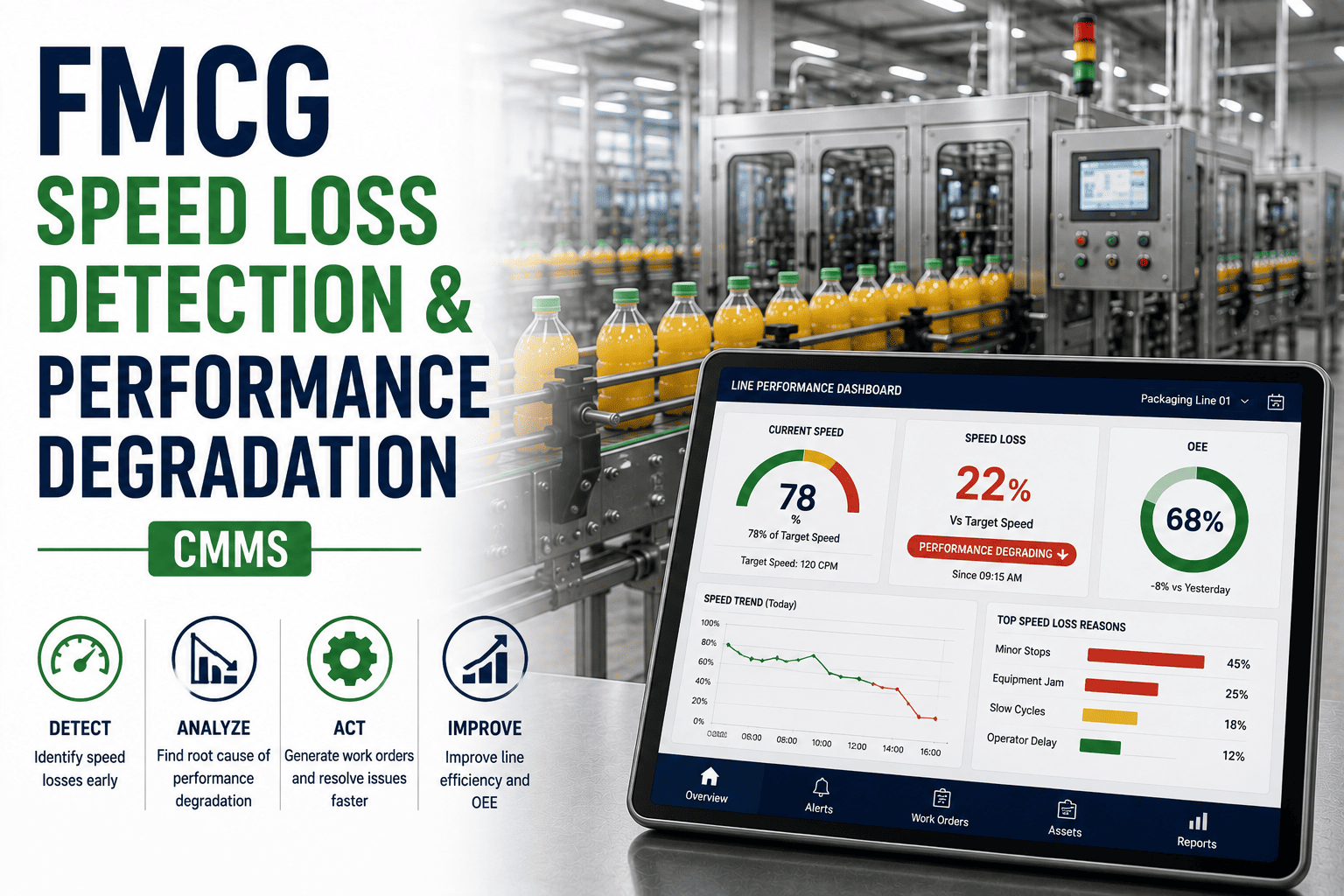
A bearing rated for years of standard-speed service can wear out in months once a line is pushed to high-speed output. The physics don't care that the maintenance calendar was built around a slower era of the plant. Lines running near 450 units a minute for 16-24 hours a day put mechanical components through a fundamentally different stress profile than the PM schedule was ever designed for. Sign up to start matching your PM intervals to your real operating speed.
Why Speed Changes The Wear Curve, Not Just The Output
Running a line near 450 units per minute for 16-24 hours a day multiplies the number of load cycles a bearing sees compared to standard-speed, single-shift operation. Wear isn't linear with speed, it compounds, which is why a PM interval that worked fine for years can quietly become inadequate the moment throughput targets go up.
Standard-Speed PM vs. High-Speed Reality
| Factor |
What Changes At High Speed |
| Load cycles |
Far more cycles accumulate per day, compressing years of standard-speed wear into a fraction of the calendar time |
| Operating hours |
16-24 hour high-volume operation leaves little idle time for heat to dissipate between cycles, accelerating thermal wear |
| Legacy PM interval |
A calendar-based schedule set for the original, slower operating profile no longer matches the actual stress the component sees |
The Components That Feel It First
Drive Bearings
Main drive and motor bearings absorb the highest cycle count on the line, making them the earliest and most frequent high-speed failure point
Seals
Higher rotational speed generates more friction heat at seal contact points, shortening seal life well ahead of the original design estimate
Drive Belts And Chains
Increased cycling accelerates stretch and tooth wear, which is often what forces the informal speed reductions plants don't track
Alignment Points
Vibration from higher cycle loads works fasteners and mounts loose faster, so alignment drift shows up sooner than the PM calendar expects
Match Maintenance To The Speed You Actually Run
OxMaint adjusts PM intervals based on real operating hours and cycle counts, not a calendar built for a slower era of the line. Sign up for a free trial to start scheduling maintenance around your actual wear rate, or book a demo to see condition-based intervals on your own high-speed lines.
Rebuilding The Maintenance Plan Around Real Wear
1
Recalculate Intervals By Actual Cycle Count
Replace a fixed calendar interval with one based on real operating hours and speed, so components running 16-24 hours a day get checked accordingly
2
Add Condition Monitoring On The Highest-Risk Points
Vibration and temperature sensors on drive bearings catch early degradation between scheduled checks, before it turns into unplanned downtime
3
Track Bearing Life Against Actual Speed History
Log replacement intervals against the specific speed each bearing operated at, so the next PM plan is built on real evidence, not an estimate
Where A CMMS Fits In
Adjusting PM intervals for high-speed operation only works if actual operating hours, speed, and condition data are being captured consistently. A CMMS that ties maintenance scheduling to real usage data, instead of a static calendar, is what keeps reliability from quietly falling behind as throughput targets climb.
Frequently Asked Questions
Q
Why doesn't the manufacturer's standard PM schedule cover high-speed operation?
Standard schedules are typically built around a reference operating profile. When a plant later pushes throughput up to something like 450 units a minute across 16-24 hour operation, the original interval assumptions no longer match the real load the components see.
Q
Which components should get condition monitoring first?
Start with main drive bearings, since they absorb the highest cycle count on the line and tend to be both the most expensive and most disruptive failure when they go unnoticed.
Q
Is shortening every PM interval the right fix?
Not blindly. Over-maintaining low-risk components wastes labor and planned downtime. The better approach is targeting the specific components proven to wear fastest at your actual speed, backed by real usage and condition data.
Keep Reliability From Falling Behind Throughput
OxMaint ties PM intervals to real operating hours, speed, and condition data, so bearing and seal maintenance keeps pace with what your high-speed line actually demands. Sign up for a free trial to start scheduling around real wear, or book a demo to see it on your own lines.