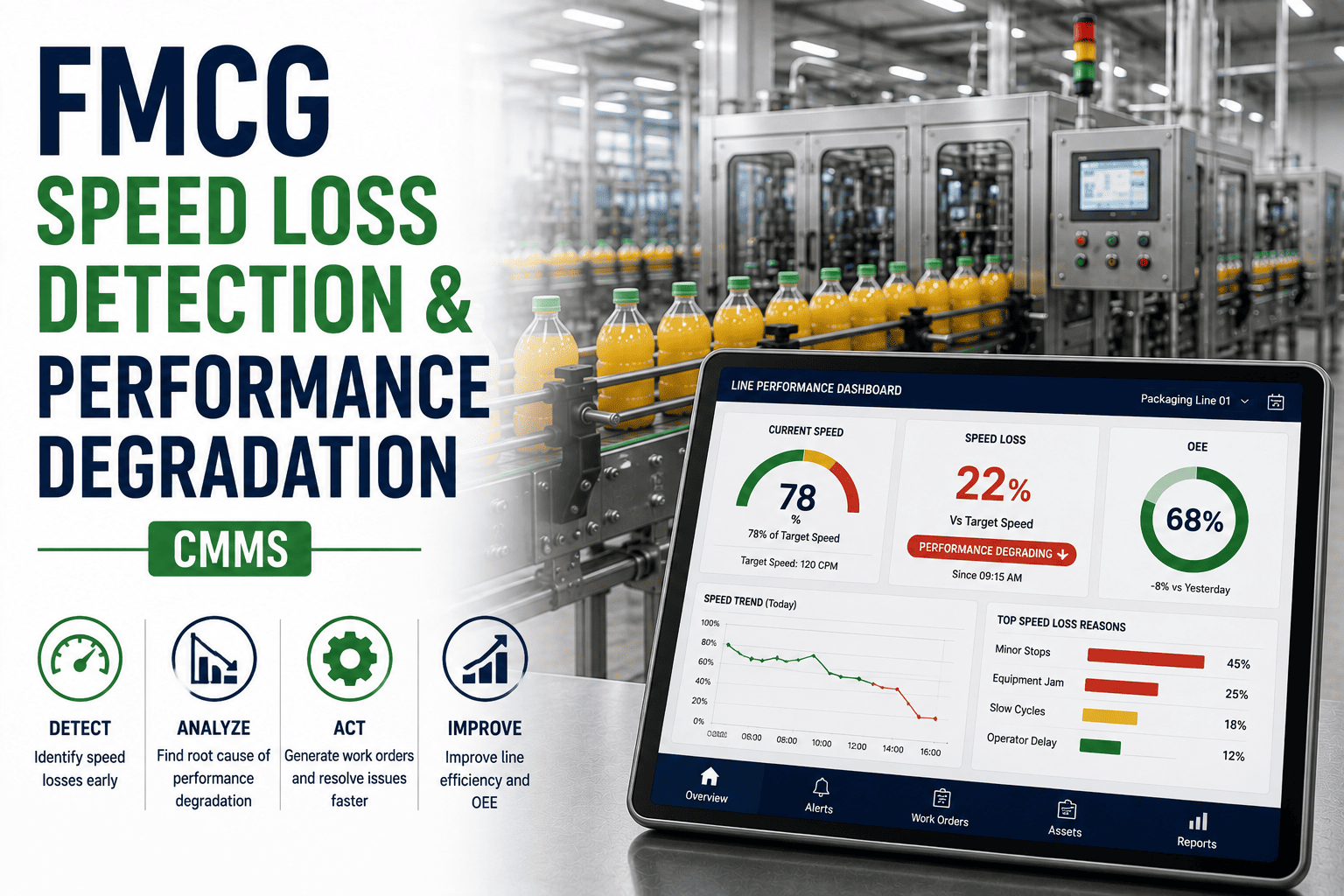
A line that never stops can still be bleeding OEE. Speed loss doesn't trigger an alarm or show up on a stoppage report, it just quietly runs at 92% of rated speed instead of 100%, shift after shift, until someone finally compares the numbers and finds months of lost output. It's the most silent of the three OEE components, and usually the least monitored. Sign up to start trending your actual line speed against its rated maximum.
Why Speed Loss Hides In Plain Sight
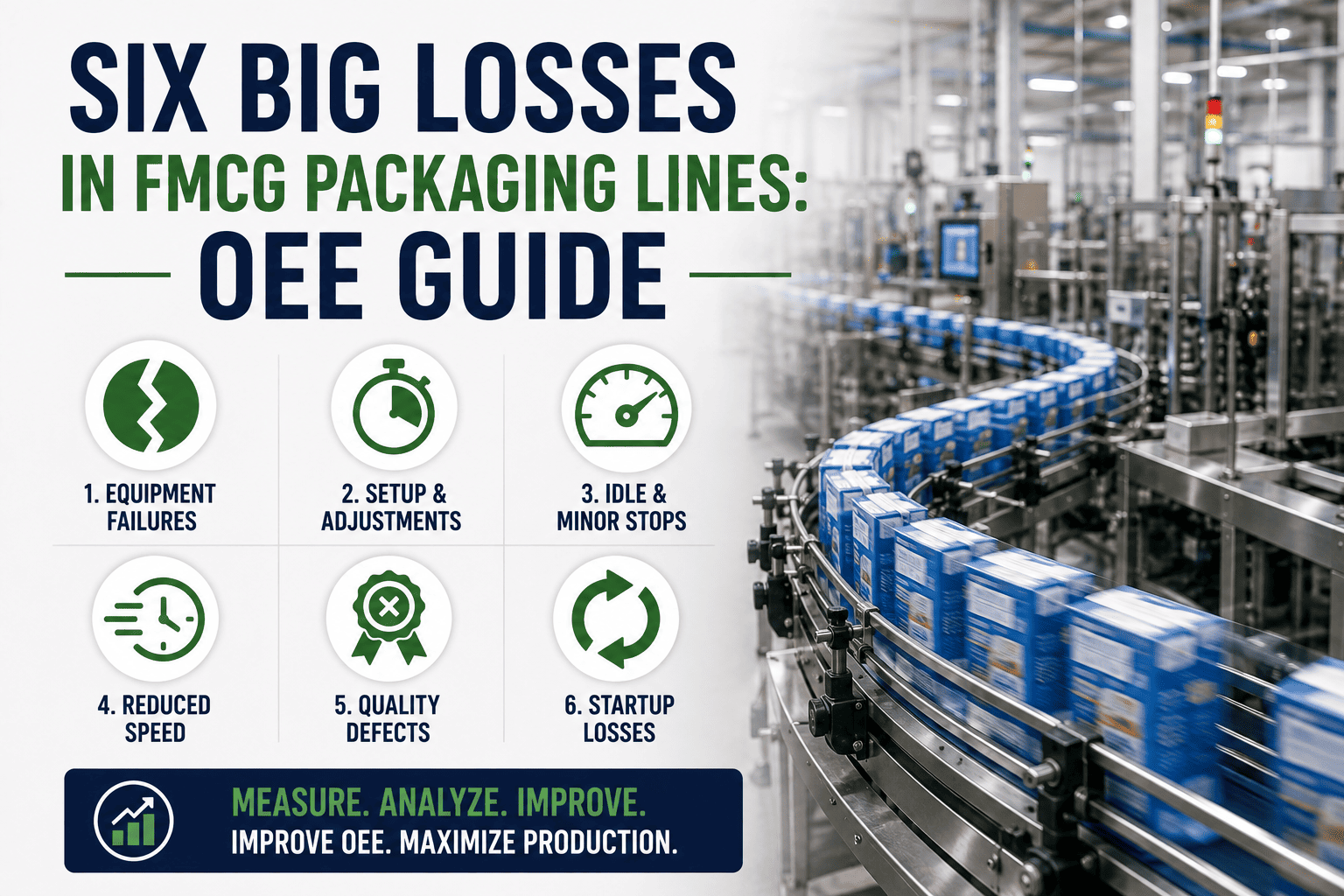
A line running below rated speed still looks fine on the floor: no red light, no jam, no operator escalation. But performance in the OEE formula is actual output against ideal cycle time, and a machine quietly degrading from its rated speed to 90% of it, day after day, adds up to weeks of lost production a year that nobody flagged as a problem.
The Detection Window That Actually Matters
1
0-24 Hours: Normal Variation
Small speed dips within a single shift are usually noise from material changes or minor adjustments, not something worth chasing yet
2
24-48 Hours: The Real Detection Window
A speed drop that persists across two full shift cycles is where genuine degradation separates itself from ordinary variation, and it's the point where trending should trigger a look
3
Beyond 48 Hours: Compounding Loss
Past this point the reduced speed often becomes the new unquestioned normal, and the longer it goes unflagged the more output has already been permanently lost
What's Usually Behind The Drift
Bearing Wear
Increased friction as bearings degrade forces operators to slow the line to reduce vibration and noise, long before a full failure occurs
Alignment Drift
Conveyors and drive components gradually shift out of alignment, and the line gets throttled down informally to compensate
Belt And Chain Stretch
Worn belts and chains lose tension over time, and running at full rated speed starts producing skips or missed cycles
Operator Habit
A speed reduction made once during a temporary issue often never gets reversed after the original cause is fixed
Catch The Drift Inside The 24-48 Hour Window
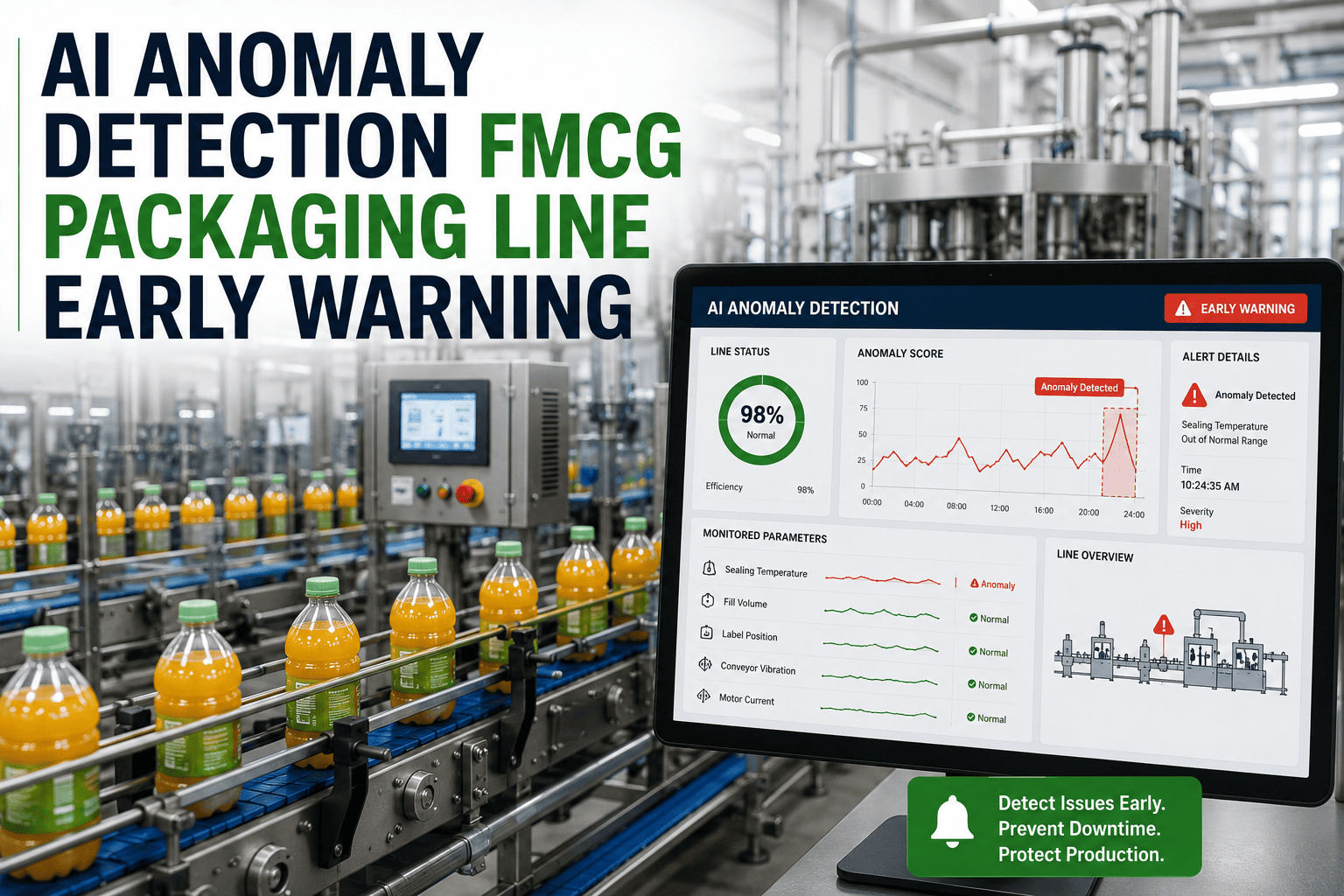
OxMaint trends actual line speed against rated speed continuously, flagging sustained drops before they quietly become the new normal. Sign up for a free trial to start trending your real speed data, or book a demo to see degradation alerts mapped to your own lines.
Building A Speed Loss Program
Measure
True Rated Speed
Confirm the manufacturer's rated speed rather than whatever the line has settled into, since that's the only honest baseline to trend against
Trend
Continuous Comparison
Log actual speed against rated speed automatically every shift so a sustained drop is visible within the 24-48 hour window, not months later
Investigate
Root-Cause The Drift
Cross-check flagged drops against maintenance history to identify whether wear, alignment, or habit is the driver before assigning a fix
Why This Depends On Automated Trending
Manual speed checks happen occasionally, if at all, and a gradual decline is nearly impossible to notice without a continuous baseline to compare against. A CMMS that logs speed automatically every shift, and links it to maintenance history like bearing replacements, is what turns an invisible drift into a specific, fixable maintenance action.
Frequently Asked Questions
Q
Why is 24-48 hours the right window to flag speed loss?
It's long enough to filter out normal shift-to-shift noise, but short enough to catch a real drift before it gets accepted as the new baseline speed everyone stops questioning.
Q
Can bearing wear really cause a measurable speed drop before it fails?
Yes. Increased friction and vibration from a degrading bearing often lead operators to run slower well before the bearing actually fails, which makes speed trending an early warning sign, not just an efficiency metric.
Q
Is speed loss usually mechanical or behavioral?
Both, and it's worth checking each time. Genuine mechanical degradation and an operator habit that outlived its original reason look identical on a speed chart, which is why root-cause investigation matters as much as detection.
Stop Letting Slow Become Normal
OxMaint trends actual speed against rated speed on every line, flagging sustained drops inside the 24-48 hour window before they quietly cost you weeks of output. Sign up for a free trial to start trending your real speed data, or book a demo to see it running on your own lines.