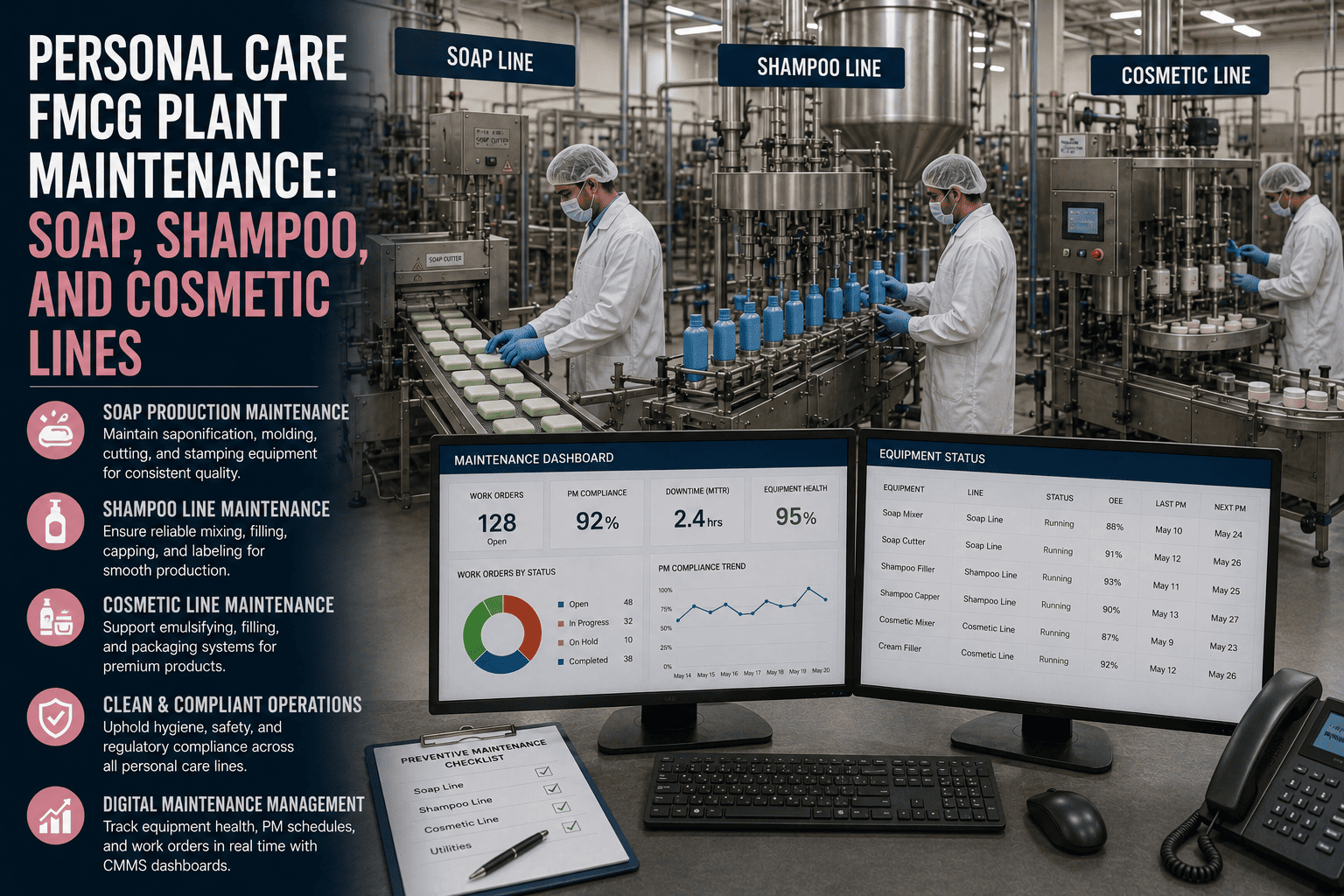
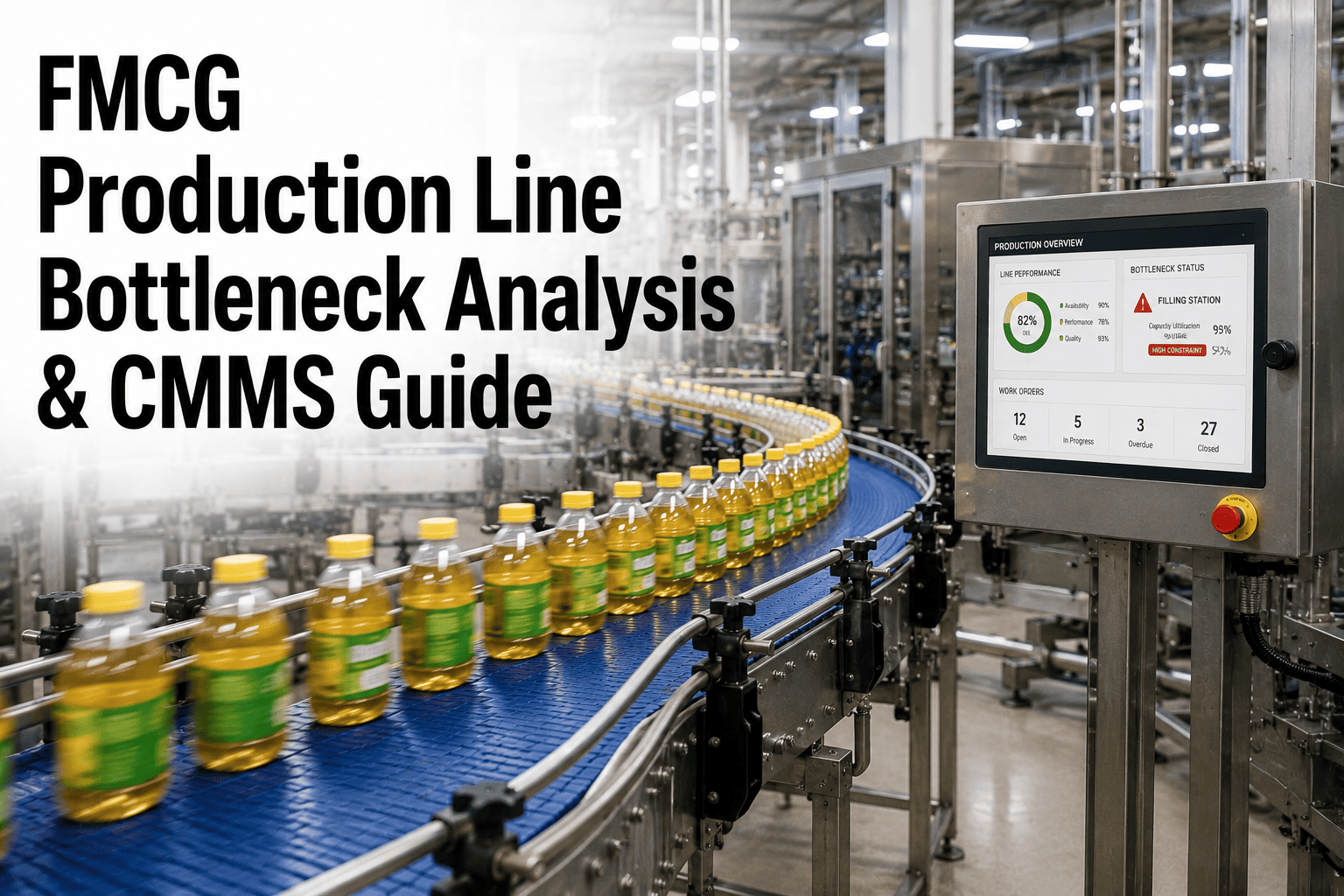
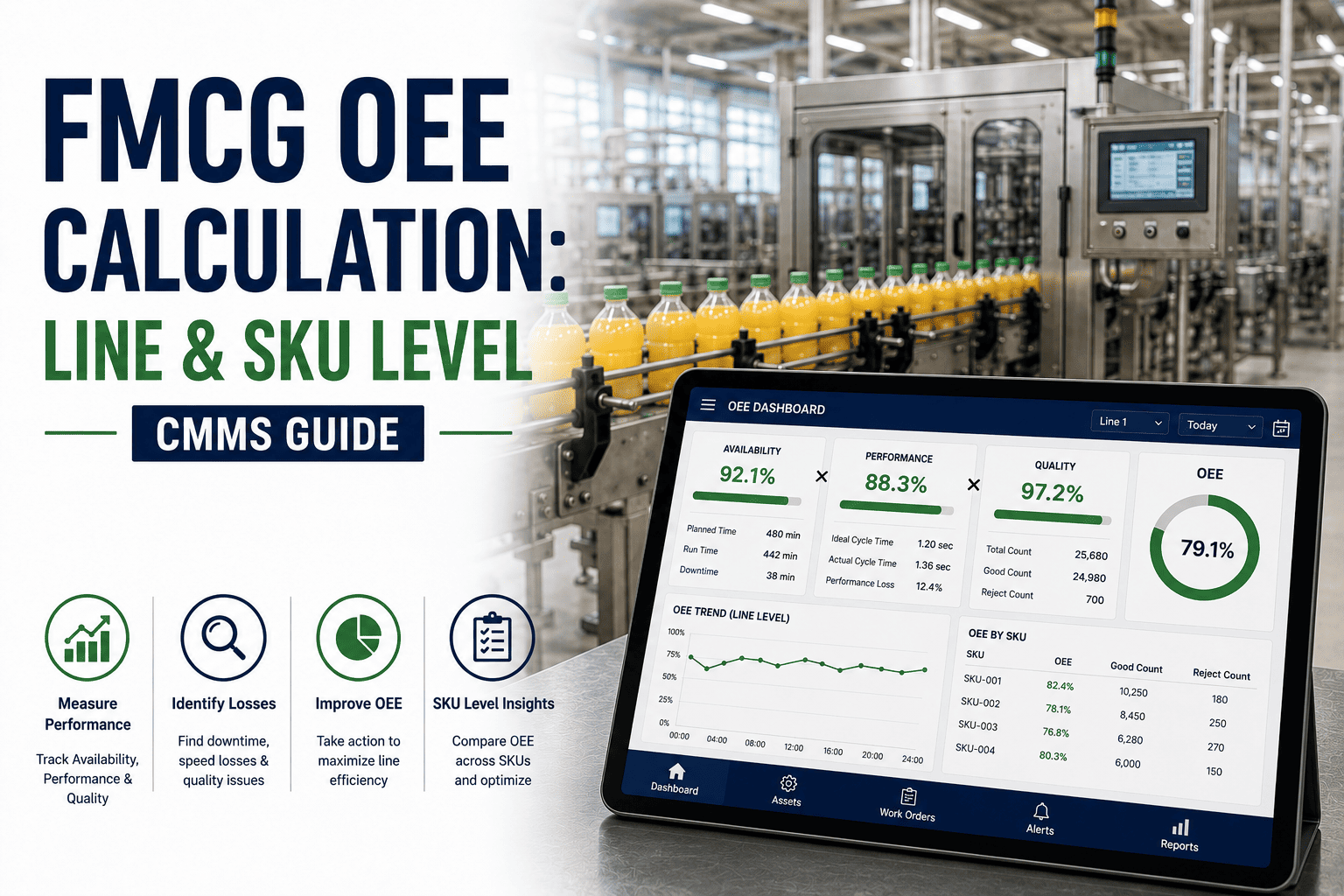
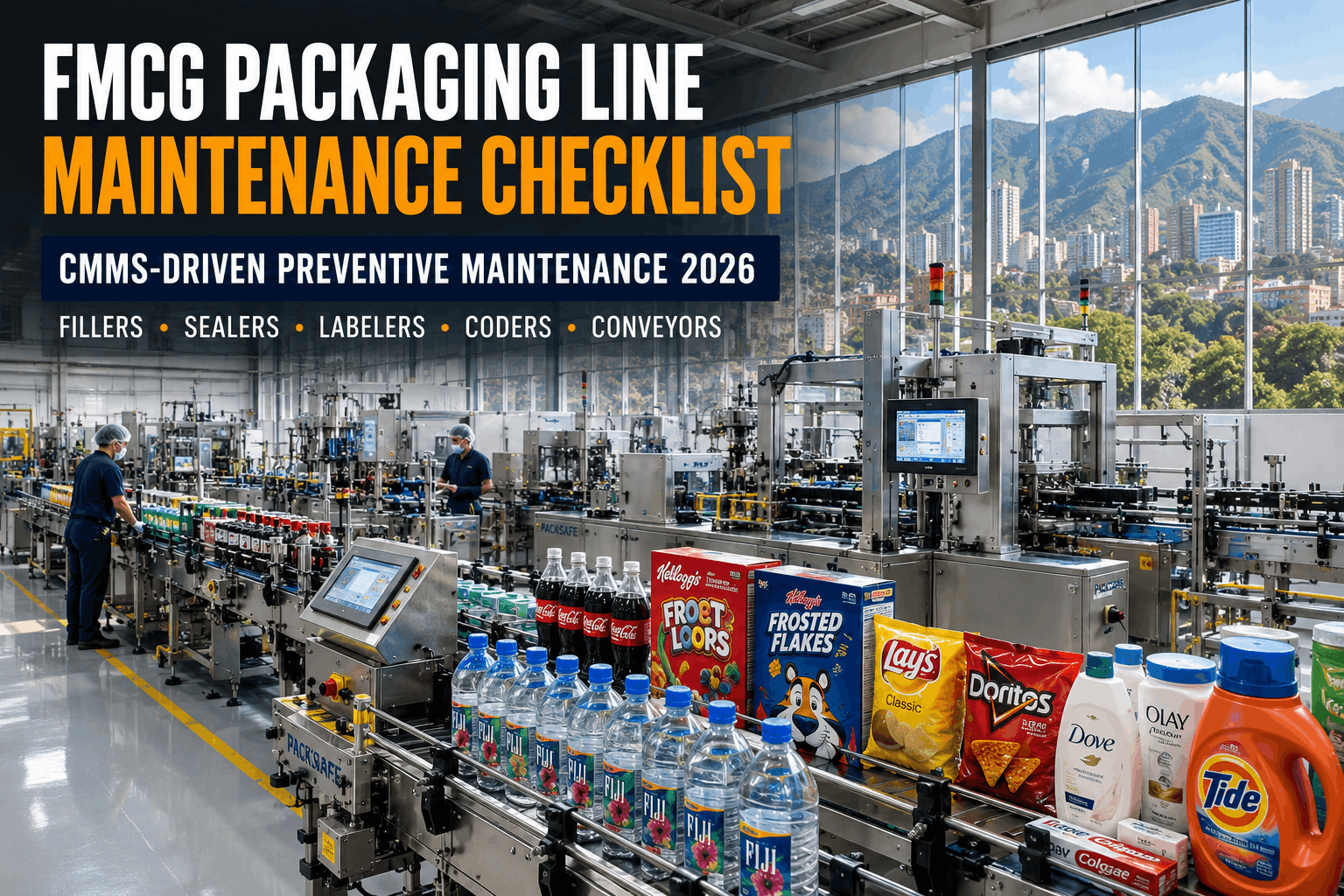
Personal care manufacturing is the only FMCG vertical that must simultaneously hold two competing operating constraints: zero tolerance for cross-contamination across product-contact surfaces, and aggressive SKU turnover that demands changeover cycles measured in single-digit hours. Soap saponification lines, shampoo blending tanks, and cosmetic filling lines each carry distinct failure modes — but they share one operating truth: every minute saved on changeover and every minute lost to unplanned downtime moves cost-per-unit directly. A worn jacketed-tank agitator seal that leaks product into the cooling jacket is invisible until the next QC batch fails micro-testing. A miscalibrated piston filler that drifts 0.4% over a shift produces giveaway in the lakhs per week. A homogenizer that loses suction pressure under load fails one batch and stops the entire production schedule. Plants moving from reactive to structured maintenance recover both yield and changeover time, typically lifting OEE 15-22 points within the first year. Oxmaint Maintenance Management ties soap, shampoo, and cosmetic lines into a unified asset hierarchy using Inspection Management for CIP validation, Preventive Maintenance for seal cadence, Statistical Quality Control for filler drift, and Safety & Compliance for ISO 22716 / GMP evidence — so you can book a demo and walk through your specific contamination-vs-changeover trade-offs.
Find your changeover savings
Personal care plants typically lose 4-8 hours per changeover that should take 2-3. Find the gap in your operation.
Personal Care Operating Reality
Numbers That Define Personal Care Manufacturing
+22%
OEE lift typical within 12 months of structured Oxmaint deployment
4-8 hr
average personal care changeover, with 50%+ reduction possible
4.8X
cost of reactive repair vs. scheduled PM on the same asset
65%
industry-average OEE vs. 85% top-quartile personal care operations
What Personal Care Plant Maintenance Means in Oxmaint
Personal care maintenance is the discipline of holding contamination-zero hygiene standards across product-contact surfaces while compressing changeover cycles across SKU lineups that now exceed 20-40 variants per line. Soap and detergent saponification, shampoo blending, lotion homogenization, and cosmetic piston-filling each carry distinct cleaning, validation, and PM requirements. Oxmaint encodes every changeover procedure, every cleaning validation, and every preventive inspection into digital evidence that the line is both safe and fast to turn around.
Plants treating contamination control and changeover speed as one integrated workflow consistently outperform on both yield and audit readiness. To map your assets into a unified hierarchy, start a free trial, or book a demo for a walkthrough.
The Personal Care Maintenance Dual Axis
Every PM event on a personal care line sits on one of two axes: contamination control (vertical) and changeover speed (horizontal). Best-in-class plants score high on both. Oxmaint is built around the four-quadrant model below.
High contamination control + High changeover speed
Best-in-class personal care plant
Digital CIP validation, locked SKU recipes, auto-scheduled PMs, audit-ready every day. This is where Oxmaint customers land within 12 months.
Low contamination control + High changeover speed
Recall-risk operation
Fast changeovers without CIP validation rigour — productive but exposed. One missed validation step can trigger an ISO 22716 finding.
High contamination control + Low changeover speed
Safe but slow operation
Clean and compliant but losing 4-8 hours per changeover to ad-hoc procedures. SKU agility suffers; margin erodes.
Low contamination control + Low changeover speed
Reactive plant
The starting position for most uninstrumented personal care plants. 60-65% OEE, 4-8 hour changeovers, paper CIP logs.
Three Verticals, Three Failure Profiles, One Oxmaint Hierarchy
Soap, shampoo, and cosmetic lines fail differently. Oxmaint configures each with its own PM cadence while rolling all three into one portfolio dashboard.
Caustic saponification tanks, high-shear blenders, agitator seal weep into cooling jackets, NaOH dosing skid corrosion.
Oxmaint Modules
Preventive Maintenance on agitator seals + Parts & Inventory linked to chemistry-rated spares + EHS Management for caustic handling.
High-shear homogenizers, surfactant blending tanks, piston filler drift, viscosity-sensitive transfer pumps, fragrance carryover risk.
Oxmaint Modules
Inspection Management for CIP validation + Statistical Quality Control for filler drift + Smart Document Management for SKU recipe locks.
Emulsifier tanks, precision piston/volumetric fillers, color carryover between shades, cap-and-label timing drift on premium packaging.
Oxmaint Modules
Safety & Compliance for ISO 22716 evidence + OEE Analytics for capper micro-stop tracking + Predictive Maintenance for emulsifier seal alerts.
A 0.4% filler drift on a shampoo line produces Rs.40-80 lakh of giveaway annually — invisible without Oxmaint SPC tracking.
Six Pain Points Across Personal Care Lines
These are the recurring failures every reactive personal care plant encounters — most of them surface late, after product is in QC hold or distribution.
CONTAMINATION
Agitator Seal Weep
A leaking mechanical seal contaminates product with cooling water — invisible until the next batch fails micro-testing and the whole campaign is on hold. Oxmaint Preventive Maintenance forces seal inspection cadence.
GIVEAWAY
Filler Drift & Giveaway
A piston filler running 0.4% over target on a 250ml shampoo SKU adds tonnes of free product per quarter — entirely invisible. Oxmaint SQC surfaces drift live each shift.
CONTAMINATION
CIP Cycle Gaps
A skipped CIP step between two fragrance SKUs produces cross-contamination — discovered when a consumer reports the wrong scent or allergic reaction. Oxmaint Inspection Management gates each step.
CHANGEOVER
Changeover Time Stretch
Without locked digital procedures, every changeover stretches 4-8 hours by operator skill — robbing shifts of productive output. Oxmaint Smart Document Management locks recipes.
OEE
Capper & Labeler Micro-Stops
A capper jamming every 12 minutes for 45 seconds consumes 6% of capacity. Across labeler and cartoner, 15-18% of available time evaporates. Oxmaint OEE Analytics captures each event.
AUDIT
GMP & ISO 22716 Gaps
When ISO 22716, FDA, or GMP audits ask for cleaning validation across 12 months, paper logs produce hours of scramble and often gap findings. Oxmaint Safety & Compliance exports in minutes.
These pain points compound across SKU turnover and stack into the OEE and yield gap between top-quartile personal care plants and the rest — which is why structured plants start a free trial to baseline contamination events first, or book a demo for the CIP validation module.
How Oxmaint Solves the Personal Care Problem
Six Oxmaint modules combine to convert reactive personal care into a planned, audit-ready operation. Every module maps to a known failure mode.
A
Every mechanical seal carries a usage-based PM trigger and inspection record — seal weep is caught before it becomes a contamination event.
B
Piston filler weight checks logged per shift, drift trended on SPC charts, recalibration PMs trigger automatically before giveaway compounds.
C
Every CIP cycle is a digital procedure with required temperature, time, and concentration checks. No step skipped, every step auditable.
D
SKU-specific changeover procedures with recorded setup parameters cut changeover time 40-60% and remove operator-dependent variability.
E
Every PM, calibration, cleaning cycle, and sign-off timestamped and exportable as an audit pack — pre-audit prep drops from days to minutes.
F
Portfolio dashboards roll up OEE, PM compliance, CIP completion, and cost variance across every personal care plant in the organization.
A 50% changeover reduction on a 20-SKU shampoo line returns 15-25 hours of weekly production — worth Rs.60 lakh-plus per year.
Reactive Personal Care Plant vs. Planned Plant on Oxmaint
The operating gap is process discipline captured in one system every shift uses identically.
| Operational Dimension |
Reactive Plant |
Planned Plant on Oxmaint |
| OEE |
60-65%, no shift visibility |
78-85%, real-time dashboards |
| Changeover Time |
4-8 hours, operator-dependent |
1.5-3 hours, SOP-locked |
| Filler Drift |
Discovered in monthly variance |
Logged per shift, trended live in SQC |
| Contamination Events |
1-3 per quarter typical |
Near-zero with CIP digital workflow |
| CIP Validation Records |
Paper logs, gap-prone |
Digital sign-off, exportable evidence |
| Audit Readiness |
2-3 days of pre-audit prep |
Audit pack exportable in minutes |
| Spare Parts Stock-Outs |
Discovered at need |
Auto-reorder before minimum |
| Capper Micro-Stops |
Unlogged, invisible |
Auto-captured, root-caused |
ROI & Outcomes from Oxmaint on Personal Care Lines
These are the measurable outcomes plants reach within 12 months of unified Oxmaint deployment.
+22%
OEE lift
Within 12 months on full personal care line Oxmaint deployment
-52%
changeover time
From 4-8 hours to 2-3 hours with SOP-locked procedures
-45%
unplanned downtime
Across blending, filling, and packaging combined
-0.4%
filler giveaway
Recovered through Oxmaint SQC discipline per shift
3.6X
CIP compliance lift
Paper-validation plants vs. digital workflow plants
75 days
typical payback
On a single personal care line Oxmaint deployment
These numbers are what personal care plant managers bring to their VP Operations to justify scaling — which is why so many teams start a free trial on one line first, or book a demo for the multi-site rollup.
Personal Care Maintenance FAQ
How often does Oxmaint calibrate piston fillers
Best-practice plants verify filler weights every shift change inside Oxmaint Statistical Quality Control, and run a full calibration PM every 30-60 days. Drift is trended on SPC charts and alerts trigger before giveaway compounds.
Can Oxmaint enforce CIP validation steps
Yes. CIP cycles are configured in Oxmaint Inspection Management as digital procedures with required time, temperature, and concentration checkpoints. No step can be marked complete without the required measurement entered.
Does Oxmaint support ISO 22716 GMP requirements
Yes. Every PM, calibration, cleaning cycle, and operator sign-off is timestamped and traceable in Oxmaint Safety & Compliance, producing the audit evidence personal care plants need for ISO 22716, FDA, and customer audits.
How long does deployment take for a personal care plant
A single personal care line is typically live in 7-10 working days with Oxmaint pre-built FMCG asset templates. First CIP digital validation is captured inside week one, with full team adoption inside 30 days.
Decision Point
Stop Losing Hours to Changeover and Lakhs to Giveaway
Turn every blender, filler, capper, and labeler into a predictable, audit-ready system with Oxmaint. Used by operations teams managing 10,000+ assets. Live in days, not months.
CIP validation tracking
Filler drift alerts
ISO 22716 audit-ready
No heavy implementation. Works across multi-site personal care portfolios. Measurable results in 30 days.