A national FMCG brand shipping 340,000 e-commerce orders per week from three fulfillment centers discovered that 4.2% of outbound shipments contained at least one picking error — wrong SKU, wrong variant, wrong quantity, or missing promotional insert. At an average order value of $38 and a return processing cost of $14.50 per incident, mispick-driven returns were costing the operation $9.8 million annually before accounting for customer churn and negative reviews. Manual quality audits caught only 31% of errors before dispatch. After deploying robotic sorting cells with integrated machine vision on the six highest-error product families — each cell verifying SKU barcode, variant label, unit count, and package integrity at 1,200 units per hour — outbound order accuracy rose from 95.8% to 99.94%. Return rates on those SKUs dropped 87%. The maintenance variable that determined whether accuracy held at 99.94% or decayed back toward 98% within six months was vision system calibration, conveyor belt tracking, and gripper wear — all tracked through automated preventive maintenance work orders in Oxmaint. Schedule a demo to see how Oxmaint maintains robotic sorting accuracy across high-volume e-commerce fulfillment operations.
Fulfillment Accuracy 2026
Robotic Sorting & Vision for E-Commerce FMCG Order Accuracy
E-commerce FMCG fulfillment demands sub-0.1% error rates across SKU counts that have tripled in five years. This article equips operations directors and fulfillment engineers with the sortation architectures, vision system specifications, maintenance requirements, and CMMS integration strategies needed to achieve and sustain 99.9%+ order accuracy — without sacrificing throughput.
99.94%Order Accuracy with Robotic Vision
87%Return Rate Reduction on Target SKUs
1,200/hrPer-Cell Verification Throughput
$9.8MAnnual Mispick Cost Eliminated
The Sorting Accuracy Maturity Spectrum
E-commerce FMCG fulfillment operations fall along a maturity curve from fully manual pick-and-pack with spot-check QC to fully robotic sortation with inline vision verification on every unit. Most operations sit in the middle — partially automated conveyance with manual sorting decisions and sampling-based quality checks that miss the majority of errors before they reach the customer's doorstep.
Manual Sort (Spot-Check QC)
93–96%
Semi-Auto (Scan & Confirm)
97–99%
Robotic Vision (100% Inline)
99.9%+
Core Robotic Sorting System Components
Sortation Cell Subsystem MapMaintenance Critical
Vision
Machine Vision Cameras
2D barcode readers + 3D depth cameras verify SKU identity, variant label, unit count, fill level, and package seal integrity at line speed. Calibration drift is the #1 cause of accuracy decay.
Accuracy Critical
Gripper
End-of-Arm Tooling
Vacuum cups, mechanical fingers, or adaptive grippers handle product ranging from 50g sachets to 2kg bottles. Wear patterns change grip reliability and placement precision within 200K–500K cycles.
Damage Risk
Conveyor
Sortation Conveyors
Belt, roller, and divert conveyors route products to correct order lanes. Belt tracking drift, roller bearing wear, and divert actuator timing directly affect sort destination accuracy.
Throughput Risk
Robot
Articulated or Delta Arms
6-axis articulated arms for heavy/varied items, delta robots for high-speed light items. Joint backlash, servo drift, and reducer wear affect pick placement accuracy over millions of cycles.
Precision Risk
Controls
PLC & Software Stack
PLC logic, WMS integration middleware, vision AI classification models, and robot motion planning. Software version mismatches between subsystems cause silent sorting logic errors.
Logic Risk
Safety
Guarding & Personnel Detection
Light curtains, area scanners, and interlocked access gates protect operators during jams, rework, and maintenance access. Safety system faults halt the entire cell until cleared.
Compliance Risk
Order Error Severity Scale
Not all fulfillment errors carry the same operational or brand impact. A missing promotional insert is an annoyance; shipping the wrong product to an allergen-sensitive customer is a safety event and potential lawsuit. This severity scale helps fulfillment teams prioritize which error categories demand robotic vision investment first.
5
Safety / Allergen
Wrong product shipped to customer with documented allergen sensitivity. Regulatory exposure, liability, potential FDA involvement.
4
Wrong Product
Entirely incorrect SKU shipped. Customer receives product they did not order. Full return, reshipping, and customer recovery cost.
3
Quantity Error
Correct SKU but wrong count — over-ship loses margin, under-ship loses trust. Partial refunds, complaint calls, and reshipping costs.
2
Variant Mismatch
Correct product family, wrong size/flavor/scent. High return rate. Often caught only by the customer — not by barcode-only QC systems.
1
Cosmetic / Insert
Missing promotional insert, damaged outer packaging, or incorrect gift wrap. Low return risk but impacts brand perception and repeat purchase.
Track Every Sort, Every Error, Every Root Cause
Oxmaint connects your robotic sorting cells to structured maintenance workflows — so vision calibration drift, gripper wear, and conveyor misalignment generate work orders automatically instead of silently eroding accuracy until customer complaints spike.
Robotic Sorting Technologies for FMCG Fulfillment
Each FMCG product profile demands a specific robotic sorting approach. High-speed single-SKU lines use delta robots. Mixed-case multi-SKU orders require articulated arms with adaptive grippers. Large-format items need gantry systems. Selecting the wrong architecture for your product mix creates maintenance burden and accuracy problems no amount of software tuning can fix. Oxmaint helps you maintain any sorting architecture at peak accuracy — Book a Demo.
Speed
Delta Robot Pick-and-Place
Up to 120 picks/min
Parallel-link robots for high-speed single-item picking from conveyor to order container. Excel on uniform lightweight items — pouches, sachets, blister packs, and small cartons under 500g.
Lightweight SKUsHigh CadenceVision-GuidedLow Payload
Versatile
6-Axis Articulated Arms
30-60 picks/min
Full-reach articulated robots handling varied product sizes and weights with adaptive grippers. Best for mixed-SKU order assembly where product geometry changes every pick cycle.
Mixed SKUsAdaptive GripHeavy ItemsFlexible Path
Divert
Vision-Guided Sortation Conveyors
2,000-4,000 items/hr
Camera-equipped conveyor systems using vision-triggered diverts to route products to correct order lanes. No robotic arm required — the conveyor IS the sorting mechanism.
High VolumeBarcode + VisionLane DivertCompact Footprint
Mobile
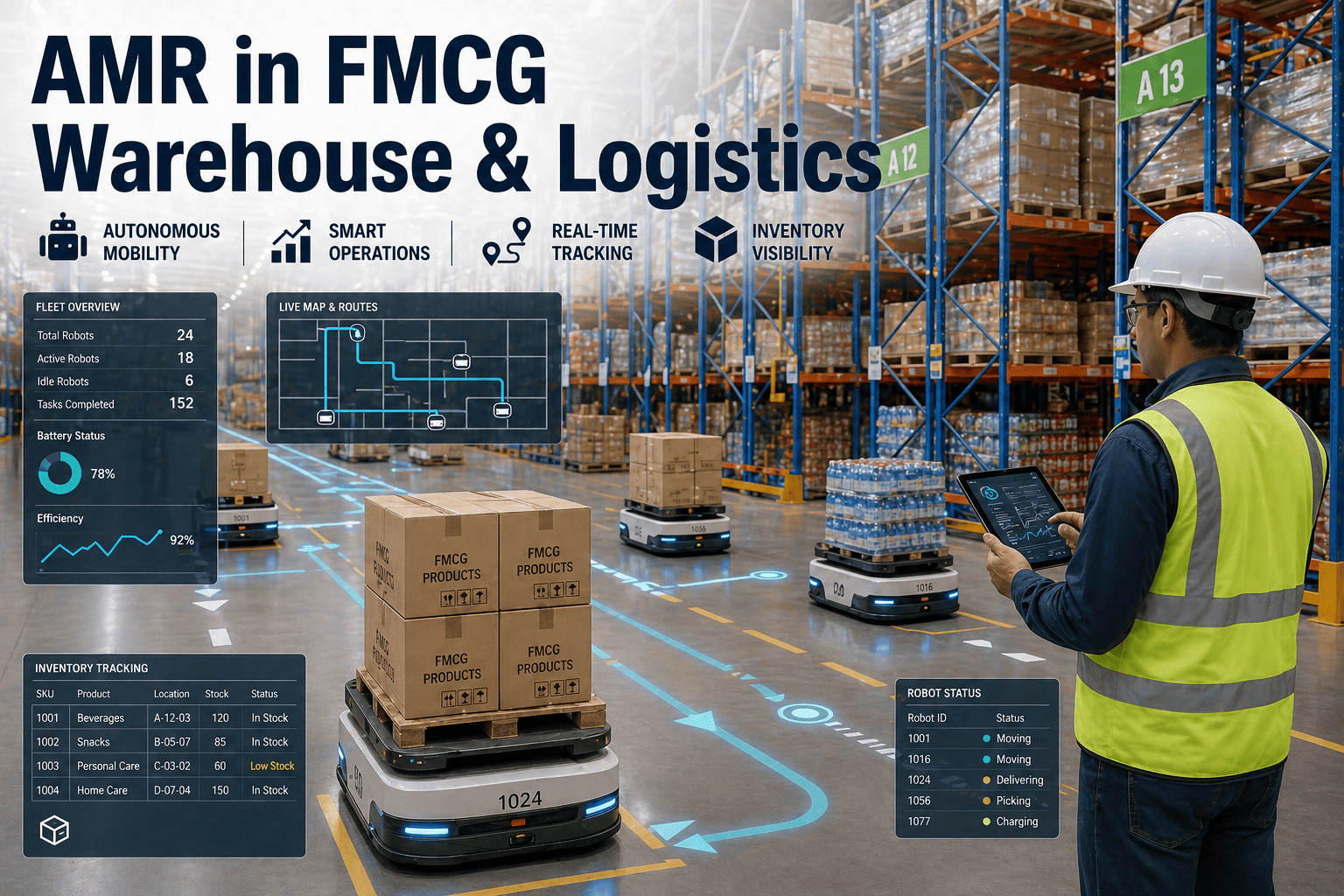
AMR-Based Goods-to-Robot
Variable by fleet size
Autonomous mobile robots deliver inventory pods to stationary robotic picking arms. Decouples storage density from picking speed. Scales by adding AMRs without fixed infrastructure changes.
ScalableNo Fixed ConveyPod DeliveryFleet Managed
Kitting
Robotic Kitting & Assembly
15-30 kits/min
Multi-arm cells that assemble variety packs, subscription boxes, and promotional bundles from component SKUs. Vision confirms every item before the kit is sealed and labeled.
Bundle BuildMulti-ArmPack VerifyPromo Kits
QC
Inline Vision QC Stations
1,200-2,400 checks/hr
Standalone vision verification stations positioned after manual or semi-automated picking. Cameras verify SKU, variant, count, and package integrity — rejecting errors before they reach packing.
Post-Pick AuditSKU + CountReject LaneRetrofit Ready
Error Sources by Fulfillment Stage
Order accuracy failures originate at different stages of the fulfillment process — and each stage presents different opportunities for robotic vision intervention. Understanding where errors enter the process determines where sorting and verification technology delivers the highest ROI.
Inbound & Putaway
Mislabeled Inbound Cases
Wrong Bin Location Assignment
Variant Confusion at Receiving
Damaged Product Stowed
Lot/Expiry Data Entry Errors
Picking & Sorting
Adjacent Bin Mispick
Quantity Count Error
Variant Look-Alike Confusion
Robot Gripper Drop / Misplace
Conveyor Missort / Lane Error
Packing & Dispatch
Wrong Shipping Label Applied
Missing Items After Consolidation
Damaged During Pack-Out
Insert / Promo Material Omitted
Cross-Order Contamination
The Escalating Cost of Fulfillment Errors
For every mispick that generates a customer complaint, there are dozens of smaller accuracy failures eroding margin, inflating return processing costs, and degrading brand perception on review platforms. The cost pyramid shows why proactive maintenance of sorting and vision systems delivers 8-15x ROI compared to absorbing mispick costs downstream. Oxmaint prevents accuracy decay with automated vision system PMs — Sign Up Free.
$0.12/order
Preventive Maintenance
Vision calibration, gripper replacement, conveyor alignment, software updates, and sensor cleaning. Planned maintenance keeps accuracy above 99.9%.
Frequency: Scheduled
$14.50/error
Return & Reship
Customer contacts support. Return label generated. Product shipped back, inspected, restocked or destroyed. Correct order reshipped. Agent time, shipping, and product loss.
Frequency: Per Mispick
$9.8M/yr
Systemic Accuracy Failure
Compounding mispick costs across 340K orders/week at 4.2% error rate. Customer churn, negative reviews, retailer chargebacks, and brand erosion.
Frequency: Ongoing (If Unaddressed)
Stop Absorbing Mispick Costs. Start Preventing Them.
Oxmaint tracks every robotic sorting cell, vision station, and conveyor subsystem with operating-hour preventive maintenance — so calibration drift, gripper wear, and divert timing errors are caught and corrected before they become customer complaints.
CMMS Features for Sorting Accuracy Management
Maintaining 99.9%+ order accuracy is not a one-time achievement — it is a continuous discipline requiring structured maintenance of every optical, mechanical, and software subsystem in the sorting cell. A purpose-built CMMS links accuracy metrics to equipment condition, connecting the quality team's error data with the maintenance team's work orders so root causes are identified and eliminated instead of recurring. Oxmaint connects accuracy data to maintenance action — Book a Demo.
A
Order Accuracy Dashboard
Real-time accuracy rates by sorting cell, shift, product family, and error type. When accuracy dips below threshold, the dashboard triggers an investigation work order linking the error pattern to the specific equipment that needs attention.
B
Vision Calibration Scheduling
Automated PM work orders for camera calibration, lens cleaning, lighting adjustment, and AI model validation — triggered by operating hours, throughput count, or accuracy deviation. Every calibration event is documented with before-and-after verification images.
C
Rework Ticket Tracking
Every order flagged for rework — by vision system rejection, manual QC catch, or customer return — generates a rework ticket linked to the originating sorting cell, time window, and operator assignment. Rework trends by cell identify equipment degradation patterns.
D
Gripper & EOAT Lifecycle Tracking
Track vacuum cup wear, finger pad compression, and suction generator performance against pick cycle counts. Replace grippers based on measured degradation, not calendar dates — ensuring grip reliability stays within tolerance for every product format handled.
E
Throughput Metrics & OEE
Track picks per hour, sorts per hour, divert accuracy, and cell availability against targets. Correlate throughput declines with specific subsystem conditions — a 5% throughput drop that coincides with rising reject rates points to a maintenance root cause, not a scheduling problem.
F
Conveyor & Divert PM Automation
Belt tracking, roller bearing, and divert actuator maintenance scheduled by operating hours and cycle counts. Misaligned belts and worn divert mechanisms are the silent accuracy killers that vision systems cannot compensate for — the product arrives at the wrong lane before the camera ever sees it.
Frequently Asked Questions
Q. What order accuracy rate should we target with robotic vision sorting?
The benchmark for robotic vision-verified FMCG e-commerce fulfillment is 99.9% or higher — meaning fewer than 1 error per 1,000 orders shipped. Top-performing operations achieve 99.94-99.97% with properly maintained inline vision systems. Without robotic vision, manual fulfillment typically ranges from 93-96% accuracy, and barcode-scan-confirmed semi-automated operations reach 97-99%. The gap between 99% and 99.9% may seem small, but at 340,000 orders per week it represents the difference between 3,400 mispicks and 340 — a 10x reduction in customer complaints, returns, and reshipping costs.
Q. Why does vision system calibration drift affect order accuracy?
Machine vision cameras require precise calibration of focal distance, lighting intensity, exposure timing, and classification model thresholds to reliably distinguish between similar-looking SKU variants. Environmental factors — vibration from adjacent conveyor motors, temperature changes across shifts, dust accumulation on lenses, and LED aging — cause gradual drift that degrades recognition confidence scores. When confidence drops below threshold, the system either rejects good product (reducing throughput) or passes bad product (reducing accuracy). Scheduled calibration every 500-1,000 operating hours, tracked through CMMS work orders, prevents this decay cycle.
Q. Can robotic sorting handle FMCG variant look-alikes — same brand, different scent or flavor?
Yes — this is where machine vision delivers the most value over barcode-only systems. Barcode verification confirms the correct GTIN, but two variants of the same product often share identical barcodes with only a small label color difference or text change distinguishing them. Machine vision systems trained on variant-specific visual features — label color zones, text regions, cap colors, package graphics — catch mismatches that barcode scanners miss entirely. Maintaining this capability requires periodic AI model retraining when packaging designs change and camera calibration to ensure color accuracy under production lighting conditions.
Q. What maintenance does a robotic sorting cell require to sustain 99.9% accuracy?
Five subsystems require structured preventive maintenance. Vision systems need camera calibration and lens cleaning every 500-1,000 operating hours. Grippers need vacuum cup or finger pad replacement every 200K-500K pick cycles depending on product abrasiveness. Conveyors need belt tracking adjustment and roller bearing inspection every 2,000-4,000 operating hours. Robot arms need joint backlash measurement and servo calibration annually. Safety systems need scanner cleaning weekly and function verification monthly. Oxmaint tracks all five subsystems independently with cycle-count and operating-hour triggers rather than calendar-based schedules that miss heavily utilized cells.
Q. What is the typical ROI timeline for robotic sorting in e-commerce FMCG fulfillment?
Most operations see payback in 8-14 months based on three cost categories: return processing elimination (the largest — typically $14-$22 per mispick in shipping, handling, restocking, and agent time), throughput increase (robotic cells maintain consistent speed without fatigue-driven decline across shifts), and labor redeployment from manual QC stations to higher-value tasks. A facility shipping 50,000 orders per week with a 3% error rate spends approximately $1.1M annually on mispick-related costs. Reducing that error rate to 0.06% saves over $1M per year against a typical robotic sorting cell investment of $400K-$800K per line.