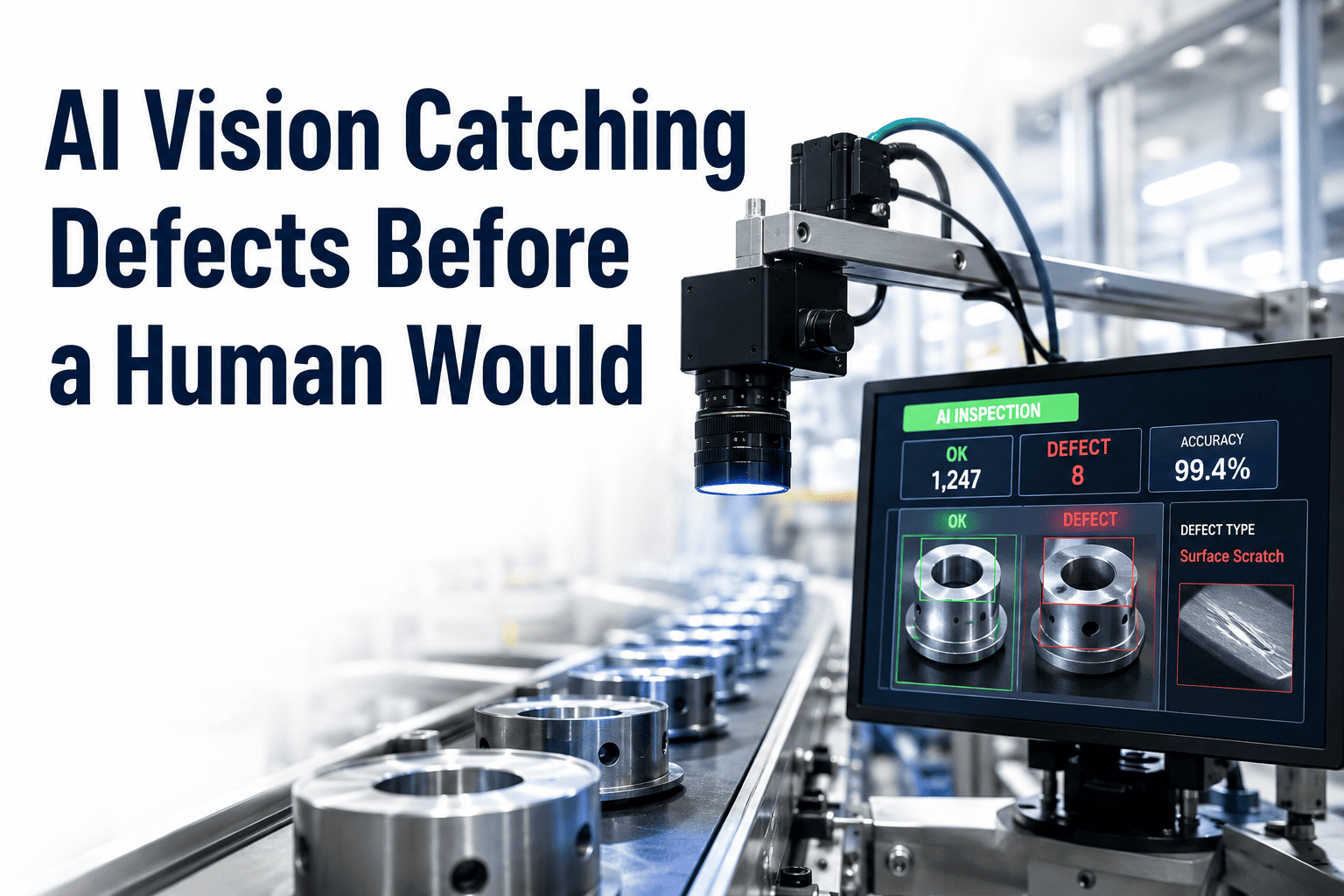
A commercial bakery in Texas was rejecting 12% of finished products at manual inspection stations—missing misshapen loaves, detecting color inconsistencies too late, and struggling to keep pace with 800 units per minute on their high-speed lines. Human inspectors, no matter how trained, couldn't maintain accuracy across 10-hour shifts. After deploying AI-powered visual inspection, defect detection improved to 99.2% accuracy while false rejection rates dropped by 67%. The system paid for itself in 4 months through reduced waste and fewer customer complaints.
Bakery operations face unique quality challenges: products with natural variation, high-speed lines, and defects that develop during baking, cooling, or packaging. Traditional inspection methods can't scale with modern production demands. AI vision systems transform quality control from a bottleneck into a competitive advantage—catching defects in milliseconds, learning from every inspection, and generating the documentation that food safety audits require. Book a demo to see how Oxmaint's AI Visual Inspection Integration works with your existing lines.
AI & Automation / Quality Control
AI Vision Systems for Bakery Product Inspection
Automated defect detection and quality assurance for high-speed bakery production lines.
99.2%Detection Accuracy
800+Units/Minute Capacity
67%Fewer False Rejects
4 MoAverage Payback
What AI Vision Detects in Bakery Operations
Modern AI vision systems inspect multiple quality parameters simultaneously, catching defects that human inspectors miss—especially at production speeds exceeding 500 units per minute.
SHP
Shape & Dimension
Loaf height and width variance
Bun symmetry and roundness
Crust spread and rise uniformity
Package seal alignment
CLR
Color & Appearance
Crust browning consistency
Burn spots and pale areas
Topping distribution
Glaze coverage uniformity
SRF
Surface Defects
Cracks and tears
Collapsed sections
Foreign material detection
Topping missing or displaced
PKG
Packaging Integrity
Seal completeness
Label placement accuracy
Date code readability
Package damage or contamination
Ready to automate quality inspection? Oxmaint integrates AI vision data with your maintenance and quality systems.
How AI Vision Inspection Works
AI vision systems combine high-speed cameras, specialized lighting, and machine learning algorithms to inspect every product on your line. Sign up for Oxmaint to connect inspection data with your maintenance workflows.
1
Image Capture
High-speed cameras capture multiple angles as products pass inspection points at full line speed.
2
AI Analysis
Machine learning models compare each image against trained quality standards in milliseconds.
3
Decision & Action
Pass/fail decisions trigger reject mechanisms while data feeds quality dashboards in real-time.
4
Continuous Learning
System improves accuracy over time by learning from operator feedback and new defect patterns.
Manual vs. AI-Powered Inspection
The limitations of human inspection become critical constraints at modern bakery production speeds.
Speed Capacity
60-120 units/min
800+ units/min
Detection Accuracy
70-85% (degrades over shift)
99%+ consistent
Documentation
Manual logs, sampling
100% automatic with images
Consistency
Varies by inspector/fatigue
Identical every inspection
Defect Traceability
Limited batch-level
Individual product tracking
Key Benefits for Bakery Operations
Waste Reduction
Early defect detection prevents further processing of reject-bound products, saving ingredients and energy.
Consistent Quality
No shift changes, fatigue, or subjective judgment—every product gets identical inspection criteria.
Audit Documentation
Every inspection generates timestamped records with images—instant audit readiness for SQF, BRC, FSSC.
Process Feedback
Defect trends alert operators to upstream issues—oven calibration, mixer problems, ingredient variations.
Connect Vision Data to Maintenance
Oxmaint's AI Visual Inspection Integration links quality alerts directly to maintenance workflows—when vision systems detect equipment-related defects, work orders generate automatically.
Implementation Considerations
Camera Placement
Optimal positions depend on product type, line speed, and defect types. Most bakery lines need 2-4 camera positions for complete coverage.
Lighting Requirements
Consistent, controlled lighting is critical. LED arrays eliminate ambient light variation and highlight surface defects invisible under standard lighting.
Training Period
AI models require 2-4 weeks of supervised learning with your specific products. Accuracy improves continuously as the system processes more examples.
Frequently Asked Questions
How long does it take to install an AI vision system?
Hardware installation typically takes 2-3 days per inspection point. The AI training period adds 2-4 weeks of supervised operation before the system runs autonomously.
Book a consultation to get a timeline for your specific lines.
Can AI vision handle natural product variation in baked goods?
Yes—modern systems learn acceptable variation ranges during training. They distinguish between normal batch-to-batch differences and actual defects, reducing false rejects while catching real quality issues.
What happens when the system detects a defect?
Reject mechanisms (air jets, diverters, or robotic arms) remove defective products automatically. Simultaneously, the system logs the defect with images, updates dashboards, and can trigger alerts if defect rates exceed thresholds.
How does vision data connect to maintenance systems?
Oxmaint's integration correlates defect patterns with equipment performance. When vision systems detect issues linked to equipment problems (e.g., oven hot spots causing burns), maintenance work orders generate automatically.
Try Oxmaint free by Signing Up to see this integration.
Automate Quality Control in Your Bakery
Join bakeries using AI vision and Oxmaint to achieve 99%+ inspection accuracy while reducing waste and ensuring audit readiness.