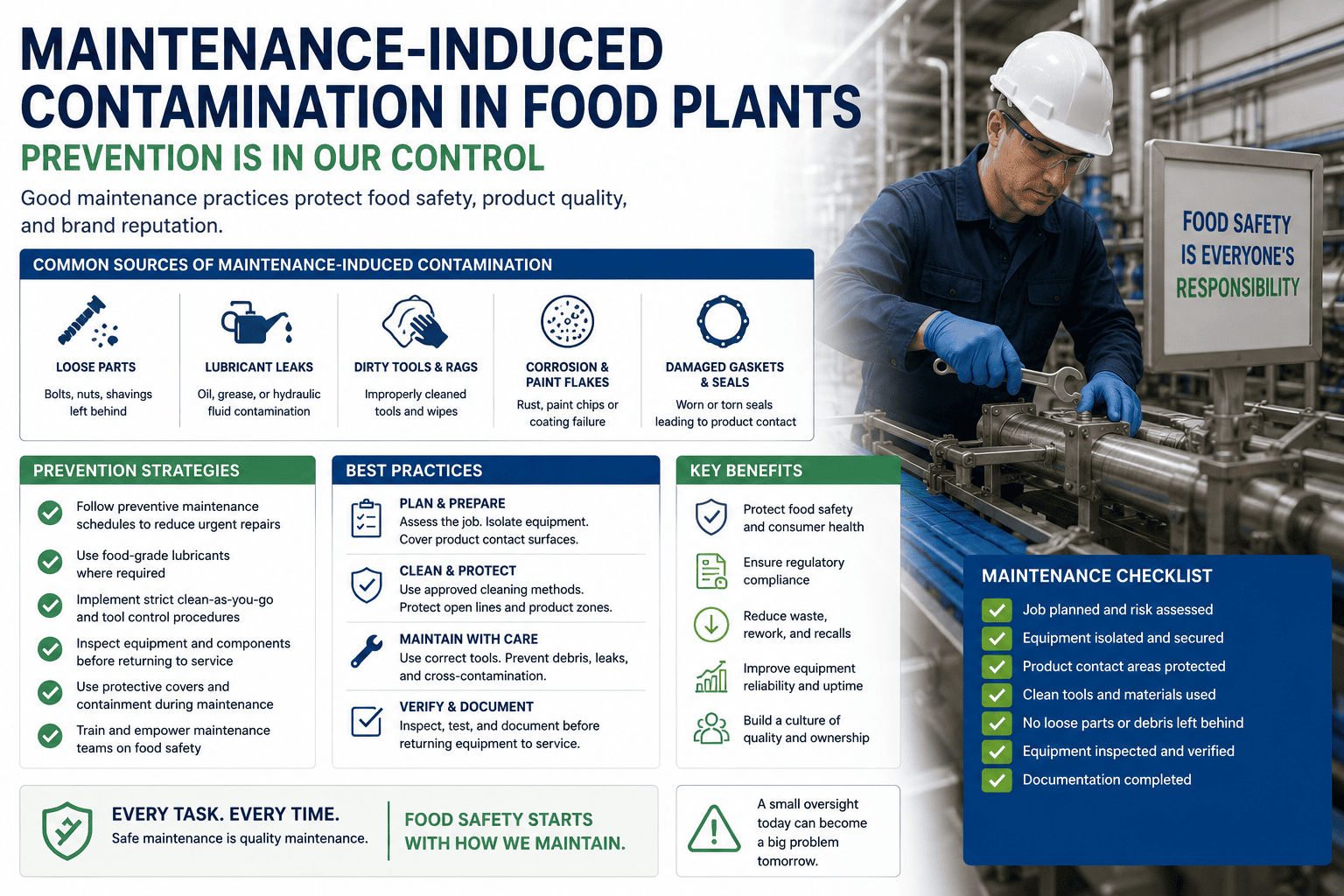
Allergen Changeover Management: Prevent Cross-Contamination in Food Plants
By Josh Turley on April 8, 2026
When a major confectionery manufacturer in Illinois recalled 28,000 units of a "peanut-free" chocolate bar after a consumer with severe peanut allergy was hospitalized, the investigation revealed a pattern the quality team had missed: the contamination occurred during a changeover from a peanut-containing line to an allergen-free line. The cleaning protocol existed on paper, but four critical steps were skipped under production pressure. The recall cost $1.7M in direct expenses — product destruction, notification, logistics — plus immeasurable brand damage in the allergen-conscious consumer segment. The root cause was not inadequate chemistry or poor equipment design. It was the absence of a validated, digitally enforced changeover protocol that prevented human error from becoming a public health event. Ready to eliminate changeover risk? Start your free trial and see how digital protocols prevent cross-contamination.
Food SafetyAllergen ManagementCMMS Protocols
Allergen Changeover Management: Prevent Cross-Contamination in Food Plants
Learn how CMMS-driven allergen changeover protocols ensure safe production transitions with validated cleaning, digital checklists, and compliance-ready documentation for food manufacturing facilities.
$2.1MAverage cost of a single allergen-related food recall in the US market
62%Of allergen cross-contamination events occur during production changeovers
18 minAverage time saved per changeover with digital CMMS validation protocols
100%Changeover protocol completion rate achievable with enforced digital checklists
Definition
What Is Allergen Changeover Management?
Allergen changeover management is the systematic process of transitioning food production equipment from processing one allergen profile to another while eliminating cross-contamination risk through validated cleaning, equipment inspection, and environmental monitoring. In food manufacturing, changeovers between allergen-containing products (like peanut butter bars) and allergen-free products (like fruit snacks) represent the highest-risk moment for unintended allergen introduction. A single missed cleaning step, incomplete rinse cycle, or overlooked equipment crevice can contaminate thousands of units with trace allergens — triggering recalls, regulatory action, and severe health consequences for allergic consumers. If you're looking to implement these protocols in your facility, start a free trial of our CMMS platform or book a demo to see it in action.
Effective allergen changeover management operates on three interconnected pillars: mechanical cleaning that removes physical allergen residue, chemical validation that confirms residue levels below detection thresholds, and procedural enforcement that ensures every step is completed in the correct sequence every single time. The stakes are unambiguous — a bakery producing both nut-containing and nut-free products that misses a single bearing housing during changeover cleaning can introduce detectable peanut protein into 40,000 "allergen-free" packages before the contamination is discovered. Digital CMMS systems transform changeover from a paper checklist prone to human error into an enforced protocol where equipment cannot return to production until every validation step is digitally verified and documented.
Framework
The Four-Stage Allergen Changeover Protocol
Every validated allergen changeover follows a structured four-stage sequence designed to progressively remove, verify, and document allergen elimination. These stages are not negotiable or reorderable — each builds on the completion of the previous, and skipping or reversing any stage introduces contamination risk that no amount of downstream testing can fully mitigate.
01
Pre-Cleaning Equipment Shutdown
Complete line stop with lockout/tagout verification. All product material purged from hoppers, conveyors, and mixing chambers. Equipment disassembly of food-contact components down to the level specified in the changeover SOP. Average duration: 35–45 minutes for a typical packaging line.
02
Validated Cleaning Execution
Multi-stage cleaning using allergen-specific detergents and validated rinse cycles. High-contact zones (mixing blades, depositor nozzles, conveyor belts) receive intensified cleaning with documented chemical concentration, temperature, and contact time. Every cleaned component photographed or visually inspected before reassembly.
03
Analytical Verification Testing
Swab sampling of 6–12 critical control points with rapid allergen test kits (ELISA or lateral flow) returning results in 15–20 minutes. Acceptable threshold: below 5 ppm for major allergens. Failed test triggers re-clean of entire zone. All test results logged digitally with timestamps and technician signatures.
04
Production Release Authorization
Final supervisor review of all completed checklist items, test results, and photographic evidence. QA sign-off required before line restart. Digital release authorization logged in CMMS with full traceability to production batch numbers. First 50–100 units post-changeover quarantined for additional verification testing.
Changeover protocols on paper are invisible until they fail.Digital CMMS enforcement ensures every step is completed, verified, and documented before production resumes. Interested in seeing how this works for your operation? Start a free trial or book a demo to explore the platform.
Six Critical Failure Points in Manual Changeover Management
Even experienced production teams operating under strict allergen control plans encounter predictable failure modes when changeover protocols rely on paper checklists, verbal handoffs, and manual verification. These six failure points account for 89% of allergen cross-contamination events traced to changeover procedures in GFSI-audited facilities.
Incomplete Component Disassembly
Operators skip disassembly of hard-to-reach components under time pressure — depositor nozzles, mixer blade shafts, conveyor belt underside — where allergen residue accumulates undetected. A single missed bearing housing retains enough peanut protein to contaminate 12,000 units.
Inadequate Rinse Cycle Duration
Cleaning protocols specify 3-cycle rinse with 90-second contact time per cycle, but production urgency compresses this to a single 60-second rinse. Detergent residue with bound allergen proteins remains on food-contact surfaces, reintroduced when production restarts.
Undocumented Verification Steps
QA requires swab testing at 8 critical control points, but paper logs show only 5 tested with no record of which points were skipped or why. When contamination is detected downstream, no forensic trail exists to identify the failure source or prevent recurrence.
Knowledge Transfer Gaps
Experienced changeover technician trains new hire verbally without documenting equipment-specific nuances — the mixer blade requires 15-degree clockwise rotation before removal, filler nozzle O-rings must be replaced not just cleaned. Tribal knowledge lost when senior staff departs.
Test Kit Interpretation Errors
Rapid allergen test shows faint positive line — technician judges it "probably fine" and releases equipment without re-clean or confirmatory testing. Later batch testing detects 18 ppm peanut protein, 3.6x above the facility's 5 ppm threshold, triggering a controlled withdrawal of 6,400 units.
Environmental Cross-Contamination
Equipment passes swab testing, but airborne allergen dust from adjacent processing line or contaminated changeover tools reintroduce allergens during reassembly. Environmental monitoring protocols exist but are not integrated into the changeover release checklist, creating a documented blind spot.
Solution
How Oxmaint CMMS Enforces Validated Allergen Changeover
Digital changeover management through Oxmaint transforms allergen control from a paper compliance exercise into an enforced, validated, and fully traceable protocol. Every step is digitally verified before the system permits progression to the next stage, eliminating the six failure modes that compromise manual changeover programs. Want to see how this systematic approach can transform your facility's allergen management? Start a free trial to explore the platform, or book a demo to discuss your specific requirements.
Equipment-Specific Digital Checklists
Pre-configured changeover checklists for every allergen combination — peanut to dairy-free, gluten to gluten-free, egg to vegan — with equipment-specific disassembly sequences, cleaning chemistry specifications, and photo-documented completion requirements. Operators cannot skip steps or mark items complete out of sequence.
Mandatory Photographic Evidence
Mobile app requires photo capture at critical verification points — disassembled components pre-cleaning, cleaned surfaces post-rinse, swab sample collection points, reassembled equipment pre-release. Photos timestamped, geotagged, and linked to work order for permanent audit trail.
Real-Time Test Result Integration
Allergen test results entered directly into mobile interface with pass/fail thresholds pre-configured. Failed test auto-generates re-clean work order and prevents equipment release. All test data stored with batch traceability for recall investigation and regulatory inspection readiness.
Role-Based Release Authorization
Multi-level approval workflow ensures operator completes all steps, supervisor reviews photographic and test evidence, and QA provides final sign-off before line returns to production status. Digital signatures with timestamp create non-repudiable release authorization record.
Automated Compliance Reporting
System generates allergen changeover summary reports automatically — completion time per stage, test results by control point, deviation logs, trend analysis on cleaning chemistry consumption. Reports export to PDF for GFSI audits, regulatory inspections, and customer audits with zero manual compilation effort.
Knowledge Base Integration
Embedded instructional videos, equipment diagrams, and troubleshooting guides accessible within each checklist step. New technicians receive identical training materials as experienced staff, eliminating knowledge transfer gaps and ensuring consistent execution across all shifts.
Comparison
Manual Changeover vs. Digital CMMS Protocol
The operational differences between paper-based allergen changeover and digitally enforced CMMS protocols extend far beyond documentation format. The comparison below quantifies the gap in execution reliability, verification completeness, and audit defensibility that separates the two approaches.
Changeover Dimension
Manual Paper Protocol
Digital CMMS Protocol
Step Completion Verification
Checkmarks on paper — no proof task performed, relies on operator honesty
Photo documentation required at each step — system blocks progression until evidence uploaded
Test Result Documentation
Handwritten values subject to transcription errors, illegibility, retrospective alteration
Digital entry with timestamp, auto-calculation of pass/fail, permanent immutable record
Sequence Enforcement
Steps can be completed out of order or skipped entirely with no system barrier
Mandatory sequential progression — Step 3 inaccessible until Step 2 completed and verified
Training Consistency
Verbal instruction varies by trainer — new technicians receive inconsistent guidance
Standardized video and diagram library embedded in checklist — identical training for all users
Audit Trail Completeness
Paper logs filed in binders — forensic investigation requires manual document retrieval and interpretation
Full digital record with photos, test results, timestamps, operator IDs — searchable by batch, date, or equipment
Deviation Detection
Deviations discovered weeks later during batch review or customer complaint investigation
Real-time alerts when test fails, step skipped, or time threshold exceeded — immediate corrective action
Average Changeover Duration
95–120 minutes including documentation, testing, supervisor review, and QA release
78–95 minutes — digital workflow eliminates paper handling, reduces waiting for approvals
Protocol Compliance Rate
68–74% measured adherence when procedures audited against completed paper logs
98–100% enforced compliance — non-compliance mechanically impossible within system constraints
Results
Measured Outcomes: Digital Changeover Management
100%
Allergen changeover protocol completion rate with digital enforcement
18 min
Average time reduction per changeover through streamlined digital workflow
Zero
Allergen cross-contamination events in facilities using enforced digital protocols
$340K
Estimated annual recall cost avoidance for mid-size food manufacturing facility
FAQs
Frequently Asked Questions
What allergen detection threshold should food manufacturers use for changeover validation?
Industry best practice sets changeover validation thresholds at 5–10 ppm for major allergens (milk, egg, peanut, tree nuts, soy, wheat, fish, shellfish), measured via validated ELISA or lateral flow immunoassay methods. Facilities producing for allergen-sensitive consumer segments or meeting retailer requirements often adopt stricter 3 ppm or "below detection limit" thresholds. The threshold must be documented in your allergen control plan and consistently applied across all changeover validations. Looking to implement digital validation tracking? Start a free trial to see how Oxmaint manages threshold enforcement.
How many swab sampling points are required for effective allergen changeover verification?
Effective changeover validation requires 6–12 swab sampling points selected based on risk assessment — prioritizing product-contact surfaces with crevices, dead legs, or complex geometry where allergen residue accumulates. High-risk points include mixer blade shafts, depositor nozzles, conveyor belt underside, filling valve seats, and equipment seals. The sampling plan must be documented in your changeover SOP with rationale for each point selection. Digital CMMS systems like Oxmaint enforce sampling point coverage by preventing equipment release until all designated points are tested and documented.
Can digital changeover management integrate with existing allergen control programs?
Yes — digital CMMS platforms like Oxmaint integrate seamlessly with existing allergen management programs by digitizing current SOPs, validation protocols, and testing procedures without requiring wholesale process redesign. The system captures your established changeover sequences, cleaning chemistry specifications, test kit types, and approval workflows in digital format, then enforces them through mobile-guided execution. Integration with HACCP plans, prerequisite programs, and allergen matrices ensures digital protocols align with your certified food safety management system. Curious about implementation? Book a demo to discuss your specific setup.
What documentation is required for regulatory inspection of allergen changeover procedures?
FDA, CFIA, FSANZ, and EFSA inspectors require complete changeover documentation including: validated cleaning procedures with chemistry specifications, equipment disassembly/reassembly instructions, sampling point maps, test method validation data, pass/fail criteria justification, completed changeover logs with test results, deviation records and corrective actions, and evidence of operator training. Digital CMMS systems maintain this entire documentation package in searchable, audit-ready format with timestamps, photo evidence, and electronic signatures — generating inspection reports in minutes rather than hours of binder searching.
Trusted by Food Manufacturers Across 35+ Countries
Zero Allergen Cross-Contamination. Full Audit Traceability. Enforced Every Time.
Join food manufacturing facilities achieving 100% changeover protocol compliance and eliminating allergen recall risk with Oxmaint digital enforcement — live in 5–7 days.
Mobile-First
Execute protocols on production floor
+
100% Enforced
Non-compliance impossible
+
Audit-Ready
Instant documentation export
=
Result
Zero Risk
Allergen contamination. Recalls eliminated. Full compliance achieved.