Food Plant Compressed Gas and Nitrogen System Maintenance

By Jack Edwards on April 25, 2026

food-plant-compressed-gas-nitrogen-system-maintenance

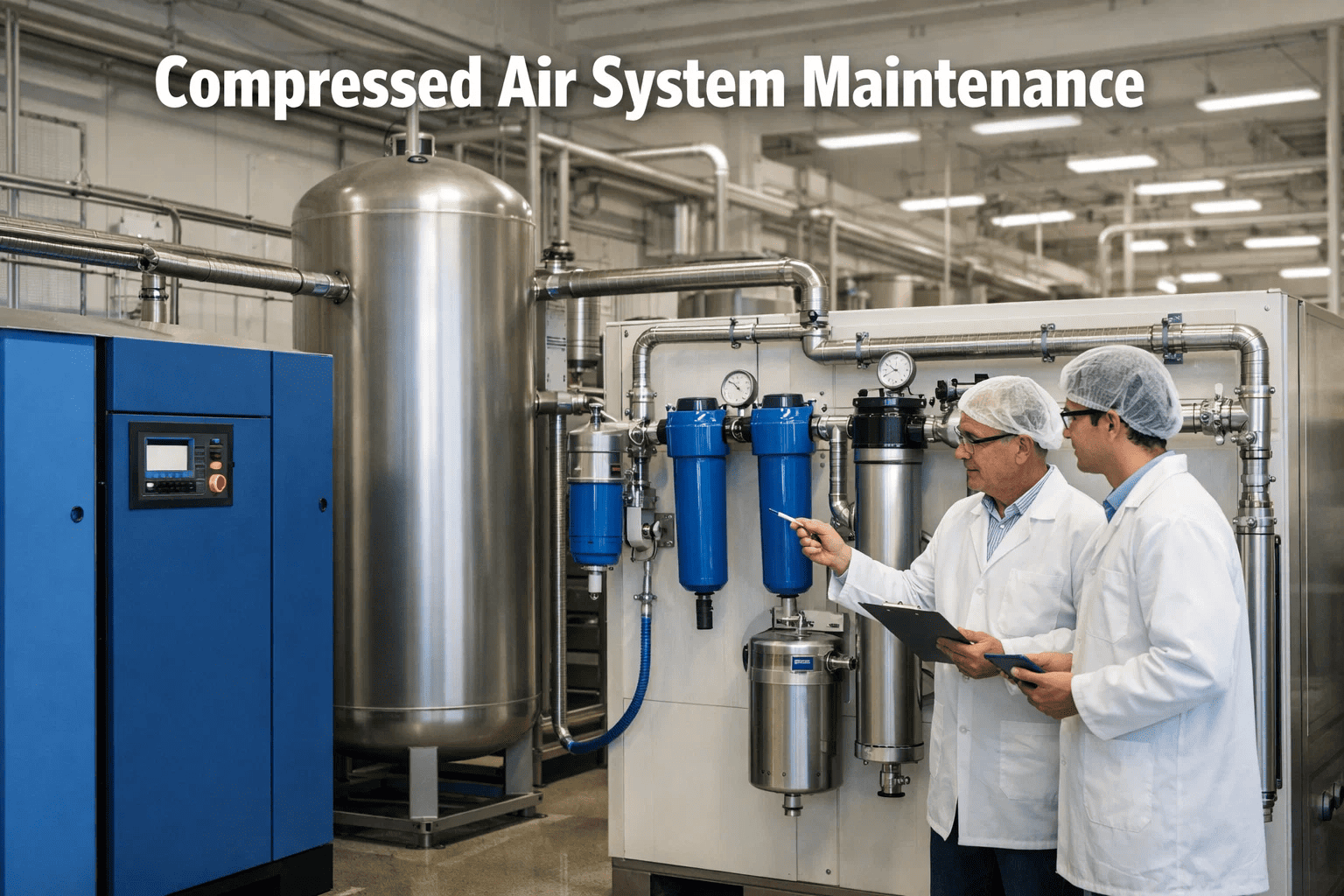
A nitrogen generator supplying MAP packaging lines at 99.5% purity that drifts to 97% over three months doesn't announce its failure — it quietly extends packaging headspace oxygen levels past the threshold where aerobic spoilage begins, shortening product shelf life by weeks before anyone measures it. Compressed gas and nitrogen systems in food plants are invisible infrastructure until they fail, at which point every production line depending on them stops simultaneously. Start your OxMaint free trial — gas system PM schedules configured in under 48 hours

Compressed Gas · Nitrogen Systems · MAP Packaging · Food-Grade Utilities

Nitrogen Purity Failures Don't Show Up on Production Dashboards—Until Shelf Life Does

Nitrogen generators, compressors, distribution manifolds, and gas analyzers are maintenance-critical food plant utilities that most CMMS implementations treat as generic mechanical equipment. OxMaint delivers food-grade gas system PM templates covering purity monitoring, compressor maintenance, distribution integrity, and HACCP-linked compliance documentation that MAP packaging compliance requires.

99.5%
Minimum nitrogen purity required for MAP food packaging applications

78%
Of MAP packaging failures trace to nitrogen purity drift or distribution leaks
2x
Shelf life extension achieved with properly maintained MAP nitrogen systems

1–2yr
Payback period for on-site nitrogen generators vs. cylinder supply contracts
Why Gas Systems Need CMMS

Every Production Line Downstream Depends on Gas System Integrity

Compressed gas and nitrogen systems serve multiple downstream consumers simultaneously — MAP packaging machines, pneumatic actuators on filling lines, cleanroom pressurization, instrument air for control valves, and inerting applications during production. A single compressor or nitrogen generator failure can stop 4–8 separate production processes in minutes. Structured PM prevents this cascading failure scenario. See how OxMaint manages gas system PM in a live demo

Gas Supply System
Compressor + N2 Generator + Buffer Tank
MAP Packaging Lines
99.5%+ N2 purity · 2–6 bar supply
Pneumatic Actuators
Dry instrument air · 6–8 bar · Oil-free
Filling and Dosing Lines
Consistent pressure · Low dew point
Control Instruments
Particle-free · 4–7 bar clean air
Maintenance Schedule

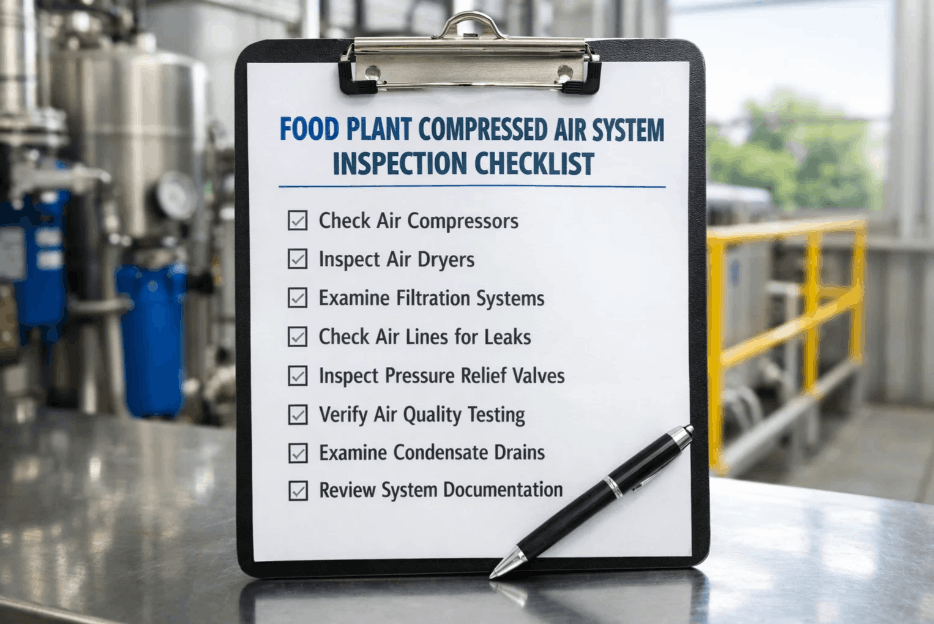
PM Intervals by Gas System Component

Food-grade gas system maintenance requires PM intervals calibrated to each component's specific failure modes — compressor valve degradation, nitrogen membrane fouling, distribution manifold seal wear, and analyzer sensor drift all follow different timelines and demand different inspection parameters. OxMaint templates cover every component type. Access pre-built gas system PM templates in a free OxMaint account

Air Compressors
Food-Grade Lubrication Required
Daily
Oil level check · Pressure output verification · Condensate drain auto-check · Unusual noise/vibration log
Weekly
Inlet filter inspection · Belt tension check · Pressure relief valve test · Dew point measurement at outlet
Monthly
Full oil analysis · Valve condition inspection · Cooler fin cleaning · Vibration baseline comparison
Annual
Full overhaul per OEM schedule · Valve replacement · Bearing inspection · Food-grade oil certification record
Nitrogen Generators (PSA / Membrane)
Purity Critical — HACCP Linked
Daily
Purity % reading vs. set point · Flow rate verification · Inlet air pressure check · Analyzer calibration status
Weekly
Inlet air pre-filter inspection · Purity trend log review · Buffer vessel pressure check · Solenoid valve operation
Monthly
Inline oxygen analyzer calibration · Molecular sieve bed condition check · Valve cycle count inspection
Annual
Molecular sieve replacement assessment · Full analyzer recertification · Performance capacity test vs. specification
Distribution System and Manifolds
Leak Detection · Pressure Mapping
Weekly
Pressure drop survey across distribution — identify leaks via pressure differential mapping
Monthly
Manifold valve leak check · Isolation valve operation test · Food-contact fitting inspection for corrosion
Quarterly
Full system leak detection survey · Regulator calibration at each use point · Pipe support and expansion joint check
Annual
Pressure test complete distribution network · Food-grade seal replacement on all food-contact points · Documentation audit
Gas Purity Analyzers
Calibration Records — Audit Trail
Daily
Reading verification vs. known standard · Sensor response time check · Alarm function test
Weekly
Zero and span calibration check using certified reference gas · Calibration certificate expiry review
Monthly
Full calibration with traceable reference gas · Sensor condition assessment · Data log backup and review
Annual
Sensor replacement per manufacturer schedule · Full recertification with calibration certificate · HACCP record update
Before vs. After

Gas System Management Without and With Structured CMMS

Without Structured PM
Nitrogen purity measured only when MAP shelf life complaints arrive from retailers
Compressor oil changes scheduled by memory, not actual operating hours
Distribution leaks discovered when pressure drops halt packaging lines
Gas analyzer calibration done before audits only — drift undetected between inspections
No purity trend data — can't prove MAP specification compliance to retailers
Compressor failure during peak season — cylinder delivery emergency, 3x cost
With OxMaint Gas System PM
Daily purity readings logged with trend alerts — drift caught before product impact
Compressor oil changes triggered by actual operating hours tracked in CMMS
Weekly pressure mapping detects distribution leaks early — repaired during planned downtime
Monthly analyzer calibration with traceable certificates in digital record — audit-ready
Complete purity trend history exported as MAP compliance documentation for retailers
Compressor overhaul on schedule — backup capacity planned during maintenance window
Business Impact

What Structured Gas System PM Delivers for Food Plants

2x
MAP Shelf Life Performance

Correctly maintained nitrogen systems deliver full MAP shelf life specification — preventing premature spoilage returns that damage retailer relationships
90%
Fewer Emergency Gas Supply Events

Proactive compressor and generator PM prevents unplanned failures that force emergency cylinder deliveries at 3x the cost of on-site generation
100%
Audit Documentation Readiness

Digital calibration records, purity logs, and maintenance history provide complete MAP compliance documentation for retailer and certification audits
35%
Lower Gas System Maintenance Cost

Compressor and generator component life extended through structured PM — replacing emergency breakdowns with planned component replacements at standard cost
Food-Grade Gas Systems · MAP Compliance · Purity Tracking

Nitrogen Purity Drift Is Silent Until Your Retailer Measures Shelf Life

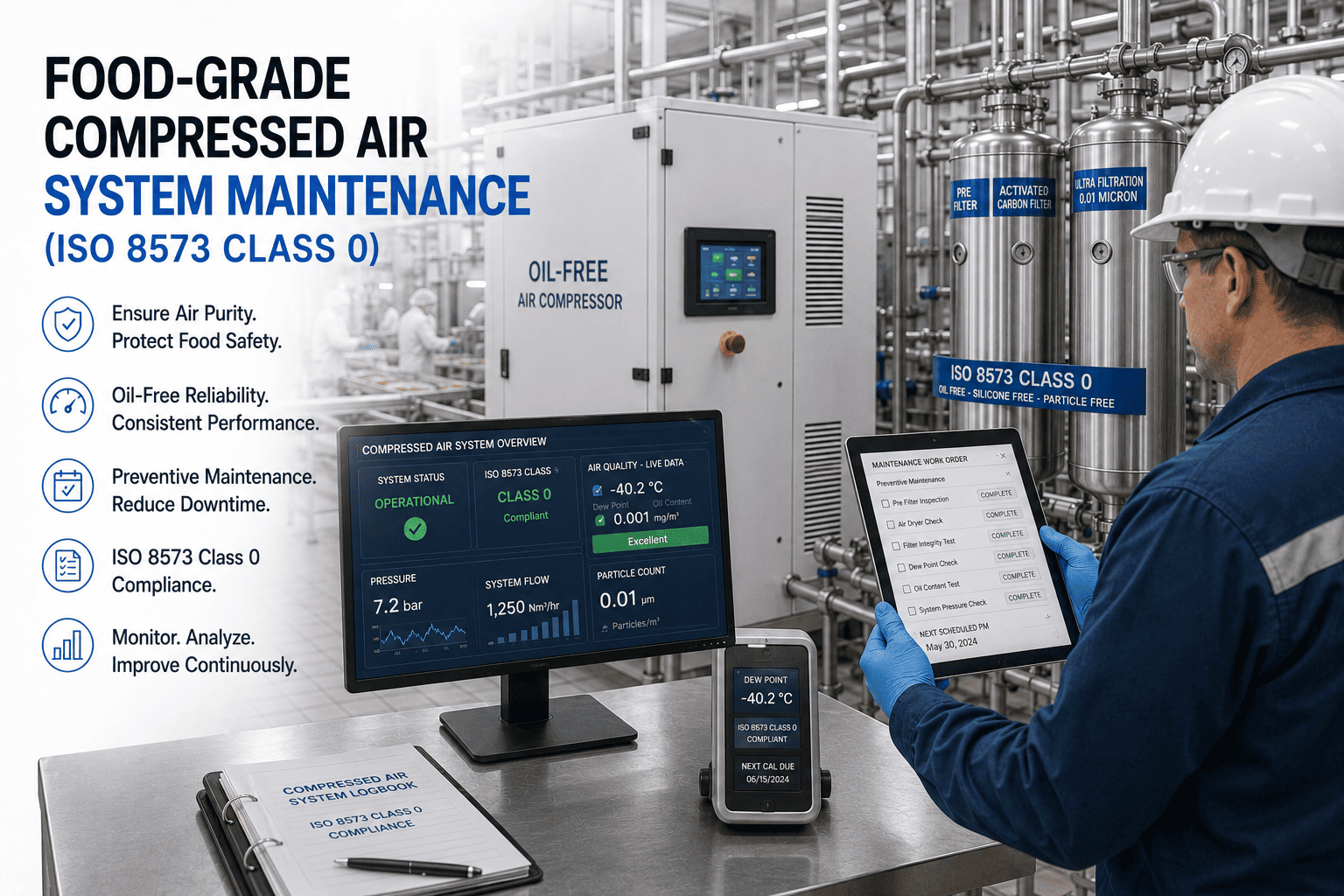
Gas systems fail quietly — purity drifts, pressure drops, and compressor wear accumulate over months without visible symptoms, until MAP packaging fails spec and shelf life complaints arrive. OxMaint delivers structured PM for every gas system component, with daily purity trending, calibration audit trails, and HACCP-linked documentation that MAP compliance demands. Start your free trial today — gas system PM templates configured in 48 hours.

Frequently Asked Questions

Food Plant Gas System Maintenance — What Engineers Ask

How does OxMaint track nitrogen purity trends for MAP compliance documentation?
OxMaint nitrogen generator work orders include daily purity reading fields where technicians record oxygen analyzer output as a percentage. Each reading is timestamped and stored against the generator asset record — building a continuous purity trend log over weeks and months. When readings trend toward your configured alert threshold (typically 0.2–0.3% above minimum specification), an alert fires to the maintenance manager before the purity failure affects production. The complete purity history is exportable as a PDF or Excel report for retailer MAP compliance audits and food safety certification reviews. See purity trend tracking in a free trial account
Can OxMaint track food-grade lubricant certification for compressors?
Yes. Compressor oil change work orders in OxMaint include fields for food-grade lubricant product name, batch number, certification standard (NSF H1, NSF 3H, or H2 as applicable), and supplier certificate upload. When the oil change is completed, the technician attaches the lubricant certificate and records the quantity used. This creates an auditable food-grade lubricant record tied to each oil change event — satisfying BRC clause 4.7.3 food-grade lubricant requirements and FSMA preventive control documentation for maintenance-related food safety hazards. Lubricant certificate expiry tracking prevents use of expired certifications.
How does distribution system leak detection work through CMMS?
OxMaint distribution system PM work orders include pressure drop measurement fields at key points across the distribution network — compressor outlet, main header, branch manifolds, and individual use points. Technicians record actual vs. expected pressure at each point during weekly surveys. The system compares readings against baseline values established during commissioning and flags pressure differentials exceeding threshold. Leak locations identified by large pressure drops between adjacent measurement points narrow the investigation area from the entire distribution network to a specific pipe section. See distribution system PM templates in a 30-minute demo
Does OxMaint support gas analyzer calibration records for HACCP compliance?
Yes. Gas analyzer calibration work orders in OxMaint capture calibration date, technician name, reference gas details (supplier, certificate number, expiry), pre-calibration reading, post-calibration reading, and pass/fail result. Calibration certificates are uploaded as attachments. HACCP plans that cite gas purity monitoring as a preventive control require documented evidence of regular calibration with traceable standards — OxMaint generates this evidence automatically from the work order completion record. Calibration interval alerts ensure no analyzer exceeds its scheduled recertification date without a work order being issued.

Share This Story, Choose Your Platform!