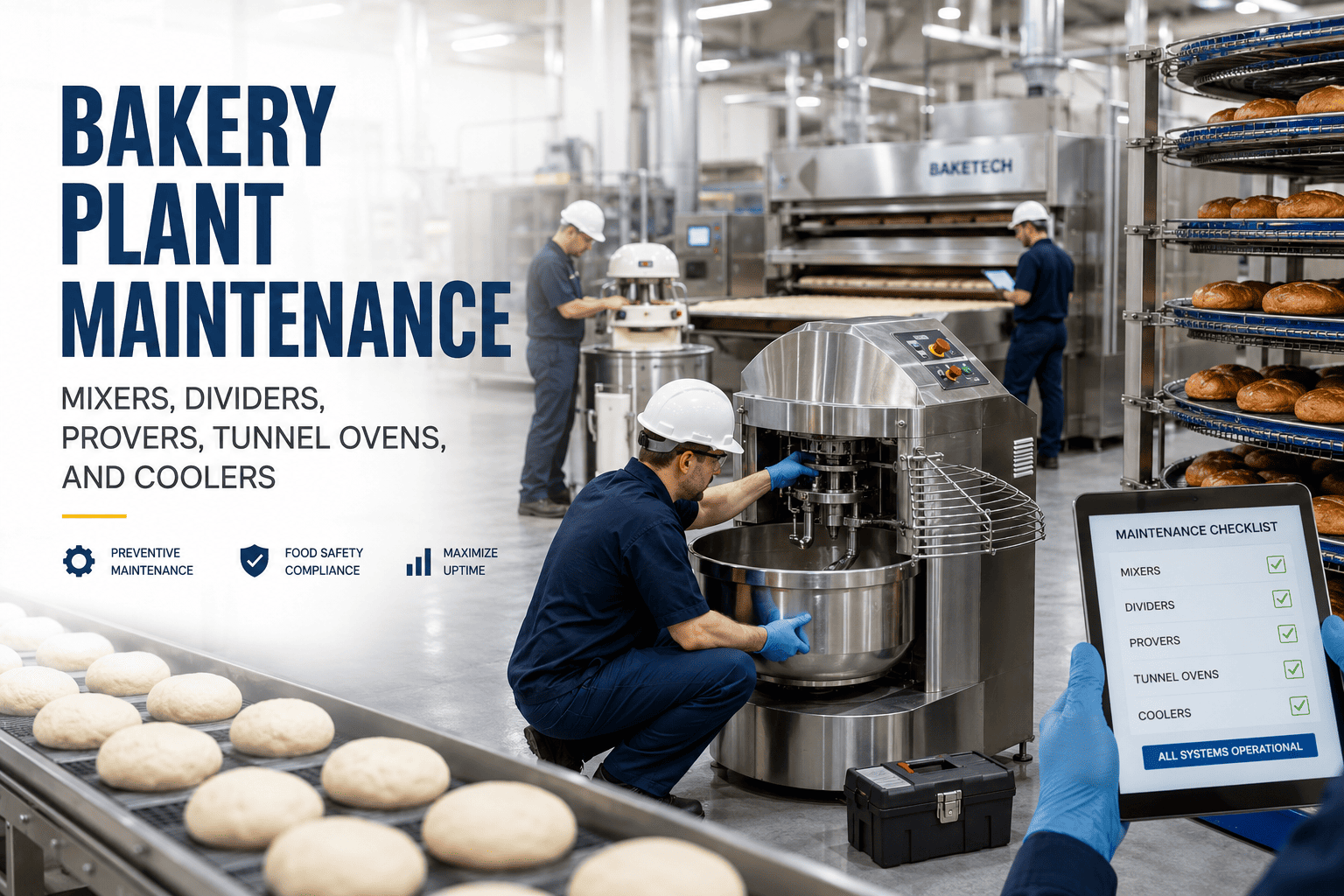
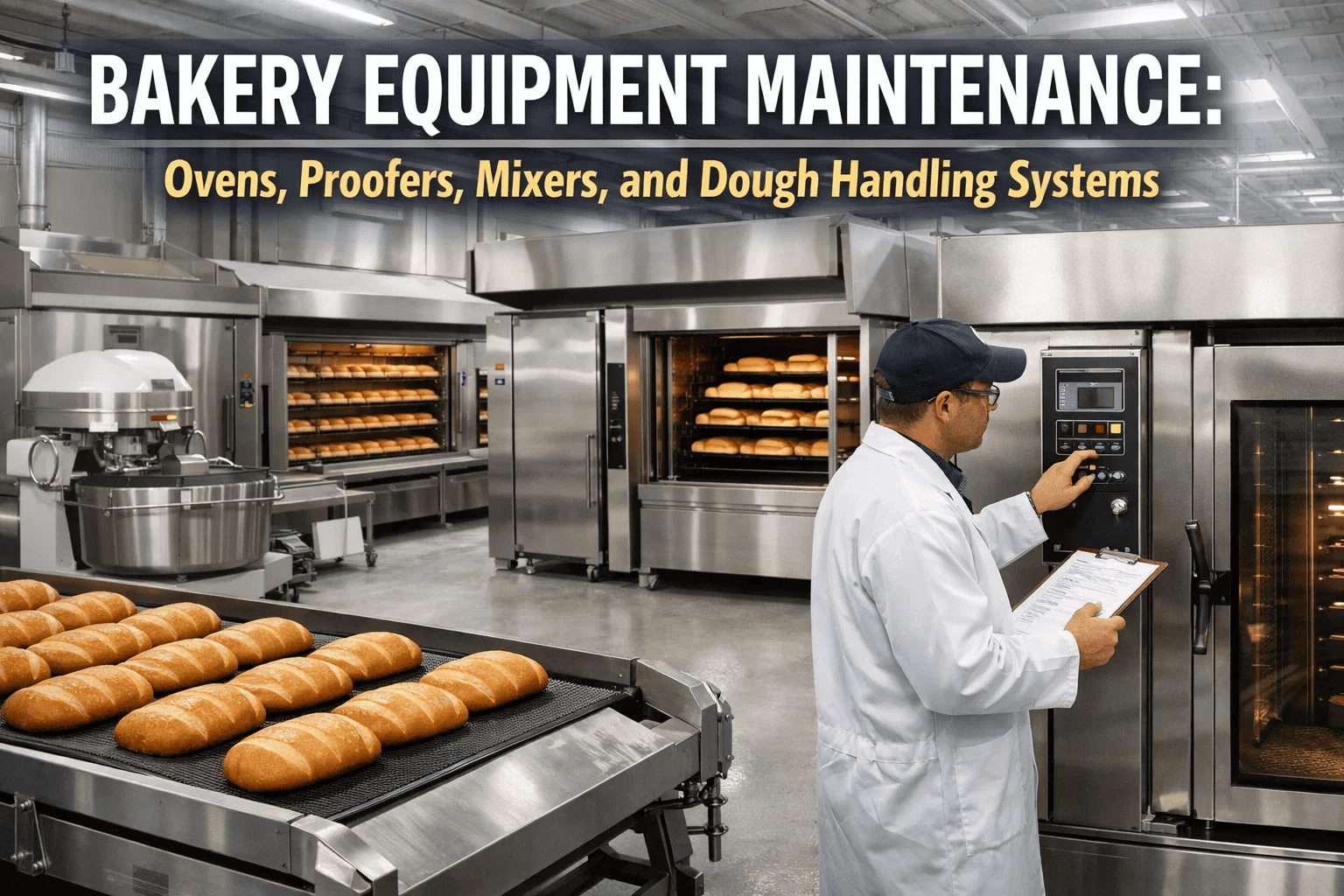
A bakery or snack line only looks like one machine from the plant floor, but it behaves like five machines chained together — a mixer holding hydration and gluten development targets, a former or extruder shaping product to spec, a tunnel oven cycling through 220–280°C zones, a fryer holding oil chemistry inside a narrow window, and a packaging line running hundreds of cycles a minute. One missed task on any of these five zones stops the whole line, because bakery and snack production has almost no buffer between stations. Plants that treat oven, mixer, fryer, and packaging maintenance as one generic equipment category lose far more unplanned hours than plants that maintain each zone by its own failure pattern. OxMaint gives bakery and snack plants zone-specific PM templates for ovens, mixers, extruders, fryers, and packaging lines from one dashboard.
Stop Losing Shifts to Small, Preventable Failures
Zone-specific PM templates for mixers, ovens, fryers, extruders, and packaging — scheduled, tracked, and audit-ready from day one
The Five Zones of a Bakery or Snack Line — and How Each One Fails
Every zone on the line degrades a different way and on a different clock. A checklist built for one zone rarely catches what's actually wearing out in the next one.
01
Mixing & Dough Prep
Spiral mixer speed control faults, bowl and hook bearing wear, and divider blade misalignment build slowly and then stop a shift without warning. Monthly bearing and gearbox lubrication catches most of it before the divider jams mid-run.
Check point: monthly lubrication
02
Forming & Extrusion
Knife gap drift, die orifice wear, and preconditioner paddle wear track with cumulative throughput, not calendar days. Per-shift knife checks plus tonnage-based pulldowns catch wear tied to how much product actually ran, not how many weeks passed.
Check point: tonnage-based pulldown
03
Tunnel Oven
Burner fouling, conveyor belt tension loss from thermal cycling, and sensor drift are the top three causes of uneven bake and color complaints. Belt tracking is checked every 500 operating hours; temperature sensors are calibrated weekly against a reference thermometer.
Check point: 500-hour belt interval
04
Fryer System
Oil chemistry drift, heat exchanger fouling, and worn de-oiling belts show up first as texture and shelf-life complaints, not equipment alarms. Daily oil filtering and continuous fines removal keep free fatty acid levels from creeping past spec.
Check point: daily oil filtration
05
High-Speed Packaging
Flow wrapper seal jaw wear, guard interlock faults, and changeover misalignment turn a 30-second fix into a full line stop at packaging speed. Interlocks are tested at a defined frequency with results logged, not just scheduled.
Check point: interlock test logging
40%
Fewer unplanned downtime events reported by bakeries running structured, zone-specific PM programs versus generic equipment templates
30–40%
Of bakery and snack equipment failures trace back to inadequate or missed lubrication maintenance across mixers, ovens, and extruders
500 hrs
Operating-hour interval for tunnel oven conveyor belt tension and tracking checks under continuous 220–280°C thermal cycling
Reactive vs Planned — What the Same Line Looks Like Both Ways
Reactive Pattern
Oven burner misfires mid-shift with no warning
Fryer oil chemistry drifts until product complaints arrive
Divider blade misalignment stops the line unannounced
One plant lost 11 hours in a single week to four small failures
Every failure looks isolated. Together they define the week.
Planned Pattern
Burner and belt PM scheduled by oven operating hours
Fryer oil filtered daily, FFA trend tracked before it drifts
Mixer and divider lubrication logged monthly, on schedule
40% fewer unplanned stops, 2–4x longer asset life on average
Failures are caught as trends, weeks before they're shift losses.
One CMMS, Five Zones, Zero Generic Checklists
Mixer, extruder, oven, fryer, and packaging PM — each on its own trigger, hours, tonnage, or calendar — from a single dashboard
PM Cadence by Zone — What to Check and When
Each zone earns its own frequency. Scroll the table on smaller screens to see every interval.
| Zone | Per-Shift / Daily | Weekly | Monthly | Quarterly |
| Mixing & Dough |
Visual bowl and hook check |
Speed control test |
Bearing and gearbox lube |
Divider blade alignment |
| Forming & Extrusion |
Knife gap check |
Die assembly cleaning |
Gearbox oil level check |
Tonnage-based pulldown |
| Tunnel Oven |
Burner visual inspection |
Sensor calibration |
Belt tension and tracking |
Temperature uniformity survey |
| Fryer System |
Oil filtering |
Heat exchanger check |
Full oil change review |
De-oiling belt inspection |
| Packaging |
Seal jaw check |
Guard interlock test |
Changeover alignment audit |
Drive and belt overhaul |
Why One Generic Equipment Template Fails Multi-Zone Lines
A plant running tunnel ovens, fryer lines, and a coating drum on one shared equipment template ends up with maintenance that looks complete on paper and fails on the floor — oven burner fouling missed because the checklist asked about conveyor speed, fryer oil degradation uncaught because nobody tracked heat exchanger differential, and packaging interlocks marked "tested" without a logged result. Zone-specific templates close that gap because each asset type gets the inspection fields its actual failure modes require, not a generic set borrowed from the next line over.
Frequently Asked Questions
Bakery & Snack Line Maintenance — OxMaint
Stop Running One PM Template Across Five Different Failure Patterns
40%
fewer unplanned stops
5
zone-specific templates