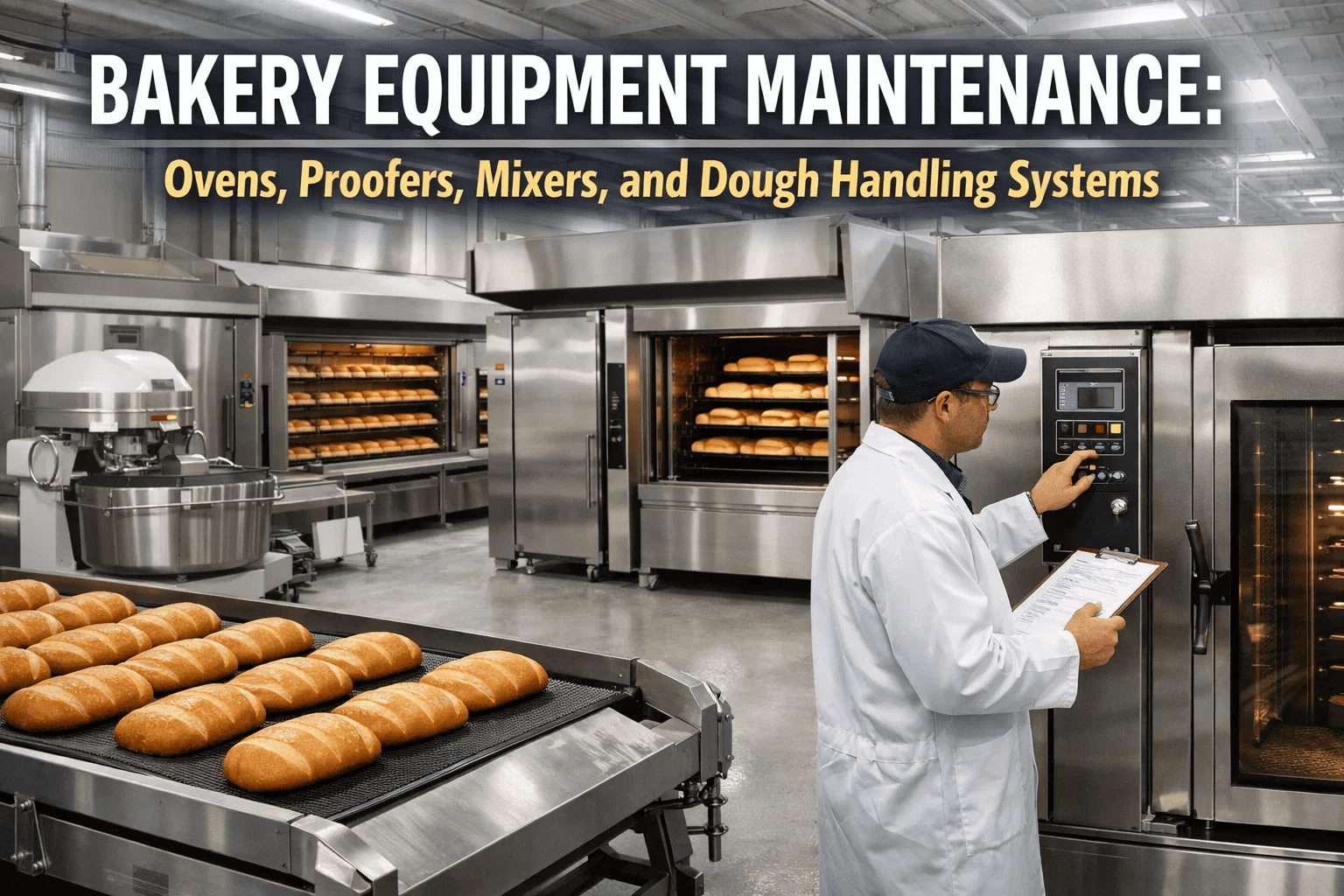
Bakery Plant Maintenance: Mixers, Dividers, Provers, Tunnel Ovens, and Coolers
By Josh Turley on May 19, 2026
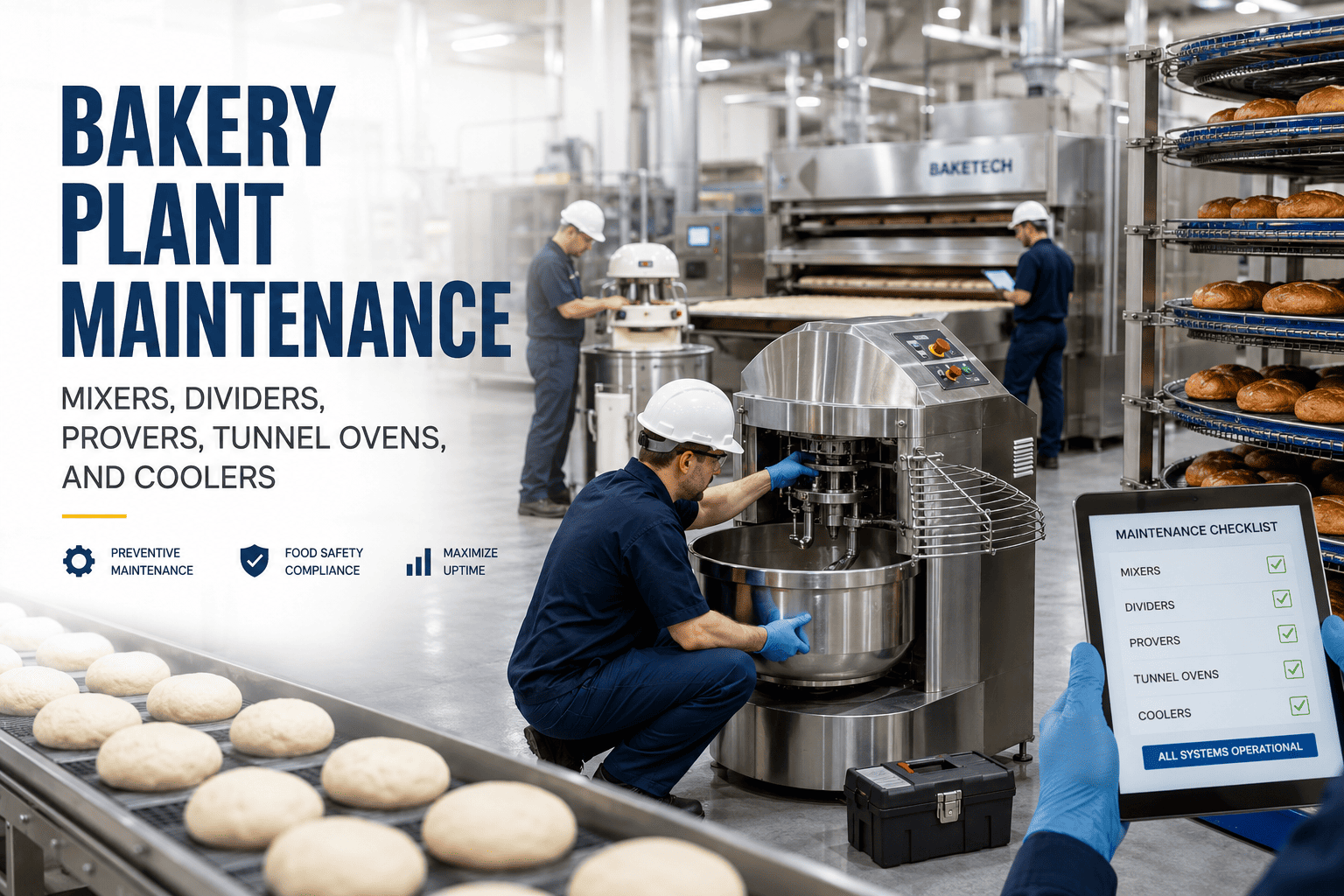
Commercial bakeries run some of the most failure-prone production lines in food manufacturing — and almost all of those failures are predictable. Heat cycling in deck and tunnel ovens degrades door gaskets, heating elements, and combustion systems on monthly timelines. The hygroscopic nature of flour and sugar means residue accumulates inside motor housings, on conveyor rollers, and in proofer humidification systems — creating both mechanical risk and food safety hazard simultaneously. Industry data shows facilities running structured oven maintenance cut unplanned downtime events by 40%, with similar gains across mixers, dividers, provers, and spiral coolers when each asset class moves to documented PM schedules and CMMS-tracked sanitation records. A Texas bakery running three 24-hour shifts recently lost 11 hours of output in a single week — not to one catastrophic failure but four small ones, each preventable with structured maintenance on mixer, oven, proofer, and divider assets. Start a free trial to consolidate bakery plant maintenance across every asset class — or book a demo to walk through your specific line configuration.
Food Manufacturing · Bakery Plant · 2026
Bakery Plant Maintenance: Mixers, Dividers, Provers, Tunnel Ovens, and Coolers
Spiral mixers, dividers, provers, tunnel ovens, spiral coolers — every bakery asset class with its own failure mode, sanitation cycle, and CMMS-tracked PM record. See how plant managers cut downtime, prove FDA and SQF compliance, and stop losing shifts to preventable failures.
Live in 4–6 weeks across multi-line bakeries — measurable downtime reduction within the first 30 days.
40%Reduction in unplanned downtime events at bakeries running structured oven PM checklists
11 hrOutput lost in one week at a Texas bakery to four preventable small failures across mixer, oven, and proofer
15–25%Energy cost reduction with structured oven seal, gasket, and combustion maintenance discipline
60%Reduction in unplanned downtime within two quarters of deploying AI-driven bakery equipment monitoring
What Bakery Plant Maintenance Actually Covers
Bakery plant maintenance is the structured PM, calibration, sanitation, and parts-control programme that keeps a continuous bread, roll, or pastry line producing on spec. It spans five distinct asset classes that each have their own failure modes: spiral and planetary mixers (gear wear, bowl seal degradation, hook clearance drift), dough dividers (piston wear, scaling variance, cut-off blade fatigue), provers (humidity sensor failure, mould colonisation, heating element drift), tunnel and deck ovens (door gasket loss, burner fouling, conveyor belt stretch, temperature controller drift), and spiral or tunnel coolers (chain elongation, evaporator coil fouling, transfer plate misalignment).
The model matters because a single failure on any one asset stops the entire line. A flat batch from a humidity sensor failure is not just a single batch lost — it is the upstream mixer and downstream cooler standing idle, the labour cost of three shifts, and a delayed delivery to a major retailer. Bakeries moving from paper PM logs and reactive callouts to a structured CMMS programme typically recover hours of weekly production within the first quarter and extend asset service life across every class — start a free trial to see what that looks like on your line layout.
Six Asset Classes a Bakery PM Programme Must Cover
Six concepts separate bakeries running disciplined equipment programmes from those running on reactive habit. Each represents an asset class with distinct failure modes — and each becomes a documented PM track inside the CMMS.
01
Spiral & Planetary Mixers
Hook clearance 2–4mm, motor current trending, bowl seal integrity, drive belt tension — caught early or caught in product variance.
02
Dough Dividers & Sheeters
Piston wear, scaling CpK, cut-off blade replacement, roller gap calibration — 1% weight giveaway costs thousands per week.
03
Provers & Humidity Systems
Humidity sensor calibration, anti-microbial cycles, heating element drift — a failed sensor delivers a flat batch with no warning.
04
Tunnel & Deck Ovens
Door gasket replacement, burner cleaning, thermocouple calibration, belt stretch measurement, decarbonisation cycles.
A single 1% dough weight giveaway at the divider costs a high-volume bakery thousands of dollars every week — and never appears on a paper PM log.
Where Bakery Equipment Programmes Break Down
Bakery failure patterns repeat across continuous bread, roll, pastry, and tortilla lines in the same six ways. Every after-action review traces back to two or three of them combined. Plants closing even two of these gaps typically recover 15–25% of weekly downtime in the first quarter — start a free trial to map your own profile.
Calendar-Only PM
Same maintenance interval for every mixer regardless of hydration, hours, or batch count — wrong service at the wrong time.
Lost Calibration History
Burner misfires for 40 minutes because nobody can pull up the oven's thermocouple calibration record from the binder.
Out-of-Stock Critical Spares
Spiral mixer drive belt fails, spare not on shelf, parts run consumes a shift — every bakery's most common 3-hour repair story.
Silent Proofer Failures
Humidity sensor drifts unnoticed, a full batch comes out flat, quality flags it after the fact — too late.
Belt Stretch Untracked
Tunnel oven conveyor belts stretch and edge-wear progressively — small variance becomes full-belt replacement and a multi-day outage.
Sanitation Gaps at Audit
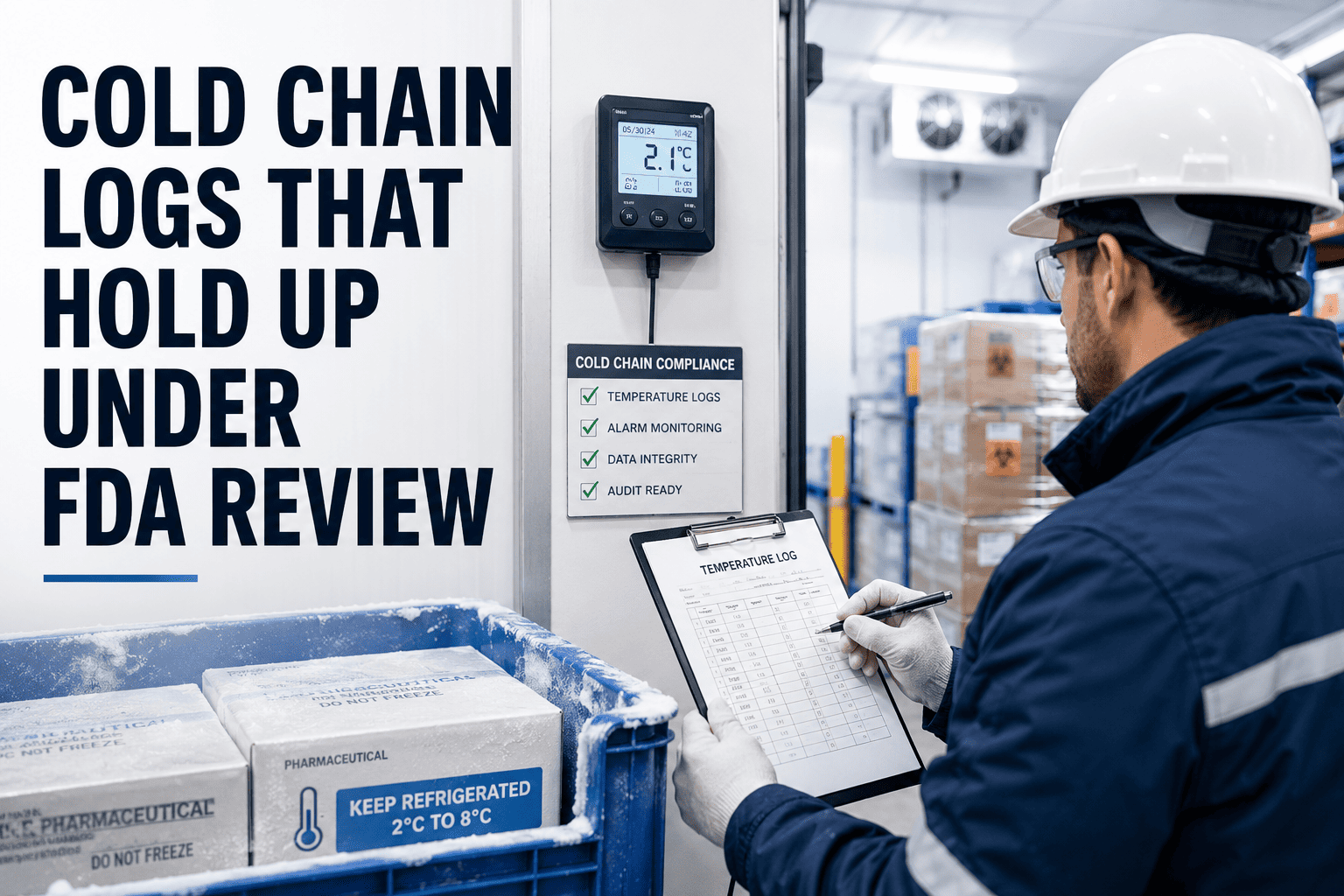
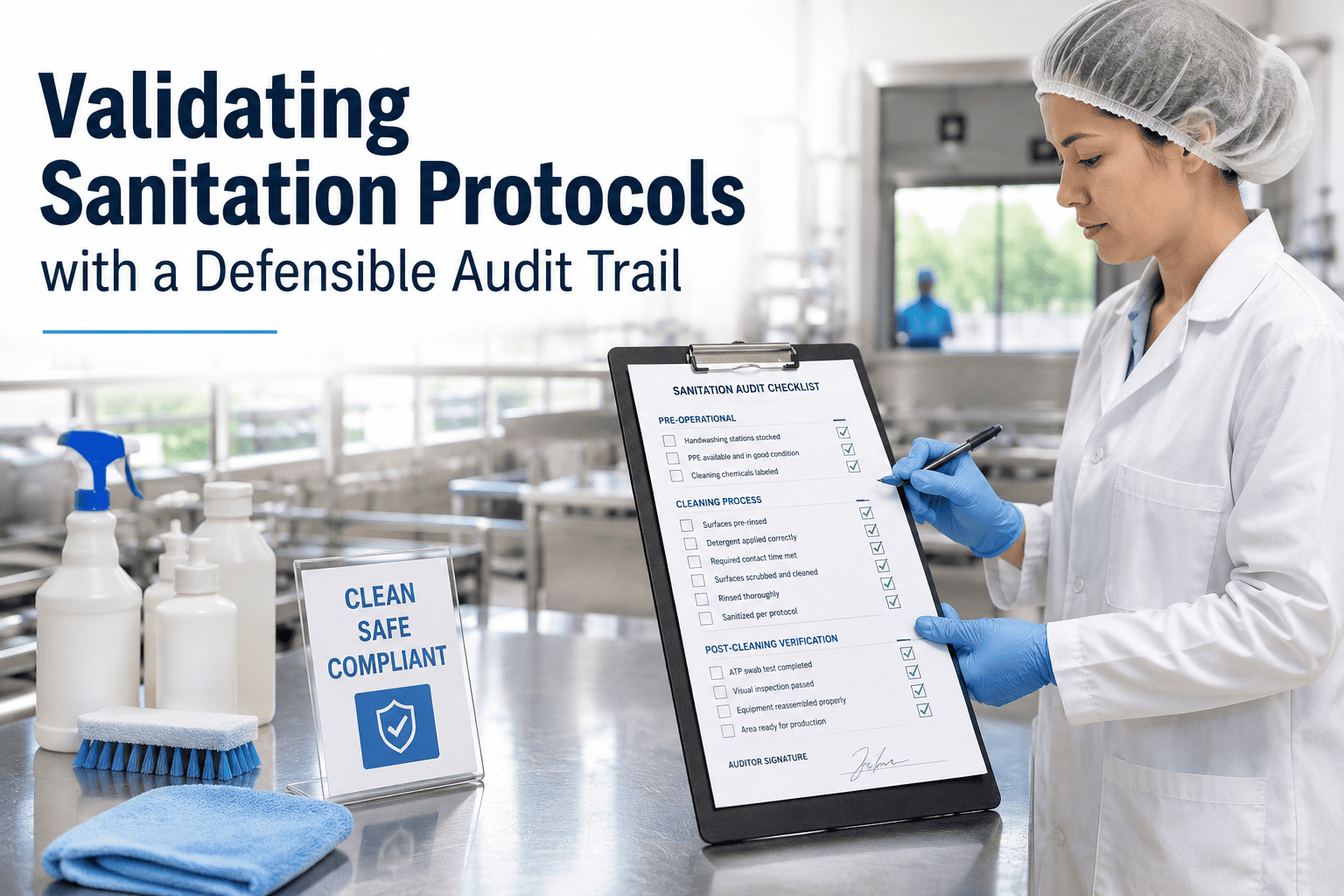
CIP, allergen changeover, mould prevention — paper records cannot prove FDA or SQF compliance under inspector scrutiny.
How Oxmaint Runs Bakery Plant Maintenance End to End
Oxmaint turns the six asset classes into one unified workflow — every mixer, divider, prover, oven, and cooler with its own PM template, parts list, calibration record, and sanitation cycle. Production counters drive usage-based PM. Critical spare reorders are automatic when stock drops below minimum. Calibration history is searchable in seconds, not hours. Start a free trial to see the workflow on your asset list.
Asset-Specific PM Templates
Spiral mixer, divider, prover, tunnel oven, spiral cooler — each gets its own OEM-aligned checklist with frequency and tolerance.
Usage-Based Triggers
Batch counters and motor hours auto-trigger PM — a mixer running high-hydration doughs gets serviced when its data says so.
Calibration Record Vault
Thermocouples, humidity sensors, scaling pistons — every calibration record retrievable in seconds, not binder hunts.
Auto-Reorder for Critical Spares
Min-max stock levels per part, linked to the asset it serves — stock drops, reorder work order generated automatically.
Sanitation & CIP Tracking
Allergen changeover, mould prevention, food-grade lubricant — every sanitation event timestamped for FDA and SQF audit.
Mobile Floor Workflow
Technicians close work orders, log defects, capture photos from the line — no return trips to the office to file paper.
A damaged tunnel oven door seal increases energy use by several percentage points and breaks temperature uniformity — both caught by a 2-minute weekly inspection.
Reactive Maintenance vs Structured Bakery PM — Side by Side
The gap between reactive callouts and structured PM is widest at the four moments bakery operations actually pay for — emergency parts run, batch loss, energy cost, and audit readiness. The comparison below is built from continuous bread, roll, and pastry lines that completed the transition.
Maintenance Dimension
Reactive Programme
Structured Bakery PM
PM trigger
Calendar only
Usage + condition + calendar
Calibration retrieval
Binder hunt, 30+ minutes
Searchable in seconds
Critical spares
Discovered when needed
Auto-reorder at min stock
Proofer drift detection
Caught at quality inspection
Sensor trend flags before batch loss
Belt stretch
Replaced after full failure
Measured monthly, replaced on schedule
Sanitation audit
Scramble for paper
Filtered export in seconds
Average weekly downtime
8–12 hours
2–4 hours
ROI After Structured PM Rollout
The numbers below come from commercial bakeries that completed a 6–12 month move from reactive to structured CMMS-driven maintenance. The pattern is consistent across high-volume bread, roll, and pastry lines — and the payback typically arrives with the first avoided multi-hour line stop.
−40%
Reduction in unplanned downtime events at bakeries with structured oven and mixer PM
Sensor trending, calibration discipline, and stocked spares prevent the small failures that compound into hours of lost output.
15–25%
Energy cost reduction from disciplined oven seal, gasket, and combustion maintenance
Door seal integrity and combustion efficiency are the two highest-impact, lowest-cost interventions in any bakery PM programme.
11 hr
Output recovered per week at a typical mid-size bakery after closing four common small-failure modes
Calendar-PM bakeries lose this consistently — structured CMMS programmes recover it in the first quarter.
−60%
Reduction in unplanned downtime within two operational quarters of AI-driven bakery equipment monitoring
Industry benchmark for plants moving from manual PM to condition-based monitoring across mixer, oven, and proofer assets.
Three Outcomes Plant Managers See in 90 Days
Every mixer, divider, prover, oven, and cooler on a documented PM schedule with searchable history
Critical spares auto-replenish before they become a 3-hour parts run
FDA and SQF audits answered with filtered exports — sanitation, calibration, and CIP records in seconds
Frequently Asked Questions
Can Oxmaint handle both deck and tunnel oven PM in one workflow
Yes — the platform supports deck, tunnel, rack, and rotary oven configurations with each oven type carrying its own OEM-aligned PM template, calibration interval, and combustion check frequency. Mixed-line bakeries manage every oven from one dashboard.
Does the system handle SQF and FDA documentation alongside engineering PM
Yes — sanitation cycles, CIP records, allergen changeover, food-grade lubricant tracking, and pest-control evidence all live in the same platform as PM history. Auditors receive filtered exports rather than binder compilations.
How does the spare parts module prevent the typical parts-run downtime
Each critical part is linked to the asset it serves with a minimum stock level. When consumption drops stock below minimum, a reorder work order or purchase request is generated automatically — preventing the parts shortages that turn a 30-minute repair into a 3-hour one.
How fast can a multi-line bakery deploy
Typical deployment runs 4–6 weeks. Asset registry import, PM template configuration per equipment type, mobile rollout, and operator training are templated. No IT-side build, measurable downtime reduction in the first 30 days.
Decision Point
Stop Losing Shifts to Small Failures That Add Up to Big Numbers
Turn every bakery asset into a documented, trend-tracked, audit-ready record — and stop the weekly drip of preventable downtime.
Used by commercial bread, roll, and pastry operators running 24/7 — live in 4–6 weeks, no IT project.