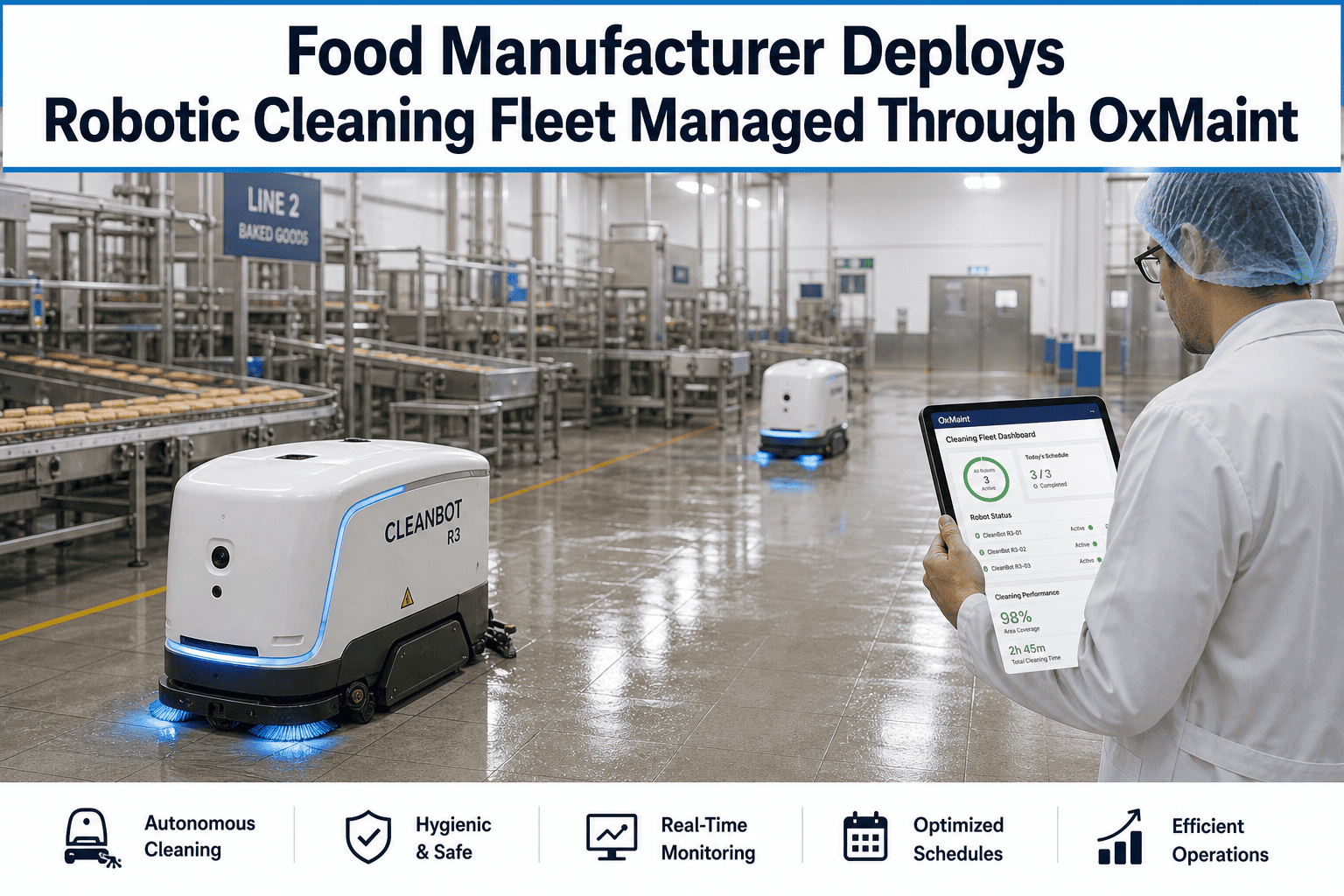
A dairy processing plant in Wisconsin faced a Listeria-positive environmental sample that halted production for 72 hours while they traced the contamination source. Investigation revealed their manual CIP protocol had been shortened by 8 minutes during a shift change—sanitization contact time fell below the validated 12-minute requirement, allowing biofilm to persist in a filler valve body. The deviation went undetected because operators logged completion times manually without verification. After switching to automated CIP robotics integrated with CMMS by Signing Up to Oxmaint, the facility now tracks every cycle parameter in real-time, prevents protocol deviations, and maintains perfect sanitation compliance with zero manual logging errors.
Why Manual CIP Processes Fail Food Safety Requirements
Traditional manual CIP operations depend on operator adherence to written procedures, accurate timekeeping, and consistent chemical dosing. Each manual step introduces variability that compromises sanitation effectiveness. Operators under production pressure skip steps, estimate contact times, and record completion without verification. The result: validation studies don't reflect actual practice, and contamination risks persist despite documented "compliance." Book a consultation to evaluate your CIP automation readiness.
Protocol Deviation
- Contact times shortened during shift changes
- Chemical concentrations estimated rather than measured
- Temperature requirements not verified at critical points
- Rinse cycles abbreviated to resume production faster
Documentation Gaps
- Handwritten logs completed after the fact
- Missing data for critical control parameters
- No traceability linking CIP to production batches
- Corrective actions not documented when issues occur
Resource Waste
- Chemical concentrations set conservatively high
- Fixed cycle times despite variable soil loads
- No optimization based on actual cleaning results
- Water consumption unmonitored and uncontrolled
Transform CIP from Risk Point to Competitive Advantage
Oxmaint integrates with robotic CIP systems to automate scheduling, monitor performance, and ensure perfect compliance.
Automated CIP Cycle Workflow
Robotic CIP systems execute standardized cleaning protocols through sequential phases controlled by programmable logic. Each phase requires specific parameter verification before progressing—ensuring validation requirements are met every cycle. CMMS integration monitors real-time performance and triggers maintenance when system health indicators deviate.
Pre-Rinse Phase
4-8 minutesRemove gross soil and product residue using ambient or warm water flush. Sensors verify flow rate, temperature, and conductivity. Robotic system monitors turbidity to determine when rinse water runs clear.
Caustic Wash Phase
12-20 minutesAlkaline detergent circulation removes protein, fat, and carbohydrate soils. Robotic dosing systems maintain precise chemical concentration. Temperature and contact time verified continuously against validation parameters.
Intermediate Rinse
3-5 minutesRemove alkaline detergent before acid wash to prevent neutralization. Conductivity sensors verify chemical removal. System tracks rinse water volume to optimize resource usage while ensuring complete removal.
Acid Wash Phase
8-15 minutesRemove mineral deposits, scale, and alkaline residue using acidic cleaner. Particularly critical for dairy and beverage applications. Sign Up to Oxmaint monitors to track acid concentration trends to predict when tank refills are needed.
Final Rinse
5-10 minutesRemove all chemical residues to prevent product contamination. Multiple conductivity and pH sensors verify complete removal. System documents final water quality parameters for batch release records.
Sanitization
3-8 minutesFinal microbial reduction using heat or chemical sanitizer. Temperature or concentration verified to ensure lethality. System ensures no production restart until sanitization contact time requirements met.
CIP System Component Maintenance Requirements
Robotic CIP reliability depends on maintaining sensors, valves, pumps, and heat exchangers that control cycle parameters. Preventive maintenance prevents the component failures that cause protocol deviations and sanitation failures.
| Component | Failure Mode | Impact on CIP | PM Frequency | CMMS Alert Trigger |
|---|---|---|---|---|
| Flow Meters | Calibration drift, sensor fouling | Incorrect velocity, poor soil removal | Weekly verification | ±5% reading deviation |
| Conductivity Sensors | Electrode fouling, calibration shift | False rinse completion, chemical carryover | Weekly calibration | Failed buffer test |
| Temperature Sensors | Probe degradation, wiring issues | Inadequate heat kill step, poor cleaning | Monthly verification | ±3°F from reference |
| Spray Balls | Nozzle clogging, pattern degradation | Incomplete surface coverage, soil remaining | Monthly inspection | Pressure drop >15% |
| Diaphragm Valves | Diaphragm fatigue, seat wear | Leakage, cross-contamination between phases | Quarterly rebuild | Cycle time extension |
| Dosing Pumps | Check valve failure, stroke drift | Under/over chemical concentration | Monthly calibration | Concentration variance >0.2% |
| Heat Exchangers | Scale buildup, fouling | Temperature target not reached | Quarterly descaling | ΔT increase >10°F |
| Return Pumps | Seal leakage, impeller wear | Flow rate reduction, longer cycles | Quarterly seal inspection | Amperage increase >8% |
Manual vs. Automated CIP Performance Comparison
Real-world data from 150+ beverage and dairy facilities demonstrates measurable performance differences between manual and automated CIP execution.
Manual CIP Process
Operator ControlledAutomated CIP System
Robotic ControlEliminate CIP Variability Through Automation & CMMS
Oxmaint connects your robotic CIP systems to comprehensive maintenance management—ensuring equipment reliability supports sanitation consistency.
Oxmaint Features for CIP System Management
Purpose-built capabilities connecting automated CIP execution to preventive maintenance, compliance documentation, and performance optimization.
Real-Time Cycle Monitoring
Direct integration with PLC controllers captures every cycle parameter—temperature, concentration, contact time, flow rate. Automatic alerts when readings fall outside validated ranges.
Auto-Generated Documentation
Batch records, sanitation logs, and compliance reports created automatically from cycle data. Eliminates manual logging errors and provides instant audit trail access.
Component PM Scheduling
Sensor calibration, valve rebuilds, pump maintenance scheduled based on cycle counts and operating hours. Oxmaint tracks usage automatically to trigger preventive tasks at optimal intervals.
Performance Trending
Track cycle times, chemical usage, water consumption, and cleaning effectiveness over time. Identify degradation patterns that indicate needed maintenance before failures occur.
Deviation Management
Automatic incident creation when CIP cycles fail to meet specifications. Structured workflows for root cause investigation, corrective action, and effectiveness verification.
Batch Traceability
Link each CIP cycle to specific production batches for complete chain of custody. Critical for recall investigations and proving due diligence during audits.
Resource Optimization
Analyze water and chemical consumption patterns to identify optimization opportunities. Compare actual usage against theoretical minimums to reduce waste and cost.
Multi-System Dashboard
Centralized view of all CIP systems across multiple production lines or facilities. Monitor health status, upcoming maintenance, and performance benchmarks from single interface.
Frequently Asked Questions
Build Sanitation Consistency Through Automated CIP & CMMS
Manual CIP processes cannot deliver the consistency that modern food safety standards demand. Oxmaint connects robotic CIP execution to systematic preventive maintenance—ensuring your sanitation systems perform flawlessly, every cycle, with complete documentation and zero human error.