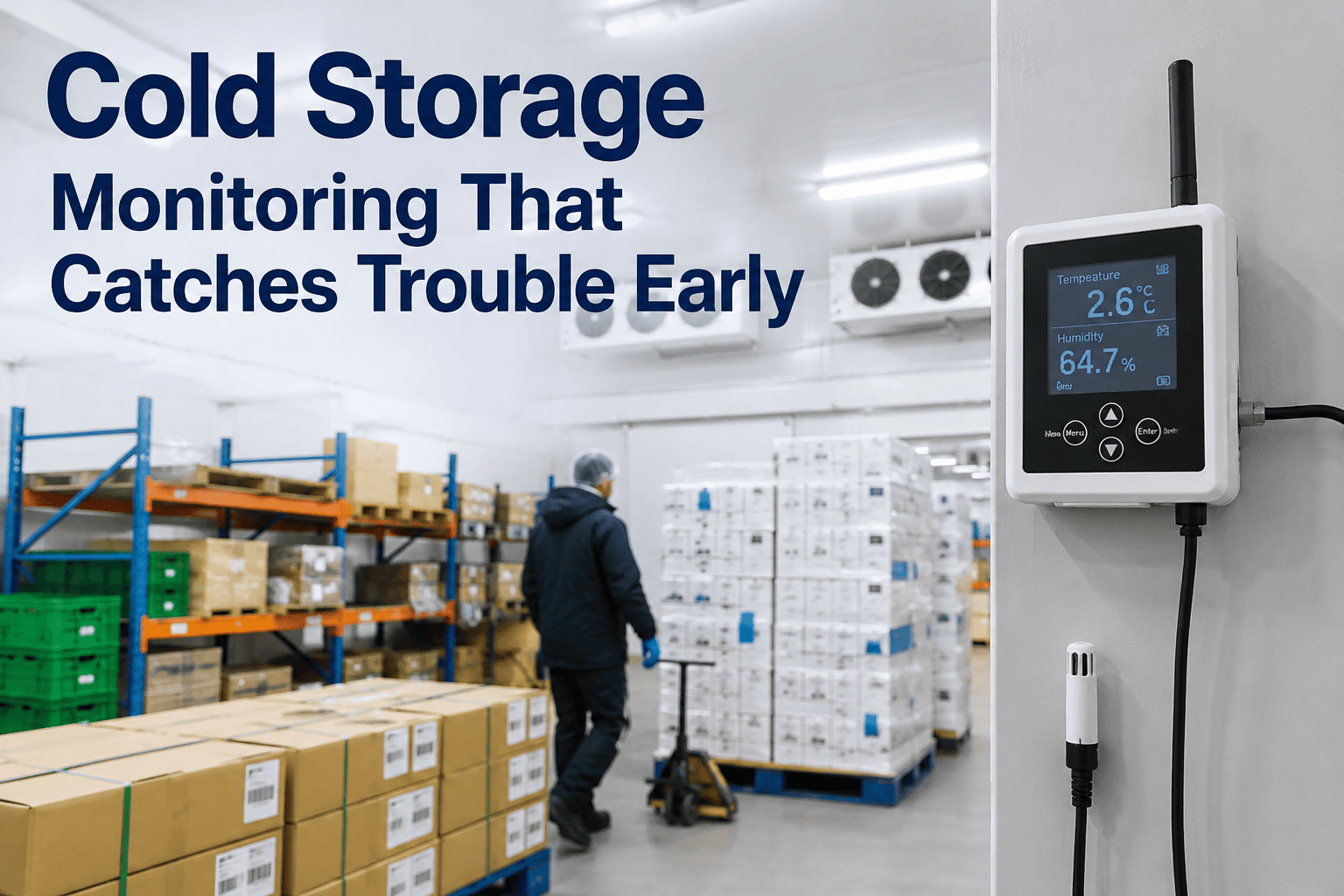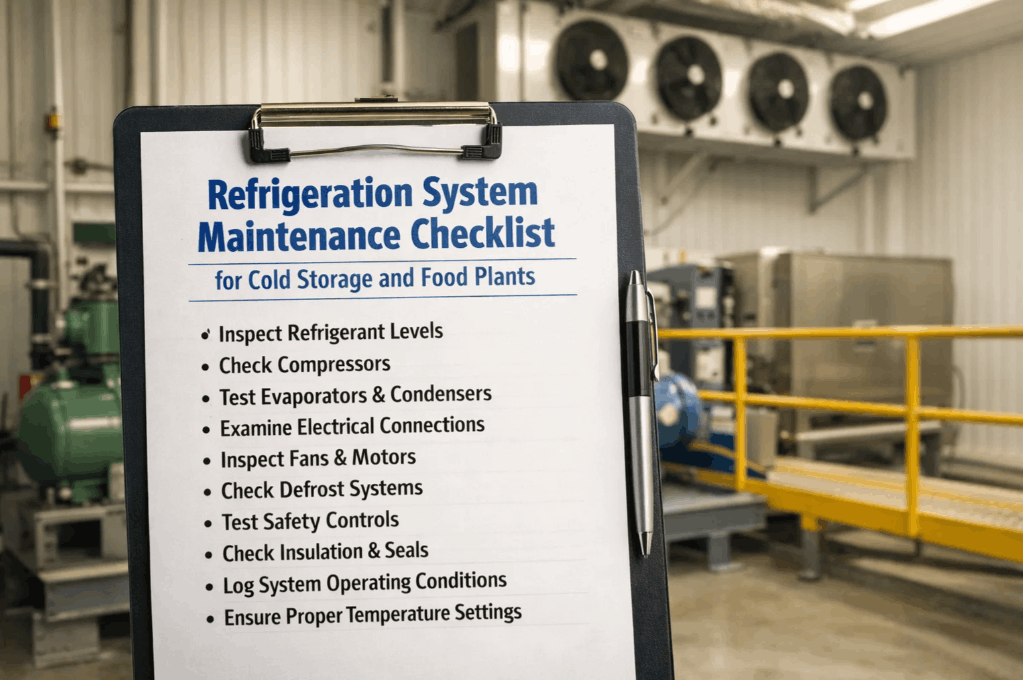
In cold storage operations, the difference between a minor intervention and a full-blown product loss often comes down to minutes — specifically, the minutes between a system drifting off-spec and the moment a deviation alert finally triggers. A 2°C pre-alert threshold gives maintenance and operations teams a critical buffer, transforming a reactive scramble into a planned, measured response. By catching thermal drift before it crosses a Critical Control Point (CCP), facilities can protect inventory, extend compressor life, and maintain audit readiness without halting production. Configuring your CMMS to flag these early warnings is one of the highest-leverage adjustments you can make this year; explore the framework below or Start Free Trial to implement it directly in your dashboard.
COLD STORAGE PRE-ALERT THRESHOLD
What if your team had 47 minutes to save $250,000 in inventory — instead of 4?
A 2°C pre-alert is not just a notification; it is a structural time advantage. By triggering an alarm before your product crosses a Critical Control Point deviation, cold chain teams gain the runway needed to reroute stock, cycle backup compressors, or dispatch a technician — turning catastrophic loss into routine maintenance.
THE MONITORING PHILOSOPHY
Why a 2°C Buffer Outperforms Deviation-Only Alerting
Waiting for a deviation alert means waiting until failure has already begun. A pre-alert threshold intercepts thermal drift in its earliest phase, when compressor run-time trends and ambient load factors are still manageable. Here is how the proactive model rewrites cold storage response.
Time-to-Response Expansion
A deviation alert at -18°C gives teams roughly 4 to 8 minutes before product temperature approaches the CCP danger zone. A pre-alert at -16°C extends that window to 45–60 minutes — enough time to assess, diagnose, and act without discarding stock.
Compressor Run-Time Trend Catching
When a CMMS logs compressor cycles against a 2°C pre-alert threshold, maintenance teams can identify degrading cooling capacity weeks before total failure. A 15% increase in run-time to hold setpoint is an early mechanical warning — not an after-the-fact data point.
Audit Readiness and HACCP Compliance
Pre-alert logs create a documented, proactive intervention trail. When auditors review HACCP records, a 2°C threshold with timestamped response actions demonstrates control — whereas deviation-only records show recovery, not management.
Escalation Ladder Activation
A pre-alert triggers a tiered response: a technician notification at the 2°C mark, a supervisor escalation at 3°C, and a full deviation lockdown at 4°C. This ladder prevents alert fatigue while ensuring critical drift never goes unanswered.
BY THE NUMBERS
The Measured Impact of Pre-Alert Configuration
Data from cold storage facilities operating with CMMS-driven pre-alert thresholds versus legacy deviation-only systems shows a dramatic shift in operational outcomes and cost containment.
RESPONSE WORKFLOW
The 4-Stage Pre-Alert Escalation Timeline
A properly configured CMMS does not just send an alarm — it orchestrates a response. This timeline maps the exact sequence from initial thermal drift to resolution, showing how each minute is allocated.
Pre-Alert Trigger at 2°C Drift
CMMS detects chamber temperature has shifted 2°C from setpoint. Automated notification dispatched to assigned technician via mobile app, SMS, and dashboard flag. Compressor run-time log captured for trend analysis.
Technician Acknowledgment and Triage
Technician acknowledges alert in CMMS, reviewing real-time compressor cycles, door-open logs, and ambient humidity. If drift is trending toward deviation, backup cooling or stock relocation is initiated.
Supervisor Escalation at 3°C Drift
If temperature continues to rise, CMMS auto-escalates to shift supervisor. Work order generated with full context — drift rate, compressor status, maintenance history — for immediate dispatch decision.
Resolution or Containment
Root cause addressed — compressor serviced, refrigerant topped, or stock relocated to adjacent chamber. CMMS logs resolution, updates asset health score, and schedules preventive follow-up if trend indicates mechanical wear.
THRESHOLD DESIGN
The Pre-Alert Threshold Formula
Setting a pre-alert threshold is not guesswork. It is a calculated buffer based on your facility's thermal inertia, compressor recovery rate, and acceptable product temperature range. Use this formula to calibrate your CMMS.
REACTIVE VS PROACTIVE
Deviation-Only Alerting vs. 2°C Pre-Alert Configuration
The operational gap between these two monitoring philosophies is not incremental — it is the difference between managing a facility and being managed by it.
| Operational Metric | Deviation-Only Alerting | 2°C Pre-Alert Configuration |
|---|---|---|
| Response Window | 4–8 minutes before CCP breach | 45–60 minutes before CCP breach |
| Product Loss Exposure | $2.80 per sq ft per incident | $0.14 per sq ft per incident |
| Compressor Failure Detection | Post-failure; replacement required | Trend-based; scheduled repair |
| Audit Trail Quality | Recovery documentation only | Proactive intervention log |
| Technician Alert Fatigue | High — every alert is critical | Low — tiered escalation filters noise |
| Mean Time to Resolution | 2.5 hours average | 38 minutes average |
CONFIGURE YOUR THRESHOLD
Stop Waiting for the Deviation. Start Responding at the Drift.
Deploy a 2°C pre-alert configuration in your CMMS today and give your team the time they need to protect product, compressors, and compliance.
FIELD RESULTS
What Cold Chain Teams Report After Switching
Facilities that moved from deviation-only alerting to a structured 2°C pre-alert model documented measurable shifts within the first quarter of implementation.
"We caught a condenser fan degradation three weeks before it would have taken down a 40,000-square-foot freezer. The 2°C pre-alert showed us the compressor was cycling 18% longer than baseline — we replaced a $340 motor instead of losing $180K in inventory."
"Our last FDA audit was the first one where the inspector specifically noted our pre-alert intervention logs as a best practice. The escalation ladder in the CMMS gave us a clean, timestamped record of every action taken before deviation."
FREQUENTLY ASKED
Pre-Alert Threshold Configuration Questions
Why is 2°C the recommended pre-alert threshold and not 1°C or 3°C?
A 2°C buffer balances early warning with alert fatigue. At 1°C, normal operational fluctuations (door opens, defrost cycles) trigger false alarms that desensitize staff. At 3°C, the remaining response window shrinks below 20 minutes — too tight for off-hour staffing. Two degrees provides a 45–60 minute window while filtering out routine thermal noise.
How does compressor run-time trend monitoring complement the pre-alert?
Temperature tells you what happened; compressor run-time tells you why. When a CMMS logs that a compressor is running 15% longer to hold the same setpoint, it flags mechanical degradation — low refrigerant, fouled coils, or bearing wear — before temperature drift even begins. This pairs with the 2°C alert to create a two-layer early warning system.
Can I configure different pre-alert thresholds for different cold storage zones?
Yes — and you should. A blast freezer at -35°C, a holding freezer at -18°C, and a cooler at 3°C each have different thermal mass and recovery profiles. Your CMMS should allow per-zone threshold rules based on the pre-alert formula, accounting for product load, compressor capacity, and HACCP CCP limits. You can Start Free Trial to access the per-zone configuration wizard.
What happens if a technician does not acknowledge the pre-alert?
The escalation ladder activates. If the initial alert goes unacknowledged for 10 minutes, the CMMS auto-escalates to the shift supervisor. At 20 minutes with continued drift, the system notifies the facility manager and logs an exception for review. This ensures no pre-alert is silently dismissed — a common failure mode in legacy monitoring.
How long does it take to implement a 2°C pre-alert in an existing CMMS?
For a facility with 10–20 monitored zones and existing temperature sensors, configuration typically takes one business day. This includes threshold setup, escalation rule mapping, mobile notification routing, and a 48-hour shadow period to validate alert behavior against actual drift patterns. Book a guided walkthrough via Book a Demo to scope your specific facility.
START PROACTIVE MONITORING
Give Your Team the Minutes That Save the Inventory
Configure a 2°C pre-alert threshold in your CMMS and convert cold storage crises into routine maintenance interventions.
Free 14-day trial · No credit card