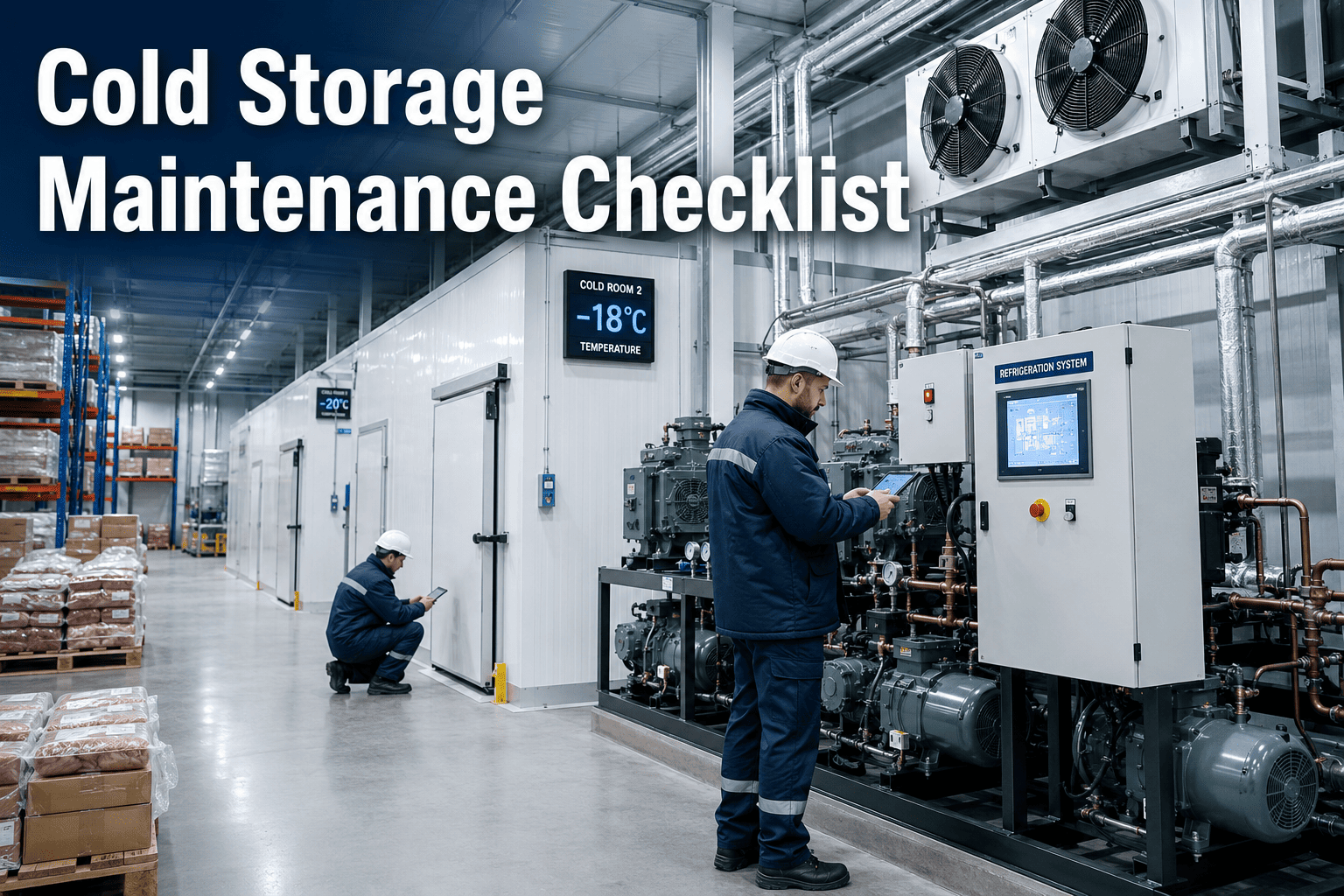
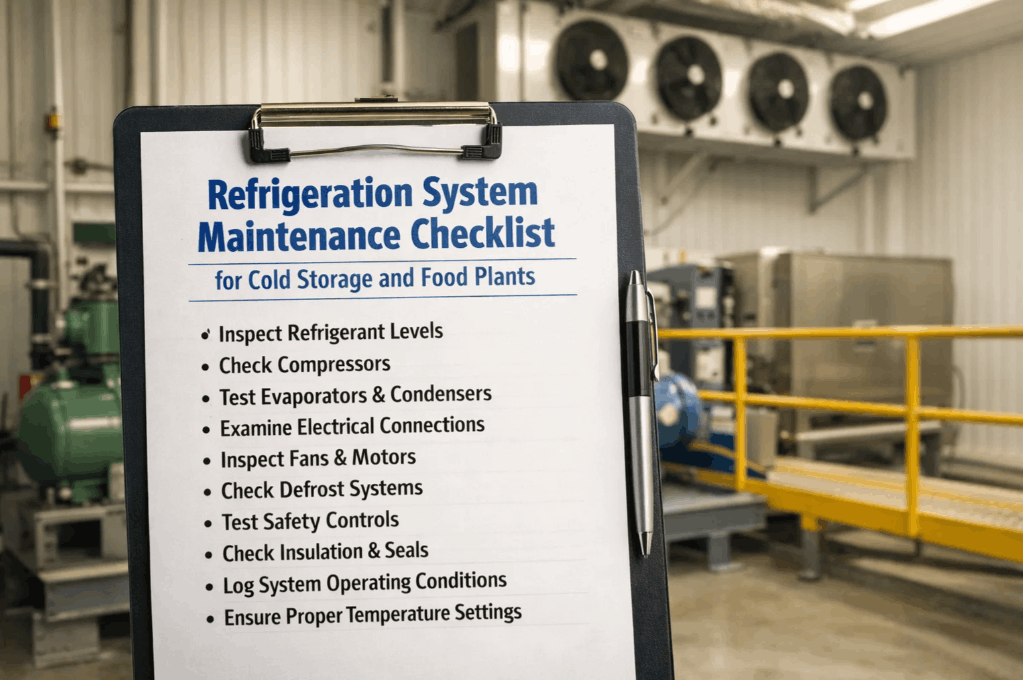
The plant manager's phone rang at 2:47 AM on a Saturday. The overnight security guard reported water pooling on the warehouse floor outside Cold Room 3—a 4,000 square-foot freezer holding $380,000 in finished frozen entrees. By the time the refrigeration technician arrived at 3:30 AM, the room temperature had climbed from -10°F to 18°F. The evaporator coils were encased in a solid wall of ice three inches thick. The defrost drain had clogged weeks earlier—each defrost cycle sent meltwater cascading onto the coils instead of down the drain, building layer after layer of ice until airflow stopped completely. The compressors had been running at 100% capacity for hours trying to compensate, pulling record amperage before the high-pressure safety tripped and shut everything down. It took 36 hours to defrost the coils, clear the drain, and pull the room back to temperature. Of the $380,000 in product, $142,000 had to be destroyed—temperature logs showed it had exceeded safe holding temperatures for too long to reclaim. The clogged drain that started everything would have taken five minutes to clear during a routine monthly inspection.
Facilities with structured cold storage preventive maintenance programs experience 78% fewer unplanned temperature excursions and save an average of $215,000 annually in prevented product losses, emergency repairs, and regulatory penalties.
Maintenance Guide / Preventive Maintenance Scheduling
Cold Storage Maintenance Best Practices
Essential maintenance procedures to prevent temperature excursions, protect inventory, and ensure food safety compliance across cold rooms, freezers, and blast chillers.
Fewer Temperature Excursions
$215K
avg. annual savings
Prevented Losses
Cold Storage System Components and Maintenance Priorities
Cold storage systems are complex mechanical installations where every component affects the system's ability to hold temperature. Understanding the relationship between components helps maintenance teams prioritize work that has the greatest impact on reliability and efficiency:
Compressors
The heart of the refrigeration system—compresses refrigerant gas to drive the cooling cycle. Reciprocating, screw, or scroll types depending on system size. Failure stops all cooling.
Maintenance Priority:
Critical
Oil analysis quarterly, vibration monitoring monthly, amp draw logging, suction/discharge pressure trending, operating hour tracking
Evaporator Coils and Fans
Absorb heat from the cold room interior. Coils accumulate frost and ice that must be periodically defrosted. Fans distribute cold air throughout the space. Most common failure point.
Maintenance Priority:
Critical
Defrost system verification daily, coil inspection weekly, fan motor condition monthly, drain patency monthly, fin condition quarterly
Condenser System
Rejects heat absorbed from the cold room to the outside environment. Air-cooled or evaporative types. Dirty or restricted condensers are the leading cause of compressor overload and failure.
Maintenance Priority:
High
Coil cleaning monthly (more in dusty environments), fan motor inspection, water treatment (evaporative), ambient clearance verification
Doors, Seals, and Insulated Envelope
Maintains the thermal barrier between conditioned and ambient space. Strip curtains, rapid doors, dock seals, and wall/ceiling/floor insulation panels work together to minimize heat infiltration.
Maintenance Priority:
High
Door seal inspection weekly, strip curtain condition, insulation panel joints, floor heater verification, vapor barrier integrity
Controls and Monitoring
Temperature controllers, defrost timers, pressure controls, alarm systems, and data loggers that manage system operation and provide documentation for regulatory compliance.
Maintenance Priority:
High
Sensor calibration monthly, alarm testing weekly, data logger verification, controller backup, defrost timer accuracy
Piping, Valves, and Refrigerant
Connects system components and carries refrigerant. Expansion valves, solenoid valves, check valves, sight glasses, filter-driers, and insulation maintain proper refrigerant flow and system efficiency.
Maintenance Priority:
Moderate
Leak detection quarterly, sight glass monitoring, filter-drier condition, valve operation verification, pipe insulation inspection
Cold Storage Types and Specific Requirements
Different cold storage environments operate at different temperatures and serve different functions, each creating unique maintenance challenges:
Raw ingredient storage, fresh product holding, staging areas, thawing rooms
Unique Maintenance Challenges:
High door traffic increases heat load and humidity infiltration
Condensation management—warm moist air entering cooler condenses on cold surfaces
Drain systems handle large volumes of condensate and must remain clear
Evaporator fan motors work continuously in humid environment
Floor condition—constant moisture creates slip hazards and floor deterioration
Frozen product storage, ingredient holding, finished goods warehousing
Unique Maintenance Challenges:
Frost and ice accumulation on coils, walls, floors, and racks is constant
Defrost drain freeze-up—drain lines, pans, and heaters require dedicated maintenance
Door heaters must prevent freeze-shut conditions while not wasting energy
Floor heater systems prevent frost heave that can crack foundations
Metal fatigue—extreme cold makes components brittle over time
Rapid product freezing, IQF processing, flash chilling cooked products
Unique Maintenance Challenges:
Extreme temperature differential creates massive frost load on evaporator coils
High-velocity fans require frequent motor and bearing maintenance
Aggressive defrost cycles stress components through repeated thermal cycling
Product moisture creates heavy ice loads—defrost must be thorough and complete
Compressor load is maximum—any efficiency loss has amplified impact
Fresh produce long-term storage, ripening rooms, atmosphere-modified environments
Unique Maintenance Challenges:
Gas-tight door seals—any leak compromises controlled atmosphere
Atmosphere generation and scrubbing equipment adds maintenance complexity
Humidity control is critical for produce quality—too low desiccates, too high promotes rot
Ethylene removal systems require filter replacement and calibration
Safety systems for oxygen-depleted atmospheres must function reliably
Never Miss a Cold Storage PM Again
Oxmaint automates preventive maintenance scheduling across every cold room, freezer, and blast chiller in your facility—with automated alerts, digital checklists, and complete maintenance histories for regulatory compliance.
The Top 5 Cold Storage Failures and How to Prevent Them
These five failure modes account for the vast majority of cold storage temperature excursions. Addressing each systematically prevents the cascading equipment failures and product losses that follow:
#1
Evaporator Coil Ice-Up
Responsible for ~35% of cold storage temperature excursions
How It Happens:
Defrost cycle fails to fully clear frost from coils. Each subsequent cycle adds more ice. Airflow decreases progressively. Room temperature rises slowly—often just 1-2°F per day initially—until ice blocks airflow completely. By the time alarms trigger, the coil is a solid block of ice requiring hours of manual defrost.
Prevention:
Verify defrost completion visually after each cycle (coils should be frost-free)
Test defrost heater continuity monthly—individual failed heaters allow ice to persist
Verify defrost termination thermostat setting—must reach 55°F+ at coil to clear all ice
Keep defrost drain clear—clogged drains cause meltwater to refreeze on coils
Monitor room temperature trend—gradual rise of 1-2°F is the early warning
#2
Dirty Condenser Coils
Responsible for ~25% of compressor failures and temperature excursions
How It Happens:
Food processing environments produce airborne flour, cardboard fibers, grease, and dust that accumulate on condenser coils. Dirty coils can't reject heat efficiently, causing head pressure to rise. Compressor works harder, draws more power, runs hotter, and eventually trips on high-pressure safety or burns out. A 20% reduction in condenser airflow can increase energy consumption by 30%.
Prevention:
Clean condenser coils monthly minimum—bi-weekly in flour or grease-heavy environments
Record discharge pressure at each cleaning—trending upward between cleanings means interval is too long
Maintain clearance around condenser—stored materials, pallets, and equipment block airflow
Install condenser coil filters where available and replace on schedule
For evaporative condensers: maintain water treatment program to prevent scale
#3
Door Seal and Insulation Failures
Responsible for ~20% excess energy consumption and ice buildup issues
How It Happens:
Damaged gaskets, misaligned doors, torn strip curtains, and deteriorated insulation allow warm, humid air to infiltrate continuously. This increases refrigeration load, accelerates evaporator frost accumulation, creates condensation and ice formation on walls and floors, and drives energy costs up dramatically. A 1-inch gap around a freezer door gasket can admit enough moisture to ice over evaporator coils in days.
Prevention:
Inspect door gaskets weekly—use flashlight test (visible light through closed door = failed seal)
Replace damaged strip curtains immediately—each missing strip increases infiltration
Verify door closer mechanism returns door to fully closed position
Inspect insulation panels for dents, moisture staining, and joint separation
Test door heaters (freezers)—failed heaters allow ice to build up and prevent closure
#4
Refrigerant Leaks
Responsible for ~10% of gradual cooling capacity loss
How It Happens:
Vibration, thermal cycling, and corrosion create small leaks at joints, fittings, and valve stems. Refrigerant charge decreases slowly—system compensates by running longer but capacity drops. Eventually the system can't hold setpoint, especially under heavy load (hot weather, frequent door openings, product loading). By the time it's noticed, significant charge may be lost.
Prevention:
Check refrigerant sight glass weekly—bubbles indicate low charge
Conduct electronic or ultrasonic leak survey quarterly
Track refrigerant additions—any system requiring regular additions has a leak
Monitor superheat trends—rising superheat suggests decreasing charge
EPA regulations require leak repair for systems with annual leak rates above thresholds
#5
Control System and Alarm Failures
Responsible for ~10% of delayed response to temperature excursions
How It Happens:
Temperature sensor drift causes the system to maintain the wrong temperature without alarming. Alarm system communication failures (cellular, WiFi, phone line) prevent notifications from reaching personnel. Battery backup failures during power outages disable monitoring. The equipment failure itself may be minor, but the delayed detection turns it into a product-loss event.
Prevention:
Calibrate temperature sensors monthly against certified reference
Test alarm notification system weekly—confirm messages reach designated personnel
Test battery backup quarterly—verify runtime exceeds expected outage duration
Maintain redundant alarm paths (cellular + WiFi, or primary + backup phone numbers)
Review alarm log monthly—nuisance alarms lead to alarm fatigue and ignored real events
Energy Efficiency Through Maintenance
Cold storage is typically the largest single energy consumer in a food processing facility—often 40-60% of the total electricity bill. Maintenance-related inefficiencies compound into massive costs because the equipment never stops running:
Every 1°F increase in condensing temperature raises energy consumption approximately 2-3%. In food processing environments, monthly condenser cleaning is often insufficient—bi-weekly cleaning may be needed. Track discharge pressure as a condenser cleanliness indicator.
Warm air infiltration doesn't just raise temperature—it brings moisture that becomes frost on evaporator coils, reducing their efficiency further. The energy to cool the air and remove its moisture through repeated defrost cycles compounds the loss. Strip curtains, rapid doors, and maintained gaskets provide layered protection.
Frost acts as an insulator on evaporator coils, reducing heat transfer efficiency. The system compensates by running longer to maintain setpoint. Properly functioning defrost systems with correct timing, heater coverage, and drain management prevent efficiency-robbing ice accumulation.
Every watt of lighting inside a cold room becomes a watt of heat that must be removed. LED retrofits reduce lighting energy by 60-80% and the associated cooling load proportionally. Ensure occupancy sensors function properly to avoid lights running in unoccupied rooms.
Damaged or moisture-saturated insulation panels lose R-value dramatically. A forklift impact that cracks a panel may not seem urgent, but the moisture that enters the crack degrades insulation progressively. Repair panel damage promptly and investigate any condensation on exterior surfaces.
Improper refrigerant charge, restricted filter-driers, or failing expansion valves cause superheat and subcooling values to drift from specification. These parameters directly affect system efficiency. Monthly measurement and trending catches drift before it becomes significant waste.
Combined Impact
These efficiency losses are cumulative. A cold storage system with dirty condensers (+25%), poor door seals (+20%), and frosted evaporators (+15%) may be consuming 60% more energy than a properly maintained system. For a facility spending $200,000 annually on refrigeration electricity, that's $120,000 in preventable waste—more than enough to fund a comprehensive maintenance program.
Defrost System Maintenance: The Most Overlooked Critical Task
Defrost systems remove the inevitable frost accumulation from evaporator coils. When defrost fails, everything else follows—reduced airflow, rising temperatures, compressor overload, and eventual system shutdown. Defrost maintenance deserves dedicated focus:
Resistance heating elements mounted on or near evaporator coils that melt accumulated frost during scheduled defrost cycles.
Maintenance Requirements:
Test heater continuity monthly with megohmmeter—open heaters don't heat their section of coil
Inspect heater mounting and position—displaced heaters create undefrosted zones
Check heater lead wires for damage from ice expansion and thermal cycling
Verify heater wattage matches specification—degraded heaters produce insufficient heat
Inspect for corrosion on heater sheath—corroded heaters become ground faults
Electronic or mechanical timers that initiate defrost cycles at programmed intervals and terminate when the coil reaches target temperature.
Maintenance Requirements:
Verify defrost initiation times match schedule—clock drift on mechanical timers shifts cycle timing
Test defrost termination thermostat—must reach 55°F+ at coil to ensure complete defrost
Verify failsafe timer terminates defrost if thermostat fails (prevents room warmup)
Review defrost duration trends—increasing duration suggests declining heater performance
Confirm fan delay timer keeps fans off until coil temperature drops below 32°F post-defrost
Drain pans, drain lines, and drain heaters that carry meltwater from defrost cycles out of the cold room. The most common single point of failure in defrost systems.
Maintenance Requirements:
Flush drain lines with hot water weekly—ice blockages are progressive, not sudden
Verify drain pan heaters are operational—frozen drain pan overflows onto coils and floor
Check drain line heater continuity monthly—these fail frequently and silently
Inspect drain line insulation and trace heating outside the cold room
Clear drain pan of debris—product particles and scale accumulate and restrict flow
Complete Cold Storage Compliance Documentation
Oxmaint captures temperature logs, maintenance records, calibration data, and excursion responses in one searchable platform—giving you audit-ready documentation for FDA, USDA, and customer inspections.
Seasonal Maintenance Considerations
Cold storage systems face different challenges as seasons change. Ambient temperature, humidity, and operational patterns shift throughout the year, requiring maintenance adjustments:
Challenge: Peak heat rejection demand. Condensers must work hardest when ambient temperatures are highest.
Increase condenser cleaning frequency—dirty coils that performed adequately in spring may cause high-pressure trips in summer heat
Verify condenser fan motors and belts are in good condition before peak demand
Check compressor amp draw under load—summer operation should not exceed nameplate
Verify liquid line subcooling is adequate—low subcooling in high ambient indicates condenser capacity issues
Ensure nothing obstructs condenser airflow—seasonal storage, vegetation growth, construction staging
Challenge: Low ambient causes low head pressure, affecting expansion valve operation and system capacity.
Verify head pressure control (fan cycling, VFD, dampers) maintains adequate condensing pressure
Check for frozen outdoor piping, valve stems, and drain lines
Inspect roof-mounted equipment for ice accumulation and snow loading
Verify crankcase heaters operate when compressor is off to prevent liquid refrigerant migration
Check exterior building doors for ice formation that prevents proper closure
Challenge: High ambient humidity dramatically increases moisture infiltration, evaporator frost load, and drain demand.
Increase defrost frequency if evaporator icing accelerates
Clear defrost drains more frequently—higher moisture load means higher drain demand
Inspect and replace damaged strip curtains and door gaskets before humid season
Monitor for condensation on exterior of cold room panels—indicates vapor barrier breach
Check that door anti-sweat heaters function to prevent moisture accumulation on frames
Frequently Asked Questions
How often should condenser coils be cleaned in a food processing facility?
Monthly cleaning is the minimum for most food processing environments, but facilities with airborne flour, grease, or fibers may need bi-weekly or even weekly cleaning. The best approach is to track condenser discharge pressure after each cleaning and establish a baseline. If pressure rises more than 5-10 PSI between cleanings, shorten the interval. Use coil cleaning solution and low-pressure water—never high-pressure wash, which can bend fins and reduce airflow permanently. For rooftop units, include cleaning in the PM schedule rather than relying on "as needed" which invariably means "when it fails."
What temperature rise is acceptable before product is at risk?
For frozen product (target 0°F or below), product temperature reaching 15°F–20°F is the concern threshold, though actual risk depends on the specific product and how long it stays elevated. For coolers (target 34°F–40°F), any sustained temperature above 41°F puts product into the FDA "danger zone." The key is duration: brief excursions during door openings or defrost cycles are normal; sustained temperature rise over hours indicates equipment problems. Your HACCP plan should define specific time-temperature limits for each product category and the disposition decision process when limits are exceeded.
How do I know if my defrost system is working properly?
After a defrost cycle completes, visually inspect the evaporator coils—they should be completely frost-free with visible metallic fin surfaces. Any remaining frost or ice indicates incomplete defrost. Monitor defrost duration: if cycles are taking longer to reach termination temperature, heater performance is declining. Check defrost drain flow: water should exit the drain freely during defrost. Verify the defrost termination thermostat trips at the correct temperature (typically 55°F at coil). If coils show ice patterns that match missing heater sections, individual heaters have failed.
What are the most important spare parts to stock for cold storage equipment?
Prioritize parts whose failure causes immediate temperature impact: evaporator fan motors (most common failure), defrost heaters for each coil type, defrost termination thermostats, door gasket sets, contactors for compressor and fan circuits, run/start capacitors, temperature sensors and controllers, filter-driers, sight glasses, and drain line heaters. For critical rooms, also stock an expansion valve and compressor contactor. Most of these parts cost under $200 each—insignificant compared to the product loss from a 48-hour parts wait.
How can I reduce cold storage energy costs through maintenance?
The highest-impact maintenance activities for energy savings are: clean condenser coils regularly (20-35% energy reduction potential), maintain door seals and strip curtains (15-30% reduction), ensure defrost systems work completely to prevent evaporator ice buildup (10-25% reduction), and verify correct refrigerant charge through superheat/subcooling measurements (5-20% reduction). Combined, proper maintenance can reduce cold storage energy consumption by 30-45% compared to poorly maintained systems. For a facility spending $200,000 annually on refrigeration electricity, that translates to $60,000-$90,000 in savings.
What refrigerant record-keeping is required by EPA regulations?
Under EPA Section 608, facilities must maintain records for systems containing 50+ pounds of refrigerant. Required documentation includes the quantity and type of refrigerant added during each service, the date of service, identification of the technician and their certification, leak inspection dates and results, and repair records when leaks are found. Facilities must calculate annual leak rates and repair systems that exceed 20% leak rate for commercial refrigeration (30% for industrial process). Records must be retained for at least 3 years. The 2024 AIM Act updates add additional requirements for HFC phase-down compliance.