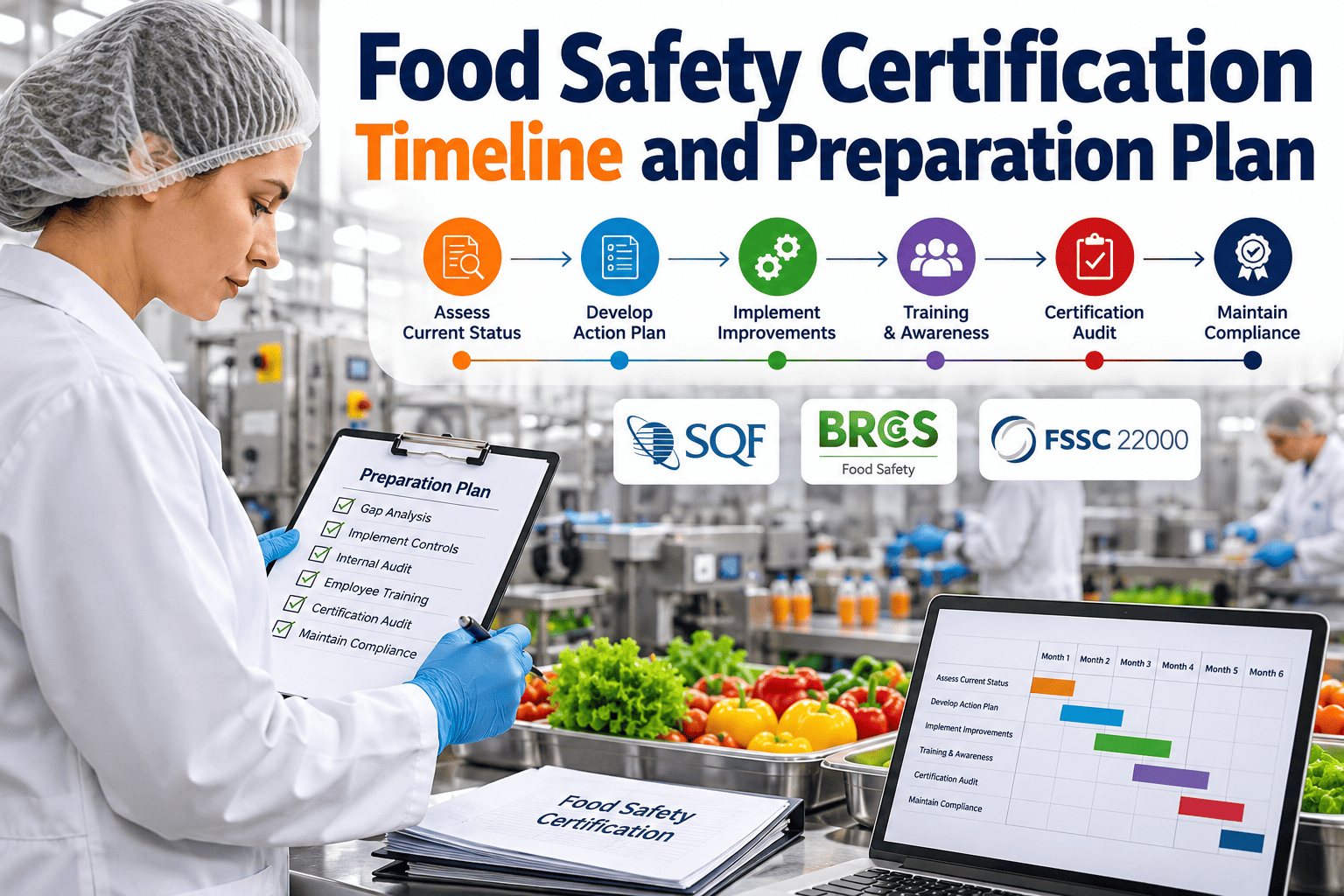
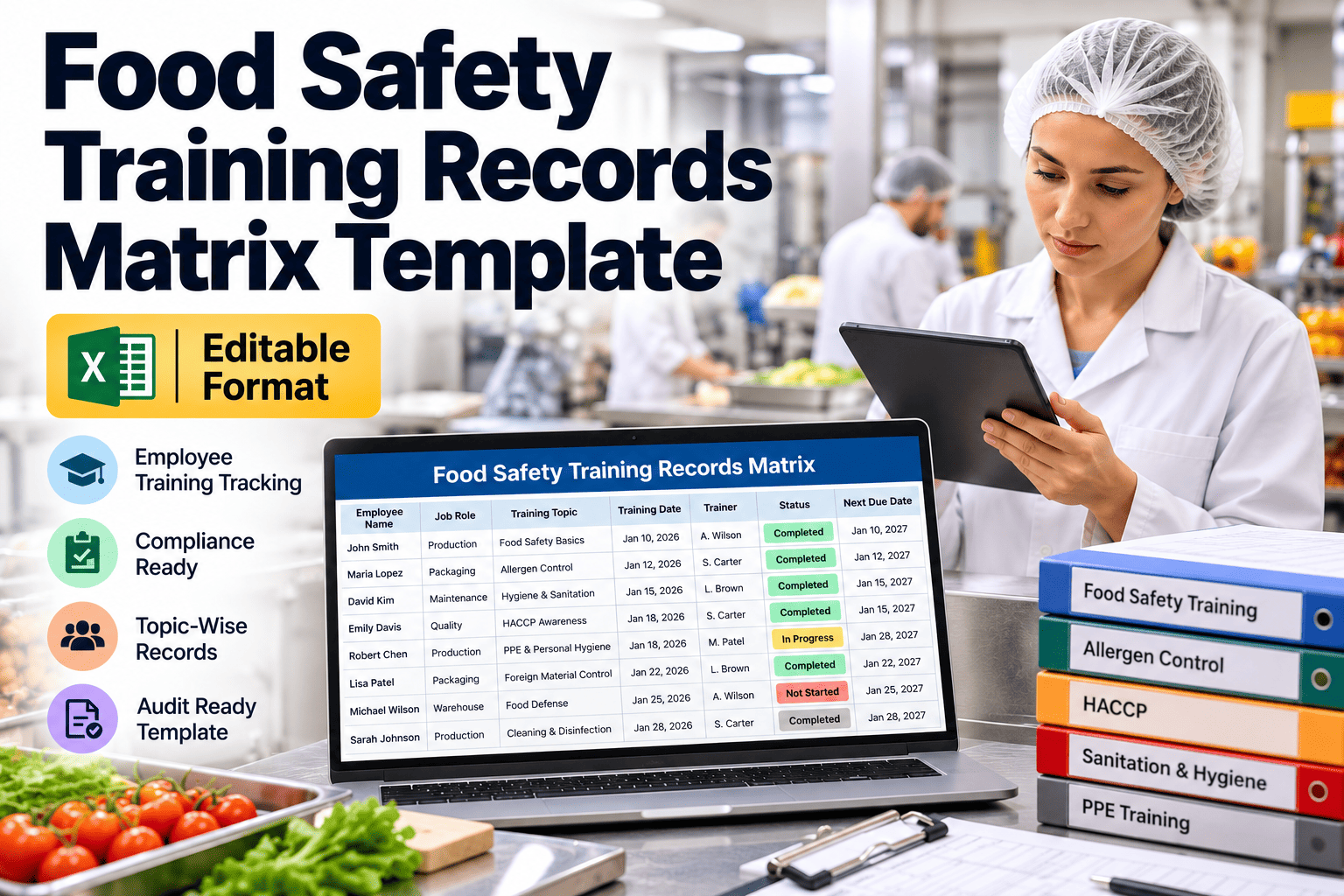
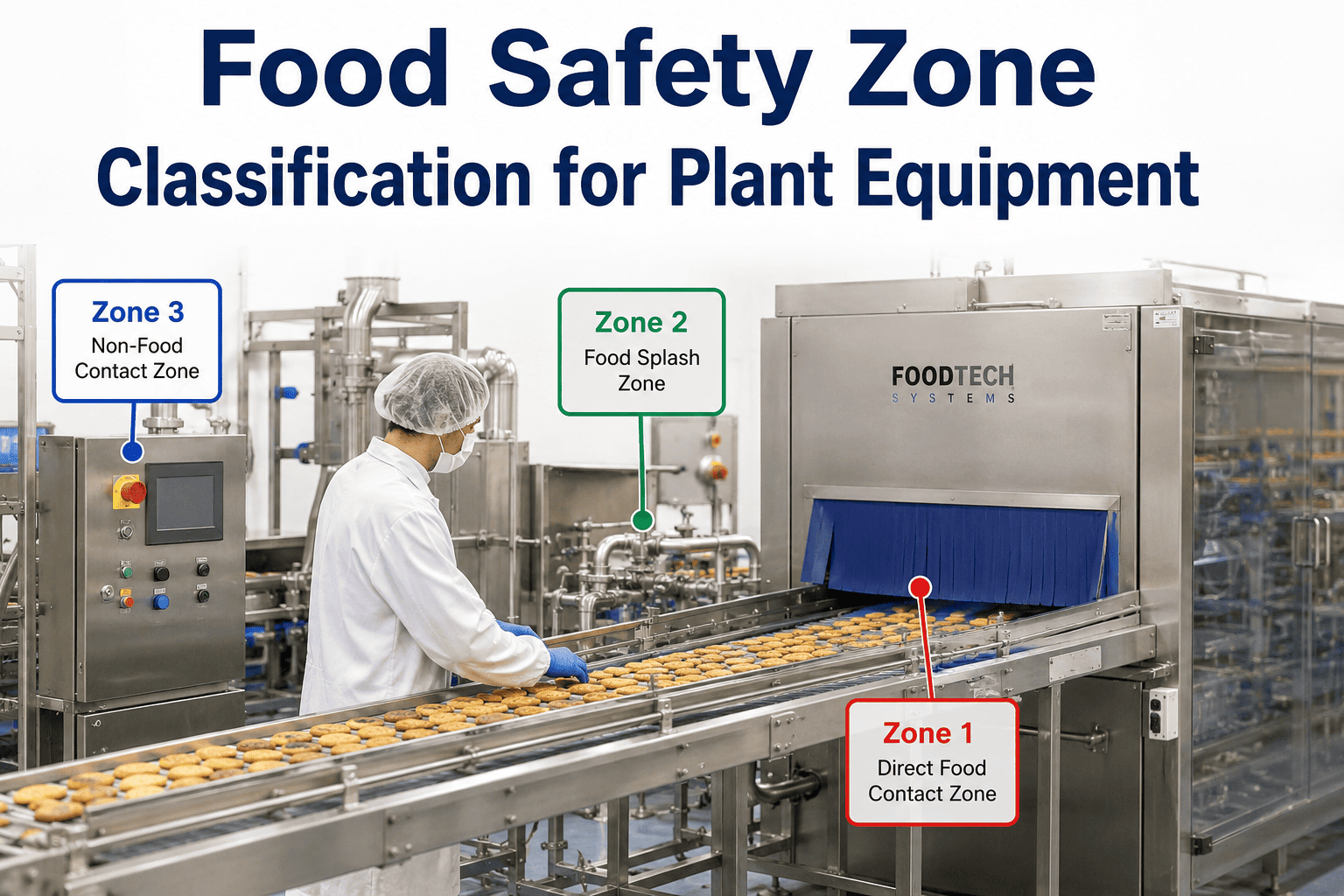
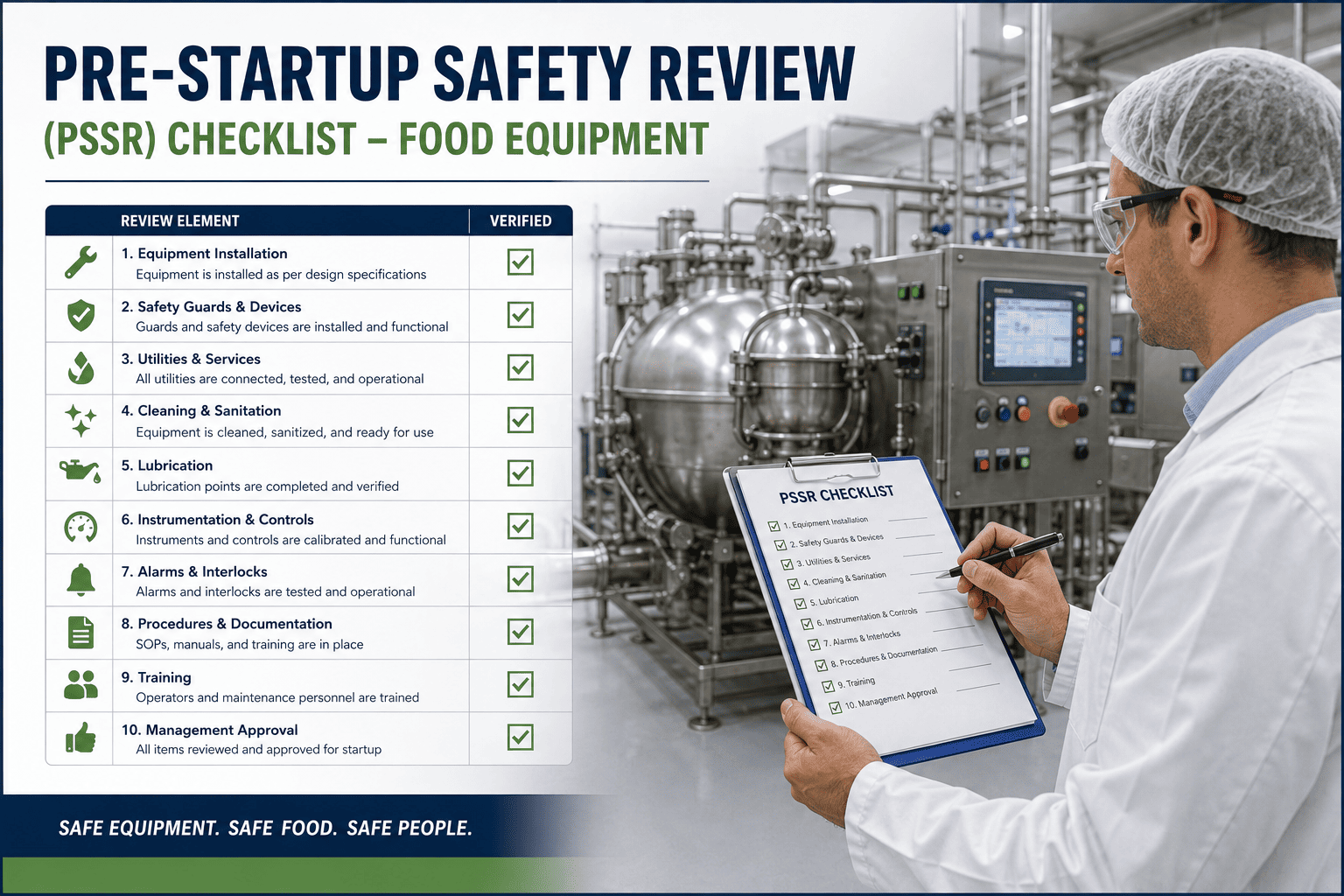
Maintenance training in food manufacturing is one of the most overlooked levers for operational excellence — and one of the most consequential. When a technician misses a lubrication step on a filler line or misreads a conveyor tension gauge, the ripple effects reach product quality, food safety compliance, and facility uptime simultaneously. For HR and Maintenance Directors building structured programs, the question is no longer whether to invest in training — it is how to build programs that produce lasting competency rather than ticked compliance boxes.
Build a Training Program That Actually Works
OxMaint gives Maintenance Directors a CMMS-powered platform for tracking technician certifications, OJT completion, and food safety training compliance — across every facility and every audit standard.
Why Maintenance Training Programs Fail in Food Plants
Most food plant maintenance training failures share a common root cause: programs are designed around documentation rather than demonstrated competency. A technician completes a sign-off sheet, the record enters a binder, and the facility considers its obligation met. Three months later, the same technician is troubleshooting a CIP pump failure using intuition rather than procedure.
The gap between training completion and applied skill is where food safety and equipment reliability risk lives. For HR Directors managing workforce development across facilities in the US, UK, Canada, Germany, and the UAE, closing that gap requires a fundamentally different program architecture — one built on competency verification, structured on-the-job training, and continuous assessment rather than one-time induction events.
A well-structured maintenance training platform transforms this dynamic by tying training records directly to maintenance work orders, asset history, and compliance schedules — making skill gaps visible before they become failures.
What a Competency Framework Looks Like for Food Plant Technicians
A competency framework defines what a technician must know and be able to demonstrate — not just what topics they have been exposed to. In food manufacturing environments, competency maps to four distinct domains, each carrying different risk profiles and certification requirements.
Equipment-Specific Technical Skills
Covers mechanical, electrical, pneumatic, and hydraulic competencies for specific assets on the production floor. A filler technician's competency map differs from a refrigeration technician's. Skills are verified through practical demonstration on actual equipment — not multiple-choice testing alone.
Food Safety and Hygiene Competencies
Maintenance technicians who enter production areas must understand allergen contamination risks, hygienic maintenance practices, and the food safety consequences of improper reassembly. GFSI standards including BRC, SQF, and FSSC 22000 require evidence that maintenance staff are trained in these areas — not just production operators.
Regulatory and Compliance Competencies
Covers lockout/tagout (LOTO), confined space entry, permit-to-work systems, and jurisdiction-specific requirements. UK facilities operate under HSE regulations, Canadian sites under provincial OHS requirements, German facilities under DGUV standards, and UAE sites under OSHAD framework requirements. Competency records must reflect the applicable regulatory environment for each facility.
Predictive and Condition-Based Maintenance Skills
As food manufacturers adopt vibration analysis, thermography, and oil analysis, technicians need competency in data interpretation and condition monitoring tools. Building these skills within the maintenance workforce — rather than depending entirely on external contractors — delivers long-term operational advantage and cost reduction.
Structuring On-the-Job Training for Maximum Skill Retention
On-the-job training (OJT) in food plant maintenance is the most effective — and most poorly executed — element of most programs. Structured OJT differs from shadowing or observation in one critical way: it defines specific tasks the trainee must perform independently, under supervision, before sign-off is granted.
Each competency is broken into discrete tasks. The trainee performs each task while the assessor observes and scores. Sign-off is granted per task — not per training session. This creates a granular competency record that holds up under GFSI audit scrutiny.
Pairing new technicians with experienced mentors for a structured period accelerates equipment familiarity and workplace-specific knowledge transfer — particularly valuable in multi-shift operations across Canadian and UK facilities where institutional knowledge sits with senior staff approaching retirement.
Skills degrade without repetition. Structured refresher cycles — typically annual for safety-critical competencies and biennial for technical skills — maintain proficiency and satisfy audit requirements for ongoing competency verification. A CMMS automates refresher scheduling against individual technician records.
Cross-training technicians across equipment categories reduces single-point-of-failure risk during absenteeism or turnover. In Germany and UAE facilities experiencing skilled maintenance labor shortages, cross-competency development provides operational resilience without proportional headcount increases.
Food Safety Training Requirements for Maintenance Teams
Maintenance technicians occupy a unique position in food safety risk management. They access equipment interiors, handle food-contact surfaces during reassembly, and work in production areas where contamination pathways are real and consequential. Food safety training for maintenance staff must go beyond general hygiene awareness into maintenance-specific contamination prevention.
Hygienic Reassembly and Verification
Requirement: Technicians must demonstrate correct reassembly of food-contact equipment after maintenance, including documentation of pre-operational checks before line restart.
Standard reference: BRC Issue 9 Section 4.11, SQF Edition 9 Module 11, FSSC 22000 Version 6.
Allergen Contamination Prevention
Requirement: Technicians working across allergen-segregated lines must understand cross-contact risks and follow allergen cleaning verification procedures before and after maintenance activity.
Standard reference: Required under all GFSI-recognized standards and FDA FSMA preventive controls requirements in the US.
Foreign Body Risk from Maintenance Activity
Requirement: Tool control, fixings accounting, and post-maintenance equipment inspection are mandatory training elements. Foreign body contamination from maintenance materials is a leading cause of product recalls in UK and Canadian food facilities.
Standard reference: BRC 4.10, SQF 11.8, and IFS Food Version 8.
Temporary Repairs and Material Restrictions
Requirement: Technicians must be trained on approved maintenance materials — lubricants, adhesives, sealants — and the prohibition on unapproved materials entering food zones. Temporary repairs must be documented with time-bound resolution commitments.
Standard reference: Required under all major GFSI standards and Health Canada food facility requirements.
Equipment Certification Pathways for Food Plant Maintenance
Equipment certification formalizes technician competency at a level that satisfies both internal quality assurance requirements and external regulatory expectations. For HR Directors in food manufacturing, managing certification pathways across diverse equipment categories requires a systematic approach to tracking expiry, renewal, and competency gaps.
| Certification Type | Applicable Equipment | Issuing Body / Standard | Typical Renewal Period | Relevant Markets |
|---|---|---|---|---|
| Lockout/Tagout (LOTO) Certification | All powered equipment | OSHA 29 CFR 1910.147 (US), HSE PUWER (UK) | Annual retraining | US, UK, Canada, Germany, UAE |
| Refrigeration Systems Certification | Ammonia and HFC refrigeration plants | EPA 608 (US), F-Gas Regulation (UK/EU) | No expiry — competency-based | US, UK, Germany |
| Pressure Systems Competency | Retorts, autoclaves, boilers | ASME (US), Pressure Systems Safety Regs (UK), BetrSichV (Germany) | Role-linked, typically 3 years | US, UK, Germany |
| Electrical Competency Authorization | HV and LV electrical systems | NFPA 70E (US), BS 7671 (UK), DIN VDE (Germany) | Biennial review | US, UK, Germany |
| Forklift / Powered Industrial Truck | Forklifts, pallet trucks, reach trucks | OSHA 1910.178 (US), PUWER (UK), DGUV (Germany) | 3 years with annual refresh recommended | US, UK, Canada, Germany, UAE |
| Confined Space Entry Permit | Tanks, vessels, silos, ducts | OSHA 1910.146 (US), Confined Spaces Regs (UK) | Annual | US, UK, Canada |
Centralizing certification tracking in a CMMS eliminates the risk of expired certifications reaching the production floor undetected. Automated alerts notify HR Directors and Maintenance Managers before expiry dates are reached — replacing spreadsheet-based tracking systems that generate compliance gaps during periods of high operational demand. Sign Up Free to see how OxMaint manages certification expiry across your entire technician workforce.
How AI Vision Enhances Maintenance Training in Food Manufacturing
AI Vision — the application of computer vision and machine learning to real-world visual data — is opening capabilities for food plant maintenance training programs that were previously dependent on expensive external consultants or one-off observation sessions.
AI Vision can observe a technician performing a maintenance task — bearing replacement, filter change, conveyor tension adjustment — and verify procedure adherence in real time. This removes assessor bottlenecks that slow OJT sign-off, particularly in facilities operating across multiple shifts.
AI detects whether technicians are wearing required PPE in designated zones — hard hats, safety glasses, hearing protection, and hygiene equipment. In UK and German facilities with statutory safety obligations, automated compliance monitoring provides documented evidence for regulatory inspections.
AI can identify deviations from standard maintenance procedures during task execution — incorrect sequencing, missed steps, or unapproved shortcuts. Early detection prevents both safety incidents and food safety consequences from improper equipment reassembly.
Aggregated AI Vision data across multiple technicians and tasks surfaces systemic training gaps — showing HR Directors which procedures generate the most deviation events and which technician groups need targeted refresher intervention. This data-driven approach replaces anecdotal assessment with objective evidence.
For multi-site food manufacturers operating across Canada, the UAE, and Europe, AI Vision delivers consistent training quality assessment regardless of site location — removing the inconsistency that emerges when assessor quality varies between facilities. Book a Demo to see how AI-powered tools integrate with your maintenance training program.
CMMS-Based Training Compliance Tracking
A Computerized Maintenance Management System with integrated training tracking closes the loop between technician competency and maintenance work order execution. Without this integration, a food plant can have excellent training records and poor maintenance outcomes simultaneously — because the competency data and the operational system never speak to each other. Sign Up Free on OxMaint to explore how CMMS-based training compliance works in practice.
Competency-Gated Work Order Assignment
A CMMS can restrict work order assignment to technicians with verified, current competency for the task and equipment involved. If a technician's LOTO certification has lapsed or their equipment-specific qualification has expired, the system prevents assignment and flags the gap to the Maintenance Manager. This control is increasingly expected in BRC and IFS audited facilities across the UK and Germany.
Automated Training Due Date Alerts
A CMMS generates advance alerts as training or certification renewal dates approach — notifying both the individual technician and HR management. For facilities in Canada and the UAE managing large maintenance teams, automated alerts replace the manual monitoring that generates compliance lapses during high-production periods.
Audit-Ready Training Records
GFSI auditors require evidence that maintenance personnel are trained and competent for their roles. A CMMS generates consolidated training records showing each technician's qualification history, assessment results, sign-off dates, and renewal status — retrievable in seconds rather than requiring archive searches through paper binders or disconnected spreadsheets.
Cross-Site Competency Visibility
For HR Directors overseeing maintenance workforce development across multiple facilities, a CMMS training module provides portfolio-level visibility into competency coverage — identifying which sites have critical skill gaps before they become production constraints or audit findings. This strategic view is impossible to maintain with site-level spreadsheet systems.
Training Program Platforms and Tools: A Comparison
Food manufacturing HR and Maintenance Directors evaluating training management tools face a range of options — from standalone learning management systems to integrated CMMS platforms with competency tracking. The right choice depends on facility complexity, audit standard commitments, and integration requirements with existing maintenance systems. Book a Demo to compare how OxMaint's platform fits your operation.
| Platform Type | Best Suited For | Key Capabilities | CMMS Integration | Audit Readiness |
|---|---|---|---|---|
| Standalone LMS | Large enterprises with dedicated L&D teams | Course delivery, completion tracking, e-learning content | Limited — typically API-dependent | Moderate — course-focused, not competency-verified |
| HR Platform with Training Module | Organizations prioritizing HR system consolidation | Employee records, compliance tracking, training scheduling | Low — disconnected from maintenance operations | Moderate — records available but context-limited |
| Paper-Based / Spreadsheet Systems | Very small single-site facilities | Manual records, sign-off sheets, calendar reminders | None | Low — retrieval delays, inconsistency risk |
| CMMS with Training Tracking Module | Multi-site food manufacturers, GFSI-audited facilities | Competency gating, certification expiry alerts, OJT sign-off, audit records | Native — training directly linked to work orders and assets | High — integrated competency and maintenance records |
| AI-Powered CMMS Platform | Growth-stage and enterprise food manufacturers | Automated scheduling, AI-assisted gap analysis, multi-site dashboards, predictive training needs | Very high — IoT-ready, API-enabled | Very high — real-time compliance and competency visibility |
The ROI of Structured Maintenance Training Programs
The business case for investing in food plant maintenance training extends well beyond audit compliance. HR and Maintenance Directors who quantify training program value present a compelling case to operations leadership and finance teams focused on facility profitability.
Competent technicians diagnose and resolve equipment failures faster, with fewer repeat failures. The reduction in mean time to repair (MTTR) and mean time between failures (MTBF) improvement directly translates into production uptime gains that dwarf training program costs.
Maintenance-related nonconformances in BRC, SQF, and FSSC 22000 audits carry major classification risk. Documented competency programs with CMMS-tracked records eliminate the most common audit findings in this category — protecting certification grades and retailer relationships in the UK and Germany.
Structured career development pathways — competency frameworks with visible progression milestones — improve technician retention in competitive labor markets. US and Canadian food manufacturers facing maintenance workforce shortages report measurable retention improvements when structured training programs replace informal development.
Cross-training programs that expand internal competency coverage reduce the volume of specialist contractor call-outs required for equipment outside technician qualification. For UAE and German facilities with high contractor rates, internal competency development generates rapid financial returns.
Common Challenges in Food Plant Maintenance Training
Training Time vs. Production Pressure
Problem: Maintenance teams under production pressure find OJT sign-offs delayed indefinitely as operational demands take priority.
Fix: Modular task-based OJT that can be completed in short windows between jobs — tracked in a CMMS system — maintains program momentum without requiring dedicated training days.
High Technician Turnover
Problem: Frequent turnover means programs must continuously onboard new technicians while maintaining proficiency in the existing team.
Fix: Standardized onboarding competency paths with clear milestones allow new starters to reach operational independence faster and more consistently across facilities in the US, UK, and Canada.
Inconsistency Across Multi-Site Operations
Problem: Sites in different countries apply different training standards, assessment rigor, and documentation formats — creating audit variability.
Fix: A centralized training management platform standardizes competency frameworks and assessment criteria while allowing local compliance configuration for UK, German, Canadian, and UAE regulatory requirements.
Tracking Certifications Across Large Teams
Problem: HR teams managing hundreds of certifications across dozens of technicians cannot reliably track expiry dates with spreadsheets — creating silent compliance gaps.
Fix: Automated CMMS alerts for approaching expiry dates remove human-dependency from compliance timing and ensure no certification lapses reach an audit undetected.
Best Practices for Building Training Programs That Stick
Ground Competency Frameworks in Real Equipment and Real Procedures
Generic maintenance training content — industry-standard manuals and e-learning modules — builds awareness but not plant-specific competency. Effective programs are grounded in the actual equipment, actual maintenance procedures, and actual failure modes of the specific facility. Involving experienced technicians in competency framework development ensures relevance and accelerates new starter knowledge transfer.
Make Food Safety Training Maintenance-Specific, Not Generic
Food safety awareness training designed for production operators does not adequately address the maintenance-specific contamination risks — foreign body introduction, allergen cross-contact during equipment disassembly, hygienic reassembly failures. Develop maintenance-specific food safety modules that address the scenarios technicians actually encounter, not generic hygiene principles that production teams need.
Link Training Records Directly to Maintenance Operations
Training records stored in isolation from maintenance operations create a disconnection that undermines the entire program's value. When competency data feeds directly into work order management — preventing unqualified assignment and generating training gap alerts — the training program becomes operationally integrated rather than a parallel compliance process that maintenance leadership views as HR overhead.
Build Visible Career Progression into the Competency Framework
Technicians engage more consistently with training programs when competency milestones are linked to tangible career progression — pay grade advancement, role designation changes, expanded equipment authorization, or shift leadership opportunities. Facilities that build visible pathways from apprentice to specialist technician within the competency framework report significantly higher training completion rates and lower voluntary turnover across US, UK, and Canadian operations.
Building a Scalable Maintenance Training Program
For food manufacturers expanding from single-site operations to multi-facility portfolios across North America, Europe, and the UAE, scalability is the defining requirement of maintenance training infrastructure. A program designed around paper sign-off sheets and site-specific spreadsheets cannot scale without proportional administrative overhead that creates compliance gaps and inconsistency.
Deploying a CMMS-based training tracking system early in growth creates the infrastructure that scales with the business — maintaining competency program quality as technician headcount increases, sites multiply, and audit frequency intensifies. Every facility added to the portfolio benefits from the same competency framework, assessment standards, and audit-ready documentation without requiring proportional HR overhead expansion.
For food manufacturers committed to GFSI certification, regulatory compliance, and operational excellence across international markets, maintenance training is not a cost center — it is the workforce infrastructure on which reliability, food safety, and audit performance depend. Book a Demo to see how a purpose-built CMMS delivers training tracking, competency management, and compliance visibility at scale.
Ready to Modernize Your Maintenance Training Program?
OxMaint gives HR and Maintenance Directors automated certification tracking, competency-gated work order assignment, and audit-ready training records — across every technician, every site, every standard.
Frequently Asked Questions
What training do food plant maintenance technicians need for GFSI certification?
GFSI-recognized standards including BRC, SQF, and FSSC 22000 require that maintenance personnel are trained and competent for their roles — with documented evidence. This covers food safety and hygiene awareness for maintenance staff, equipment-specific technical competency, food safety consequences of maintenance activity (foreign body risk, allergen cross-contact, hygienic reassembly), and safety certifications applicable to the equipment and work environment. Records must be retained and retrievable for third-party audit review.
How often should food plant maintenance training be refreshed?
Refresh frequency depends on training category and regulatory requirements. Safety-critical competencies — LOTO, confined space entry, electrical authorization — typically require annual retraining or competency verification. Food safety training for maintenance staff is commonly refreshed annually under GFSI standards. Technical equipment competencies are typically reviewed biennially, with refresher triggered by procedure changes, equipment modifications, or performance observations indicating skill degradation.
What is the difference between training completion and competency verification?
Training completion records that a technician attended a session or completed a course. Competency verification records that the technician can perform a specific task to the required standard under observation. GFSI auditors increasingly distinguish between the two — seeking evidence of competency demonstration rather than attendance records alone. A robust program documents both the training event and the practical assessment that confirms the skill was acquired and can be applied.
How does a CMMS improve maintenance training management in food facilities?
A CMMS improves food facility maintenance training management by linking competency records directly to work order assignment, automating certification expiry alerts, generating audit-ready competency reports on demand, and providing cross-site visibility into training compliance status. These capabilities eliminate the compliance gaps — expired certifications, unqualified task assignments, missing refresher records — that generate audit nonconformances and operational risk.
Are maintenance training requirements different in the UK, Canada, Germany, and UAE?
Core competency principles are consistent across markets, but specific regulatory requirements, safety certification standards, and documentation expectations vary by jurisdiction. UK facilities must comply with HSE PUWER, LOLER, and Confined Spaces Regulations. Canadian facilities follow provincial OHS requirements. German operations align with DGUV and BetrSichV frameworks. UAE facilities increasingly align with OSHAD requirements and destination-country regulatory expectations for export operations. A configurable CMMS accommodates jurisdiction-specific training requirements from a single platform.
How should a food manufacturer structure on-the-job training for new maintenance technicians?
Effective OJT for food plant maintenance technicians follows a structured task-based sign-off approach: a defined list of tasks the new technician must demonstrate to a qualified assessor before independent authorization is granted. Each task is signed off individually — not at the end of a training period. New starters are paired with an experienced mentor for a defined period, and a CMMS tracks sign-off progress against the required competency list. This approach creates a granular, audit-ready competency record and accelerates time to independent operational contribution.