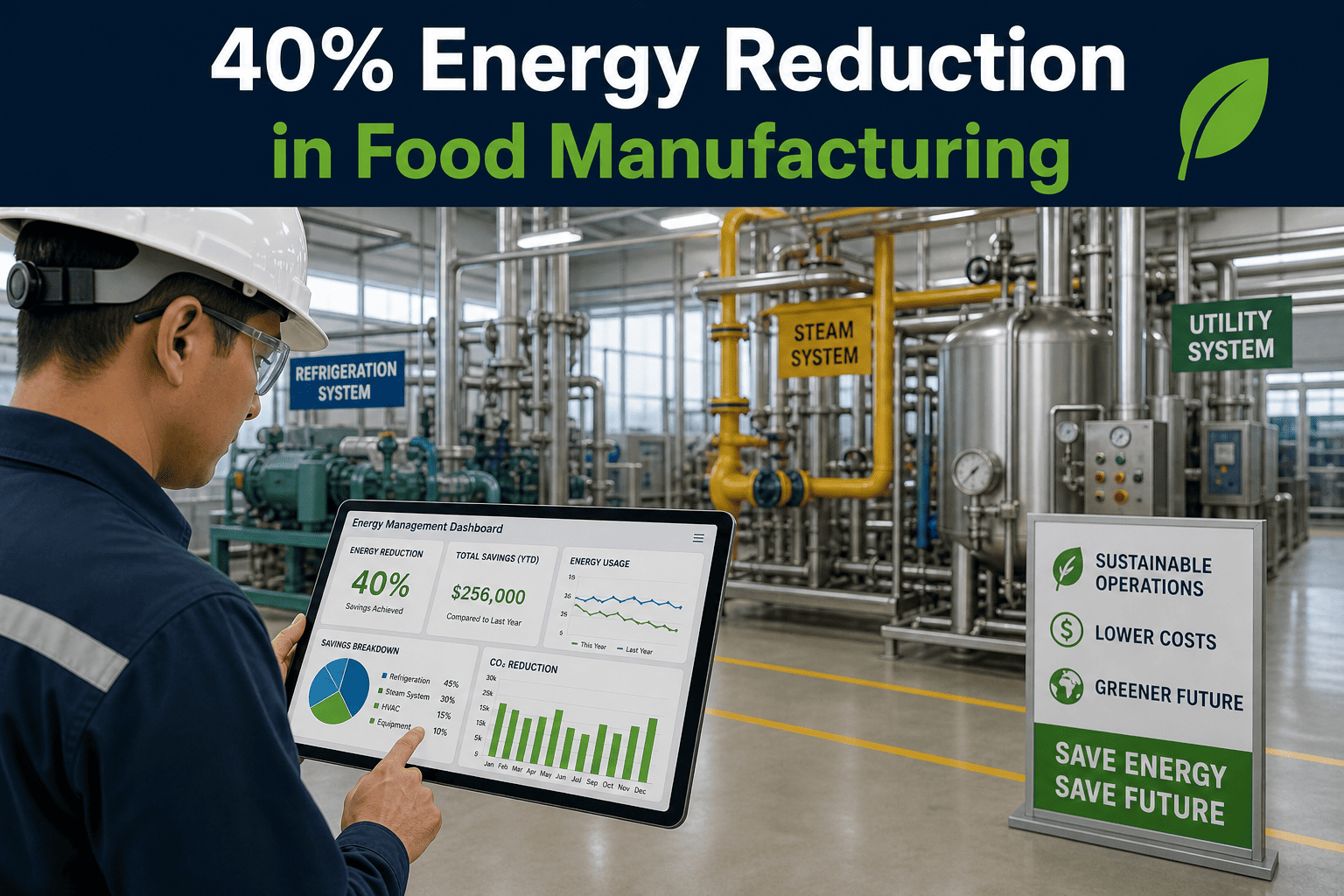
A mid-sized frozen food manufacturer in Ohio cut energy consumption by 31% and reduced product waste by 2.8 tons per month after replacing reactive maintenance routines with a smart, sensor-driven maintenance platform. Their aging equipment had been running well past optimal efficiency thresholds—compressors cycling unnecessarily, heat exchangers fouled with scale, and conveyor motors drawing 40% more power than rated specifications. Within six months of deploying IoT-connected condition monitoring and automated work order scheduling through a CMMS, the facility improved Overall Equipment Effectiveness from 68% to 87%, eliminated three unplanned shutdowns per quarter, and documented enough energy savings to offset the entire platform cost. Sign up for Oxmaint to build a smarter, greener maintenance program for your facility.
Food Manufacturing Sustainability Goals:
The Role of Smart Maintenance Systems
How predictive maintenance platforms help food manufacturers cut energy waste, reduce emissions, extend equipment life, and meet sustainability targets—while improving the bottom line.
The Hidden Environmental Cost of Poor Maintenance
Food manufacturing accounts for roughly 25% of global emissions. Much of that waste isn't from production itself—it comes from equipment running inefficiently, breaking down unexpectedly, and consuming resources it shouldn't. Book a demo to see how Oxmaint makes maintenance a sustainability strategy.
Wasted Energy
Poorly maintained motors, compressors, and HVAC systems draw 15–40% more power than properly serviced equipment. Restarting after unplanned failures consumes even more.
Spoiled Product
Equipment breakdowns in cold chains and processing lines lead to temperature excursions, batch failures, and tons of food waste that ends up in landfills generating methane.
Premature Replacements
Without condition data, parts get replaced on fixed schedules—often too early, wasting materials and manufacturing resources, or too late, causing cascading damage.
Excess Chemicals & Water
Uncalibrated CIP systems and malfunctioning sanitizer dosing waste water and cleaning chemicals, increasing both cost and environmental discharge loads.
How Smart Maintenance Powers Sustainability
A connected maintenance platform transforms equipment care from a cost center into your most powerful sustainability tool.
5 Sustainability Wins from Smart Maintenance
Each impact area directly supports ESG reporting requirements and cost reduction goals. Sign up for Oxmaint to start tracking these metrics.
Reduce Energy Consumption
Condition monitoring keeps motors, compressors, and refrigeration systems running at peak efficiency. Variable frequency drives paired with maintenance alerts ensure equipment never wastes power running harder than necessary.
Minimize Product Waste
Preventing unexpected breakdowns eliminates batch losses, temperature excursions, and the spoilage cascade that follows unplanned downtime. Every prevented failure keeps food out of landfills.
Optimize Water & Chemical Use
Smart calibration tracking for CIP systems ensures cleaning cycles use exact concentrations—no over-dosing of chemicals, no excessive rinse water. Automated logs prove compliance and savings.
Extend Equipment Lifespan
Addressing wear before it cascades into major damage means machines last years longer. Fewer replacements reduce the environmental footprint of manufacturing, shipping, and disposing of heavy equipment.
Lower Carbon Footprint & Strengthen ESG Reporting
Efficient equipment burns less fuel, draws less power, and produces fewer emissions. A CMMS automatically logs energy data, equipment runtime, and maintenance actions—giving sustainability teams audit-ready data for ESG reports, carbon accounting, and regulatory disclosures without manual collection.
Make Maintenance Your Sustainability Strategy
Oxmaint connects your equipment health data to real sustainability outcomes—energy savings, waste reduction, and ESG-ready documentation in one platform.
Reactive Maintenance vs. Smart Maintenance: The Sustainability Gap
How Oxmaint Supports Sustainable Food Manufacturing
Book a demo to see these features in action for your facility.
Real-Time Condition Monitoring
IoT sensors track vibration, temperature, pressure, and energy consumption across all critical assets. Anomalies trigger instant alerts before efficiency drops.
Automated Work Orders
Predictive algorithms generate prioritized maintenance tasks based on actual equipment condition—not arbitrary calendars. Right repair, right time, zero waste.
Energy & OEE Dashboards
Track energy usage per asset, line, and shift. Monitor OEE trends to identify where efficiency gains translate to measurable sustainability improvements.
Mobile Technician App
Maintenance teams receive alerts, log work, and capture photo evidence from the floor. Digital workflows eliminate paper and ensure nothing gets missed.
Regulatory Compliance Integration
Maintenance activities automatically align with HACCP, FDA, and FSMA requirements. Complete audit trails for every asset, every action, every result.
Sustainability Reporting Data
Export energy consumption trends, waste reduction metrics, and equipment lifecycle data directly into your ESG and sustainability reports.
Frequently Asked Questions
Turn Equipment Maintenance Into Measurable Sustainability Impact
Oxmaint gives food manufacturers the tools to reduce energy waste, prevent product loss, extend asset life, and document every improvement—all from one platform. Start building a maintenance program that's as good for the planet as it is for your bottom line.