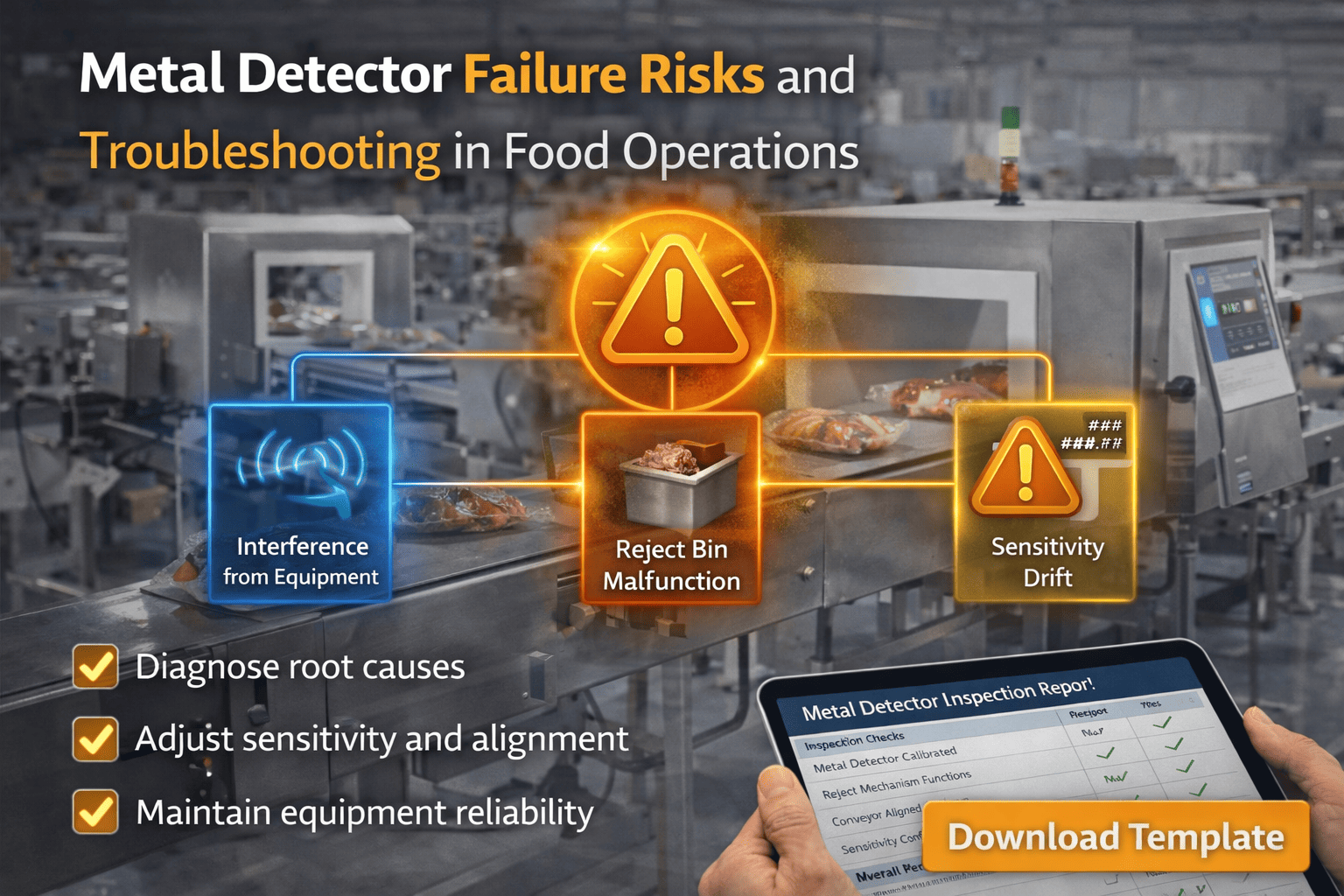
When a bakery in Pennsylvania discovered their metal detector had allowed contaminated product to ship for three consecutive days, the quality manager assembled an investigation team. Their initial finding: a loose cable connection caused intermittent detection failures. The maintenance team re-terminated the connection, verified the detector was working, and documented the repair. Six weeks later, the same detector failed again from another loose connection on a different cable. This time the investigation went deeper, applying metal detector failure root cause analysis methodology to understand why connections were loosening. The team discovered that vibration from a new packaging machine installed nearby was gradually working connections loose across multiple cable terminations. The actual root cause was not the cable, but inadequate vibration isolation during the packaging equipment installation combined with cable routing that lacked proper strain relief. Addressing these systemic issues prevented future failures across the entire production area.
Surface-level fixes address symptoms. Root cause analysis addresses the underlying conditions that allow failures to occur and recur. For metal detectors protecting food safety, the difference between symptom treatment and root cause correction can mean the difference between isolated incidents and systemic detection gaps that expose products and consumers to contamination risk. Effective root cause analysis transforms each failure from a problem into an opportunity to strengthen the entire detection system.
Sign up to implement structured root cause analysis for your metal detectors or book a demo to see how systematic failure analysis prevents recurring incidents.
Root Cause Analysis of Metal Detector Failures in Food Manufacturing
Move beyond symptom fixes to eliminate the systemic conditions that allow detection failures to occur and recur.
Why Root Cause Analysis Matters for Metal Detector Reliability
Metal detector failures in food manufacturing carry consequences that extend far beyond equipment repair costs. Each failure creates potential product exposure, requiring investigation, documentation, and potentially product hold or recall. When the same types of failures recur, the cumulative impact on operations, compliance, and food safety multiplies rapidly. Root cause analysis breaks this cycle by identifying and eliminating the conditions that allow failures to develop.
The challenge with metal detector failures is that the obvious cause is rarely the true root cause. A detector that fails verification due to sensitivity drift has an immediate cause, but the root cause might involve inadequate calibration frequency, environmental factors not accounted for in the original installation, or procedural gaps that allowed drift to go undetected until verification failed. Fixing only the immediate cause, recalibrating the detector, leaves the underlying conditions in place to cause future failures.
Regulatory frameworks and certification schemes increasingly expect documented root cause analysis for food safety equipment failures. FDA's FSMA preventive controls require facilities to identify the cause of problems and implement corrective actions that prevent recurrence. GFSI-benchmarked schemes like SQF, BRC, and FSSC 22000 audit not just whether corrective actions were taken, but whether root cause analysis was performed and whether the actions address the actual cause. Superficial fixes that lead to recurring failures generate audit findings and suggest systemic weakness in the food safety program.
Sign up for Oxmaint to implement structured RCA processes that satisfy regulatory expectations and prevent recurring failures.
The Root Cause Analysis Process for Metal Detector Failures
Effective root cause analysis follows a structured methodology that systematically moves from symptoms through contributing factors to true root causes. This process ensures thorough investigation while maintaining focus on actionable findings.
Create a precise, factual description of what failed, when, where, and what impact occurred. Avoid assumptions about cause in the problem statement.
Collect all relevant information before drawing conclusions. Data sources for metal detector failures typically include:
Map all factors that contributed to the failure occurring. Contributing factors typically fall into categories:
Use structured analysis methods to trace from symptoms to root causes. Multiple tools often provide complementary insights:
Root causes meet three criteria: they are the most fundamental conditions that allowed the failure, they are within your control to address, and correcting them will prevent recurrence. Test potential root causes against these criteria:
Create specific, measurable actions that address each identified root cause. Effective corrective actions specify what will be done, who is responsible, when it will be completed, and how effectiveness will be verified.
Structure Your RCA Process for Consistent Results
Oxmaint guides teams through root cause analysis with structured workflows, documentation templates, and corrective action tracking that ensures thorough investigation and verified resolution for every metal detector failure.
5-Why Analysis Examples for Common Metal Detector Failures
The 5-Why method provides a straightforward approach to drilling through layers of causation. These examples demonstrate how the technique reveals systemic root causes behind common metal detector failures.
Common Root Cause Categories for Metal Detector Failures
Analysis of metal detector failures across multiple food manufacturing facilities reveals patterns in root cause categories. Understanding these patterns helps investigation teams focus on likely causes while ensuring comprehensive analysis.
Verification, maintenance, or calibration procedures that do not detect developing problems or do not address actual failure modes experienced.
Installation or operating environment conditions not accounted for in equipment selection, installation, or maintenance planning.
Changes to equipment, products, or environment made without assessing impact on metal detection performance.
Operators or maintenance personnel lacking knowledge to properly verify, maintain, or troubleshoot metal detection equipment.
Equipment that is inadequate for the application or environment, or design features that create maintenance or reliability challenges.
Inadequate time, personnel, parts, or budget allocated to metal detector maintenance and verification activities.
Track Root Causes. Prevent Recurring Failures.
Oxmaint captures root cause findings, tracks corrective actions to completion, and identifies patterns across your metal detector fleet. Build institutional knowledge that strengthens food safety with every investigation.
Implementing RCA Findings Across Your Metal Detector Fleet
Root cause analysis delivers maximum value when findings from one failure prevent similar failures across all equipment. This fleet-wide implementation approach ensures lessons learned translate into improved reliability.
When root cause analysis reveals a systemic issue, evaluate all similar equipment for the same vulnerability. If one detector failed due to inadequate verification procedure, review whether the same procedural gap exists for other detectors.
Revise verification, maintenance, and calibration procedures based on RCA findings. Document why changes were made and what failures they prevent. Train all affected personnel on revised procedures.
When RCA reveals knowledge gaps contributed to failures, update training programs to address those gaps. Use actual failure cases as training examples to illustrate consequences of errors.
Track root causes across all metal detector failures over time. Identify which root cause categories appear most frequently and focus improvement resources on addressing systemic issues.
Frequently Asked Questions: Metal Detector Root Cause Analysis
Transform Failures into Systematic Improvement
Oxmaint provides the structured workflows, documentation templates, and tracking tools that make root cause analysis consistent and effective. Stop repeat failures and build a metal detection system that gets stronger with every incident investigated.