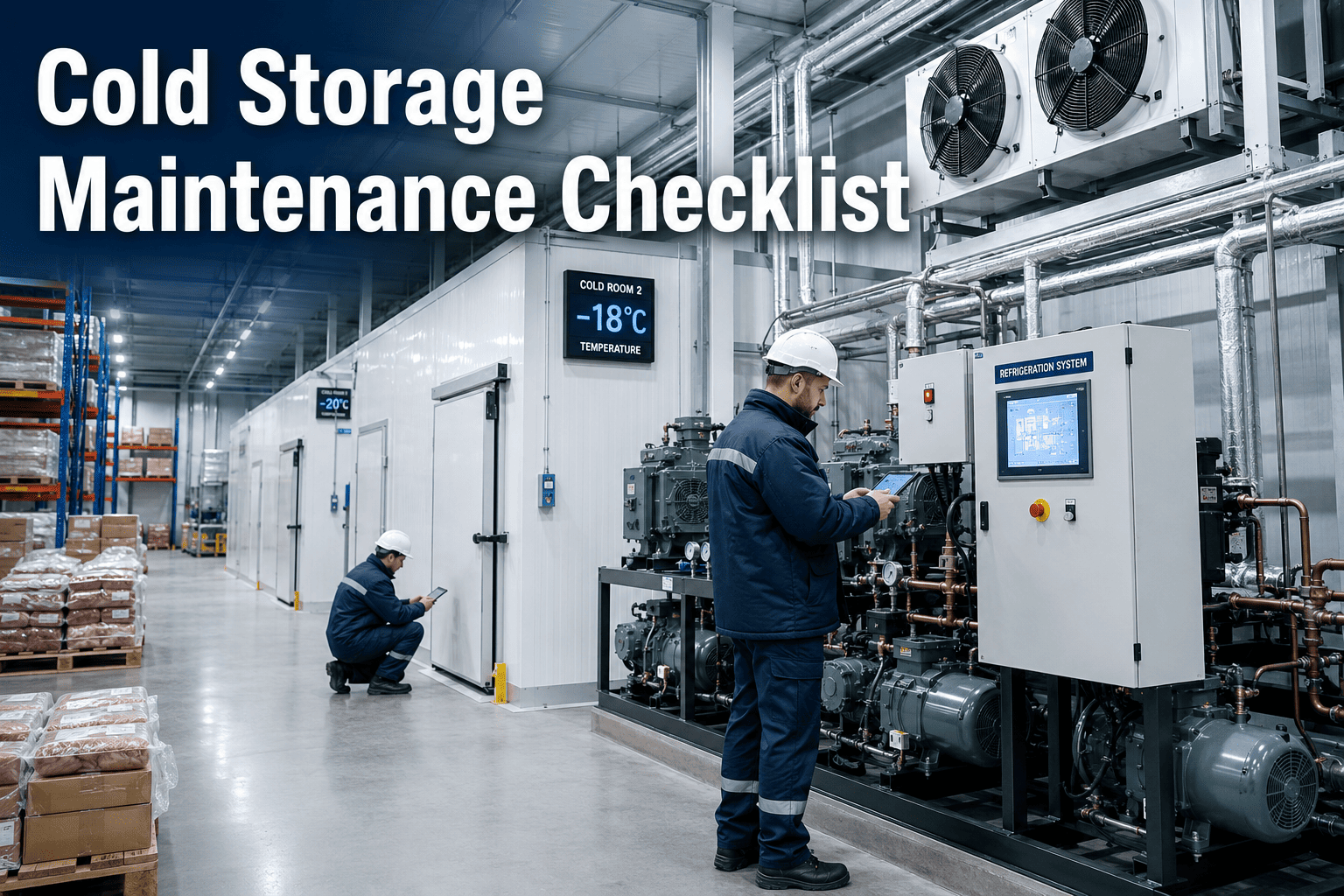
On a Thursday morning in March, a poultry processing facility in Savannah, Georgia discovered that Walk-In Cooler Unit 3 had drifted to 48 degrees Fahrenheit overnight, well above the critical 40-degree threshold. By the time operators caught it, 11,200 pounds of processed chicken valued at $38,400 had entered the temperature danger zone and required disposal. The root cause was a condenser coil clogged with grease and dust that hadn't been cleaned in nine weeks. A refrigeration maintenance checklist completed weekly would have flagged the coil condition long before the compressor was overwhelmed.
Refrigeration failures in food plants rarely announce themselves with dramatic breakdowns. They creep in through slow refrigerant leaks, neglected defrost drains, and sensor drift that goes unnoticed until product temperatures cross regulatory limits. Facilities that follow a structured cold storage inspection checklist reduce refrigeration-related product losses by 71% and cut emergency repair costs by $34,000 annually. The difference between a reliable cold chain and a costly failure event is almost always the discipline of routine inspection.
Request a Demo
Preventive Maintenance / Refrigeration & Cold Chain
Refrigeration Maintenance Checklist for Food Processing Plants
Structured inspection protocols that protect product quality, ensure compliance, and extend equipment life
Failures from Missed Checks
Compliance Audit Pass Rate
$34K
Annual Savings
Emergency Repair Reduction
Why Refrigeration Systems Demand Structured Maintenance in Food Plants
Industrial refrigeration in food manufacturing operates under conditions that consumer-grade systems never face: ammonia-based compressor racks cycling 24 hours a day, blast freezers pulling temperatures to minus 20 degrees in minutes, and walk-in coolers opening dozens of times per shift as product moves through staging areas. Each of these operating conditions accelerates wear on components that are invisible to casual observation. Refrigerant charge drops by fractions of an ounce per week through micro-leaks in flare fittings. Evaporator fins accumulate ice in patterns that reduce airflow by 15% before anyone notices a temperature change on the display panel.
Without a documented food plant cooling system maintenance routine, these incremental degradations compound until the system can no longer hold setpoint. At that moment, the maintenance team is no longer performing planned work. They are managing a crisis that affects product safety, regulatory standing, and production schedules simultaneously. A formal checklist transforms refrigeration care from a reactive scramble into a predictable, measurable process that catches problems while they are still inexpensive to fix.
63%
Of refrigeration failures in food processing environments trace back to maintenance tasks that were either skipped or performed without verification. Condenser cleaning, defrost drain clearing, and sensor calibration are the three most commonly missed items on informal maintenance routines.
Complete Refrigeration Inspection Checklist for Food Safety
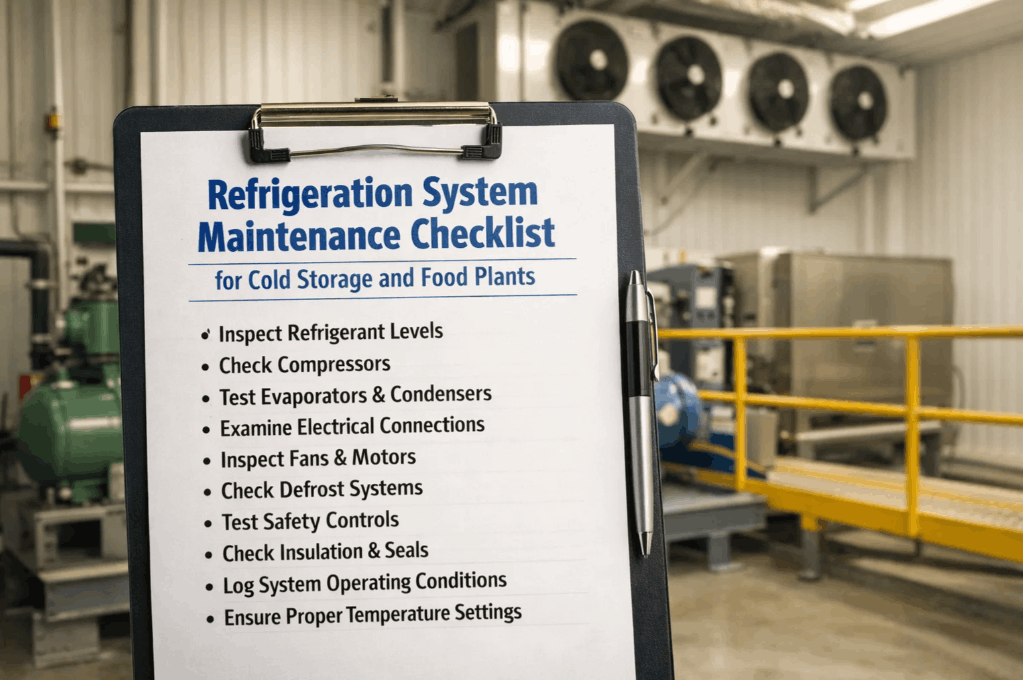
A comprehensive cold storage inspection checklist covers six distinct system areas, each with specific parameters and acceptance criteria that maintenance technicians verify on defined intervals. Use the checklist below to ensure every critical inspection point is covered during your maintenance rounds.
Verify that all refrigeration zones maintain setpoint within plus or minus 2 degrees Fahrenheit. Temperature excursions outside this range trigger immediate investigation under FSMA and HACCP protocols.
What This Section Detects
Sensor drift requiring recalibration
Refrigerant charge loss affecting capacity
Dirty condensers are the number one cause of elevated head pressure and compressor overload in food plant refrigeration. Grease, flour dust, and ambient debris accumulate rapidly in processing environments.
What This Section Detects
Restricted airflow reducing heat rejection
Fan motor bearing wear from imbalanced blades
Evaporator coils in cold storage rooms and freezers accumulate frost that reduces cooling capacity. Defrost cycles must be verified for timing, completeness, and proper drainage to prevent ice dams and water intrusion.
What This Section Detects
Incomplete defrost cycles leaving residual ice
Clogged drain lines causing water pooling on product
Compressors are the heart of any refrigeration system and the most expensive component to replace. Monitoring operating parameters at defined intervals catches degradation weeks before catastrophic failure.
What This Section Detects
Valve wear reducing pumping efficiency
Oil contamination or low charge conditions
Damaged gaskets and deteriorated insulation panels are silent energy wasters that force refrigeration systems to work harder. In high-traffic food plants, door seals degrade rapidly from forklift impacts and repeated cycling.
What This Section Detects
Warm air infiltration increasing system load
Condensation indicating insulation failure
Refrigerant leaks in food plants create both regulatory and safety concerns. Ammonia systems require immediate response protocols, while HFC systems lose capacity gradually as charge escapes through fittings and joints.
What This Section Detects
Slow leaks before they affect system performance
Oil logging in evaporators from refrigerant migration
Turn Your Refrigeration Checklists Into Automated Workflows
OxMaint digitizes every inspection point, schedules tasks by shift, and logs completions with timestamps your auditors will appreciate.
Refrigeration Failures Your Checklist Prevents
Each failure mode below is detectable through specific checklist items performed at the correct interval. The warning time column shows how far in advance a structured freezer room preventive maintenance program identifies the developing condition.
Checklist Indicators
Head pressure trending 8-15 PSI above baseline
Condenser fan motor amperage rising above nameplate
Visible debris or grease film on condenser fin surfaces
Failure Impact
Compressor high-pressure cutout, loss of cooling across all connected zones, potential compressor motor burnout requiring $8,000-$15,000 replacement
Checklist Indicators
Frost extending beyond evaporator housing onto ceiling mounts
Defrost drain water flow reduced or absent during cycle
Room temperature rising 3-5 degrees above setpoint after defrost
Failure Impact
Complete airflow blockage, water damage to stored product from ice melt, forced manual defrost requiring 4-8 hours of room downtime
Checklist Indicators
Suction pressure dropping below normal operating range
Bubbles visible in liquid line sight glass
Superheat readings climbing above manufacturer specification
Failure Impact
Gradual loss of cooling capacity, compressor overheating from inadequate suction gas cooling, EPA compliance violation for uncontrolled refrigerant release
Checklist Indicators
Condensation or frost forming on door frame exterior
Dollar bill test failing at gasket contact points
Compressor run time increasing without load change
Failure Impact
Energy costs increase 15-25%, ice buildup near door threshold creates safety hazard, product near doorway exposed to temperature fluctuations
Checklist Indicators
Extended run times to maintain setpoint temperature
Discharge temperature rising beyond normal range
Suction pressure higher than expected with normal load
Failure Impact
Progressive loss of pumping capacity, eventual inability to maintain temperature, unplanned compressor rebuild costing $5,000-$12,000 with 2-5 day lead time on parts
Checklist Indicators
Visible pitting or discoloration on contactor contact surfaces
Audible buzzing or chattering from contactor during operation
Intermittent compressor starts or delayed engagement
Failure Impact
Sudden compressor shutdown, potential single-phasing damage to motor windings, arc flash hazard during failed contact engagement
Your Refrigeration Systems Are Talking. Start Listening.
Every missed checklist item is a data point you never collected. OxMaint captures inspection results, flags trends, and builds the maintenance history your cold chain depends on.
Combined Annual Impact for a Mid-Size Food Processing Plant
$121K
Total Annual Savings
89%
Audit Compliance Rate
Integrating Your Checklist with Existing Plant Systems
A refrigeration maintenance checklist delivers maximum value when it connects to the systems your plant already relies on for monitoring, compliance, and operations management.
CMS
CMMS Work Order Integration
When a checklist finding exceeds a threshold, OxMaint automatically generates a corrective work order with the asset ID, reading value, and recommended action. This eliminates the handoff gap between inspection and repair that allows conditions to worsen.
Auto-generated work orders from out-of-range readings
Priority assignment based on deviation severity
Parts reservation triggered by predictive failure patterns
IOT
Temperature Monitoring Systems
Continuous IoT temperature sensors supplement checklist rounds by providing 24/7 coverage between manual inspections. Integration allows OxMaint to correlate sensor trends with maintenance history for predictive analysis.
Sensor data overlay on checklist completion records
Automated alerts when sensor drift contradicts manual readings
Historical trend analysis for seasonal maintenance planning
ERP
Food Safety and HACCP Platforms
Checklist completion records feed directly into HACCP documentation, providing the equipment maintenance evidence that auditors require at Critical Control Points involving temperature-sensitive storage and processing zones.
Timestamped maintenance logs linked to CCP records
Corrective action documentation with photo attachments
Audit-ready reports exportable in FDA-accepted formats
PLC
Building Management and Energy Systems
Linking refrigeration checklist data with BMS energy monitoring quantifies the relationship between maintenance actions and energy consumption, providing the evidence needed to justify preventive maintenance investment to plant leadership.
Energy consumption correlation with condenser cleaning schedule
Demand charge reduction through proactive compressor management
Utility rebate documentation for maintenance-driven efficiency gains
Frequently Asked Questions
How often should a refrigeration maintenance checklist be completed in a food plant?
Daily temperature verification and visual compressor checks should happen every shift. Condenser cleaning and defrost system audits are typically weekly or bi-weekly tasks. Refrigerant system analysis, electrical inspections, and comprehensive overhauls follow monthly, quarterly, and annual schedules.
What food safety regulations require documented refrigeration maintenance?
FSMA Preventive Controls for Human Food require facilities to maintain equipment in a condition that prevents contamination, which includes temperature-controlled storage. HACCP plans require documented verification of Critical Control Points, and refrigeration at storage CCPs demands maintenance records proving equipment reliability. SQF, BRC, and GFSI-benchmarked standards all audit refrigeration maintenance documentation during certification reviews.
Can a digital cold storage inspection checklist replace paper logs for audit purposes?
Yes, and most auditors now prefer digital records because they include automatic timestamps, cannot be backdated, and provide searchable history across any date range. OxMaint generates audit-ready reports that include the inspector's identity, exact time of completion, actual readings recorded, and photographic evidence of any findings. This level of documentation detail is difficult to maintain consistently with paper systems.
What is the typical ROI timeline for implementing a refrigeration maintenance program?
Most food plants see measurable results within 4-6 weeks of launching a structured checklist program. The first returns typically come from catching a condenser fouling issue or a slow refrigerant leak that would have caused an emergency call. Within one quarter, the combined savings from prevented product losses, reduced emergency repairs, and lower energy consumption typically exceed $30,000 for a mid-size facility with 8-15 refrigeration zones.
How does OxMaint handle refrigeration checklist management for multi-site food operations?
OxMaint supports standardized checklist templates that can be deployed across all plant locations while allowing site-specific customization for different equipment configurations. Corporate maintenance managers get consolidated dashboards showing completion rates, finding trends, and compliance metrics across every facility. Individual plant teams see only their assets and tasks, keeping the interface focused and actionable.
Schedule a demo to see the multi-site dashboard in action.
What should be included in a freezer room preventive maintenance checklist specifically?
Freezer rooms require additional checklist items beyond standard cooler inspections: verify defrost heater element resistance against baseline values, check floor heating cables that prevent frost heave beneath the slab, inspect door heater wires embedded in the gasket frame, confirm that the room achieves setpoint recovery within 15 minutes after a door opening event, and test the emergency release mechanism on any walk-in freezer door to ensure personnel safety. These freezer-specific items are critical because the consequences of failure at minus 10 to minus 20 degrees are more severe and more costly than cooler issues.
Build a Refrigeration Program That Auditors Respect and Equipment Responds To
OxMaint gives your maintenance team the checklists, scheduling, and documentation tools to keep every refrigeration zone in your food plant running at specification. Start with a free trial or let us show you how it works.