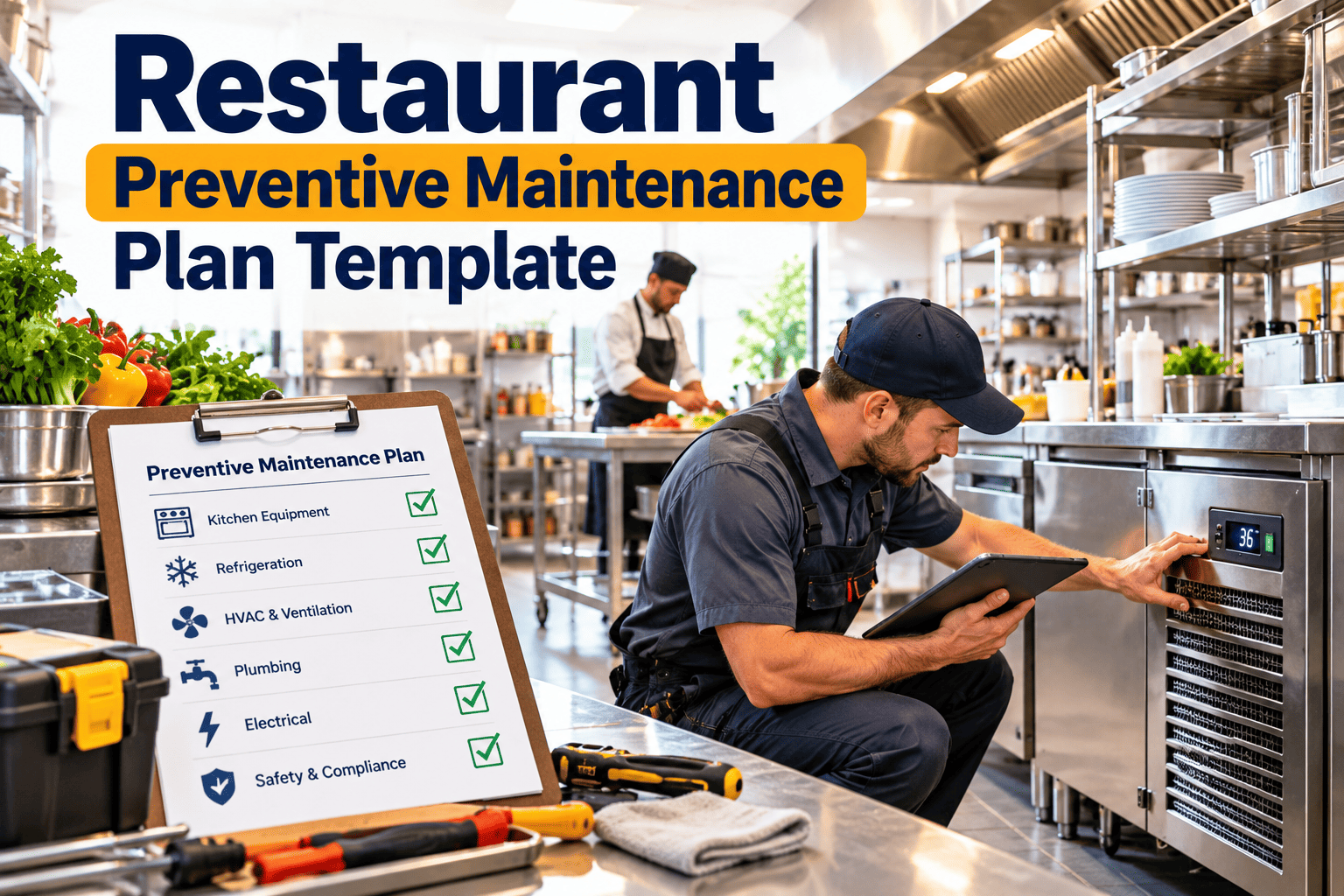
Most restaurant equipment problems are predictable. Walk-in compressors lose efficiency when coils clog, fryers drift out of calibration, ice machines grow slime, and dish machines scale up. What is missing is rarely knowledge, it is a plan that lists every appliance, the task, how often it is due and who does it. This guide gives you a restaurant preventive maintenance plan template you can adapt for any kitchen, plus a way to move it into Oxmaint maintenance management software so tasks are assigned, tracked and recorded automatically.
Restaurant Preventive Maintenance Plan Template for Any Kitchen
A plain structure for listing every appliance, task, frequency and responsible person, so missed servicing stops being the reason equipment fails.
Five columns that make a plan usable
Appliance
Name, location and model so a new hire knows exactly which unit is meant.Task
One specific action, such as clean coils or replace door gasket, not a vague "service".Frequency
Daily, weekly, monthly, quarterly or annual, set from the manufacturer manual first.Owner
A named person or role, plus a backup for absences.Record
Date done, who did it and notes on what was found.Starting-point plan by appliance
Treat these frequencies as starting points. Always follow each manufacturer's manual and your local health code, then adjust for how hard the equipment is used.
| Appliance | Task | Starting frequency | Owner | Last done |
|---|---|---|---|---|
| Walk-in cooler and freezer | Clean condenser coil, check door gasket, verify temperature log | Quarterly; log daily | ||
| Reach-in refrigeration | Clean coil, test door seals, clear drain | Monthly | ||
| Fryer | Filter or change oil, check thermostat and high-limit | Daily / Monthly | ||
| Range and oven | Clean burners and pilots, check door seal and thermostat | Weekly / Quarterly | ||
| Griddle and charbroiler | Scrape, season, inspect gas connections | Daily / Monthly | ||
| Ice machine | Clean, descale and sanitize per manual, replace water filter | Per manufacturer | ||
| Dish machine | Clean arms, descale, test rinse temperature or sanitizer | Daily / Weekly / Quarterly | ||
| Hood and exhaust | Clean filters, belt check, professional duct cleaning | Weekly / Per code | ||
| Grease trap | Pump and clean per local rules | Per local rules | ||
| Fire suppression system | Licensed inspection | Semi-annual |
How to create your plan in an afternoon
- Walk the kitchen. List every appliance with location, make, model and approximate age.
- Pull the manuals. Copy manufacturer-recommended tasks and intervals into the template.
- Rank by consequence. Mark equipment where failure stops service or risks food safety.
- Assign owners. Give every task one named person and one backup.
- Run it for a month. Adjust frequencies using what technicians actually find.
Turn the template into scheduled work
Load your appliance list into Oxmaint and let due dates, owners and records run themselves.
Paper plan versus managed plan
Laminated sheet on the wall
- Nobody notices when a task is overdue
- History is lost when the sheet is replaced
- Owner changes are not reflected
- Hard to show an inspector what was done
Plan managed in a CMMS
- Tasks generate automatically on their due date
- Every completion is timestamped and attributed
- Overdue work is visible on a dashboard
- Service history sits with each appliance
Measures that show the plan is working
The usual reasons restaurant maintenance slips
Restaurants run on tight margins and tighter schedules. Preventive work is easy to push aside when the dining room is full, and that is exactly why it needs a plan with dates and names rather than good intentions.
No owner
Everyone assumes someone else cleaned the coils or checked the gasket.No date
Tasks described as "regularly" or "when needed" never become urgent.No record
Without a log, nobody can say when a unit was last serviced.Staff turnover
Knowledge walks out the door when a chef or manager leaves.Reactive habits
Equipment is fixed only after it fails, usually on the busiest night.Short routines that catch problems early
Most of the plan is small, frequent checks done by kitchen staff. These take minutes and often reveal a developing fault before it stops service.
| When | Check | Why it matters | Owner |
|---|---|---|---|
| Opening | Read and log refrigeration and freezer temperatures | Catches failing units and protects stock and food safety records | |
| Opening | Check dish machine temperatures and chemical levels | Confirms sanitizing before the first rack is washed | |
| During service | Listen for unusual noise or watch for leaks | Early warning from compressors, pumps and fans | |
| Closing | Clean fryer, griddle and range surfaces, empty grease traps in equipment | Prevents buildup that affects performance and fire risk | |
| Weekly | Clean hood filters, check door gaskets, clear floor drains | Keeps airflow, cooling and drainage working | |
| Weekly | Inspect hoses, gas connections and visible electrical leads for wear | Spots damage before it becomes a safety issue |
Longer-interval tasks that protect the big equipment
Monthly and quarterly
- Clean condenser coils on refrigeration and ice machines
- Check and calibrate oven, fryer and holding cabinet thermostats
- Inspect door gaskets and hinges on walk-ins and reach-ins
- Descale dish machines and check rinse nozzles
- Test emergency lighting and exit signage
- Review pest control reports with the provider
Semi-annual and annual
- Professional hood and duct cleaning at the code interval
- Licensed fire suppression system inspection
- Refrigeration technician service of walk-ins
- Gas appliance and burner service
- Backflow and water filter checks as required locally
- Review the whole plan and retire or replace worn-out equipment
Assigning owners without overloading the kitchen
A plan only works if the people named can realistically do the work. Spread tasks by role and give each one a backup.
What skipping preventive work really costs
- Energy and performance. Dirty condenser coils and scaled elements make equipment work harder and run less efficiently.
- Shorter equipment life. Neglected compressors, motors and heating elements tend to fail earlier than well-maintained ones.
- Food safety exposure. A refrigeration unit drifting out of range can put stock and compliance at risk.
- Emergency pricing. Out-of-hours callouts and rush parts cost more than planned visits.
- Lost service. A dead fryer or oven during a busy period means lost orders and unhappy guests.
From template to tracked maintenance
Once your template is filled in, a maintenance management system can take over the reminders, the assignments and the history.
Asset records
Each appliance becomes an asset with model, location and service history.Scheduled tasks
Preventive tasks repeat at the frequency you set and assign to the named owner.Work orders
Faults found during checks become tracked requests with status and cost.Mobile checklists
Staff log temperatures and checks from a phone instead of paper.Reporting
Dashboards show overdue tasks, repeat repairs and spend by appliance.Keeping several kitchens on the same standard
- Use one master template, then adjust per site for different equipment and local code.
- Track completion by location so a weak site is visible early rather than at the next audit.
- List contractor visits with due dates and attach service reports to the appliance.
- Review repeat repairs across sites to spot models that cost more to keep running.
- Share what works, such as a better cleaning routine, by updating the master plan.
What to watch on each major appliance
The template lists tasks, but knowing why each matters helps staff take them seriously. Use manufacturer manuals for exact procedures.
Time the bigger jobs around your busy periods
Heavy tasks are easier when they are planned before the rush, not squeezed in during it.
- Service refrigeration and ice machines before summer, when cooling demand and ambient heat peak.
- Schedule hood cleaning and fire suppression inspection for a closed day or quiet period.
- Descale dish machines before holiday seasons and large events.
- Check heating and make-up air before winter so the kitchen stays balanced.
- Replace worn gaskets, hoses and filters at the start of a quarter rather than waiting for failure.
Keep the plan current
Monthly review
- Which tasks were overdue, and why?
- Which appliances needed repeat repairs?
- Did any task take far longer than planned?
- Are owners still correct after staff changes?
Annual review
- Add new equipment and remove retired units
- Adjust frequencies using a year of findings
- Compare repair spend with replacement cost for older units
- Update the plan before budgeting season
Where preventive maintenance supports food safety
Equipment that is clean and working properly is part of keeping food safe. A plan that records temperatures, cleaning and repairs gives you evidence when an inspector asks.
Cold holding
Refrigeration that drifts out of range is caught by daily logs and coil cleaning.Hot holding and cooking
Accurate thermostats and calibrated thermometers support safe temperatures.Warewashing
Working dish machines and sanitizer feed protect clean utensils.Pest and sanitation
Sealed gaskets and fixed leaks remove food, water and hiding places for pests.Records
Dated task history shows the standard you keep, not only what you did last week.Make the template easy to use
- Use plain task wording that a new employee understands without training.
- Group tasks by frequency so a weekly sheet and a monthly sheet are easy to print or display.
- Add a notes column for findings such as a frayed hose or a noisy compressor.
- Include the manual or model reference so staff can find instructions quickly.
- Mark tasks that must be done by a licensed contractor, so staff do not attempt them.
- Keep a spare copy with your contractor contact list and emergency shutoff locations.
Restaurant PM plan questions
How often should restaurant equipment be serviced?
Follow each manufacturer's manual first, then adjust for volume and conditions. Our template shows typical starting points by appliance.
Who should own preventive maintenance in a restaurant?
Give each task one named owner, often the kitchen manager for daily items and maintenance or a contractor for technical work.
Can I use this for multiple locations?
Yes, copy the plan per site and track completion centrally. Oxmaint can hold each location's assets and tasks.
What if I rely on outside contractors?
List contractor visits in the plan with due dates and keep service reports on the appliance record.
How do I move from a spreadsheet to software?
Import your appliance list and tasks, then assign owners. A demo can show the steps for your kitchen.
Give every appliance a plan and an owner
Start scheduling restaurant preventive maintenance with Oxmaint, or book time to review your kitchen.