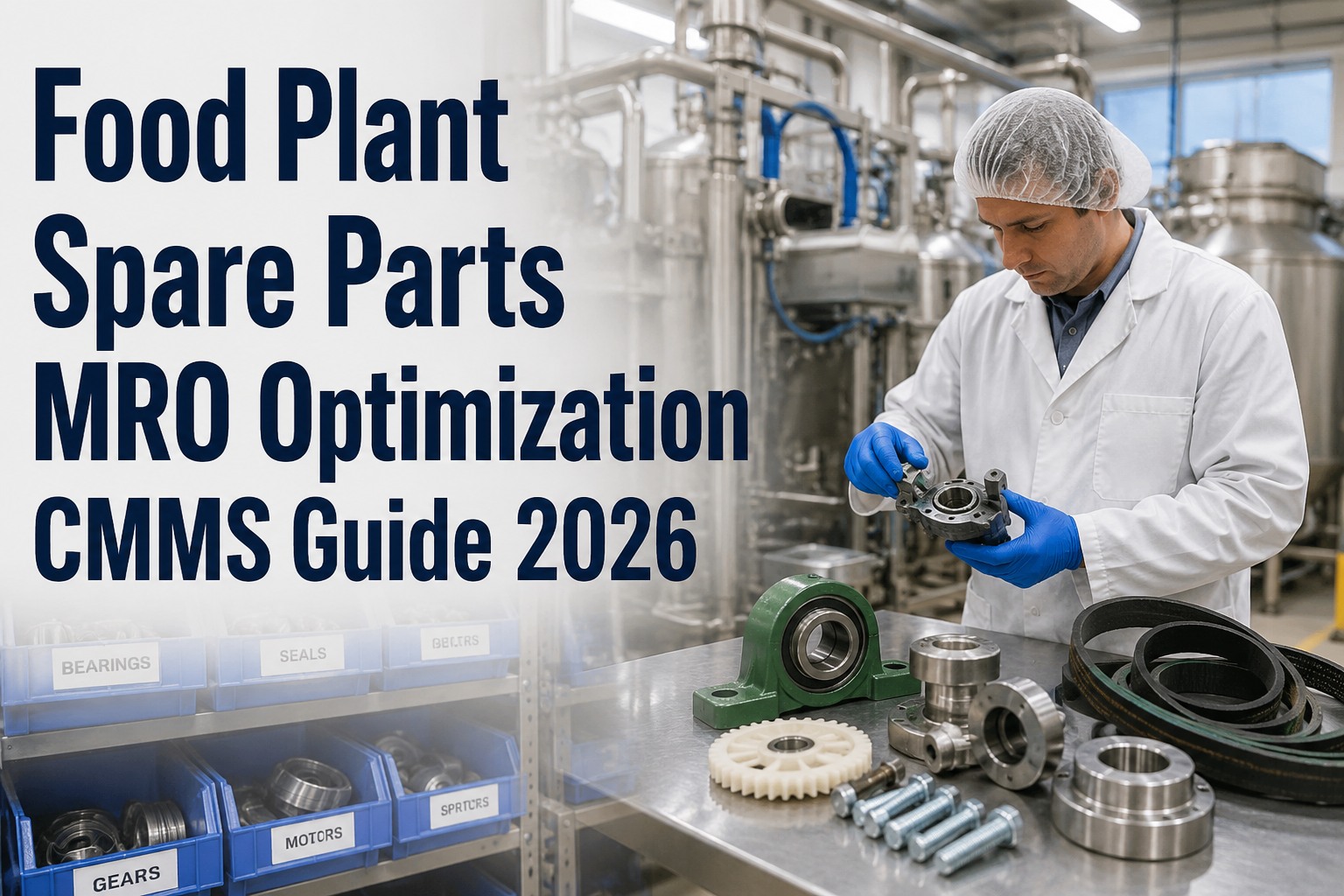
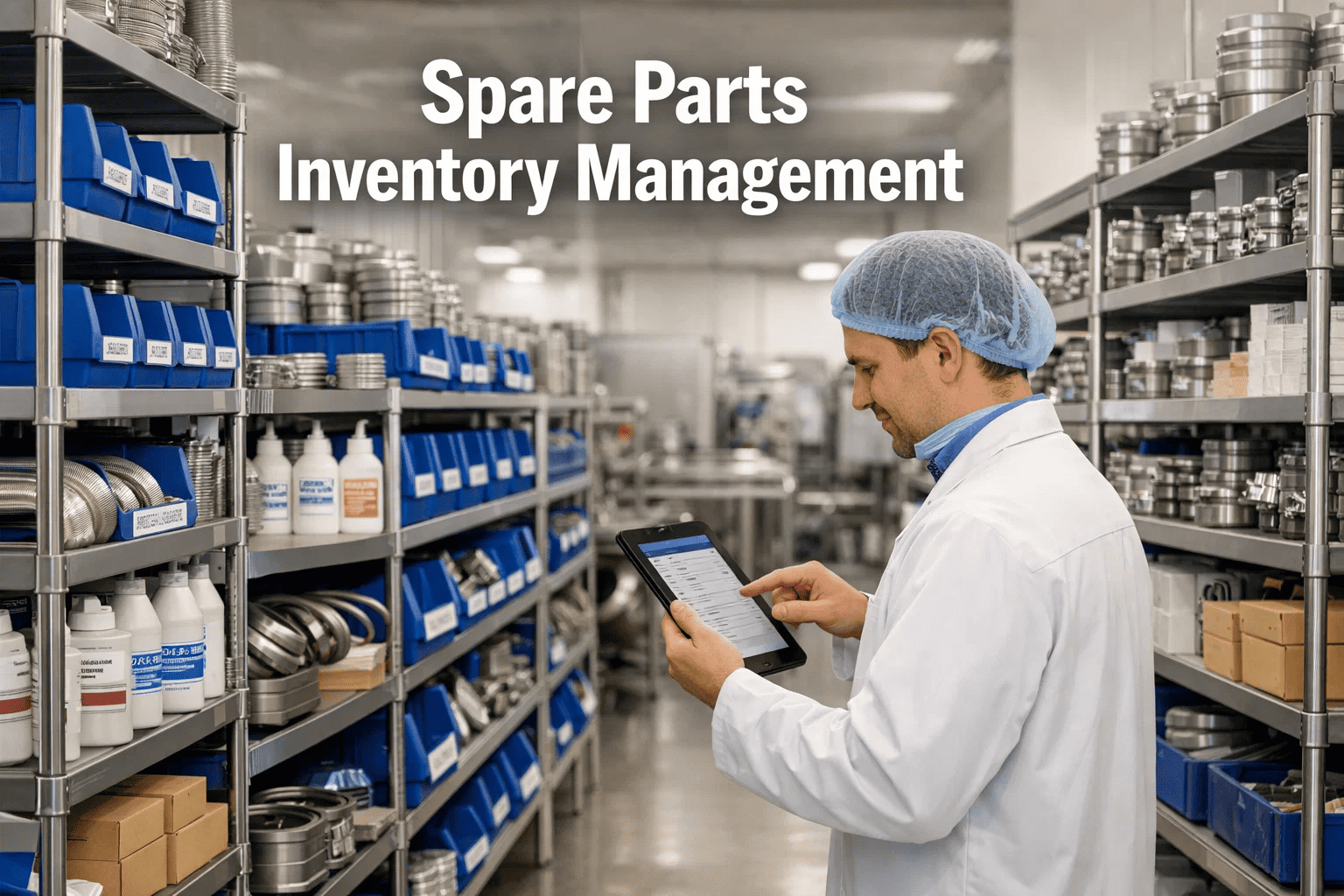
A cheese processing facility in Vermont lost 18 hours of production when a critical pump seal failed at 2:00 AM on a Saturday. The maintenance technician knew exactly what part was needed, had replaced similar seals dozens of times, and could complete the repair in 45 minutes. The problem was the part. The storeroom showed three seals in inventory, but physical inspection found an empty bin. The last seal had been used six weeks earlier, the inventory system had not been updated, and nobody had noticed the stockout. By the time a supplier opened Monday morning and the part arrived Monday afternoon, the facility had lost $127,000 in production and spoiled 14,000 pounds of product that could not be held at temperature. This single stockout cost more than the facility's entire annual spare parts inventory investment. Implementing structured inventory management with accurate counts, automated reorder points, and usage-based forecasting eliminated similar incidents and actually reduced overall inventory investment by 23% while improving parts availability to 98.5%.
Spare parts inventory represents a significant investment in food manufacturing facilities, typically ranging from $200,000 to several million dollars depending on facility size and equipment complexity. Yet this investment frequently fails to deliver its intended value: parts availability when maintenance needs them. Stockouts delay repairs and extend downtime. Excess inventory ties up capital and creates obsolescence risk. Without visibility into what parts exist, where they are located, and when they will be needed, maintenance organizations oscillate between emergency expediting and overstocking, never achieving the balance that optimizes both availability and investment.
Sign up to optimize spare parts inventory or book a demo to see how inventory management transforms parts availability and reduces carrying costs.
Inventory Management
Spare Parts Inventory Optimization for Food & Beverage Maintenance
Balance parts availability against inventory investment with data-driven stocking strategies and integrated CMMS inventory management.
Of Plants Report Parts-Related Downtime Monthly
Parts Availability Achievable with Optimization
Average Inventory Reduction with Right-Sizing
3-5x
cost multiplier
Emergency Expediting vs. Planned Procurement
The Hidden Costs of Poor Inventory Management
Spare parts inventory problems manifest in two opposite directions, both costly. Stockouts occur when needed parts are unavailable, extending equipment downtime while parts are located, ordered, and delivered. Excess inventory occurs when parts sit unused on shelves, tying up capital, occupying storage space, and potentially becoming obsolete before use. Most food manufacturing facilities suffer from both problems simultaneously: stockouts on some parts while others sit untouched for years.
The costs of stockouts extend far beyond the part purchase price. A $50 seal that causes an 18-hour production delay can generate tens of thousands of dollars in lost production, spoiled product, overtime labor, and expedited shipping. For food manufacturing specifically, extended downtime can trigger food safety concerns if product cannot be maintained at required temperatures or if sanitation schedules are disrupted. The true cost of a stockout is measured in hours of downtime multiplied by production value, not in part prices.
67%
of food manufacturing plants report experiencing production downtime due to parts unavailability at least monthly. These are not rare events but routine occurrences that have become normalized. Each incident represents preventable loss that structured inventory management can eliminate.
Excess inventory carries its own burden. Capital tied up in slow-moving or obsolete parts is unavailable for other investments. Storage space consumed by excess inventory cannot serve other purposes. Parts deteriorate over time, with seals hardening, lubricants degrading, and electronics becoming obsolete. And the administrative effort to manage bloated inventory distracts from value-adding activities. Effective inventory optimization addresses both problems, improving availability while reducing investment.
Sign up for Oxmaint to implement inventory management that eliminates stockouts while right-sizing your parts investment.
Inventory Classification Strategies
Not all spare parts deserve equal attention. Classification strategies help focus management effort where it delivers the most value, applying rigorous controls to critical items while streamlining processes for routine consumables.
A Items (70-80% of Value, 10-20% of SKUs)
High-value parts requiring tight controls: accurate counts, frequent review, careful forecasting. Examples: large motors, specialized sensors, critical spares.
B Items (15-25% of Value, 30% of SKUs)
Moderate-value parts with standard controls: periodic review, reasonable safety stock. Examples: smaller motors, standard instruments, common replacement parts.
C Items (5-10% of Value, 50-60% of SKUs)
Low-value consumables with simplified controls: higher safety stock acceptable, less frequent review. Examples: filters, gaskets, hardware, lubricants.
Critical (Production Stops Without)
Must be in stock regardless of cost or usage frequency. Stockout unacceptable. Examples: unique components for critical equipment, long-lead-time items.
Essential (Significant Impact)
High availability target with reasonable safety stock. Short-term workaround possible. Examples: pumps, drives, common sensors.
Desirable (Convenience)
Stock for convenience but stockout tolerable. Can wait for normal ordering. Examples: non-critical components, alternative available.
Vital Items
Food safety equipment spares, CCP equipment components, regulatory-mandated items. Zero stockout tolerance.
Essential Items
Production equipment spares, utility system components. High availability target with defined service level.
Desirable Items
Non-critical equipment, administrative equipment. Lower service level acceptable, order as needed.
X Items (Consistent Demand)
Predictable usage pattern enables accurate forecasting. Lower safety stock needed. Examples: PM consumables, regular replacement items.
Y Items (Variable Demand)
Moderate variability requires higher safety stock to buffer uncertainty. Examples: wear parts with variable life.
Z Items (Sporadic Demand)
Unpredictable or lumpy demand. Insurance spares, failure-driven items. Stocking decision based on criticality and lead time.
Classify and Optimize Your Inventory
Oxmaint inventory management provides classification tools and analytics to focus attention where it delivers the most value, ensuring critical parts availability while reducing excess stock.
Stocking Parameters and Reorder Strategies
Proper stocking parameters balance availability against investment. Setting these parameters requires understanding demand patterns, lead times, and the consequences of stockouts for each item category.
Example Calculation
Part uses 2 per month (0.07/day) with 14-day lead time and 2 units safety stock: ROP = (0.07 x 14) + 2 = 3 units
Key Point: ROP triggers order placement. Set too high wastes capital; too low risks stockout during replenishment.
Key Point: Safety stock protects against variability. It is insurance, not waste, when properly sized.
Considerations
Larger orders reduce ordering frequency but increase carrying cost
Price breaks may justify larger quantities
Shelf life constraints may limit order size
Storage space constraints affect practical limits
Setting Min/Max
Min = Reorder Point (triggers order)
Max = Min + Economic Order Quantity
Order Quantity = Max - Current Stock
Key Point: Min/Max works well for most maintenance parts. Simple rules enable consistent execution.
Food Manufacturing Inventory Considerations
Food manufacturing presents unique inventory management requirements beyond general industrial practices. Regulatory compliance, food safety equipment priority, and sanitary storage requirements shape how spare parts inventory must be managed.
Equipment critical to food safety requires special stocking consideration. Metal detector components, pasteurizer parts, CIP system spares, and temperature monitoring equipment must have guaranteed availability. Stockouts on these items risk both production and compliance.
Metal detector coils, sensors, and conveyor components
Pasteurizer valves, seals, and control components
CIP spray balls, valves, and pump seals
Temperature sensors and calibration standards
Weighing system load cells and displays
Parts contacting product or product zones must meet food-grade material requirements. Stocking non-food-grade alternatives creates risk of improper use. Clear identification and segregation prevents substitution errors.
FDA-compliant seals and gaskets
Food-grade lubricants (H1 rated)
Stainless steel hardware for product zones
NSF-certified components
Clear labeling distinguishing food-grade items
MRO storerooms in food facilities must maintain sanitary conditions and prevent contamination pathways. Storage practices must support both parts preservation and food safety requirements.
Enclosed storage protecting parts from contamination
Climate control for temperature-sensitive items
Separation from chemicals and hazardous materials
Pest control measures in storage areas
Regular cleaning and sanitation of storeroom
Audit requirements may extend to spare parts used on food contact equipment. Maintaining traceability supports compliance verification and recall response if needed.
Lot tracking for food-contact components
Supplier certificates of compliance on file
Material certifications for critical items
Usage records linking parts to equipment
Retention of documentation per policy requirements
Inventory Accuracy and Cycle Counting
Inventory systems are only useful if they reflect reality. Inaccurate records lead to stockouts when the system shows parts in stock, and excess ordering when the system undercounts actual inventory. Cycle counting maintains accuracy through regular verification.
Frequency by Classification
A Items / Critical
Monthly counts
B Items / Essential
Quarterly counts
C Items / Desirable
Annual counts
Count Process
Count items at random times, not predictable schedules
Investigate and resolve discrepancies immediately
Document root causes of errors
Address process issues causing inaccuracy
Unreported Usage
Parts taken without updating system, especially during emergencies
Mobile checkout, barcode scanning, accountability culture
Receiving Errors
Parts received but not entered, or entered with wrong quantities
Receiving verification process, packing slip reconciliation
Location Errors
Parts in wrong location, cannot be found even when in stock
Put-away verification, location accuracy checks
Unit of Measure Confusion
Counting boxes versus pieces, each versus pairs
Standardized UOM definitions, clear labeling
Overall Inventory Accuracy
Target: 95%+ of items within tolerance
Critical Items Accuracy
Target: 98%+ accuracy for A/Critical items
Location Accuracy
Target: 99%+ items in correct location
Note: Accuracy tolerance varies by item value. A $10 filter being off by one is different from a $5,000 motor being off by one.
Barcode Scanning
Reduces data entry errors, speeds checkout and receiving
Mobile Devices
Enables transaction entry at point of activity
CMMS Integration
Automatic issue to work order when parts used
Bin Labels
Clear location identification prevents misplacement
Book a demo to see how Oxmaint inventory management maintains accuracy through integrated transactions and mobile access.
Inventory That Supports Reliability
Oxmaint inventory management integrates with work orders, purchasing, and equipment records to ensure parts are available when maintenance needs them while minimizing excess investment.
Vendor and Procurement Management
Effective inventory management extends beyond the storeroom to include vendor relationships, lead time management, and procurement processes that support parts availability goals.
01
Lead Time Management
Accurate lead time data is essential for reorder point calculations. Track actual lead times versus quoted times. Adjust safety stock when lead times increase or become unreliable. Consider lead time variability, not just average lead time.
02
Supplier Relationships
Develop relationships with key suppliers for critical parts. Negotiate consignment arrangements for high-value, slow-moving items. Establish emergency supply agreements with expediting options. Maintain backup suppliers for critical items.
03
Vendor-Managed Inventory
For high-volume consumables, consider VMI arrangements where suppliers monitor stock and replenish automatically. Reduces ordering effort and stockout risk. Works well for filters, lubricants, and standard hardware.
04
Obsolescence Management
Monitor for discontinued parts and equipment obsolescence. Procure lifetime buys for items being discontinued when equipment will remain in service. Track OEM support timelines and plan for equipment upgrade or replacement.
05
Purchase Order Integration
Integrate CMMS with purchasing systems for streamlined procurement. Automatic PO generation when stock reaches reorder point. Receiving integration updates inventory when parts arrive. Reduces manual effort and delays.
06
Emergency Sourcing
Despite best planning, emergency needs occur. Maintain relationships with distributors offering same-day or next-day delivery. Know which items can be cross-referenced or substituted. Document emergency sources for critical items.
Inventory Performance Metrics
Measuring inventory performance enables continuous improvement and supports investment decisions. These metrics balance availability against efficiency to optimize overall inventory value.
Target
95-98% overall, 99%+ for critical items
Primary availability measure. Indicates how often stock is available when maintenance needs it.
Target
1-2 turns typical for MRO; higher for consumables
Measures how efficiently inventory investment generates usage. Low turnover indicates excess stock.
Target
Under 2% overall, zero for critical items
Inverse of service level. Track stockouts by item to identify systemic problems.
Target
Minimize value; review and disposition regularly
Identifies excess and obsolete inventory consuming capital and space.
Target
95%+ overall, 98%+ for critical items
Foundation for all other metrics. Inaccurate records undermine inventory management.
Typical Range
20-30% of inventory value annually
True cost of holding inventory. Justifies investment in reducing excess stock.
CMMS Integration for Inventory Management
Integrated inventory management within CMMS provides capabilities that standalone inventory systems cannot match. The connection between maintenance work and parts usage enables planning, automation, and analysis that improves both availability and efficiency.
Planned work orders include parts requirements identified during planning. System can verify availability and reserve parts before scheduling. Planners see stock status and can order needed parts in advance.
Parts checked out at storeroom automatically issue to associated work order. Creates complete cost tracking by work order. Ensures usage history captures actual consumption for future planning.
BOMs link equipment to associated spare parts. Creating work orders for equipment shows relevant parts. Supports standardization and ensures correct parts are identified for each asset.
Historical usage from work orders enables demand forecasting. PM schedules predict consumable needs. Failure patterns inform insurance spare requirements. Data-driven stocking decisions replace guesswork.
Frequently Asked Questions: Spare Parts Inventory
How do we determine what parts to stock versus order as needed?
Stock parts based on criticality and lead time, not just usage frequency. A part used once every two years should still be stocked if it is critical to production and has a six-week lead time. Consider the cost of stockout (downtime) versus cost of stocking. Insurance spares for critical equipment justify investment even with low turnover. Conversely, readily available parts with short lead times may not need stocking even if used regularly.
What should we do with slow-moving and obsolete inventory?
Review slow-moving inventory regularly to distinguish between excess and necessary insurance spares. For true excess: attempt to return to suppliers, sell to other facilities or brokers, repurpose if possible, or dispose and write off. For obsolete parts (equipment no longer in service): aggressive disposition is appropriate since these will never be used. Document decisions and update equipment records when decommissioning to trigger parts review.
How do we balance parts availability against inventory investment?
Apply different service level targets based on criticality. Critical items justify high investment for near-100% availability. Non-critical items accept lower service levels to reduce investment. Use ABC and criticality analysis together to find items that are over-invested (high stock on non-critical items) or under-invested (low stock on critical items).
Sign up for Oxmaint to implement classification-based stocking strategies that optimize both availability and investment.
How often should we review and adjust stocking parameters?
Review stocking parameters annually for most items, with more frequent review for high-value or problematic items. Trigger reviews when usage patterns change significantly, lead times shift, equipment is added or removed, or stockouts occur. Major changes like new production lines or equipment replacements should prompt comprehensive review of associated parts.
Should we use the same inventory system as production materials?
MRO inventory has different characteristics than production materials: lower volume, higher variety, more sporadic demand, and different replenishment logic. While ERP systems can technically manage MRO, CMMS-based inventory often provides better fit with maintenance workflows, work order integration, and equipment linking. Integration between systems allows data flow while using tools optimized for each purpose.
Parts Available When You Need Them
Oxmaint inventory management eliminates stockouts through accurate tracking, automated reordering, and CMMS integration that connects parts to the maintenance work that needs them.