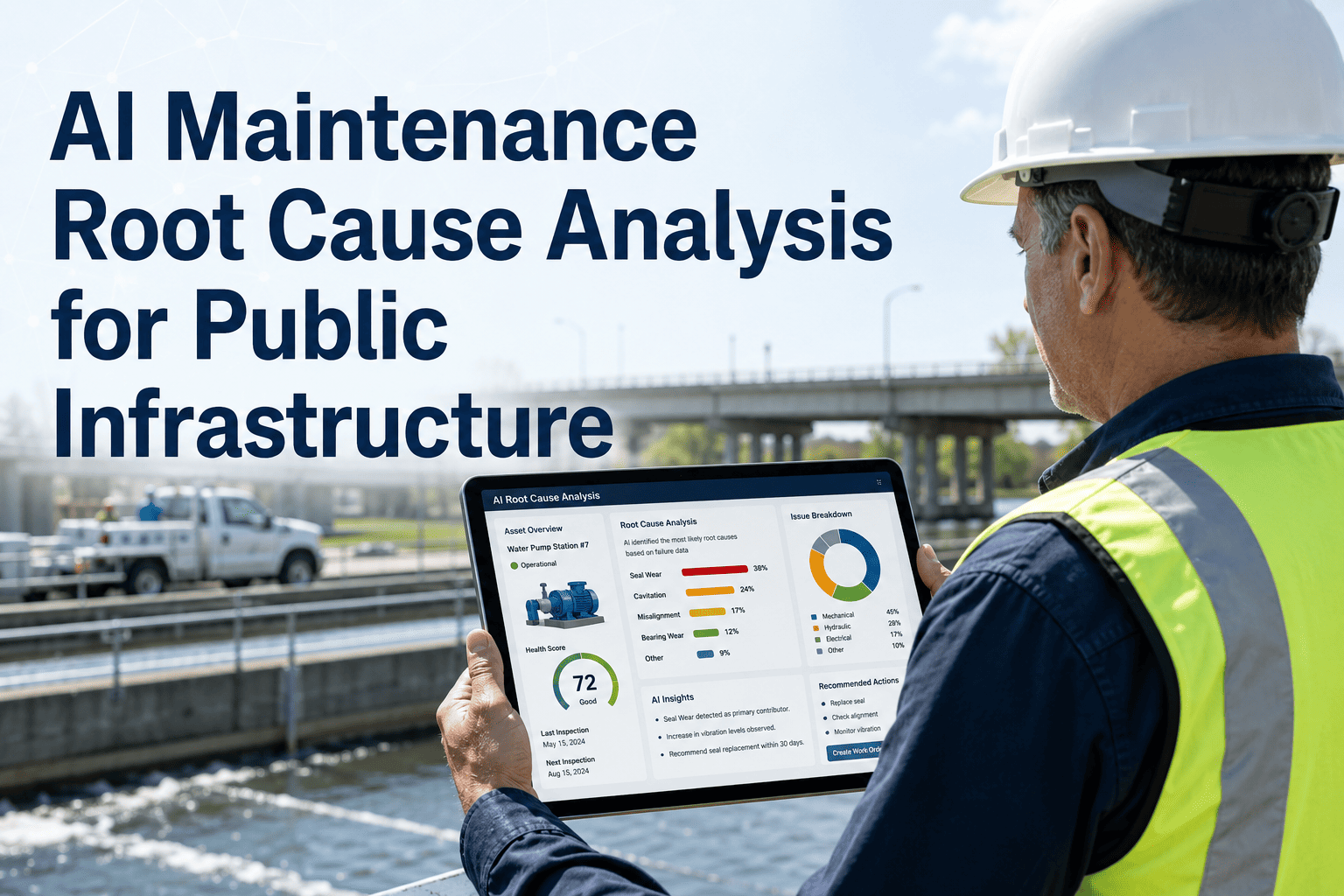
When a public infrastructure asset fails, the instinct is to fix it and move on. The failure that keeps repeating — the road that floods every spring, the pump that burns out every 18 months, the HVAC system that fails every peak summer — isn't bad luck. It's a pattern. OxMaint's AI Copilot runs continuous root cause analysis across your entire infrastructure portfolio, identifying the patterns behind repeated failures and recommending systemic fixes before the next incident report lands on someone's desk. Book a demo to see AI root cause analysis in action on public infrastructure data.
AI Copilot · Infrastructure Asset Management · P1 Critical
AI Maintenance Root Cause Analysis for Public Infrastructure
Repeated infrastructure failures have repeatable causes. AI finds them in hours — not after the fourth repair cycle.
78%
Of repeated infrastructure failures share an identified root cause detectable in maintenance data
-69%
Reduction in repeat failures within 12 months of AI root cause analysis deployment
4.2x
Faster root cause identification vs manual investigation for multi-asset failure patterns
$340K
Average avoided repair cost per identified recurring failure pattern in first year
The Reactive Maintenance Loop — and How AI Breaks It
Most public infrastructure departments operate in a reactive cycle: failure → repair → return to service → failure again. Without systematic root cause analysis, the same assets fail repeatedly because the underlying cause — installation error, design flaw, load miscalculation, environmental factor — is never addressed. AI breaks this loop by analyzing failure patterns across the entire asset portfolio, not just the asset that just failed.
Failure Occurs
Reactive response, no investigation
→
Emergency Repair
Symptom treated, cause ignored
→
Return to Service
No change in conditions
→
Failure Recurs
Cycle repeats, costs compound
With AI Root Cause Analysis, the cycle ends at repair — and the fix addresses the cause.
Root Cause Categories in Public Infrastructure
| Failure Pattern |
Common Root Cause |
Traditional Detection |
AI Detection Advance |
| Repeated pump seal failures |
Misalignment from installation or settling |
After 3rd+ failure |
Vibration pattern in 1st cycle |
| Recurring road surface cracking |
Base layer drainage failure, not surface wear |
Visual inspection cycles |
Correlates with rainfall & temperature data |
| Electrical panel repeated trips |
Harmonic distortion from connected equipment |
Electrician called repeatedly |
Current waveform analysis flags pattern |
| HVAC compressor repeated failure |
Refrigerant overcharge from previous repair |
Vendor inspection each event |
Pressure-temperature ratio deviation |
| Bridge bearing replacement cycle |
Load path change from adjacent construction |
Observed over years |
Load sensor trend analysis, weeks |
How OxMaint AI Copilot Performs Root Cause Analysis
01
Multi-Asset Failure Pattern Recognition
OxMaint's AI Copilot analyzes maintenance history across all assets of the same class — not just the failed asset. When multiple assets show similar pre-failure sensor signatures, the pattern is flagged across the fleet before the next failure occurs.
02
Environmental and Operational Correlation
Failures are correlated with environmental factors (temperature, rainfall, load cycles) and operational data (runtime hours, maintenance frequency, parts used). Root causes that span asset type and environment — like moisture-related electrical failures in specific infrastructure zones — surface automatically.
03
Natural Language Root Cause Reports
OxMaint's AI Copilot generates plain-language root cause reports — not just sensor data dumps. Maintenance supervisors receive a summary of the identified pattern, contributing factors, affected assets, and recommended corrective actions, without needing to interpret raw analytics.
04
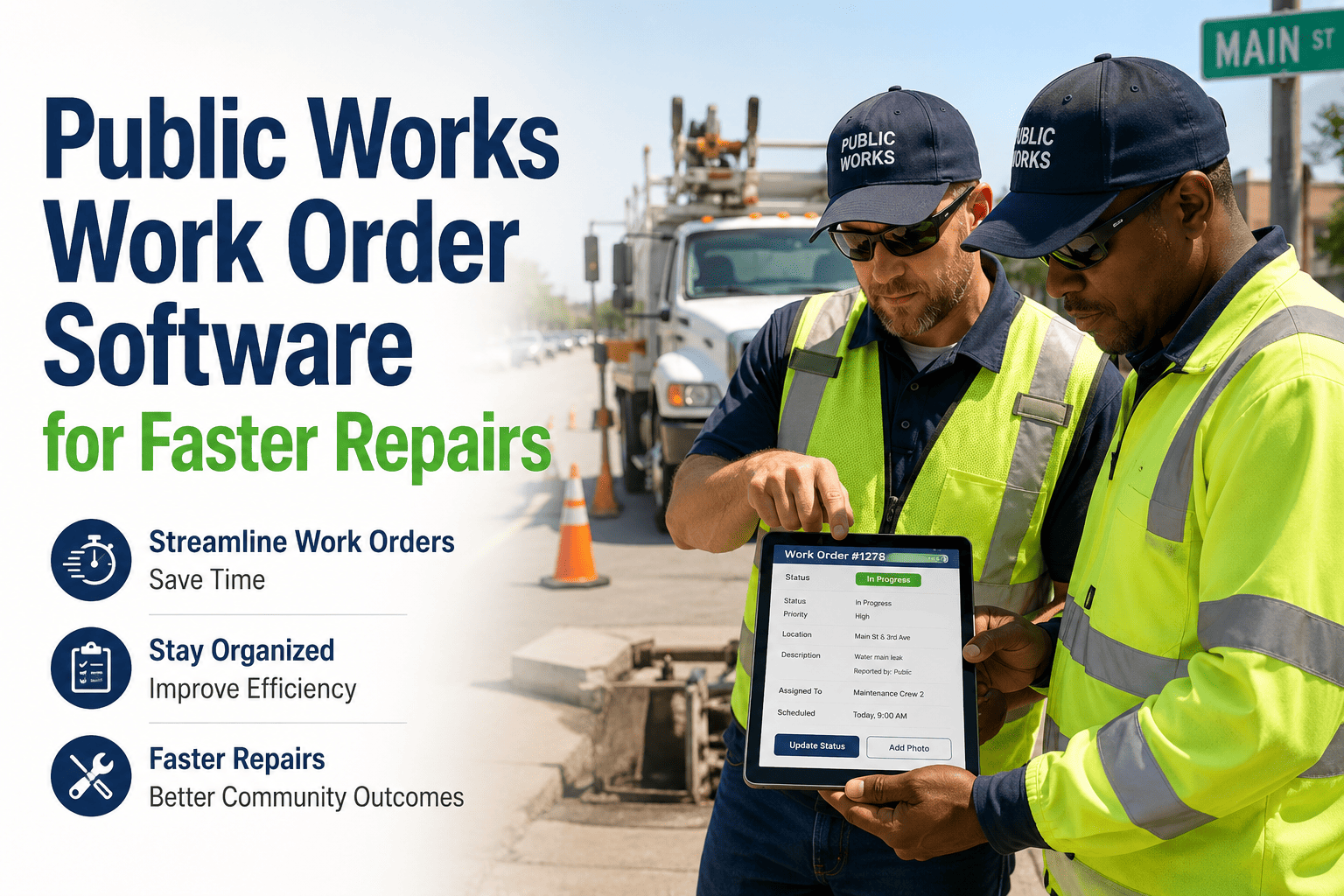
Corrective Action Work Orders
Root cause findings automatically generate corrective maintenance work orders — addressing the systemic fix, not just the immediate repair. Progress on corrective actions is tracked and root cause closure is confirmed when the failure pattern stops recurring in sensor data.
For Public Works Directors and Infrastructure Engineers
Stop Funding the Same Repair Twice
OxMaint's AI Copilot identifies which assets in your portfolio are in a repair loop — and what's actually causing the cycle. Book a demo to see root cause analysis run on sample infrastructure data from your asset class.
Expert Review
★★★★★
Infrastructure Asset Engineer · State Department of Transportation
"We had a bridge deck drainage system that we'd repaired four times in six years. Each repair was correctly executed — the drain was cleared, the structure was sound, the paperwork was filed. But the failures kept happening. When we ran the maintenance history through an AI root cause analysis tool, it flagged that every failure correlated with lane resurfacing work done by an adjacent contractor — the new asphalt grade was directing water into a low point that the original drainage design hadn't anticipated. The fix cost $8,000 in regrading. The previous four reactive repairs had cost $340,000 combined. That is the case for root cause analysis in public infrastructure: you're not just fixing the current failure, you're ending a cost cycle that compounds every time it repeats."
Frequently Asked Questions
How much historical data does OxMaint need to begin generating root cause insights?
OxMaint's AI Copilot can begin identifying basic failure patterns with as little as 90 days of work order history and sensor data. More complex patterns — those spanning multiple asset types or seasonal environmental factors — typically become visible within 6–12 months of live data accumulation. Departments that import historical maintenance records during onboarding see faster time-to-insight, often within 30–60 days.
Start a free trial to assess your current data availability for root cause analysis.
Can OxMaint AI Copilot identify root causes across different types of infrastructure assets?
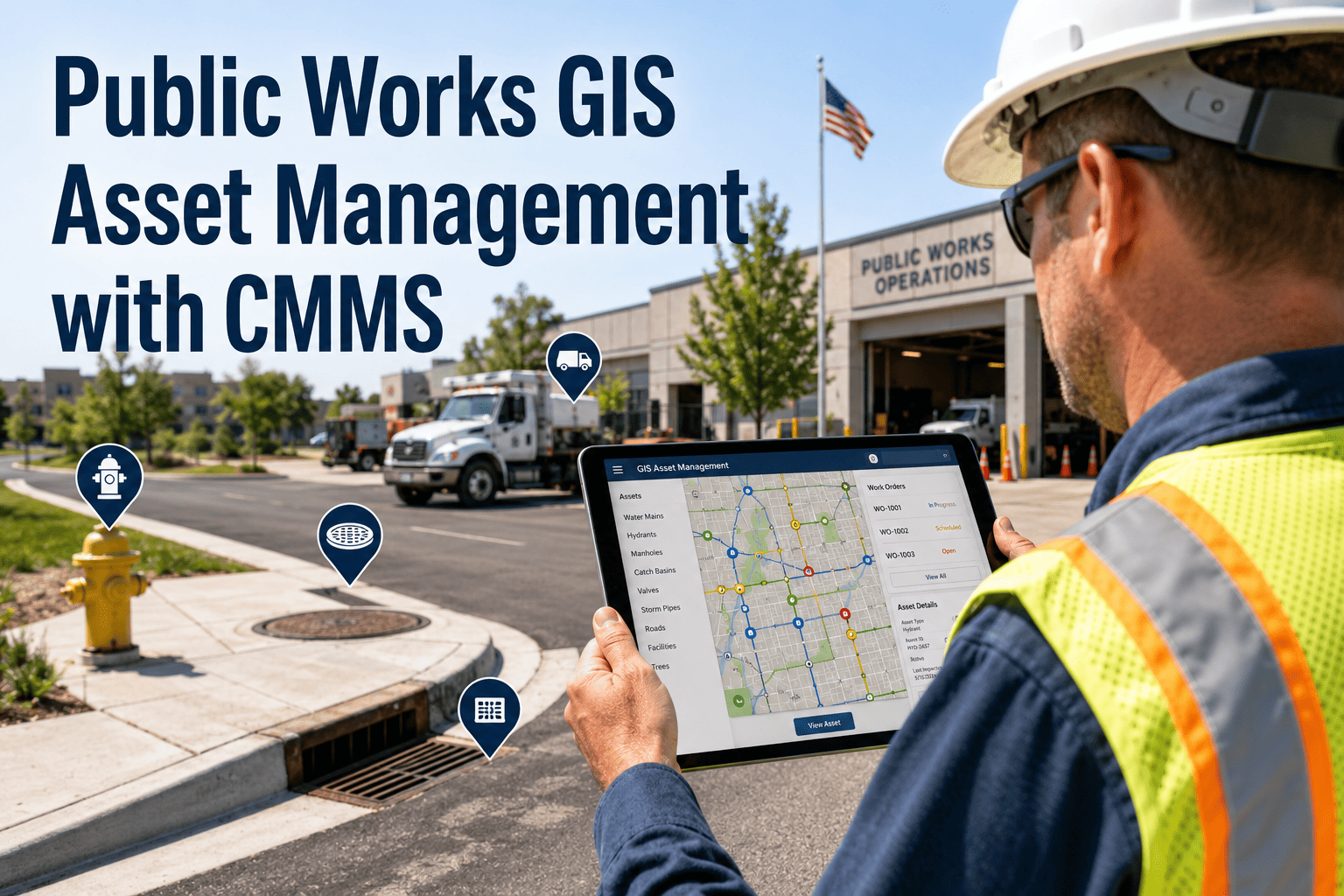
Yes. OxMaint's root cause analysis works across heterogeneous asset portfolios — roads, bridges, utility systems, buildings, and green infrastructure — identifying cross-asset patterns that would be invisible when reviewing each asset class in isolation. For example, a drainage failure pattern affecting both road surfaces and park infrastructure might share a root cause in stormwater system capacity — a correlation only visible when data from both asset types is analyzed together.
Book a demo to discuss root cause analysis across your specific asset portfolio.
How does OxMaint differentiate between a root cause finding and a false positive?
OxMaint's AI Copilot presents root cause findings with a confidence score based on pattern consistency, data volume, and statistical significance. Low-confidence findings are flagged for human review rather than generating automatic corrective work orders. Supervisors review flagged patterns and can confirm, dismiss, or escalate findings — maintaining human judgment in the analytical process while the AI handles the data processing. All root cause findings and disposition decisions are logged for audit purposes.
Does the AI Copilot require specialized training for public works maintenance staff?
OxMaint's AI Copilot is designed for maintenance operations staff, not data scientists. Root cause reports are delivered in plain language with recommended actions — not raw statistical output. Onboarding includes a structured training program for maintenance supervisors and department heads, typically completed in 2–3 days. Ongoing AI recommendations require no specialized technical knowledge to act upon — the system explains its findings and recommends actions in the language of maintenance operations.
The Pattern Behind the Failure Is in Your Data
Every repeated infrastructure failure leaves a trail in your maintenance records and sensor data. OxMaint's AI Copilot finds that trail automatically — so your team spends time fixing the cause, not revisiting the symptom. Book a demo to see what patterns are hiding in your infrastructure data right now.