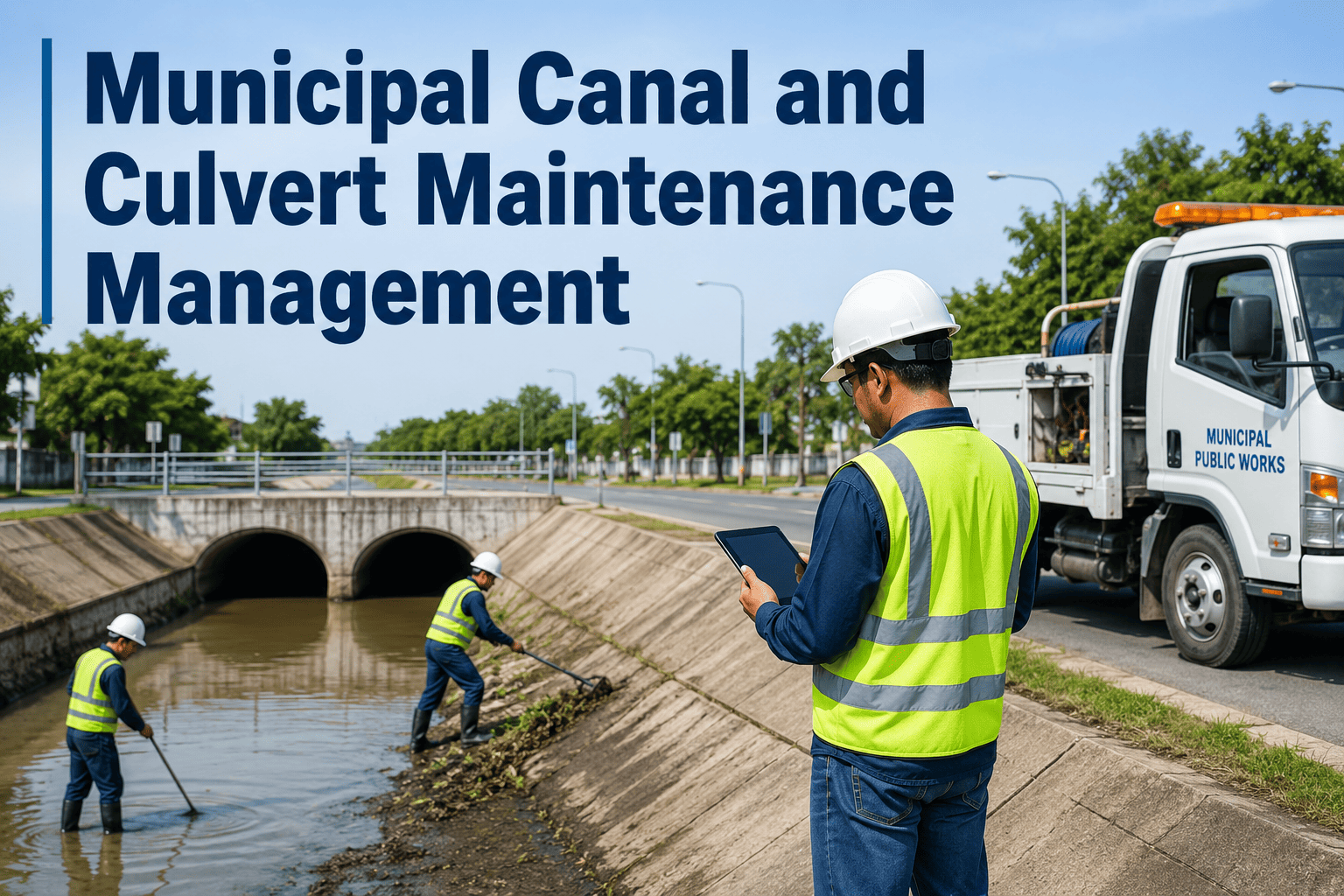
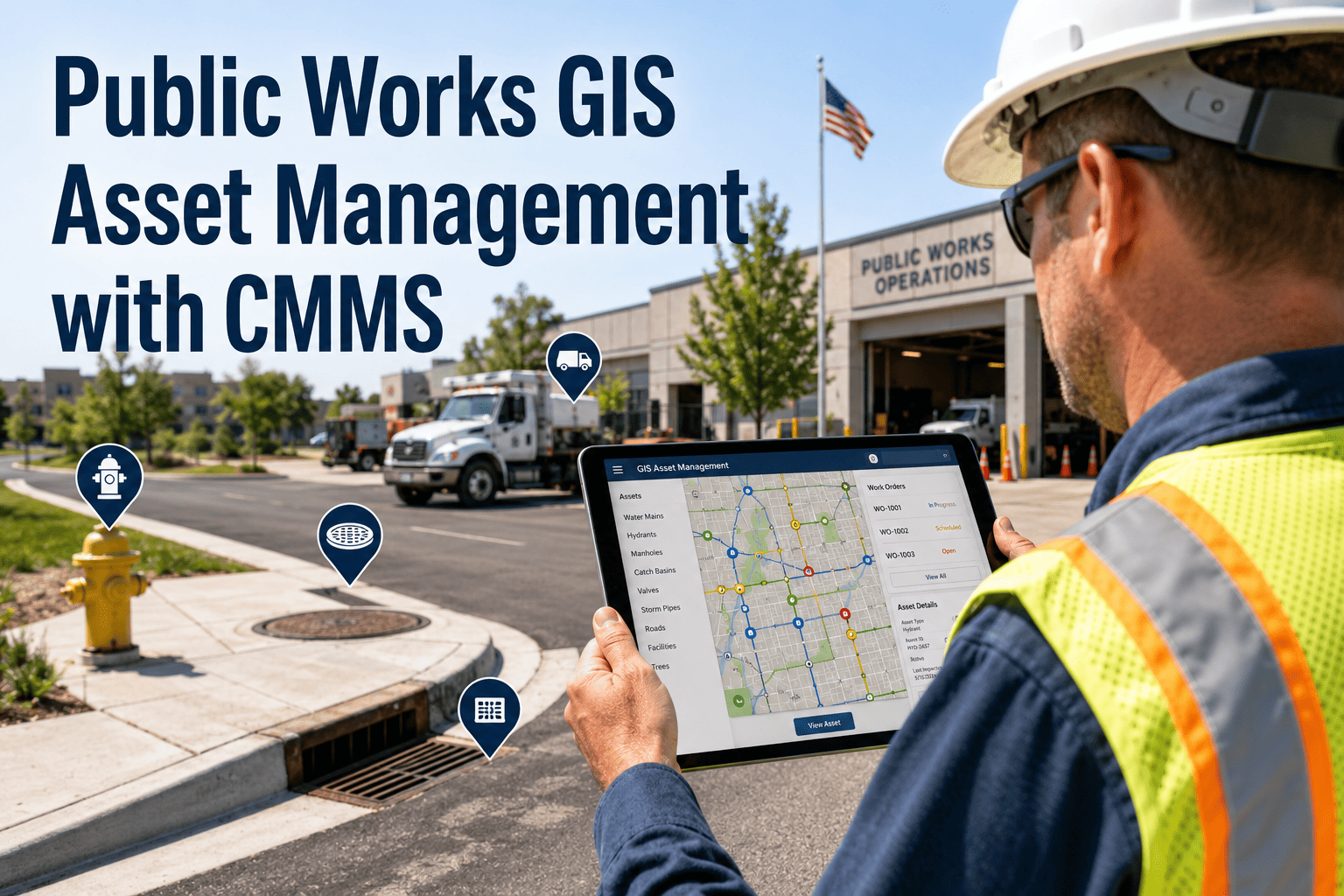
Urban flood events that damage property, disrupt infrastructure, and harm communities are rarely caused by weather alone. In most cases, the storm that exceeds system capacity was preceded by years of deferred canal maintenance, accumulating sediment, deteriorating culvert structures, and uninspected drainage corridors. Climate change is compressing the time between those failures. OxMaint's Asset Lifecycle Management gives municipal stormwater teams the tools to manage canal and culvert infrastructure proactively — scheduling inspections, tracking condition, and prioritizing maintenance before the next severe weather event tests a system that wasn't ready. Book a demo to see how OxMaint supports stormwater asset lifecycle management.
Asset Lifecycle Management · Stormwater & Climate Resilience · P2
Municipal Canal and Culvert Maintenance Management
Stormwater infrastructure fails at the worst possible moment — during the storms it was built to manage. Proactive maintenance is what changes that equation.
$6.2B
Annual urban flood damage in the US attributable to inadequate stormwater infrastructure maintenance
-71%
Reduction in culvert failure events in cities with structured inspection programs vs reactive-only
18 Yrs
Average culvert service life extension when managed with proactive maintenance vs reactive repair cycles
Why Canal and Culvert Infrastructure Fails Prematurely
Canals and culverts share a maintenance challenge unique among public assets: they're largely invisible during normal conditions, only examined under stress, and inspected less frequently than any other infrastructure class. The deterioration pathways are well-understood — the problem is that without a systematic inspection program, they're only discovered after failure has already begun.
Sediment Accumulation
Canals that lose 20–30% of cross-sectional capacity to sediment can carry flood flows at peak design capacity without visible warning. A 25% capacity reduction turns a 10-year storm event into a system-exceeding flow. Sediment profiling through structured inspection is the only way to detect this before a storm.
Avg detection: After flood event vs. OxMaint: Scheduled inspection cycle
Structural Deterioration
Concrete culverts designed for 50-year service lives develop spalling, joint separation, and invert erosion well before the end of design life — particularly in areas with high sulfide exposure from organic sediment. Unremediated structural deterioration accelerates rapidly once the integrity threshold is crossed.
Avg detection: Visual failure vs. OxMaint: Condition score trend alerts
Vegetation Encroachment
Woody vegetation in drainage corridors reduces channel capacity and creates debris dam formation risk during high-flow events. Roots from established trees destabilize embankments and penetrate culvert structures. Regular vegetation management prevents structural damage that costs 10–20x the vegetation removal program.
Avg detection: Annual visual survey vs. OxMaint: Photo-comparison AI flagging
End-of-Life Culverts
Corrugated metal pipe culverts from the 1960s–1980s are reaching the end of their design life across US municipal infrastructure. Without a lifecycle database tied to installation dates and condition history, municipalities are blind to which culverts are approaching failure — until a collapse closes a road or floods a neighborhood.
Avg detection: Road closure or flood vs. OxMaint: Lifecycle projection alerts
Canal and Culvert Asset Lifecycle: OxMaint Framework
Commissioned
Asset created in OxMaint, baseline condition recorded
→
Active Management
Scheduled inspections, PM tasks, condition scoring
→
Condition Watch
Score below threshold — increased inspection frequency
→
Capital Planning
Replacement or major rehabilitation flagged in budget
→
Rehab or Replace
Work completed, asset record updated, new lifecycle begins
Inspection and Maintenance Performance Data
| Metric |
Reactive Management |
Structured PM Program |
OxMaint AI-Assisted |
| Culvert inspection frequency |
Event-driven only |
Scheduled, manual tracking |
Automated scheduling, full coverage |
| Sediment capacity loss detection |
After storm capacity failure |
During scheduled inspection |
Trend modeled between inspections |
| Emergency repair rate |
High — over 60% of events |
Moderate — 25–40% |
Low — under 12% |
| Capital replacement planning |
After failure or complaint |
5-year estimate from age data |
Condition-based lifecycle projection |
| Climate resilience documentation |
None available |
Partial, manual reports |
Automated, grant-ready reports |
For Stormwater Managers and Public Works Directors
Build a Canal and Culvert Inspection Program That Holds Up
OxMaint's demo walks through a stormwater asset portfolio — showing inspection scheduling, condition scoring, capacity tracking, and climate resilience documentation in a single platform. Book a 30-minute session with your system size in mind.
Expert Review
Stormwater Systems Engineer
Urban Drainage and Flood Control District · Pacific Northwest Region
"The pattern I see repeatedly in post-flood forensic analysis is not that the storm was exceptional — it's that the system had been losing capacity for years before the storm that finally exceeded it. Sediment accumulation in key conveyance channels. Culverts with partial blockages from root intrusion or structural deformation. Overgrown drainage corridors that reduced effective channel width. Every one of these conditions was detectable with a systematic inspection program and a condition database that tracked trends over time. The communities that avoided the worst flood damage weren't lucky — they had maintenance records showing their infrastructure was in good condition before the storm hit. That's not a coincidence. That's asset lifecycle management working as intended, and AI-assisted platforms are the first technology that makes it achievable at municipal scale without unsustainable staffing overhead."
Frequently Asked Questions
How does OxMaint handle canal and culvert inspection in areas with limited field crew access?
OxMaint supports multiple inspection methods — in-person field inspection with mobile checklist, drone survey photo upload linked to asset records, and CCTV inspection report import from third-party survey contractors. All inspection types feed into the same condition scoring framework, so assets inspected remotely have the same lifecycle tracking as those inspected by field crews. Inspection method can be specified per asset based on access difficulty and inspection frequency requirements.
Start a free trial to configure inspection methods for your canal and culvert portfolio.
Can OxMaint support FEMA BRIC and other climate resilience grant applications?
Yes. OxMaint's Asset Lifecycle Management module generates infrastructure condition reports, maintenance history documentation, and asset inventory exports that align with the documentation requirements for FEMA BRIC (Building Resilient Infrastructure and Communities), EPA Clean Water State Revolving Fund, and state stormwater resilience grant programs. Departments using OxMaint report significant reductions in grant application preparation time compared to manual record compilation.
Book a demo to see how OxMaint supports stormwater grant documentation.
What condition scoring methodology does OxMaint use for culvert assets?
OxMaint supports configurable condition scoring frameworks — including ASCE infrastructure grades (A through F), numeric 1–5 scales, and custom scoring systems used by state DOT programs. Culvert condition assessments capture structural integrity, hydraulic capacity, inlet and outlet condition, and alignment. Scores are recorded per inspection with photo evidence and aggregate into a trend chart showing condition trajectory over time — critical for identifying assets in accelerating deterioration before they reach failure threshold.
How does OxMaint integrate stormwater maintenance records with broader climate resilience planning?
OxMaint's reporting layer connects maintenance completion rates, condition scores, and capital replacement timelines to climate exposure data — allowing departments to map maintenance vulnerability against projected rainfall intensity increases, sea level rise, and urban heat effects. This integration supports the asset-based climate resilience assessments required by HUD Community Development Block Grants and other federal programs requiring municipalities to demonstrate stormwater infrastructure adequacy under projected climate scenarios.
The Next Major Storm Will Test Your Stormwater Infrastructure
Canals and culverts maintained proactively handle design storm events as intended. Systems maintained reactively fail at unpredictable points under conditions they were built to manage. OxMaint gives stormwater teams the tools to stay on the right side of that equation — and the documentation to prove it when grant reviewers and insurers ask.