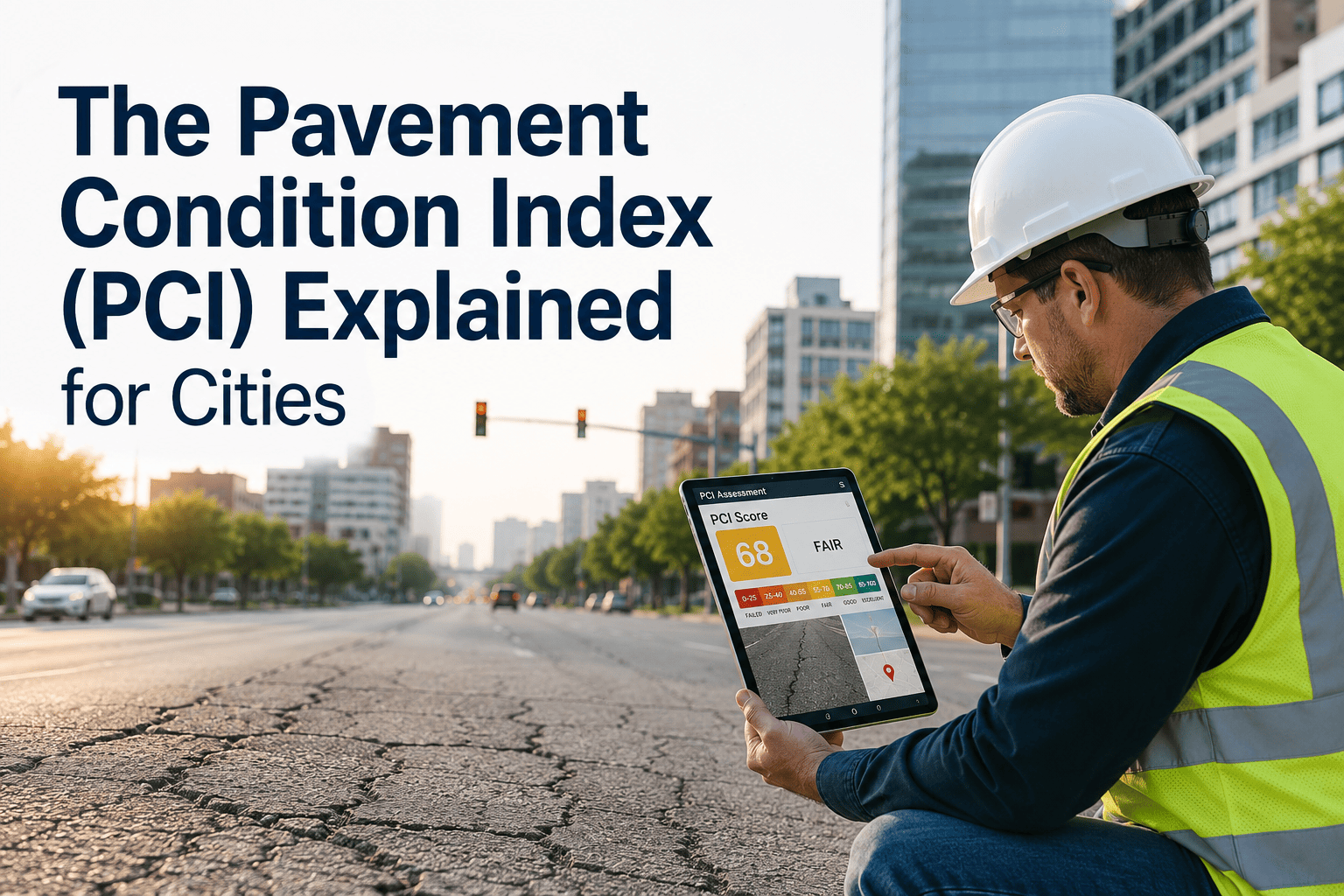
Manual pavement surveys are slow, inconsistent, and expensive — and by the time a crack is logged on a clipboard, it has already progressed. AI-powered crack detection systems scan highway surfaces at speed, classify defects by severity, and feed structured repair data directly into Oxmaint's CMMS platform. The result is a complete, audit-ready condition record for every kilometre of network — with prioritised repair work orders generated automatically. Start your free Oxmaint trial and bring AI detection data into a structured maintenance program today.
Roads & Transportation · Highway Infrastructure · AI Detection
AI-Powered Crack and Defect Detection for Highway Infrastructure Management
Computer vision replaces manual pavement surveys. AI classifies defects, scores condition, and generates prioritised repair orders — automatically. Oxmaint connects every detection event to a structured work order, compliance record, and capital forecast.
85%
Faster Survey Completion
AI-equipped vehicles complete pavement condition surveys in a fraction of manual crew time
95%
Defect Classification Accuracy
Computer vision outperforms manual visual inspection on crack type, severity, and extent classification
4x
Earlier Intervention
AI detects surface cracking at Stage 1–2 — when treatment costs a fraction of Stage 4 pothole repair
Zero
Missing Survey Records
Every detection event GPS-stamped and stored automatically — full audit trail from first scan
The Problem
What Manual Pavement Surveys Cannot Deliver
Traditional visual inspection is the dominant method for most road authorities — and it has three structural failures that compound over time into deferred maintenance backlogs and reactive repair spend.
01
Too Slow to Keep Pace
A manual crew surveys 5–10 km per day. A highway authority managing 500 km of network cannot complete a full condition cycle before the earliest surveys are already outdated. AI-equipped vehicles cover 200+ km per day without a crew safety risk.
02
Inconsistent Classification
Manual surveyors apply different severity thresholds, use inconsistent defect categories, and produce records that cannot be directly compared across seasons or survey crews. PCI scores built on manual data have error margins that undermine capital planning.
03
No Early Warning Capability
Visual surveys miss hairline cracking and sub-surface distress. By the time a defect is visible to a surveyor, it has already progressed to a stage requiring significantly more expensive intervention than early surface treatment would have cost.
How It Works
AI Detection to CMMS Work Order — End to End
Oxmaint sits at the end of every AI detection pipeline — turning raw defect data into structured, prioritised, and auditable maintenance records without manual input.
Step 1
AI Survey Vehicle Scans Network
Camera and LiDAR-equipped vehicle scans road surface at traffic speed. Computer vision classifies cracks by type (longitudinal, transverse, alligator, edge), severity (low/medium/high), and extent. Every defect GPS-tagged.
Step 2
PCI Score Calculated Automatically
Pavement Condition Index scores generated per segment from detection data. Network condition map updated in Oxmaint — every route section showing current PCI, deterioration trend, and recommended intervention type.
Step 3
Prioritised Work Orders Generated
Oxmaint auto-creates repair work orders ranked by severity and traffic volume. Crack sealing, surface treatment, or full reconstruction assigned based on defect classification — with cost estimates and material specifications attached.
Step 4
Compliance Record Built on Completion
Repair completion logged with GPS, photos, material quantities, and operator sign-off. Before/after condition comparison stored against the original detection record — building the full asset lifecycle history for every network segment.
Regulatory Compliance
Compliance Standards Oxmaint Supports Across Highway Authorities
Highway inspection and condition assessment programs operate under strict documentation requirements. Oxmaint generates compliant records automatically for every jurisdiction.
United States
FHWA MAP-21 and FAST Act pavement condition reporting, AASHTO Pavement Management Guide standards, state DOT inspection documentation, and ASTM D6433 PCI assessment records. Oxmaint auto-generates FHWA-aligned network condition reports.
Canada
TAC Pavement Asset Design and Management Guide compliance, provincial ministry of transportation inspection records, and municipal road authority condition assessment documentation. Multi-province format support for regional highway authorities.
Australia
ARRB pavement condition assessment standards, AUSTROADS Guide to Pavement Technology, state road authority inspection requirements (RMS NSW, VicRoads, TMR QLD), and IPWEA infrastructure asset management framework compliance records.
United Kingdom
Well-Managed Highway Infrastructure Code of Practice inspection standards, HD 29 pavement condition surveys for motorways and all-purpose trunk roads, local authority SCANNER survey documentation, and HA 228 assessment records.
Germany
ZEB (Zustandserfassung und -bewertung) pavement condition survey standards, FGSV technical guidelines for road condition assessment, BASt inspection documentation requirements, and German federal motorway authority reporting standards.
Saudi Arabia
Ministry of Transport highway inspection standards, Saudi Highways Authority condition assessment documentation, SASO technical standards for pavement materials, and Vision 2030 smart infrastructure reporting obligations. Arabic-language record support included.
Platform Comparison
Oxmaint vs Competitors: Highway Inspection and AI Detection Capability
| Capability |
MaintainX |
UpKeep |
Fiix (Rockwell) |
Limble CMMS |
IBM Maximo |
Hippo (Eptura) |
Oxmaint |
| AI Survey System API Integration |
No |
No |
Third-party |
No |
Enterprise |
No |
Native API |
| PCI Score Tracking per Segment |
No |
No |
Generic |
No |
Yes |
No |
Built-In |
| Severity-Ranked Work Order Generation |
Manual |
Manual |
Partial |
Basic |
Yes |
No |
Auto-Generated |
| Network Capital Forecasting |
No |
No |
Basic |
Basic |
Advanced |
No |
5–10 Year Rolling |
| Government Audit-Ready Export |
Basic PDF |
Basic PDF |
Yes |
Yes |
Enterprise |
Limited |
One-Click Export |
| Offline Mobile for Field Crews |
Yes |
Yes |
Limited |
Yes |
Limited |
Limited |
Full Offline Sync |
Client Results
What Highway Authorities Report After Deploying Oxmaint with AI Detection
85%
Faster Network Survey Cycle
Full network condition assessment completed in days rather than weeks — enabling more frequent monitoring cycles
35%
Lower Reactive Repair Spend
Early crack detection enables surface treatment before pothole formation — cutting average cost per defect intervention
2x
Capital Budget Approval Rate
PCI-backed condition reports replace anecdotal submissions — council and authority approvals accelerated significantly
100%
Audit Record Completeness
Zero missing detection-to-repair records across all authorities using Oxmaint for highway inspection management
"
We ran manual PCI surveys every two years because the cost and crew time made annual surveys impractical. After integrating AI survey outputs into Oxmaint, we now run quarterly condition cycles at lower total cost than our previous biennial manual survey. Our capital submission last year included a full network condition map with deterioration trend lines per route segment. The transport authority approved our full budget request — first time in six years.
Head of Pavement Management · State Highway Authority, Queensland AU
Turn Your AI Survey Data Into Structured Maintenance Records
Oxmaint connects any AI detection system to automated work orders, PCI tracking, and audit-ready compliance documentation.
Related Resources
More Government Infrastructure Insights from Oxmaint
Frequently Asked Questions
AI Highway Detection and CMMS — What Authorities Ask
Which AI pavement survey platforms does Oxmaint integrate with?
Oxmaint connects to all major AI pavement survey outputs via standard API — including Pavemetrics LCMS, RoadBotics, Fugro, Aris, and others. If your survey system exports structured defect data with GPS coordinates, Oxmaint can receive and process it into work orders automatically. For systems without direct API support, Oxmaint accepts bulk CSV import of survey results for manual ingestion cycles.
Book a demo and bring your survey system details — we will confirm the integration path in the call.
How does Oxmaint calculate and track PCI scores?
PCI scores are calculated per network segment from incoming defect classification data — using standard ASTM D6433 methodology adapted for your authority's specific distress categories. Scores update with each new survey cycle and are stored historically per segment, enabling deterioration rate modelling and intervention timing optimisation. The platform flags segments crossing configurable PCI thresholds for immediate work order generation.
Start your free trial and configure your network segments and PCI thresholds today.
Can Oxmaint support both AI detection and traditional manual survey inputs?
Yes. Oxmaint is designed to accept defect inputs from any source — AI survey vehicles, drone inspections, mobile field apps, or manual inspection forms completed by crew. All inputs generate the same structured defect records and feed into the same work order and compliance trail. Authorities transitioning from manual to AI-assisted surveys can run both concurrently without any platform change.
Book a 30-minute demo to walk through your current inspection workflow.
Highway Infrastructure · AI Detection CMMS · Live in 60 Minutes
Every Crack Detected. Every Repair Prioritised. Every Record Audit-Ready.
AI survey integration with native API connection. Automated PCI scoring per network segment. Severity-ranked work orders generated instantly. GPS-verified repair records. Capital forecasting from live condition data. Offline mobile for remote highway crews. No IT project. Running in under 60 minutes.
F