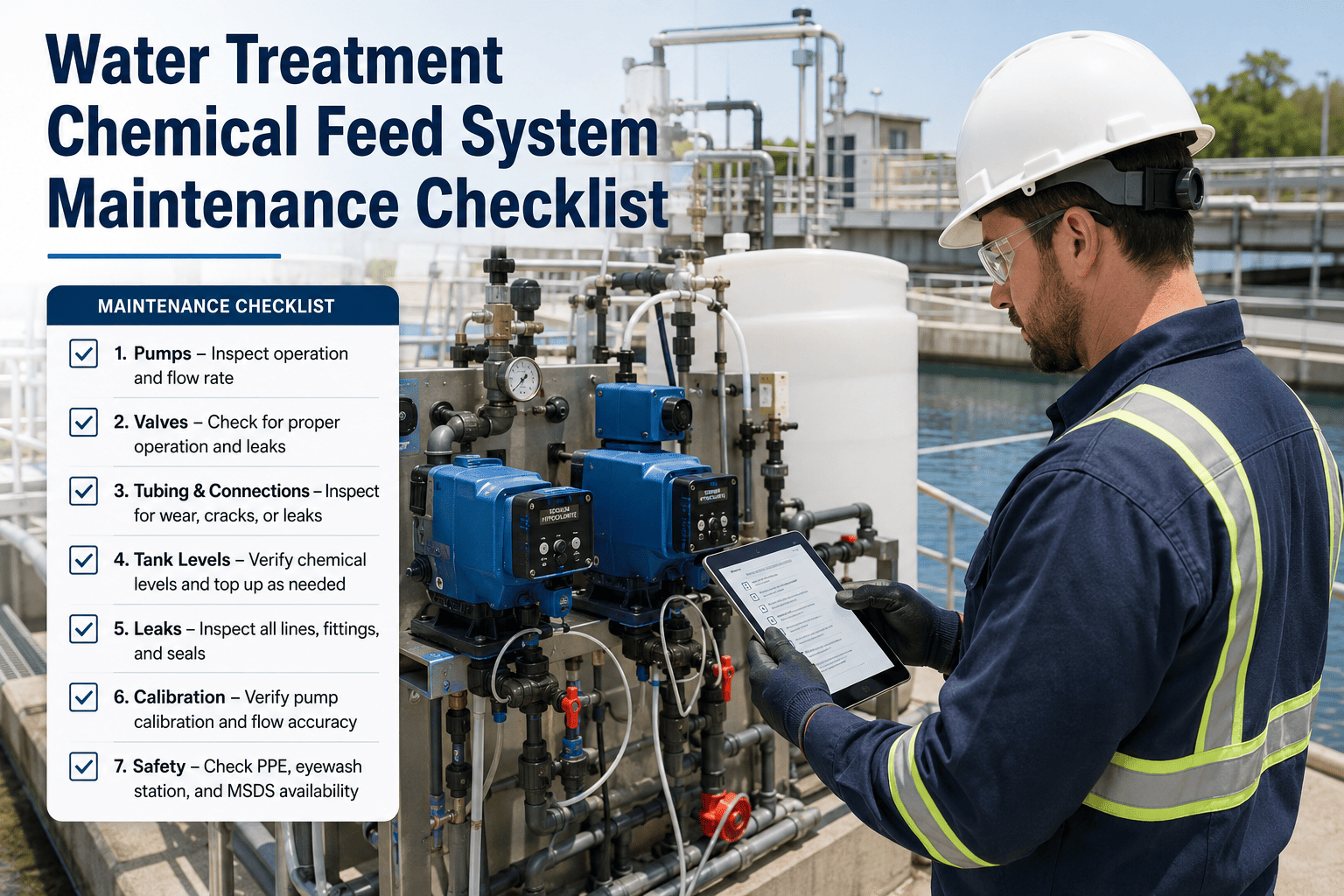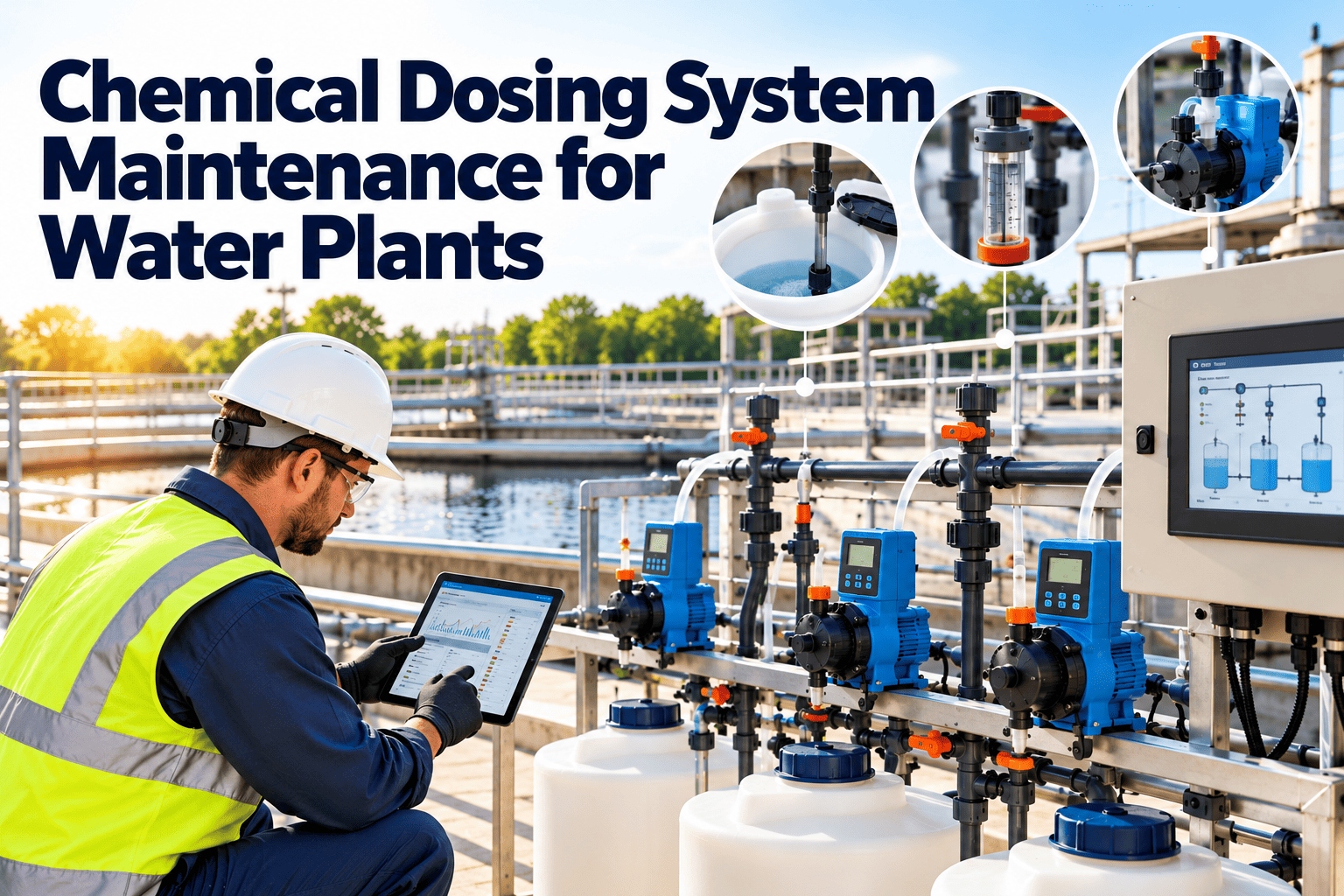
Chemical feed systems are simple on paper and unforgiving in practice. A pump that drifts out of calibration, a clogged injection quill or a slow leak can change dose without anyone noticing until a residual reading, a complaint or a violation appears. Maintenance keeps dosing accurate, safe and traceable. This guide covers failure modes, pump calibration, PM intervals, leak control and records, with preventive maintenance software to schedule the work.
Water and Wastewater / Treatment
Chemical Dosing System Maintenance for Water Plants: Keep Every Dose Accurate and Safe
Maintain pumps, lines, injection points and analyzers as one closed loop, so feed rates stay correct and every corrective action is on record.
Bulk tank
to
Day tank
to
Feed pump
to
Injection point
to
Analyzer
to
Controller
Common Dosing Failures and First Checks
| Symptom | Likely cause | First check |
|---|---|---|
| Residual drifting low | Worn diaphragm, check valve leak or air lock | Pump output at the calibration column |
| Residual drifting high | Siphoning, wrong stroke setting or analyzer drift | Anti-siphon device, settings, analyzer calibration |
| No flow with pump running | Clogged suction strainer, dry tank or failed valve | Suction line, tank level, valve seats |
| Pulsing or unstable dose | Gas binding or degassing chemical | Degassing valve and tubing condition |
| Crystals or scaling at injection | Chemical incompatibility or neglected quill | Quill cleaning and replacement interval |
| Chemical odor or wet floor | Fitting, tubing or tank leak | Connections, containment and tubing age |
Pump Calibration in Five Steps
1Record current stroke length, speed and setpoint.
2Fill a calibration column from the suction line.
3Run the pump for a timed interval and measure the volume drawn.
4Compare to expected output and adjust the setting.
5Repeat, then log the result and attach it to the pump.
PM Intervals by Component
| Component | Typical task | Starting interval to review |
|---|---|---|
| Metering pump | Calibration check, diaphragm and valve inspection | Set by chemical severity and manufacturer guidance |
| Tubing and fittings | Inspect for cracking, discoloration and weeping | Frequent visual checks, replace on condition |
| Injection quill and check valve | Clean, inspect, replace if fouled | More often with scaling chemicals |
| Day tank and level sensor | Check level reading, cleanliness and vents | Routine rounds |
| Containment and sumps | Inspect for chemical and water, confirm drains are closed | Routine rounds |
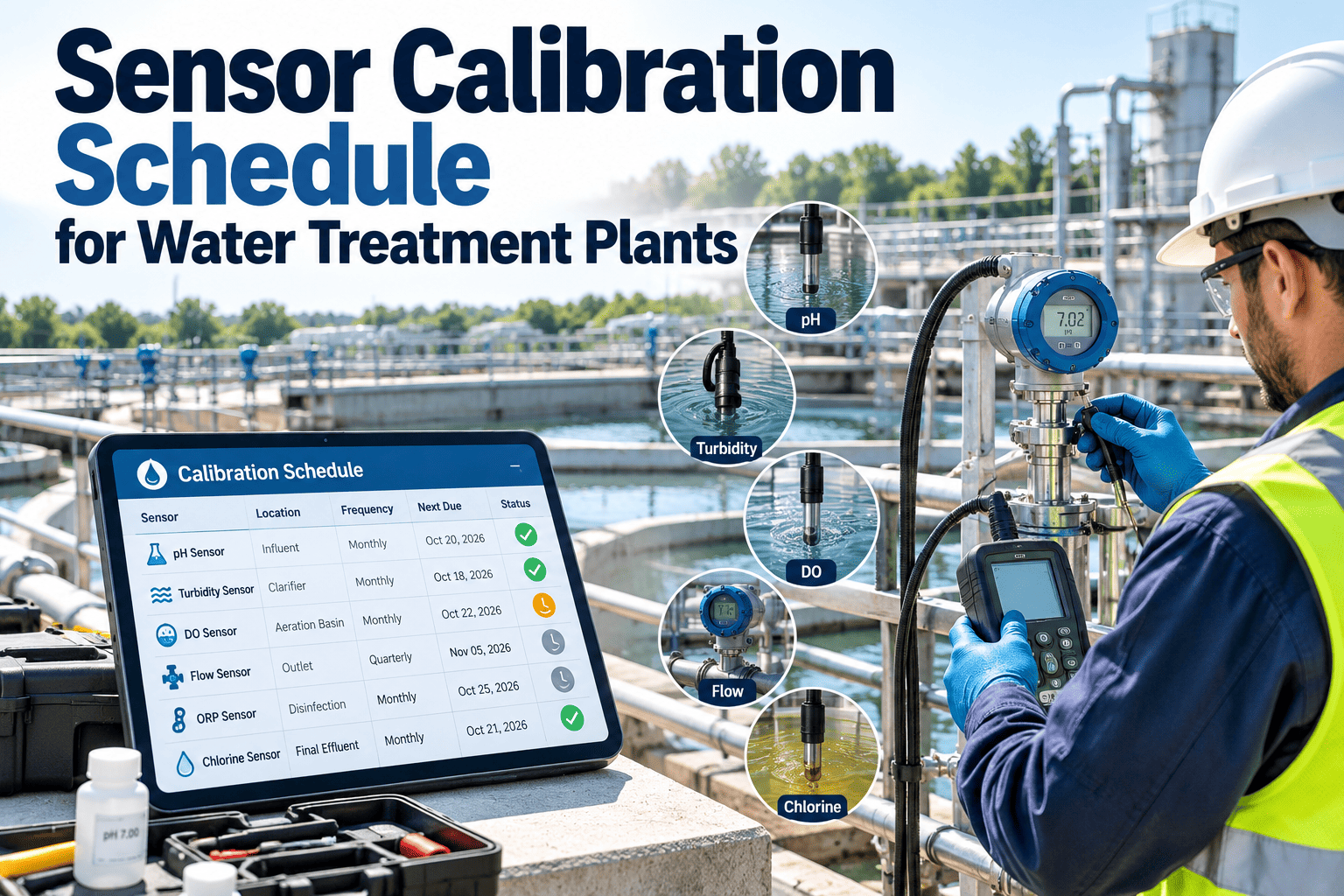
| Analyzer and sensor | Verify against a reference reading | Tied to the calibration schedule |
Schedule Pump PMs, Calibrations and Leak Checks in One Place
Build recurring tasks for every feed system, attach the procedure and record results where operators and maintenance both see them.
Leak and Safety Controls
Prevent
- Replace tubing on a condition and age basis
- Keep containment clean and drains closed
- Label lines, valves and tanks clearly
- Keep safety data sheets current
Detect and respond
- Test leak detection and eyewash stations
- Log small leaks as work orders, not notes
- Record cause and fix for each event
- Review repeats for design or material changes
Before and After Closing the Loop
Without a system
- Calibration dates live on a whiteboard
- Leaks are fixed without a history
- Analyzer drift is found after an unusual reading
- Replacement parts are ordered during failures
With scheduled work orders
- Calibration records are attached to each pump
- Repeat leaks show up in reports
- Analyzer checks are tied to dose reviews
- Spares are tracked by part and location
Documenting Corrective Action
A useful dosing work order records the symptom, readings before and after, parts replaced, cause and who verified the fix. Over time this history shows which pumps, chemicals or quills fail most, which supports spare parts planning and equipment replacement decisions in Oxmaint.Chemical-Specific Maintenance Notes
| Chemical type | Typical problem | Maintenance focus |
|---|---|---|
| Sodium hypochlorite | Gas formation can cause vapor lock and loss of prime | Degassing valves, tubing and frequent output checks |
| Coagulants | Corrosion, staining and viscosity changes | Wetted material compatibility, strainer cleaning |
| Polymers | Slippery spills and plugging when not mixed correctly | Mixing equipment, lines and spill control |
| Caustic or pH adjustment | Crystallization and scaling at injection points | Quill cleaning, heat tracing where used, leak checks |
| Corrosion inhibitors and other additives | Low flow rates make small errors significant | Calibration accuracy and back-pressure valve condition |
Operator Rounds and Maintenance Tasks Should Not Overlap
Operators usually handle
- Daily tank level and inventory checks
- Visual look for leaks and unusual noise
- Flow and dose rate confirmation
- Reporting problems through a work order
Maintenance usually handles
- Calibration and drawdown tests
- Diaphragm, valve and tubing replacement
- Quill cleaning and injection point repair
- Analyzer verification and repair
Spare Parts That Prevent Long Outages
- Diaphragm and check valve kits for every pump model
- Spare tubing, fittings and ferrules in the correct materials
- A spare injection quill and back-pressure or anti-siphon valve
- Level sensors and fuses used by the feed system
- Calibration column parts and PPE consumables
Test the Safety Layers, Not Only the Pumps
1Low-level and empty-tank alarms
2High-level and overfill protection
3Leak detection and sump alarms
4Interlocks that stop dosing on no flow
5Eyewash, shower and ventilation checks
Management of Change for Feed Systems
- Update the work order and procedure when a chemical, supplier or concentration changes
- Confirm pumps, tubing and seals are compatible with the new product
- Recalibrate the pump and verify the analyzer after the change
- Update labels, safety data sheets and operator instructions
- Record who approved the change and the date it took effect
Measures That Show Feed System Health
| Measure | What it indicates |
|---|---|
| Calibration completed on time | Whether dosing accuracy is being verified |
| Repeat repairs by pump or location | Equipment or chemical compatibility issues |
| Leak work orders and closure time | Housekeeping and response quality |
| Dose adjustments after analyzer checks | Possible drift or control problems |
| Spare parts used versus stocked | Whether inventory matches real failure patterns |
Why Small Dosing Errors Matter
A dosing system rarely fails dramatically. It usually drifts. A diaphragm wears, a check valve leaks by a small amount, a tank level sensor sticks or an analyzer reading slides, and the process still looks acceptable on the trend screen. The effects are quiet but real.- Under-dosing can weaken treatment performance and reduce residual protection
- Over-dosing wastes chemical, raises cost and can create handling or water quality problems
- Unstable feed makes control loops hunt and operators lose trust in automatic mode
- Hidden leaks create safety hazards and corrosion in nearby equipment
A Practical PM Calendar for Feed Systems
| Frequency | Tasks |
|---|---|
| Daily or each shift | Check tank levels, dose rate, alarms, and look for leaks, odors and noise |
| Weekly | Inspect tubing and fittings, check strainers, confirm pump priming and stability |
| Monthly | Verify output with a calibration column, clean injection points, inspect containment and drains |
| Quarterly | Inspect diaphragms and check valves, test alarms and interlocks, review analyzer checks |
| Annual | Rebuild or replace wear parts, inspect tanks and vents, review procedures and spare parts |
Troubleshooting Order That Saves Time
| Step | Question | What to do |
|---|---|---|
| 1 | Is there chemical to pump? | Check tank level, suction line and strainer |
| 2 | Is the pump moving fluid? | Check prime, valves and diaphragm |
| 3 | Is the output correct? | Run a drawdown against the setting |
| 4 | Does the line deliver to the point of use? | Check tubing, quill and back-pressure valve |
| 5 | Is the measured result correct? | Verify analyzer against a reference |
| 6 | Did something change? | Review work orders, supplier and concentration records |
If a Leak Is Found
- Make the area safe and follow your site chemical response procedure
- Isolate the line or stop the pump if it is safe to do so
- Contain the spill and notify the people required by your procedures
- Open a work order with location, product and approximate volume
- Repair, test the repair and confirm dose output afterward
- Record the cause and review whether similar parts need replacement
What a Good Dosing Work Order Records
| Field | Reason |
|---|---|
| Asset and chemical | Connects work to the exact pump and product |
| Reported symptom | Preserves the original problem description |
| Readings before and after | Shows whether the fix changed performance |
| Parts and labor used | Supports cost tracking and spare stocking |
| Cause identified | Helps spot patterns across pumps |
| Verification by operator | Confirms the process is back on target |
Tank and Storage Area Maintenance
- Inspect tank walls, fittings and vents for wear or damage
- Verify level sensors against a manual reading
- Check containment for cracks, water and residue
- Keep labels, placards and safety data sheets legible
- Review delivery connections and fill procedures
- Look at nearby piping, supports and electrical equipment for corrosion
Train People to Use the Same Process
- Show new technicians how to complete a calibration drawdown safely
- Review common failure signs with operators
- Use the same checklist for each pump so results are comparable
- Discuss repeat failures at routine team meetings
- Update procedures when a chemical, supplier or pump model changes
Repair, Rebuild or Replace the Pump
| Situation | Usual choice | Reason |
|---|---|---|
| Wear parts reached normal service life | Rebuild | Cost effective and restores performance |
| Repeated failures despite new parts | Investigate and consider replacement | Likely mismatch with chemical or duty |
| Pump no longer supported by manufacturer | Plan replacement | Parts risk is rising |
| Wrong size causing unstable dosing | Replace or resize | Accuracy depends on suitable turndown |
How Oxmaint Supports Chemical Feed Maintenance
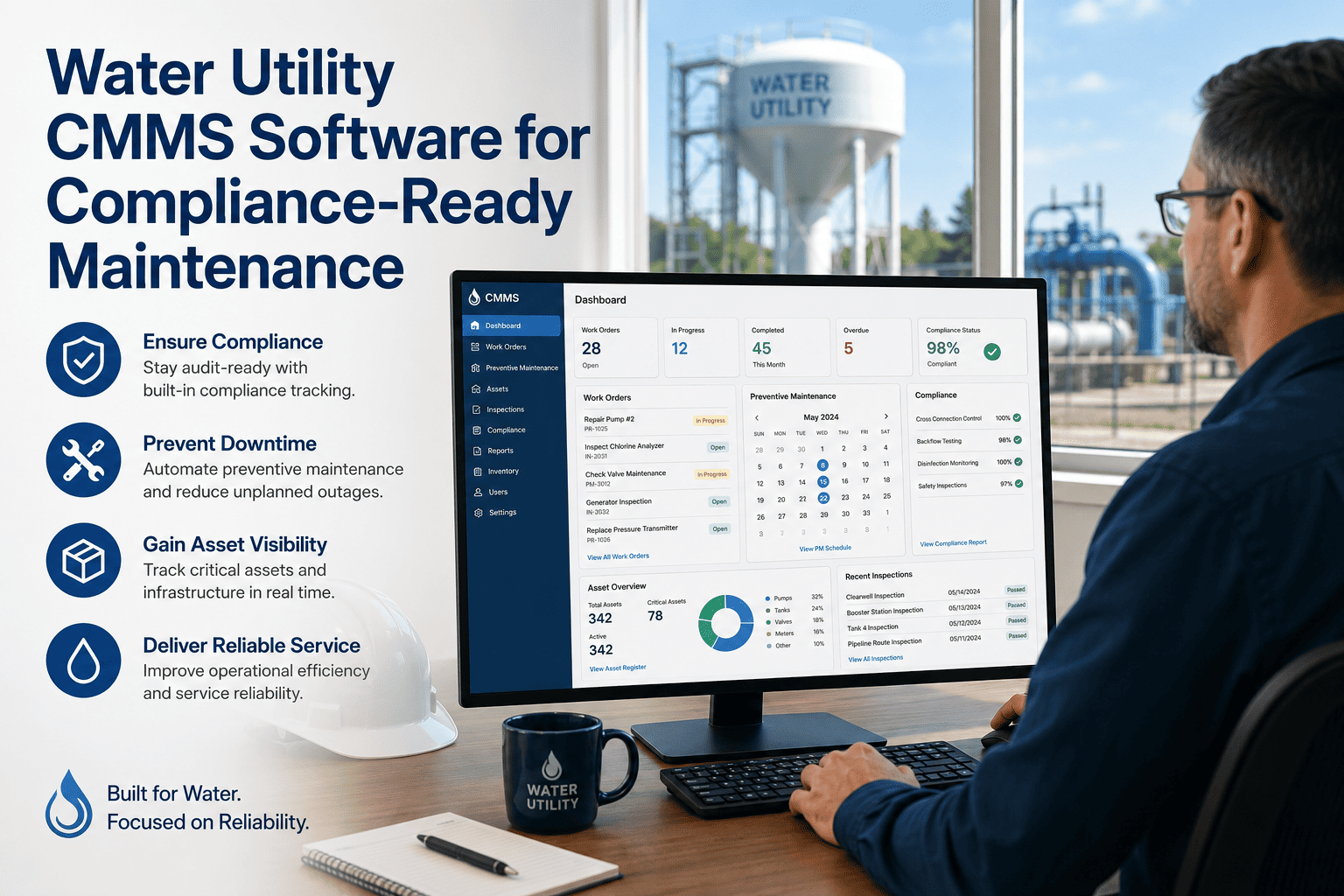
Oxmaint can register every feed pump, tank, analyzer and injection point, then schedule calibration, diaphragm replacement, leak checks and alarm tests as recurring work orders. Technicians use checklists on mobile devices and attach readings and photos. Inventory records track spare diaphragms, tubing and valves, and reports show repeat failures by pump or chemical so teams can fix causes instead of symptoms.- Recurring calibration and drawdown work orders
- Leak and corrective action history by asset
- Spare parts linked to each pump model
- Reports on overdue PMs and repeat repairs
Operational Impact of a Reliable Feed System
- More stable residuals and fewer manual adjustments by operators
- Lower chemical waste from over-dosing
- Safer work areas through earlier leak detection
- Clearer records for management, auditors and regulators
- Better capital planning based on repair history
Seasonal Shutdown and Start-Up Checks
- Drain, isolate or protect equipment as required before shutdown
- Inspect belts, seals and wiring before the first start of the season
- Test safeties, alarms and interlocks before putting units into service
- Record first-start readings as a baseline for the season
- Open a corrective work order for anything unusual before it becomes a failure
Plan for Failure Before It Happens
Every feed system should have a documented fallback. Decide what operators do if the primary pump fails, who is called, which spare is installed and how dosing is verified afterward. Keep the standby pump on the same PM and calibration schedule as the duty pump, because a spare that has never been tested is only a hope. Review each failure afterward and update the plan, spare list and checklist so the next event is handled faster.Frequently Asked Questions
How often should chemical feed pumps be calibrated?
Frequency depends on the chemical, accuracy needs and manufacturer guidance. Start conservatively, then adjust using drift found in past checks.What causes dosing errors most often?
Worn valves, air in the line, clogged injection points and uncalibrated analyzers are common causes. A consistent PM plan catches them early.Should analyzers be part of dosing maintenance?
Yes. If the analyzer drifts, the control loop corrects the wrong value. Link analyzer checks to pump calibration tasks.How do we document leaks?
Open a work order for each leak with location, cause, repair and follow-up check so repeats become visible.Can this be configured for our plant?
You can schedule a demo to see feed system assets and PM templates.Keep Chemical Feed Systems Accurate, Safe and Documented
Schedule calibration, replace parts before they fail and keep a clear record of every dosing fix.