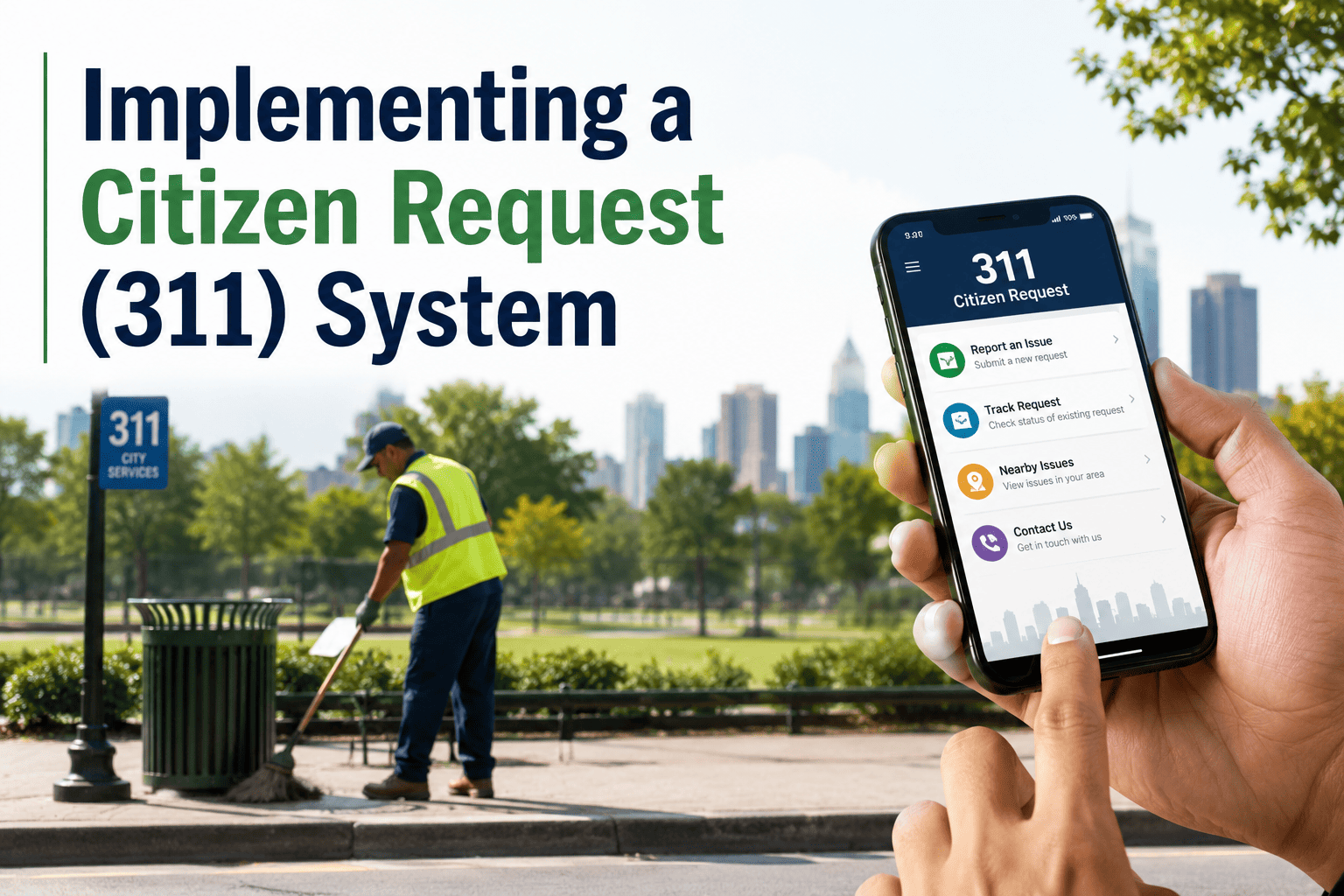
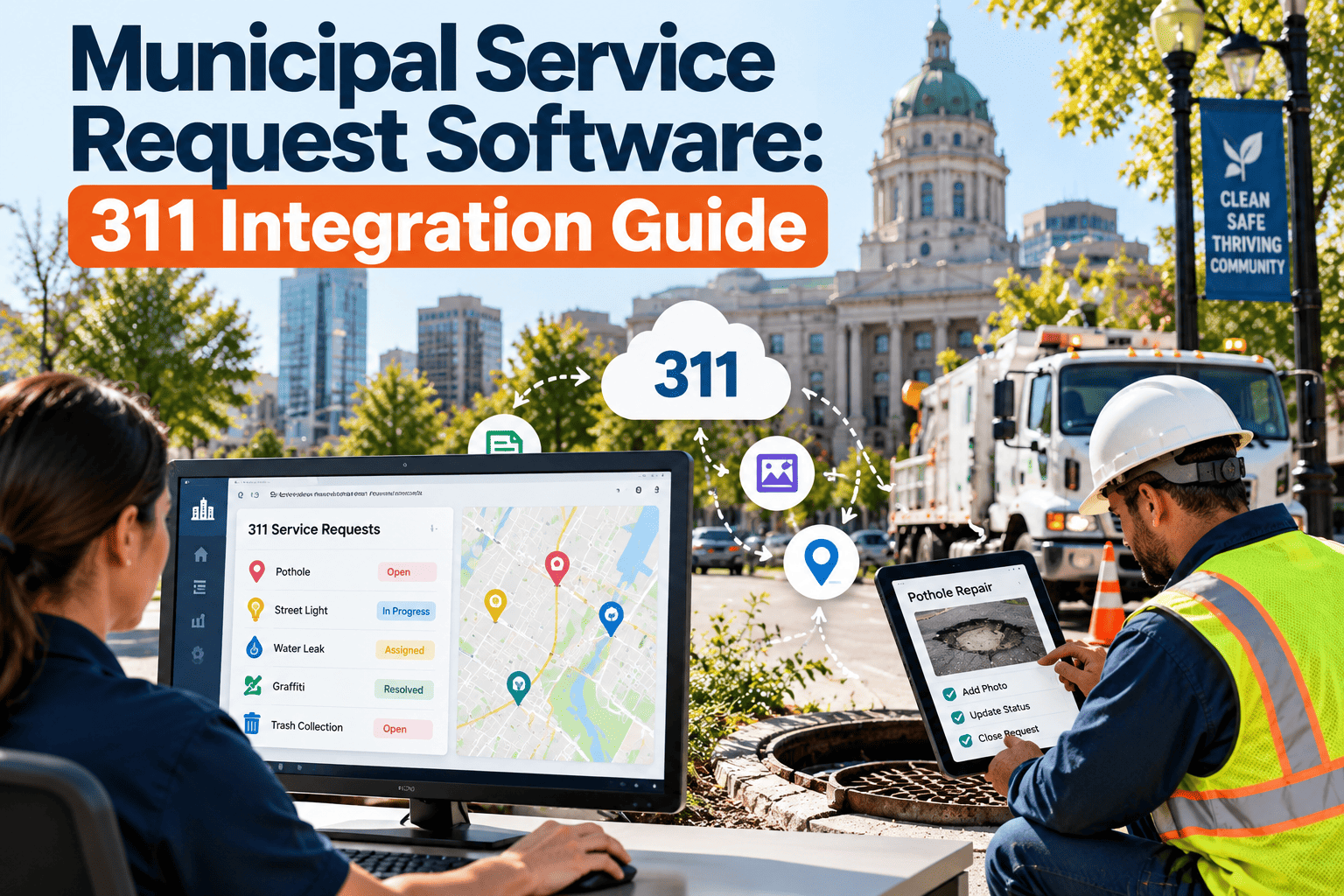
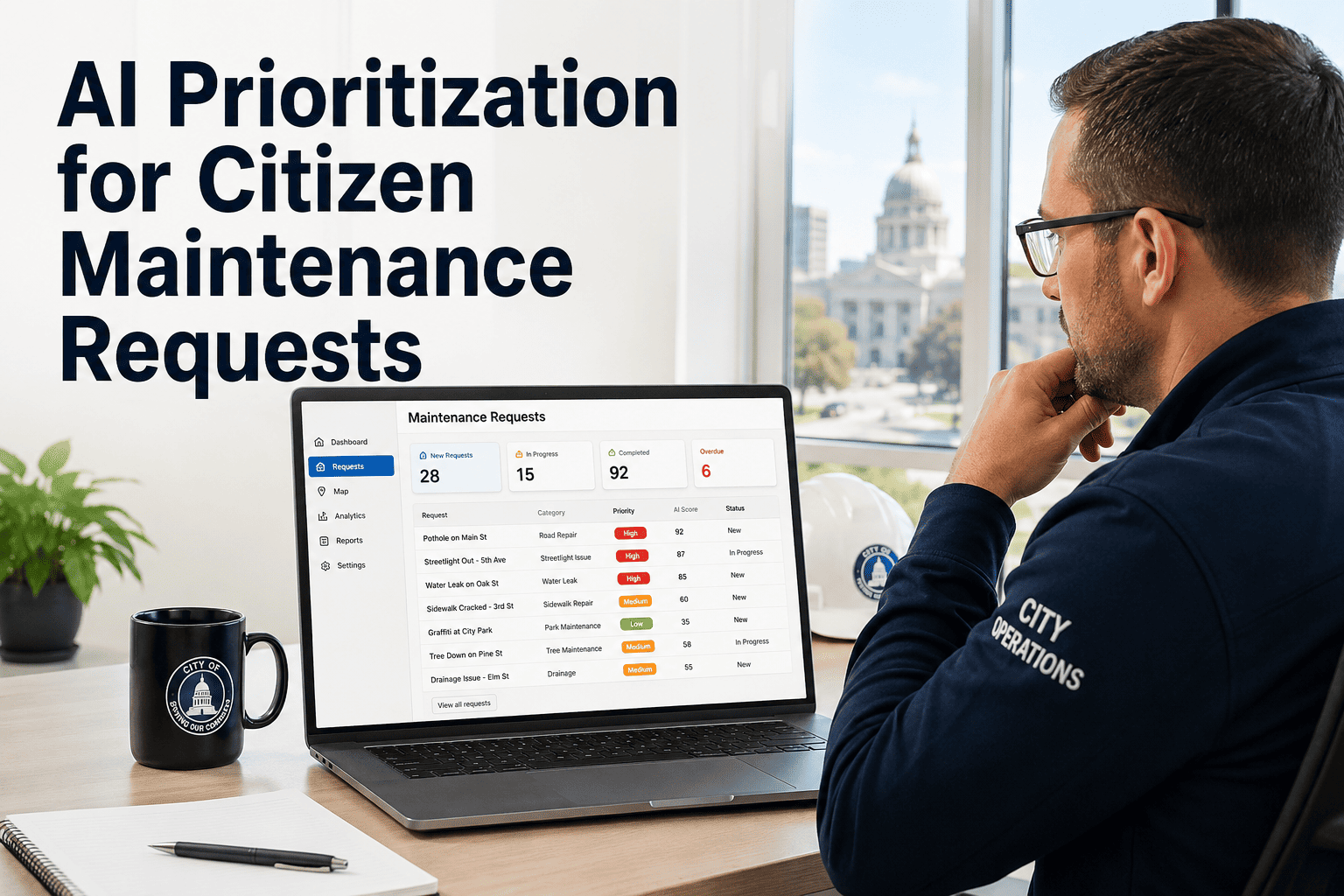
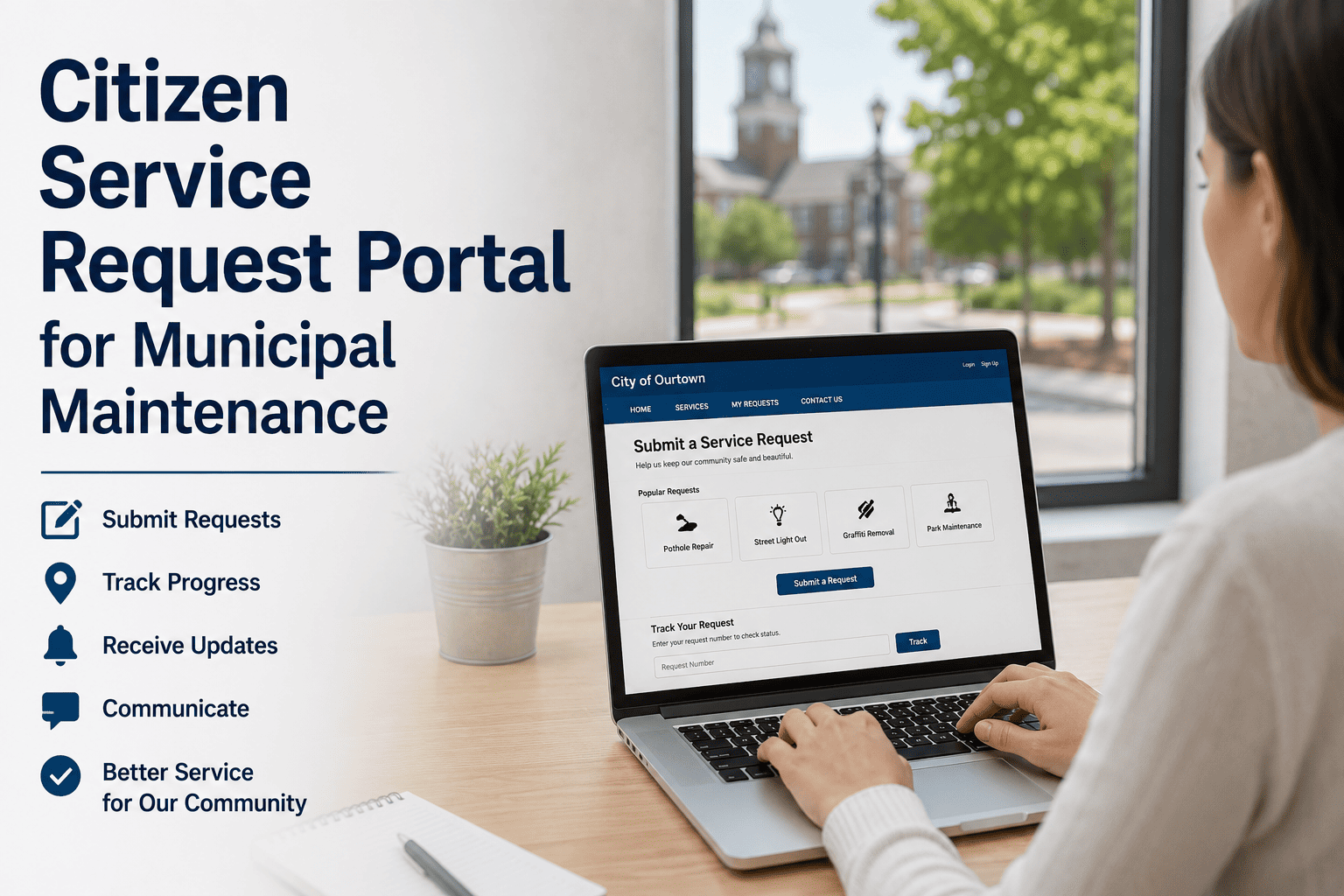
A 311 citizen request system is the centralized intake, tracking and resolution layer that every modern municipality needs to capture non-emergency service requests — potholes, streetlight outages, graffiti, noise complaints — and route them to the right crew before they escalate to elected officials. When a municipal 311 system is implemented well, first-call resolution climbs, duplicate reports collapse, and citizens can track their request end-to-end instead of calling five departments. OxMaint gives public works and facilities teams the CMMS backbone that turns those 311 citizen request tickets into closed work orders — you can Start Free Trial today or book a 30-minute demo to see it configured for your municipality.
311 Implementation Guide
Is your municipality losing citizen requests between phone, email and spreadsheet?
70% of mid-size cities still route citizen requests through departmental phone lines and shared inboxes — and the average lost-ticket rate exceeds 22% before crews ever see the work order. A 311 citizen request system fixes that gap, and OxMaint closes the loop by auto-converting each request into a tracked, prioritized maintenance work order.
22%
of citizen requests never reach a maintenance crew when intake is manual
Why It Matters
The cost of running citizen requests on phones and spreadsheets
A 45,000-resident municipality typically receives 6,000–9,000 non-emergency requests per year. Without a dedicated 311 request system, roughly 1 in 5 of those requests is lost, mis-routed or duplicated — and the visibility gap hits the bottom line.
$240K
Annual staff time wasted re-keying phone calls into disconnected spreadsheets and email folders
11 days
Average resolution time when requests bounce between departments before reaching a crew
3.4x
Increase in escalations to council members when citizens can't track the status of a reported issue
The status quo isn't just inefficient — it's politically expensive. Every unanswered pothole report, every dark streetlight ticket that vanishes into a public works inbox becomes a call to a council member's office. A citizen service request system eliminates that visibility gap by giving every request a unique ID, a category, a priority and a lifecycle the citizen can see. When that system is integrated directly into your CMMS — as OxMaint does — the request doesn't just get logged; it gets dispatched, scheduled, completed and verified with a photo before close.
Implementation Roadmap
How to implement a 311 citizen request system: a 4-phase timeline
Cities that deploy a municipal 311 system in under 90 days share one trait: they phase the rollout instead of trying to launch every category at once. Here's the deployment approach that consistently hits go-live in 8–12 weeks.
Weeks 1–2
Phase 1
Discovery & Category Mapping
Audit the last 12 months of phone logs, emails and work orders. Build a request-category tree of 15–25 root categories (potholes, streetlights, signage, graffiti, drainage, noise, parks, waste). Each category maps to a department, a default priority and an SLA target.
Weeks 3–6
Phase 2
System Configuration & CMMS Integration
Configure the 311 software intake channels (web portal, mobile app, phone). Connect the citizen reporting system to your CMMS so every approved request auto-generates a work order with asset, location, priority and parts pre-populated. OxMaint handles this natively — citizen requests become work orders without manual handoff.
Weeks 7–9
Phase 3
Pilot with Two Departments
Run a live pilot with Public Works and Parks — the two highest-volume departments. Measure intake accuracy, time-to-dispatch, resolution time and citizen satisfaction. Refine category definitions and SLA rules based on real ticket flow.
Weeks 10–12
Phase 4
Full Rollout & Public Launch
Onboard remaining departments, publish the citizen-facing portal and mobile app, and begin public communication. Enable automated status notifications so citizens receive SMS or email updates at dispatch, en-route and completion — cutting inbound "status check" calls by 40–60%.
Intake Architecture
Building the citizen request category structure that actually routes correctly
The single biggest predictor of 311 implementation success is category structure. Too few categories and requests land in the wrong department; too many and citizens misclassify their own issue. Best practice is a two-tier tree of 15–25 root categories, each with 3–6 sub-categories.
| Root Category |
Sub-Categories |
Routing Department |
Default SLA |
CMMS Asset Link |
| Roads & Potholes |
Pothole, sinkhole, faded markings, shoulder damage |
Public Works |
5 business days |
Road segment / asset ID |
| Streetlights |
Out, flickering, pole damage, daytime burn |
Public Works — Electrical |
3 business days |
Pole asset number |
| Signs & Signals |
Stop sign down, signal malfunction, faded sign |
Public Works — Traffic |
24 hours (urgent) / 7 days |
Signal / sign asset ID |
| Parks & Trees |
Fallen limb, playground damage, irrigation leak |
Parks & Recreation |
4 business days |
Park zone / equipment ID |
| Waste & Sanitation |
Missed pickup, illegal dumping, container damaged |
Sanitation |
2 business days |
Route / container ID |
| Drainage & Flooding |
Clogged drain, standing water, catch basin damage |
Public Works — Stormwater |
3 business days |
Catch basin asset ID |
When each sub-category is linked to a specific asset class inside your CMMS, the citizen request 311 system stops being a ticketing tool and becomes a maintenance trigger. A "streetlight out" report auto-creates a work order tied to the exact pole, pulls the last maintenance history, checks spare-parts inventory for the correct lamp module, and assigns it to the nearest available technician. OxMaint executes this chain automatically — no spreadsheets, no phone trees, no re-keying.
Worked Example
A 45,000-resident city: from 11-day resolution to 2.5 days
Consider a mid-size city receiving roughly 7,200 non-emergency requests per year. Before implementing a 311 system, requests arrived via 6 department phone lines, a public works email inbox and walk-in counter visits. Staff spent 14 hours per week transcribing requests into a shared spreadsheet — and 22% of requests were never actioned.
Before 311 + CMMS
11.3 days
Average resolution time
22%
Requests lost or unactioned
$240K
Annual administrative overhead
After OxMaint + 311
2.5 days
Average resolution time
< 2%
Requests lost or unactioned
$96K
Annual administrative overhead
By deploying OxMaint as the CMMS backbone behind their citizen request tracking portal, the city auto-converted 311 submissions into work orders with pre-filled asset data, location pins and priority rules. Automated status notifications cut inbound call volume by 52% — residents could see their pothole report move from "received" to "dispatched" to "completed" with a closure photo. The payback period was under 5 months, and council-member escalations dropped by 68% in the first quarter.
How OxMaint Helps
How OxMaint powers your 311 citizen request system end-to-end
A public 311 system without a CMMS is just a complaint log. OxMaint turns each citizen request into a fully tracked, asset-linked work order — from intake to verified completion — so nothing falls through the cracks.
Auto-Convert Requests to Work Orders
Every approved 311 submission triggers a work order with asset, location, priority and SLA pre-populated. No manual handoff, no spreadsheets — cutting dispatch time by up to 80%.
Asset-Linked Tracking
Each request ties to a specific asset in OxMaint — pole, sign, road segment, catch basin — so technicians see full maintenance history before they roll out, improving first-time-fix rates by 30–50%.
SLA Monitoring & Auto-Escalation
Every citizen request carries an SLA timer. Requests at risk of breaching auto-escalate to supervisors — ensuring 95%+ on-time resolution and eliminating politically costly delays.
Citizen-Visible Status & Analytics
Automated SMS/email updates at dispatch, en-route and completion cut status-check calls by 40–60%. Dashboards show department heads resolution times, backlog and category trends in real time.
See OxMaint close the loop on your citizen requests
Book a 30-minute demo and we'll show you exactly how a 311 request becomes a completed, photo-verified work order in OxMaint — configured for your departments, your assets and your SLAs.
Frequently Asked Questions
311 citizen request system: what municipalities ask before implementing
What is a 311 citizen request system and how does it differ from regular call centers?
A 311 citizen request system is a centralized, multi-channel platform — web portal, mobile app, phone and sometimes SMS — that captures non-emergency municipal service requests, assigns each one a unique tracking ID and routes it to the correct department with an SLA. Unlike a standard call center, a 311 system provides end-to-end visibility: citizens can track request status in real time, and the system integrates directly with maintenance and work-order management tools so requests don't die in an inbox.
How long does 311 system implementation take for a mid-size municipality?
A well-scoped 311 implementation for a city of 30,000–100,000 residents typically takes 8–12 weeks. The critical path is category mapping (2 weeks), system configuration and CMMS integration (3–4 weeks), a two-department pilot (3 weeks) and full rollout (2 weeks). Cities that try to launch all departments simultaneously without a pilot usually extend timelines to 6–9 months. You can
Book a Demo to get a phased timeline scoped to your municipality.
Should our 311 system integrate with our CMMS or work-order software?
Yes — this integration is the single highest-value decision in a 311 deployment. Without CMMS integration, a 311 system is just a complaint log: requests are recorded but must be manually re-entered into maintenance workflows, which reintroduces the delays and data loss the system was meant to fix. When 311 connects directly to a CMMS like OxMaint, each approved citizen request auto-generates a work order with asset data, priority, SLA and parts pre-populated — cutting dispatch time by up to 80% and resolution time by 60–75%.
What are the most common categories in a municipal 311 system?
The highest-volume categories across most mid-size cities are potholes and road damage, streetlight outages, sign and signal issues, illegal dumping and missed waste collection, parks and playground maintenance, drainage and flooding, noise complaints and animal control. Best practice is a two-tier structure of 15–25 root categories with 3–6 sub-categories each — enough granularity to route correctly, but not so much that citizens misclassify their own issue.
How much does a 311 citizen service request system cost?
For a mid-size municipality, a 311 software platform typically costs $15,000–$60,000 per year depending on population, integration depth and channel count (web, mobile, phone, SMS). However, the real ROI calculation includes staff time saved on manual intake ($100K–$240K annually for a 45,000-resident city), reduced resolution times and the drop in council-member escalations. Most municipalities achieve full payback in 4–8 months when the 311 system is integrated with a CMMS like OxMaint.
Ready to give every citizen request a tracking ID and a resolution date?
Start your free OxMaint trial today — or book a 30-minute demo and we'll show you 311-to-work-order automation configured for your city's assets, departments and SLA rules.
Free 14-day trial · No credit card