When a main water line bursts at 2:00 AM in February, or a snowstorm hits before the salt trucks are deployed, the impact goes beyond inconvenience. Public safety is at risk, local businesses suffer, and taxpayer trust erodes. For Public Works Directors managing complex portfolios—from streets and sanitation to fleet and utilities—the challenge isn't just maintaining infrastructure; it's ensuring the continuity of essential services while navigating aging assets, tightening budgets, and heightened public scrutiny.
The municipal operations landscape is shifting. Crumbling infrastructure, stricter EPA mandates, and the retirement of skilled operators are forcing departments to modernize. By 2026, data-driven asset management (IAM) is expected to be the baseline for effective governance, yet many departments still rely on reactive firefighting and paper-based logs that obscure critical data.
For municipal department heads, the path to resilience requires a strategic shift from "break-fix" to "predictive lifecycle management." This comprehensive guide provides the actionable framework your agency needs to build a defensible, efficient public works operation. Discover how digital workflows transform municipal services.
Understanding Critical Public Works Asset Categories
Effective municipal operations begin with precise categorization of assets based on criticality, consequence of failure, and service level expectations. A high-volume arterial road operates under different parameters than a residential cul-de-sac, and applying a uniform maintenance strategy leads to budget deficits and liability exposure.
Directors must segment their portfolio to align maintenance intervals, capital planning, and staff allocation with the specific demands of each infrastructure class. Failing to do so results in spending improving low-traffic alleys while critical storm drains fail.
Life-Safety & Utilities
- Water Treatment Plants
- Sewer Lift Stations
- Traffic Signals
- Emergency Generators
High Volume Assets
- Arterial Roads & Bridges
- Snow Plow Fleet
- Stormwater Mains
- Waste Collection Trucks
Operational Support
- Municipal Buildings
- Maintenance Depots
- Fleet Garages
- Street Lighting
Right-of-Way
- Sidewalks & Curbs
- Roadside Signage
- Retention Ponds
- Fencing & Guardrails
The Complete Public Works Workflow Checklist
Building a resilient public works department requires systematic attention to preventive maintenance, regulatory compliance, fleet availability, and capital forecasting. This checklist covers the critical elements directors must address to ensure fiscal responsibility and operational continuity. Schedule a walkthrough of digital public works implementation.
Preventive Maintenance (PM) Management
Automate service intervals for heavy equipment (plows, packers, excavators) based on hours or mileage to ensure uptime.
Schedule regular jetting and camera inspections (CCTV) of sewer lines to prevent backups and overflow violations.
Trigger crack sealing and pothole patching campaigns seasonally to extend road lifecycle and improve PCI scores.
Standardize filter changes and boiler inspections across all municipal buildings to reduce energy consumption.
Track annual hydrant testing and flushing schedules to maintain ISO fire ratings and water quality.
Work Order & Request Management
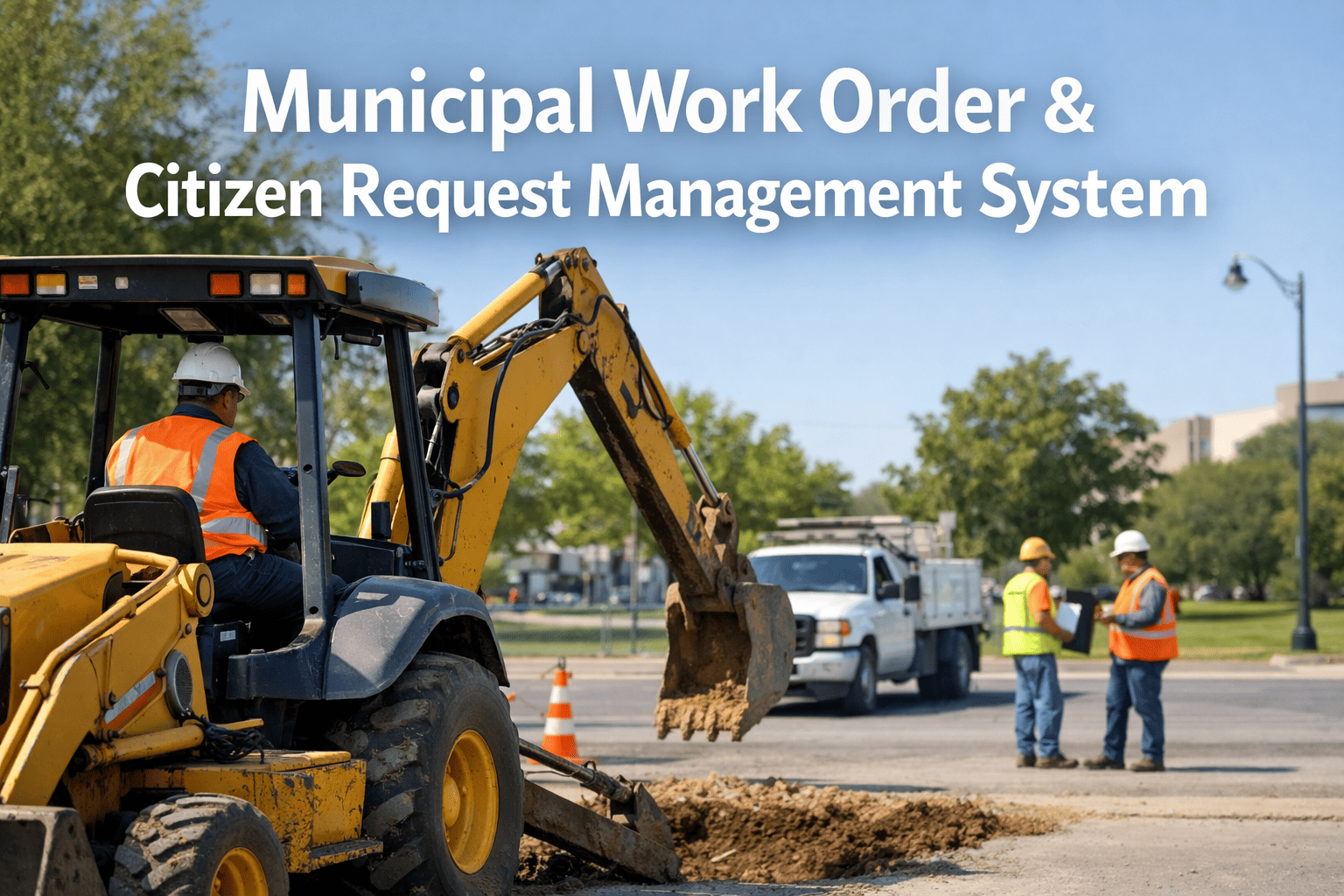
Route citizen reports (potholes, missed trash) directly to the appropriate division supervisors to reduce response time.
Group work orders by geographic zones to minimize fuel usage and travel time for field crews.
Capture exact hours spent on specific tasks (e.g., snow removal vs. leaf collection) for accurate budget reimbursement.
Create high-priority workflows for water main breaks or downed trees that bypass standard approval queues.
Empower crews to close tickets, upload photos, and add notes from tablets/phones without returning to the depot.
Vendor & Inventory Management
Monitor performance of paving, striping, and waste hauling contractors against contract terms and timelines.
Track stock levels of salt, clamps, pipes, and traffic signs to prevent delays during emergencies.
Log fuel dispensing per vehicle to monitor fleet efficiency and detect potential theft or maintenance issues.
Alert staff when equipment under warranty needs repair to ensure the vendor covers the cost.
Automatically generate requisitions when inventory (e.g., road salt) drops below minimum safety stock levels.
Capital Planning & Asset Lifecycle
Maintain up-to-date PCI ratings to prioritize resurfacing projects and justify street budget requests.
Utilize maintenance cost and age data to determine the optimal replacement window for heavy vehicles.
Analyze the full lifecycle cost of assets to make "repair vs. replace" decisions defensible to the council.
Maintain accurate asset valuation and depreciation records for financial reporting standards.
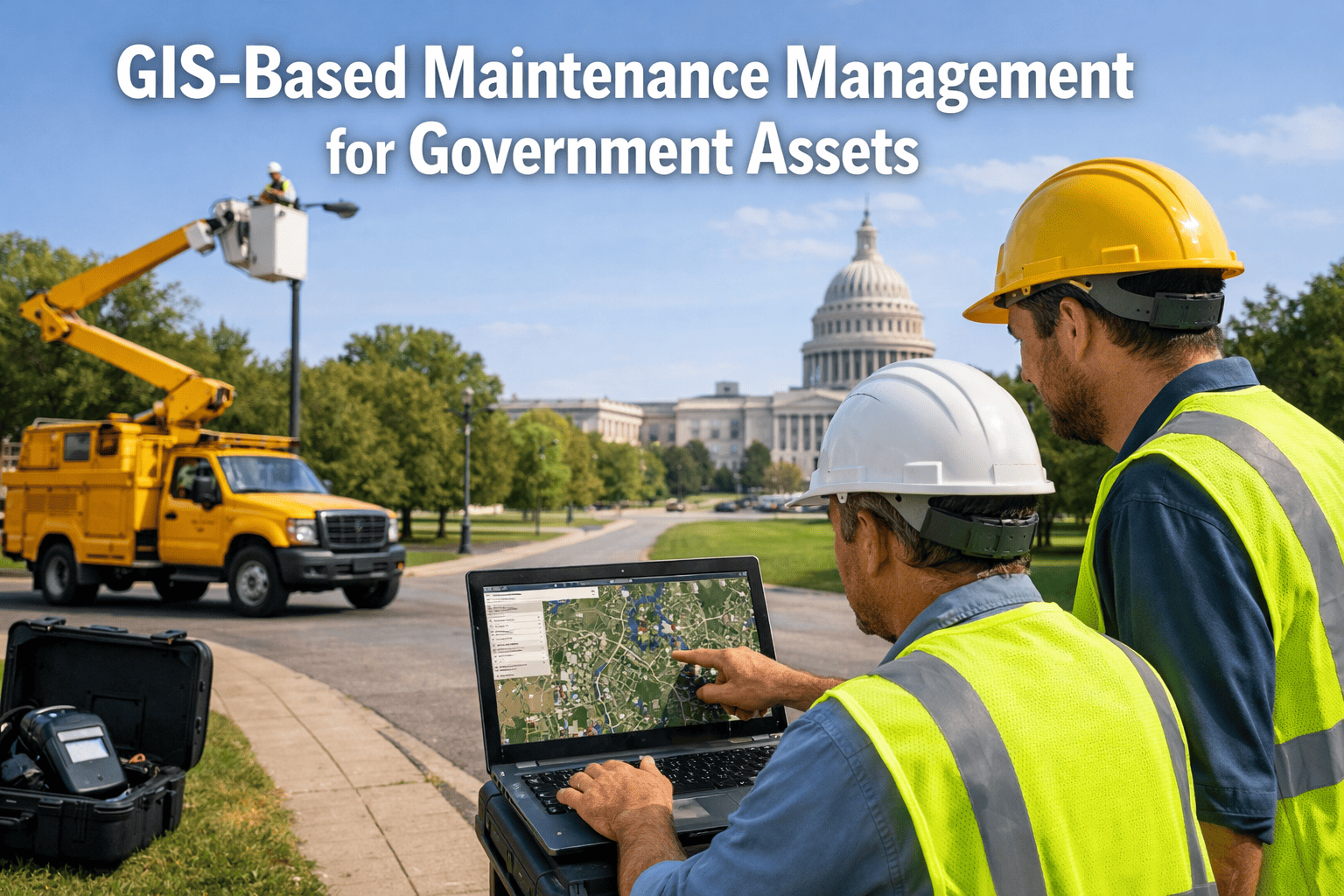
Sync asset data with GIS layers to visualize infrastructure age, material, and condition on a map interface.
Safety & Compliance
Digitize trench safety, lockout/tagout, and PPE inspections to ensure crew safety and reduce liability.
Log stormwater inspections and water quality tests to satisfy NPDES and Safe Drinking Water Act requirements.
Track sign retro-reflectivity inspections to meet federal standards for nighttime visibility.
Manage the testing schedule for backflow prevention devices to protect the municipal water supply.
Link accident or damage reports to specific assets to identify high-risk intersections or infrastructure.
Integrated Public Works Management Architecture
Modern public works management relies on a connected ecosystem where data flows seamlessly between field crews, administration, citizens, and infrastructure. When a pothole is reported, it triggers a chain reaction: work order creation, material allocation, repair verification, and PCI update. This integration eliminates the silos of paper processes where requests get lost.
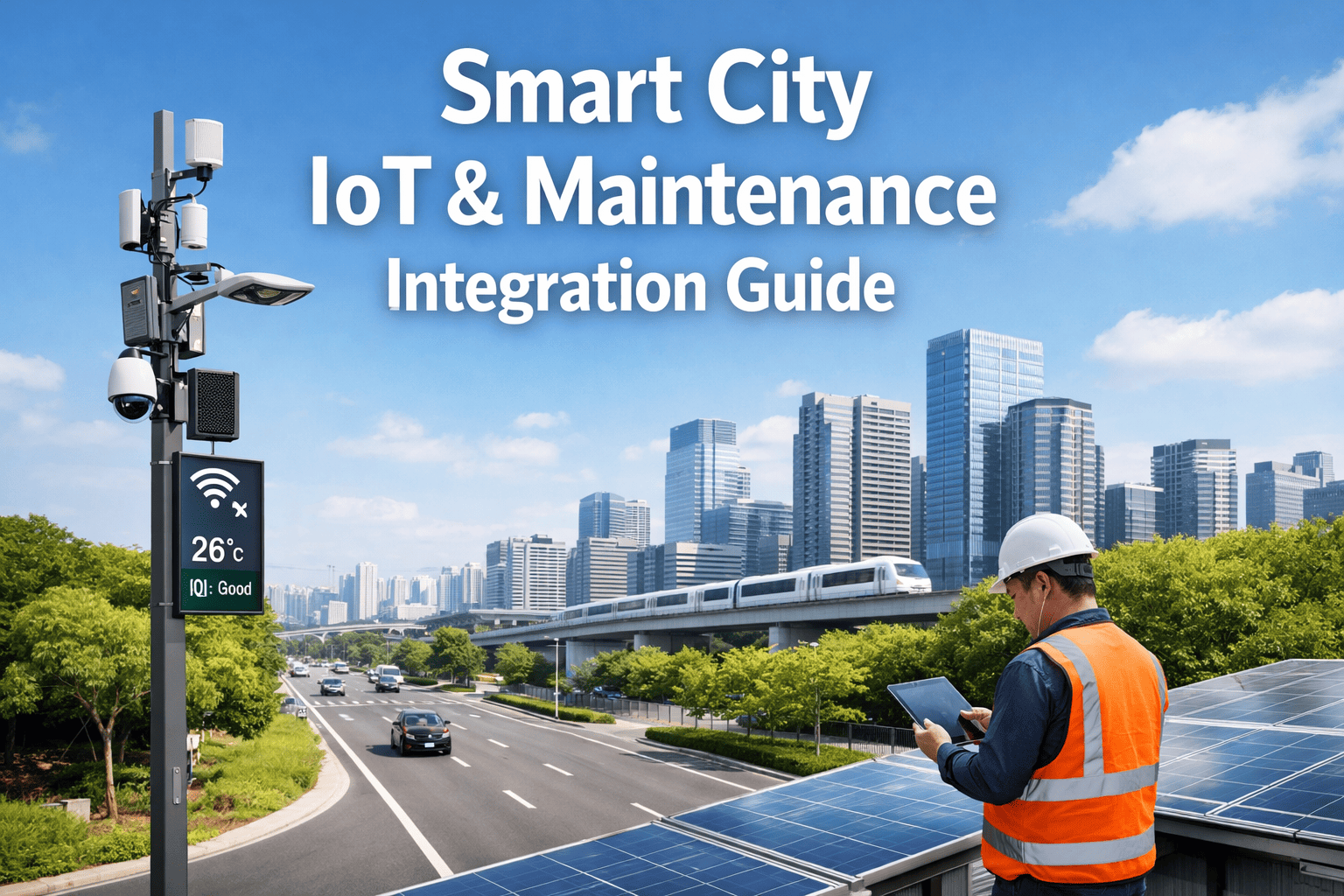
The integration between SCADA systems and CMMS enables "smart" utility management. Instead of waiting for a citizen to report low pressure, the system detects a pump fault and automatically generates a work order for the technician, preventing service interruptions. Explore smart city integration capabilities.
Key Performance Indicators for Public Works
You cannot improve what you do not measure. Effective public works operations require tracking KPIs that reveal the true condition of the infrastructure and the efficiency of the workforce. These metrics should be visible on real-time dashboards for superintendents and compiled into annual reports for city councils.
Total maintenance cost normalized by road miles. Essential for comparing efficiency across districts and justifying budget.
Percentage of preventive maintenance tasks (fleet, pumps) completed on time. High compliance prevents expensive breakdowns.
Average time from citizen report to work order completion. Measures service level responsiveness.
Percentage of the fleet available for deployment. Critical for snow fighting and waste collection readiness.
The amount of pending work expressed in weeks. Helps identify staffing shortages and resource needs.
Average condition rating of pavement or infrastructure. Used to prioritize capital improvement projects (CIP).
Regulatory Compliance and Risk Mitigation
Public Works agencies operate in a highly regulated environment. From clean water standards to workplace safety, digital record-keeping is the primary defense against audits, fines, and lawsuits. Request a compliance risk assessment.
Industry Perspective on Public Works Modernization
Public works departments are the invisible backbone of society, yet they frequently operate with outdated tools. The most successful agencies are those that leverage technology to stretch their budgets and prove their value. By capturing data on every task—from filling a pothole to servicing a lift station—directors can tell a compelling story about resource needs.
The integration of mobile technology is a game-changer for field crews. Operators cover vast areas; giving them the ability to receive work orders, check parts inventory, and log inspections from a tablet in the truck drastically improves efficiency. It eliminates the 'windshield time' of driving back to the shop for paperwork.
Furthermore, the ability to link maintenance data to capital planning is critical. When you can show a clear history of rising repair costs for a specific fleet vehicle or road segment, the argument for replacement funding becomes objective and data-backed, rather than anecdotal.
Conclusion: Stewardship Through Innovation
Public works management is about more than plowing snow and paving roads. It is about stewardship—preserving the community's critical infrastructure, ensuring public safety, and demonstrating fiscal responsibility. With infrastructure aging and citizen expectations rising, the efficiency gains from digital transformation are essential for modern agencies.
Effective operations require a holistic approach: proactive preventive maintenance to ensure reliability, rigorous data collection to inform master planning, and streamlined workflows to maximize staff productivity across distributed sites. The tools to achieve this—integrated CMMS, IoT, and mobile apps—are now accessible to departments of all sizes.
By moving from reactive firefighting to predictive stewardship, directors can deliver better services, improved safety, and transparent fiscal accountability. The result is a municipality that functions reliably, and an operation that stands up to the scrutiny of any board review.
The future of public works is connected, data-driven, and efficient. Agencies that embrace these principles today will define the standard for municipal service tomorrow. Begin building your connected operations today.
Frequently Asked Questions
How does a CMMS help with APWA accreditation?
APWA accreditation requires documented evidence of management plans, safety inspections, and systematic maintenance. A CMMS like Oxmaint provides a centralized digital repository for all this evidence. You can easily pull reports on inspection completion rates, maintenance schedules, and asset lifecycles to satisfy specific practices regarding facility and fleet management, saving hundreds of hours during the review.
Can the system handle both fleet and vertical assets?
Yes. Oxmaint is designed to handle diverse asset types within a single platform. You can create custom asset categories (e.g., "Heavy Fleet," "Streets," "Utilities," "Buildings") each with their own specific preventive maintenance checklists and data fields. This allows a single department to manage a grader, a lift station, and a city hall HVAC unit all in one place.
Does the mobile app work in areas with poor cell service?
Yes. Oxmaint's mobile app includes offline functionality. Field crews can download their work orders and inspection routes for the day, perform their tasks, take photos, and log data while in remote areas (like rural roads or basements) without signal. The app automatically syncs all data back to the cloud once the device re-connects.
How can we separate costs for reimbursable work?
You can set up specific work order types or cost centers for "Reimbursable" or "State Highway Work." When crews perform tasks on these assets, they tag the work order accordingly. This allows a single department to run specific reports on labor and material costs, which can be used to generate invoices or state reimbursement requests accurately.
Is it difficult to get older staff to use the software?
The system is designed for ease of use. For field staff, the interface is large, simple, and intuitive, similar to consumer apps. You can configure roles to only show them what they need (their assigned tasks). Voice-to-text features also allow staff to dictate notes instead of typing, which significantly increases adoption rates among non-technical crews.