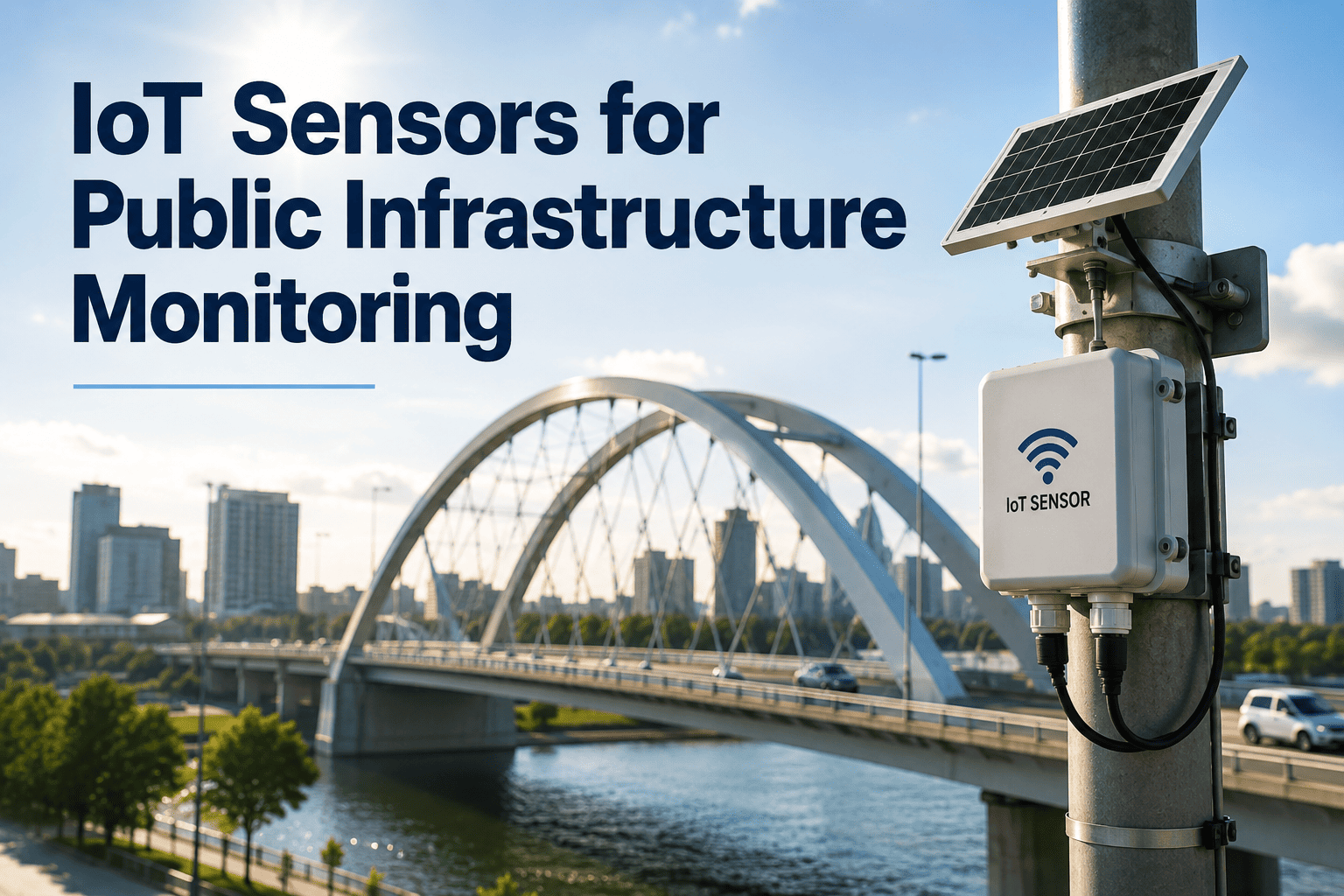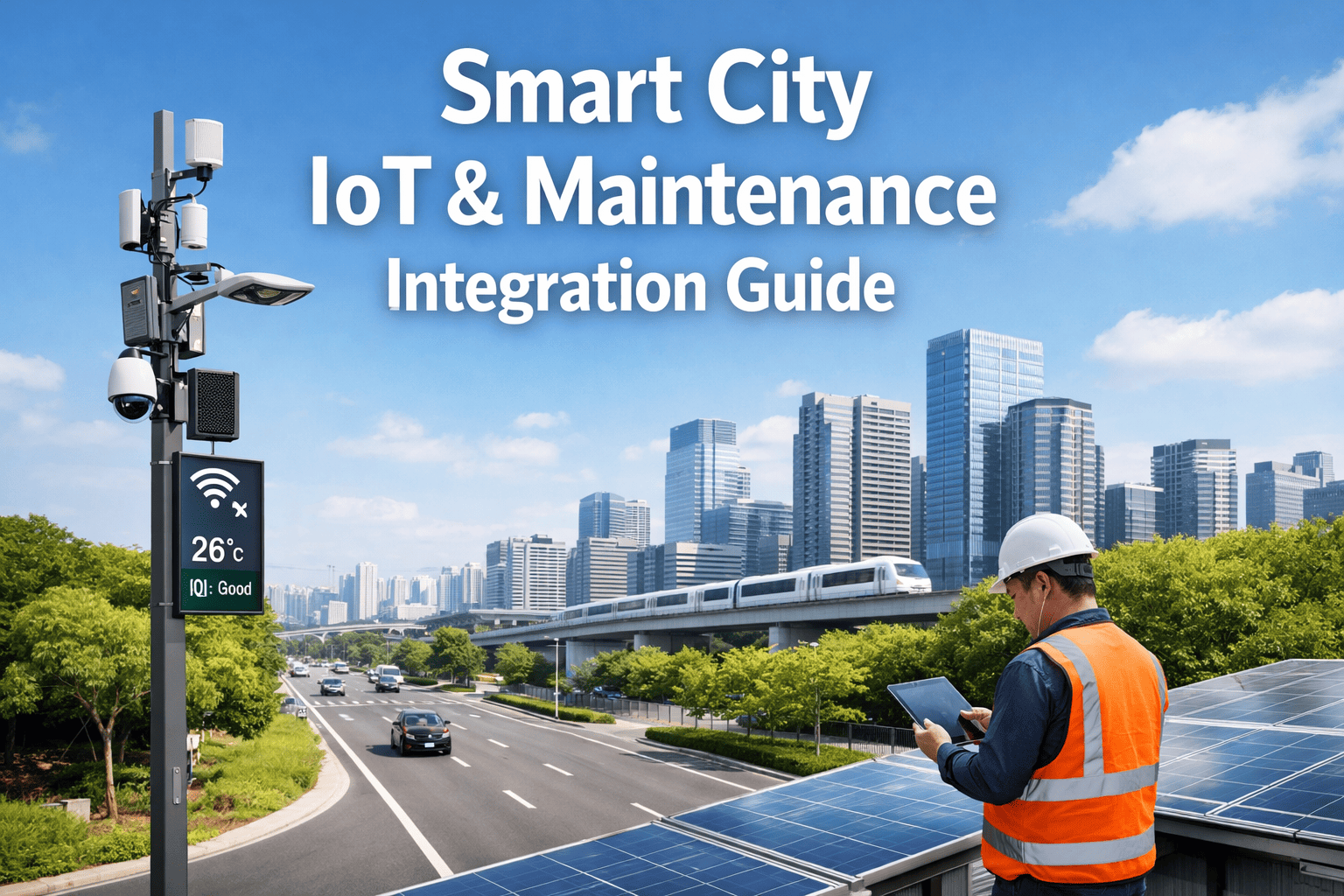
Smart city IoT deployments generate continuous streams of infrastructure data — traffic flow, pipe pressure, bridge vibration, air quality, energy consumption — but data alone does not maintain a city. The operational gap most municipalities face is not sensor coverage: it is the disconnected step between a sensor alert and a maintenance work order reaching the right crew. This guide covers how forward-thinking municipalities are integrating IoT sensor networks with CMMS platforms to close that gap — turning real-time infrastructure signals into automated, documented, and accountable maintenance actions. Sign up free to see how OxMaint integrates with municipal IoT infrastructure to turn sensor alerts into traceable work orders automatically.
Connect Your City's IoT Network to Automated Maintenance Operations
OxMaint integrates with municipal IoT sensor networks, SCADA systems, and BMS platforms to convert infrastructure alerts into prioritised work orders — with full audit documentation generated automatically from every sensor-triggered maintenance event.
The Smart City Maintenance Gap — Why Sensors Alone Are Not Enough
Cities deploying IoT sensors at scale are discovering a consistent operational failure: the data pipeline is built, but the maintenance response pipeline is not. A pressure transducer on a water main detects a 15% flow anomaly at 2:47 AM. The reading logs in the SCADA system. Nobody creates a work order. A crew shows up six days later when the ground has subsided. The sensor worked perfectly. The integration between sensor intelligence and maintenance action failed.
Five Municipal Infrastructure Domains and What IoT Monitors in Each
A well-integrated smart city maintenance programme spans five infrastructure domains. Each domain generates different sensor data types and triggers different maintenance response patterns. The common thread is the same: sensor signal to documented work order, without manual intervention.
OxMaint Integrates with Your Existing Municipal IoT Infrastructure
OxMaint connects to SCADA, BMS, and IoT gateways via OPC-UA, MQTT, and Modbus. No rip-and-replace. Your existing sensor investments start generating automated work orders and audit documentation from day one. Book a demo to map integration with your infrastructure stack.
IoT Integration Architecture: How Sensor Data Becomes a Work Order
The technical pathway from a sensor reading to a documented maintenance action involves four integration layers. Each layer has specific protocol and data requirements — and each is where most municipality IoT-maintenance integrations break down without a purpose-built connection.
| Integration Layer | What Happens | Protocol / Standard | OxMaint Capability |
|---|---|---|---|
| 1. Data Ingestion | Sensor readings collected from field devices and transmitted to the analytics platform in real time | MQTT, OPC-UA, Modbus, REST API, BACnet | Native connectors to major IoT gateways and SCADA systems — no middleware required |
| 2. Anomaly Detection | AI compares live readings against baselines and thresholds — classifying alert severity and fault type | Rules-based + ML anomaly detection models | Configurable threshold rules and AI-based drift detection — physics-based alerts start immediately on connection |
| 3. Work Order Creation | Alert triggers automated work order populated with asset ID, fault description, sensor evidence, priority, and recommended action | CMMS API integration or native trigger | Work orders created automatically — assigned by asset owner, routed by priority tier, dispatched to mobile immediately |
| 4. Audit Documentation | Completed work order generates timestamped record with sensor evidence, technician attribution, and resolution notes for compliance records | CMMS record with sensor data attachment | Full IoT-triggered maintenance audit trail — exportable for grant compliance, federal audit, and council reporting in under four hours |
Implementation Roadmap: From Disconnected Sensors to Integrated Maintenance
Most municipalities do not start from zero — they start with IoT sensors already in the field, SCADA systems already running, and maintenance work orders already being created manually. The integration challenge is connecting existing systems, not replacing them.
Frequently Asked Questions
OxMaint connects to municipal IoT infrastructure via MQTT, OPC-UA, Modbus, BACnet, and REST API — the standard protocols used by major IoT gateway vendors, SCADA platforms, and building management systems. This means OxMaint integrates with existing sensor investments without requiring a gateway replacement or additional middleware layer. Most municipalities complete the integration phase in 4–8 weeks. Book a demo to see the integration architecture mapped to your existing infrastructure stack.
IoT-triggered work orders are pre-populated with sensor evidence — the specific reading that triggered the alert, the trend graph showing how the anomaly developed, the asset ID and GPS location, and the recommended corrective action based on the fault classification. A manually created work order contains what the reporter knows, which is often limited. An IoT-triggered work order contains what the sensor measured, which is objective, timestamped, and automatically attached to the asset's permanent maintenance record for compliance documentation.
Federal infrastructure grants and state capital programmes increasingly require evidence of condition-based monitoring and documented maintenance response to justify asset investment. IoT-integrated OxMaint generates a full audit trail for every sensor-triggered maintenance event — sensor reading, alert classification, work order creation timestamp, crew assignment, completion record, and resolution notes. This record is exportable in formats required by FHWA bridge inspection programmes, EPA water infrastructure reporting, and HUD community development grant cycles. Agencies with documented IoT maintenance programmes achieve 88% capital request approval versus 47% for estimate-based submissions. Sign up free to see OxMaint's grant compliance export module.
Municipalities typically see measurable results within 30–60 days of integration going live. The fastest gains come from eliminating manual work order creation lag — issues that previously took 4–24 hours to reach the maintenance queue begin triggering work orders within minutes of sensor detection. The reduction in emergency repair ratio (from reactive detection to proactive sensor alerts) typically becomes statistically visible at 90 days. Full programme maturity — where AI threshold tuning has minimised false alarms and IoT coverage spans all five infrastructure domains — typically develops at 6–12 months post-deployment. Book a demo to see a timeline mapped to your infrastructure domains.
OxMaint supports on-premise deployment for municipalities with data residency requirements — all sensor data, work order records, and maintenance histories stay within your jurisdiction's infrastructure. For municipalities using the cloud-hosted instance, data is processed in jurisdiction-specific endpoints and never shared with other municipal clients. OxMaint complies with NIST cybersecurity framework requirements and supports the role-based access controls required for multi-department municipal operations. Security configurations align with the EU Cyber Resilience Act requirements for connected infrastructure software where applicable.
Turn Every Sensor Alert into a Tracked, Documented Maintenance Action
OxMaint integrates with your municipal IoT network to convert infrastructure sensor data into automated work orders, crew dispatch, and audit-ready compliance documentation — across all five infrastructure domains, from a single platform.