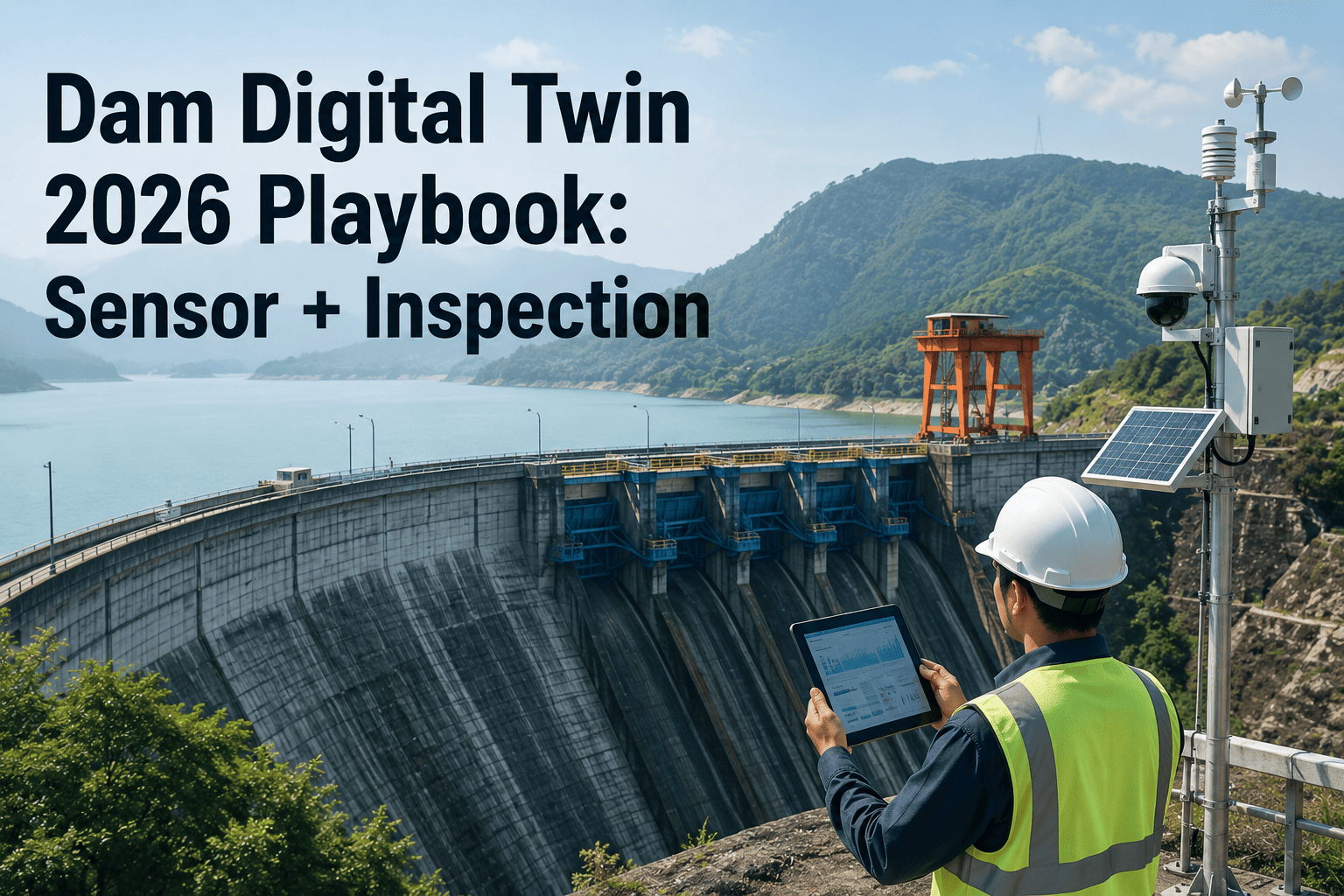
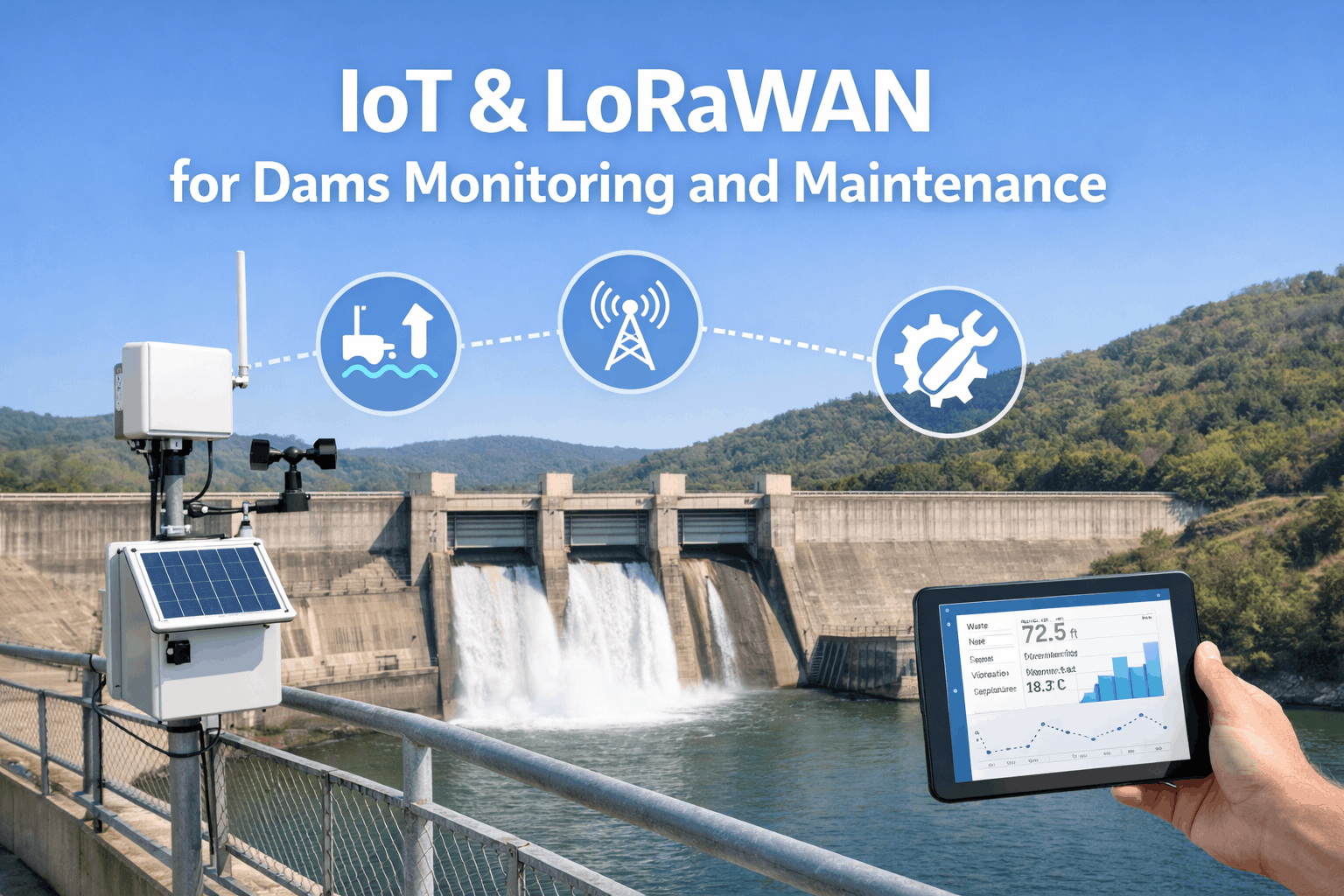
A dam failure does not give warning notices. When the Vajont Dam overtopped in 1963, 2,000 people died within minutes. When the Banqiao Reservoir Dam collapsed in 1975, the death toll exceeded 170,000. When Oroville Dam's emergency spillway failed in 2017, 188,000 people were evacuated in the largest dam evacuation in United States history. In each case, the structural signals that preceded failure were present in the data—but the monitoring infrastructure, data integration capability, and analytical tools needed to interpret those signals and trigger timely action did not exist or were not functioning. Today, they do. IoT sensor networks, real-time telemetry, and AI-powered anomaly detection give dam safety engineers the ability to watch every critical structural parameter continuously, detect deviations from safe operating envelopes the moment they develop, and transmit automated alerts to emergency management authorities before a developing condition becomes an irreversible event. For government dam safety programs managing aging infrastructure under increasing hydrological loading from climate change, this capability is no longer a technology ambition—it is the minimum standard of care. Schedule a free dam monitoring readiness assessment with our government infrastructure team and identify the specific monitoring gaps in your dam portfolio before the next hydrological event tests them.
91,000+
Dams in the United States — over 17,000 classified as high-hazard potential
57 yrs
Average age of US dams — designed before modern hydrological loading standards
$70.1B
Estimated US dam rehabilitation investment needed — ASCE Infrastructure Report Card 2021
D
ASCE grade for US dam infrastructure — same failing grade for three consecutive report cycles
168 min
Average warning time required for downstream evacuation — real-time monitoring extends this window
Regulatory Mandate
FEMA P-93 (Federal Guidelines for Dam Safety), FERC Part 12 Engineering Reviews, and state dam safety programs increasingly require documented instrumentation programs with data collection protocols for high-hazard and significant-hazard dams. Continuous automated monitoring with documented data quality assurance is rapidly becoming the standard of care that state regulators and federal oversight bodies expect dam owners and operators to demonstrate.
What 24/7 Continuous Monitoring Detects That Manual Inspection Cannot
Manual dam inspection programs—quarterly site visits, annual instrumentation readings, periodic condition assessments—are valuable and remain necessary. But they are fundamentally incapable of detecting the rapidly evolving conditions that characterize developing dam failures. The physics of dam distress do not respect inspection schedules. Seepage pathways develop and propagate during rainstorm events. Foundation pore pressures build during rapid reservoir filling. Embankment settlement occurs under specific loading combinations. Structural cracking initiates under thermal cycling at night between field visits. Continuous monitoring captures all of these phenomena as they develop—not weeks later when a technician next visits the site.
✓
Visible surface cracking, erosion, and slope distress detectable by trained observer
✓
Seepage at obvious outlet locations visible when flowing during inspection
✓
Vegetation changes indicating subsurface moisture pathways
✕
Piezometric pressure spikes during storm events between inspection visits
✕
Incremental settlement trends developing over weeks or months between visits
✕
Seepage flow changes correlated with rapid reservoir level fluctuation
✕
Structural response deviating from normal behavior during loading events
✕
Nighttime or off-hours developing failure mechanisms with no one present
30–50%
of dam failures develop in hours — beyond the detection window of any manual inspection program
✓
All manual inspection findings PLUS continuous data across all instrumented parameters
✓
Real-time pore pressure trending correlated with reservoir level and precipitation
✓
Millimeter-level settlement detection via automated total stations and GNSS
✓
AI anomaly detection identifies parameter deviations before human threshold triggers
✓
Automated alerts to dam safety engineer and emergency management at any hour
✓
Seepage flow and turbidity monitoring with statistical pattern recognition
✓
Multi-parameter correlation: AI relates piezometer, settlement, seepage, and reservoir data simultaneously
✓
Complete event timeline reconstruction for post-event investigation and regulatory reporting
85%
of developing dam anomalies detected 24–72 hours earlier with continuous monitoring vs. manual inspection alone
IoT Sensor Network: The Physical Foundation of Continuous Monitoring
A dam monitoring system is only as good as the sensor network providing its data. Sensor selection, placement, redundancy, and quality assurance are not optional design refinements—they are the engineering decisions that determine whether the system detects a developing failure or misses it entirely. The following framework covers the primary instrumentation categories for embankment and concrete dams, with configuration guidance specific to government dam safety program requirements.
Pore pressure is the primary internal loading parameter governing embankment dam stability. Elevated or rapidly rising pore pressures in the upstream embankment, foundation, or abutment zones indicate developing seepage pathways or drainage system impairment. Piezometer networks provide the earliest quantitative warning of internal erosion and piping — the failure mode responsible for approximately 50% of embankment dam failures worldwide.
Required Measurement Locations
Upstream embankment zone — multiple elevations through phreatic line
Downstream embankment — drainage zone effectiveness monitoring
Foundation contacts — alluvial and rock foundation zones
Abutment zones — seepage path monitoring through valley walls
Cutoff trench or slurry wall — upstream and downstream differential
AI Alert Configuration
Statistical process control on rolling 30-day window — alert triggers when piezometer reading exceeds 2σ deviation from the expected value for the current reservoir level and precipitation history. Rate-of-change alert activates when hourly rise exceeds threshold regardless of absolute level.
Structural movement monitoring detects deformation of the dam body, foundation, and abutments that may indicate overstress, internal erosion, or foundation instability. Modern automated total stations can measure displacements to sub-millimeter precision at hourly intervals, building a continuous record of structural response to reservoir loading, temperature cycling, and seismic events that provides the data for both real-time alerting and long-term performance trending.
Required Measurement Locations
Dam crest — survey monuments at regular intervals (typically 30–60m)
Upstream and downstream berms — settlement plates and surface monuments
Concrete structures — joint meters and crack gauges on spillway and outlet works
Foundation references — deep benchmarks anchored below active deformation zone
Abutment rock — extensometers in critical geological discontinuities
AI Alert Configuration
Trend analysis comparing current displacement vector against historical seasonal pattern. Alert on acceleration — rate of movement increasing — rather than absolute threshold alone. Cross-correlation with reservoir level to distinguish normal elastic response from anomalous deformation.
Seepage quantity and quality monitoring provides the most direct evidence of internal erosion. An increase in seepage flow relative to historical levels for the current reservoir stage, or the appearance of turbidity in seepage water (indicating transport of fine material through the dam body), are among the highest-consequence alarm conditions in any dam monitoring program. Continuous automated seepage monitoring eliminates the visibility gaps between manual inspections that allow internal erosion to develop undetected.
Required Measurement Locations
Collection drain outlets — all seepage collection gallery drain points
Toe drain discharge — total seepage from downstream embankment
Abutment drain weirs — foundation and valley wall seepage collection
Relief well discharge — foundation pressure relief well flow rates
Natural seepage exits — spring locations and downslope saturated zones
AI Alert Configuration
Regression model relating seepage flow to reservoir level — alert triggers when observed flow deviates from the predicted flow-stage relationship by more than the statistical prediction interval. Turbidity alert is zero-tolerance: any non-background turbidity in seepage triggers immediate notification regardless of flow rate.
Reservoir level is the primary load parameter for all other structural monitoring data. Without accurate, continuous reservoir level data, no other instrument reading can be correctly interpreted — piezometer readings must be normalized to reservoir stage, seepage flow must be compared at equivalent stages, and structural displacement must be referenced to load state. Redundant level measurement with two independent sensors and a visual camera reference is the minimum configuration for safety-critical reservoir monitoring.
Required Measurement Points
Primary reservoir level — pressure transducer or radar gauge, 15-minute interval minimum
Redundant level measurement — independent sensor, independent power supply
Upstream and downstream precipitation gauges — storm event correlation
Tailwater level — downstream water elevation for emergency planning
Inflow gauge — watershed inflow trending for flood routing prediction
AI Alert Configuration
Rate-of-rise alert at defined thresholds correlated with inflow forecast — triggers Emergency Action Plan review sequence. Sudden unexplained level drop alert — may indicate piping breach pathway developing. Spillway approach level alert integrated with emergency operations center notification.
Seismic monitoring serves two functions in dam safety: detection of earthquake events that may have caused structural damage requiring post-event inspection, and monitoring of microseismic activity within the dam foundation or reservoir rim that can indicate developing failure mechanisms. For dams in regions with induced seismicity from reservoir filling (reservoir-triggered seismicity), microseismic monitoring can provide advance warning of potentially destabilizing earthquake sequences.
Required Measurement Locations
Dam crest — strong-motion accelerometer (vertical and horizontal)
Foundation gallery or abutment — reference accelerometer at rock contact
Free field — off-dam reference station for input motion separation
Reservoir rim geology — microseismic array where induced seismicity is possible
AI Alert Configuration
Triggered recording at PGA threshold; automatic post-earthquake inspection notification to dam safety engineer with estimated structural amplification factor. Microseismic clustering alert when event rate or magnitude trends exceed background statistical baseline.
From Manual Readings to Continuous Intelligence
Oxmaint's platform integrates with IoT sensor networks to build a continuous, AI-powered dam safety monitoring system — linking instrument data, maintenance records, inspection findings, and emergency action plan triggers in a single government-grade operational platform.
The AI Layer: How Machine Intelligence Transforms Raw Sensor Data Into Actionable Safety Intelligence
Raw sensor data from a dam instrumentation network generates thousands of readings per day across dozens of instruments. Without intelligent analysis, this data requires a dedicated engineer monitoring every channel continuously—an operational model that no government dam safety program can staff or sustain. AI-powered analytics transform the monitoring problem from human vigilance to algorithmic detection, with human engineers engaged by the system for interpretation and decision-making rather than raw data scanning.
AI Analytics Pipeline: From Raw Data to Decision Support
Data Ingestion
Sensor telemetry from field RTUs via cellular, satellite, or fiber — validated, timestamped, and quality-flagged on arrival
→
Data Quality
Automated outlier detection, sensor drift identification, missing data flagging, and redundant channel cross-validation
→
Baseline Modeling
Machine learning models establish expected behavior for each instrument as a function of reservoir level, temperature, and season using historical data
→
Anomaly Detection
Continuous comparison of observed vs. predicted values — statistical and pattern-based detection identifies deviations before human-set threshold exceedances
→
Multi-Sensor Correlation
Cross-instrument pattern recognition — AI identifies when multiple independent sensors show correlated behavior consistent with a specific failure mode mechanism
→
Tiered Alerting
Automated notifications to dam safety engineer, agency supervisor, and emergency management contacts — severity-tiered from advisory to emergency action level
Alert Level Framework — Linked to Emergency Action Plan
Advisory
Single instrument deviation 1.5σ–2σ from expected value. Preliminary anomaly requiring monitoring attention but not immediate action.
Notification to dam safety engineer by email/app — review within 4 hours. No public notification required. Increase reading frequency.
Dam Safety Engineer
Watch
Multiple instrument deviations or single instrument exceeding 2σ. Correlated anomaly pattern consistent with identifiable mechanism.
Immediate notification to dam safety engineer and supervisor. Site visit within 24 hours. Review EAP readiness. Notify state dam safety regulator.
Dam Safety Engineer + Supervisor + State Regulator
Warning
Threshold exceedance on critical parameter (seepage turbidity, rapid piezometric rise, acceleration of deformation). EAP trigger criteria approaching.
Immediate site mobilization. Notify emergency management agency. Prepare for potential precautionary evacuation downstream. Continuous 24-hour staffed monitoring.
All + Emergency Management + Downstream Authorities
Emergency
EAP trigger conditions met. Imminent or occurring failure. Dam safety engineer judgment that public safety is immediately at risk.
Immediate downstream evacuation activation. Notify all emergency management chains. Full public notification system activation. Continuous data transmission until failure or stabilization.
All + Public Emergency Notification System
EAP-Integrated Alerting That Reaches the Right People Instantly
Oxmaint's notification system connects directly to your Emergency Action Plan contact tree — so when the AI detects a Watch or Warning condition at 2:00 AM, the right dam safety engineer, the right agency supervisor, and the right emergency management coordinator receive the alert simultaneously without waiting for a human to wake up and make calls.
Government Dam Safety Program Requirements: Monitoring Compliance Framework
Federal and state dam safety programs have distinct but overlapping instrumentation and monitoring requirements. Government dam owners and operators must navigate multiple regulatory frameworks simultaneously, each with documentation, reporting, and response obligations that a continuous monitoring system must be designed to satisfy.
FEMA
Federal Emergency Management Agency
FEMA P-93 Federal Guidelines for Dam Safety: Emergency Action Planning
Monitoring systems must support EAP notification timelines — detection to notification to evacuation
Instrumentation programs must be documented in dam Emergency Action Plans with alert threshold levels
Regular testing of alert notification systems and communication chains required
FERC
Federal Energy Regulatory Commission
FERC Part 12 Engineering Inspections and Dam Safety Program
Independent dam safety inspections every 5 years with instrumentation program review
Annual dam safety inspection with documented review of instrumentation readings and trends
Instrumentation data must be submitted to FERC upon request and reviewed for anomalies by licensee
Deficient instrumentation identified in Part 12 inspections must be addressed in documented corrective action plans
USACE
US Army Corps of Engineers
USACE Dam Safety Program ER 1110-2-1156
Risk-informed instrumentation programs required for all USACE dams and levees
Periodic Inspection Reports must include instrumentation data review and trend analysis
Dam Safety Action Classification system linked to monitoring requirements — higher hazard class requires more comprehensive continuous monitoring
Near-term and long-term risk reduction measures must include instrumentation upgrades where monitoring gaps are identified
USBR
Bureau of Reclamation
USBR Dam Safety Public Protection Guidelines and Facility Reviews
Comprehensive Facility Review (CFR) process evaluates instrumentation programs against risk portfolio
Risk-informed inspection frequencies tied to instrumentation coverage — better monitoring supports less frequent physical inspection for lower-risk dam states
Auscultation program (formal instrumentation reading and analysis program) required for all Reclamation dams above minimum size thresholds
STATE
State Dam Safety Programs (All 50 States)
Varies by state — Association of State Dam Safety Officials (ASDSO) framework
Majority of states require instrumentation programs for high-hazard and significant-hazard dams
Annual inspection programs include instrumentation review — states increasingly require continuous electronic data submission
Emergency Action Plan requirements in all 50 states for high-hazard dams — EAP must reference notification criteria linked to monitoring thresholds
Post-storm inspection trigger protocols increasingly tied to reservoir level exceedances detectable only through continuous monitoring
Dam Monitoring KPIs for Government Dam Safety Programs
Dam safety programs that cannot demonstrate their monitoring effectiveness to oversight agencies, legislative budget committees, and the public face both regulatory risk and reputational risk when any incident occurs. These quantitative metrics provide government dam safety program managers the evidence of program performance needed for regulatory compliance, budget justification, and public accountability.
100%
High-Hazard Dam Monitoring Coverage
Percentage of high-hazard-potential dams in the portfolio with an active, documented continuous monitoring program meeting FEMA guidelines minimum standards
99.5%
Sensor Uptime Rate
Data availability for each sensor channel as percentage of scheduled monitoring time. Below 99.5% indicates telemetry or sensor reliability issues requiring maintenance response
< 4 hrs
Mean Time to Alert (MTTA)
Average time from anomaly first detectable in data to qualified engineer acknowledgment of alert. Drives evacuation lead time calculation in EAP effectiveness review
100%
EAP Drill Completion Rate
All high-hazard dam EAPs exercised within required annual cycle. Drill must include monitoring system alert simulation and notification chain activation test
0
Unreviewed Alert Backlog
Number of system-generated alerts awaiting engineer acknowledgment beyond the required review window. Any non-zero value at high-hazard dams requires immediate management escalation
≤ 30 days
Instrument Deficiency Resolution Time
Average time from identification of failed or degraded instrument to replacement or repair. Longer resolution periods create monitoring gaps at safety-critical measurement points
Portfolio-Level Dam Safety Monitoring for Government Programs
Oxmaint scales from single-dam monitoring to complete state or federal dam portfolio management — providing agency safety directors the cross-portfolio dashboard visibility, compliance reporting, and exception-based management that government dam safety programs require at any scale.
Frequently Asked Questions
01
What is the minimum instrumentation required for continuous monitoring of a high-hazard dam?
FEMA P-93 and ASDSO guidelines do not prescribe a universal minimum instrumentation standard — the appropriate instrumentation program is determined by the dam type, size, age, geologic setting, hazard classification, and risk profile. However, for a high-hazard embankment dam, a credible continuous monitoring program typically includes a minimum of three to five piezometers covering the upstream embankment, downstream embankment, and foundation zones with automated electronic readout and telemetry; automated reservoir level monitoring with redundant sensors; seepage measurement at the primary collection point; and surface deformation monitoring at the dam crest. The instrumentation layout must be validated against a failure mode analysis identifying the critical failure mechanisms for the specific dam — instruments placed without reference to the failure modes they are intended to detect provide data without safety value.
02
How does AI anomaly detection improve on simple threshold alerting for dam monitoring?
Simple threshold alerting triggers when a parameter exceeds a fixed level — for example, a piezometer reading above 10 meters head. This approach generates both false positives (alarming on expected behavior during high reservoir stages) and false negatives (missing a developing anomaly that remains below the threshold while exhibiting a trend that will soon exceed it). AI-powered anomaly detection instead builds a predictive model of what each instrument should read given the current combination of reservoir level, temperature, season, and recent precipitation. The alert triggers when the observed reading deviates from the predicted reading — detecting the anomaly based on its departure from expected behavior rather than its absolute value. This approach detects developing problems earlier, generates fewer false alarms during normal high-reservoir operations, and correlates anomalies across multiple instruments to identify patterns consistent with specific failure mechanism signatures.
03
What happens to continuous monitoring data during power outages or communication failures at the dam site?
Resilient dam monitoring systems address power and communication failure at multiple levels. Local data logging at the remote terminal unit (RTU) stores instrument readings at full resolution during communication outages — data is not lost, it is queued for transmission when connectivity is restored. Power redundancy through solar panels with battery backup, uninterruptible power supplies, and in some cases small wind or hydro generation ensures sensor and RTU operation during grid power outages. Communication redundancy through primary and backup telemetry paths — for example, primary cellular with satellite backup — ensures that data transmission continues if one path fails. For truly critical monitoring during flood events when both power and communication may be simultaneously stressed, hardwired fiber optic connections to a continuously staffed monitoring center provide the most resilient architecture. All power and communication failures should themselves generate system alerts to the monitoring organization so that data gaps are not silently accepted during the high-loading events when continuous data is most critical.
04
How should a state dam safety agency justify the cost of continuous IoT monitoring to legislative budget committees?
The economic case for continuous dam monitoring is built on three quantifiable elements. First, the avoided cost of dam failure: a single high-hazard dam failure in a populated downstream area generates losses typically ranging from hundreds of millions to billions of dollars in direct property damage, emergency response, and long-term economic disruption — costs that are borne by the state and federal governments regardless of dam ownership. Second, the value of extended evacuation warning time: USACE research documents that each additional hour of evacuation warning time reduces potential life loss in dam failure scenarios by approximately 15–20%. A monitoring system that detects developing conditions 48 hours earlier than manual inspection provides evacuation time that is literally priceless in human terms. Third, regulatory and insurance value: states with documented, functioning continuous monitoring programs face lower liability exposure, more favorable federal inspection outcomes, and in some cases improved infrastructure insurance terms. The annual cost of a continuous monitoring system for a single high-hazard dam — typically $25,000–$120,000 per year depending on instrumentation density and telemetry requirements — is a small fraction of the avoided failure cost for even a modest downstream community.