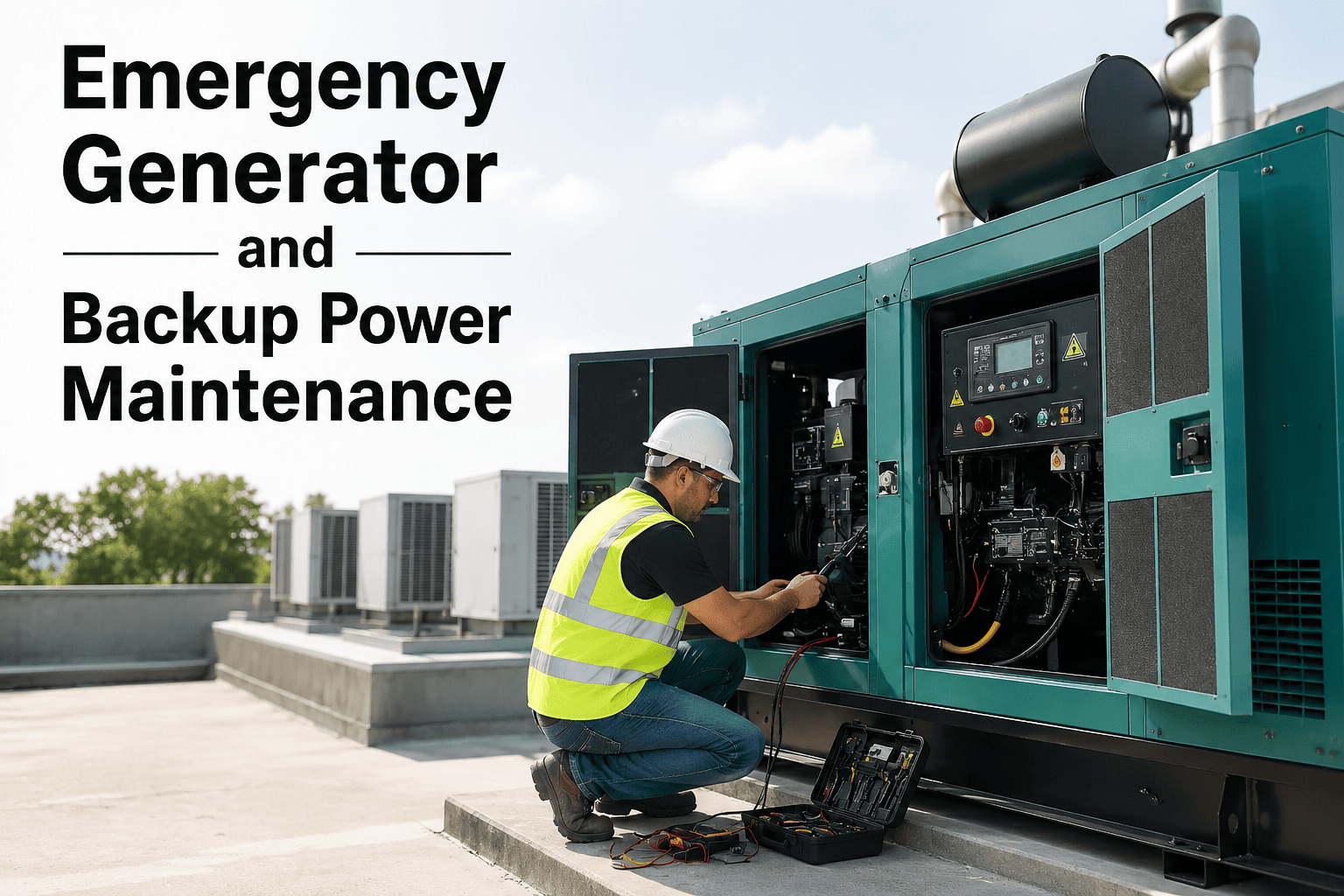
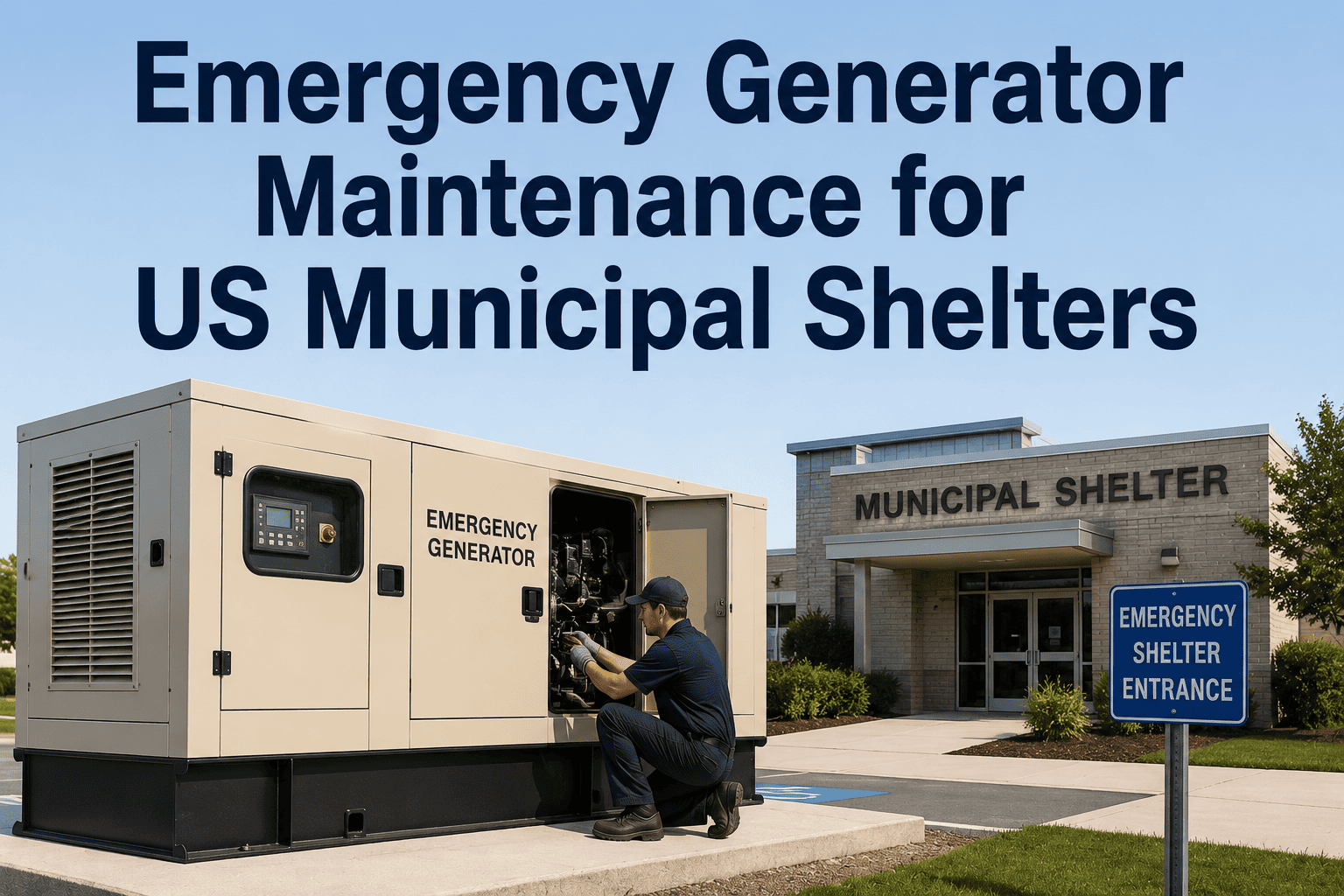
Municipal generator teams operate on unforgiving timelines. When the grid fails, emergency services depend on backup power within seconds. Water treatment plants, traffic signals, emergency shelters, and critical government facilities cannot wait. Standby generators—diesel, natural gas, and bi-fuel systems—are the last line of defense between municipal operations and catastrophic service failure. When they fail to start, there's no buffer.
This guide delivers a complete framework for demand parts planning integrated with predictive maintenance—ensuring critical generator components are always available while condition monitoring strategies prevent failures before they happen. Sign up free for Oxmaint CMMS to start protecting your municipal generator fleet today.
Critical Generator Systems in Municipal Operations
Diesel Standby Generators
Primary backup power for critical facilities. 100-2000+ kW capacity with automatic transfer switches.
Critical Parts: Fuel injectors, starter motors, coolant pumps, ATS contactors
Natural Gas Generators
Clean-burning units for extended runtime operations. Lower fuel storage requirements.
Critical Parts: Spark plugs, ignition coils, gas regulators, exhaust valves
Bi-Fuel Systems
Diesel/natural gas hybrid units providing fuel flexibility during extended outages.
Critical Parts: Fuel mixing valves, dual fuel controllers, crossover switches
Portable Emergency Units
Towable generators for emergency shelters, traffic control, and temporary power needs.
Critical Parts: Transfer cables, wheel assemblies, fuel tanks, control panels
Strengthen Municipal Generator Response Time via Digital Work Orders
The Problem
Paper-Based Chaos
Scattered across multiple facilities without central tracking. Technicians waste 60+ minutes locating parts during emergencies. No audit trail for compliance. Critical knowledge leaves when experienced staff retire.
The Solution
Digital Work Orders
Instant mobile alerts with OEM manuals attached. Parts auto-reserved when work order created. Complete audit trail for regulatory compliance. Knowledge captured permanently across all facilities.
Condition-Triggered Work Order Flow
1
Condition Alert
Monitoring detects anomaly on generator
2
Auto Work Order
CMMS creates task with parts list
3
Parts Verified
Inventory checked and reserved
4
Tech Dispatched
Mobile alert with full history
5
Auto-Logged
Completion updates all systems
The result: response time drops from 60-120 minutes to under 15 minutes, and every action creates the audit trail that municipal compliance requirements demand. Book a demo to see digital work orders in action.
Critical Spare Parts Inventory Framework
Not all parts deserve shelf space. Effective municipal generator asset tracking requires categorizing components by criticality, lead time, and failure impact. Stock the right parts—avoid dead inventory across distributed facilities.
| Component |
Typical Lifespan |
Failure Warning |
Criticality |
Stock Qty |
| Starter Motors |
5-8 years |
Slow cranking, amp draw increase |
Tier 1 |
1 per 5 units |
| Fuel Injectors |
8,000-12,000 hours |
Smoke color, rough running |
Tier 1 |
2 sets |
| ATS Contactors |
10-15 years |
Transfer time increase, pitting |
Tier 1 |
1 per ATS |
| Coolant Pumps |
6-10 years |
Bearing noise, seal weepage |
Tier 2 |
1 per 8 units |
| Battery Sets |
3-5 years |
Voltage drop, load test failure |
Tier 1 |
2 sets |
| Control Modules |
10-15 years |
Random faults, display errors |
Tier 1 |
1 each type |
Condition Monitoring Integration for Predictive Parts Management
Detect degradation weeks before failure. Trigger parts orders automatically. Schedule maintenance during planned testing windows.
Battery Monitoring
Continuous voltage, impedance, and temperature tracking identifies battery degradation before starting failures occur.
2-6 months advance warning
Coolant Analysis
Tracks coolant condition, pH levels, and additive depletion indicating cooling system maintenance requirements.
1-3 months advance warning
Fuel Quality Sensors
Monitors fuel condition, water contamination, and microbial growth that causes injector failures.
2-4 weeks advance warning
Load Bank Testing
Scheduled load testing reveals engine, alternator, and transfer switch performance degradation.
3-6 months advance warning
Making Audits Painless — A Municipal Generator Architecture with Monitoring
NFPA 110, EPA regulations, and state emergency management requirements demand timestamped proof with complete traceability. A monitoring-integrated CMMS automatically generates the audit trail that compliance requires—no filing cabinets, no scrambling.
Data Collection
Remote Monitoring, Barcode/QR Scans, Mobile Inspections
→
Oxmaint CMMS
Predictive Analytics, Compliance Reporting, Inventory Management
→
Audit Output
Compliance Logs, PM Records, Parts Traceability
Municipal Generator Compliance Requirements
NFPA 110
Emergency power system testing, maintenance documentation, fuel storage requirements
EPA Tier 4
Emissions compliance, aftertreatment maintenance, DEF system documentation
State Emergency Mgmt
Critical facility backup requirements, testing schedules, capacity verification
Implementation Timeline: Demand Parts Program for Generators
Asset & Parts Digitization
Complete generator inventory across all municipal facilities with barcode/QR tagging. Catalog all spare parts with photos, specs, and OEM manuals attached. Establish criticality tiers and minimum stock levels by generator model.
Target: 100% critical parts cataloged with reorder points
PM Programs & Digital Work Orders
Build preventive maintenance schedules from NFPA 110 and OEM recommendations. Configure mobile inspection checklists for weekly, monthly, and annual testing. Link parts to PM tasks across all facilities.
Target: PM compliance 95%+ with zero stockouts
Remote Monitoring Deployment
Enable remote monitoring on critical generators. Configure alert thresholds for battery, coolant, and fuel systems. Enable automated work order generation from monitoring triggers.
Target: 50% reduction in starting failures
Predictive Optimization
Enable AI-driven failure prediction based on testing data. Implement automated parts reordering from condition trends. Refine stock levels based on actual consumption patterns across fleet.
Target: Parts availability 99%+ with 25% inventory reduction
Municipal Generator CMMS Best Practices
1
Tag Every Component
Barcode/QR on all generator parts. Scan to pull history, manuals, and linked spares.
2
Link Parts to Assets
Every spare connects to compatible generators. Auto-suggest on work orders.
3
Automate Reorders
Set min quantities by tier. PO generates automatically when stock drops.
4
Track Every Transaction
Issue, return, scrap—all logged with timestamp and work order link.
5
Connect Monitoring to Inventory
Degradation triggers parts check. Reorder before failure occurs.
6
Review KPIs Monthly
Availability, stockouts, test results. Address trends before emergencies.
"
Before implementing demand parts management, we had three generators fail to start during actual emergencies last year. After six months with Oxmaint, we've had zero starting failures. The system flagged a battery set going bad two months before it would have failed—that single catch protected our emergency shelter during a major ice storm.
MJ
Michael Johnson
Emergency Services Director, County Public Works
Ready to Eliminate Generator Starting Failures?
Join municipal operations using Oxmaint for predictive maintenance, automated parts management, and audit-ready compliance
Conclusion
Municipal generators are the last line of defense between emergency services and catastrophic failure. When they start, critical facilities remain operational. When they don't, communities suffer. The difference between emergency failures and reliable backup power comes down to two capabilities: knowing which parts to stock and knowing when components are degrading.
Demand parts management with condition monitoring delivers both. Remote monitoring detects degradation months in advance. Inventory systems ensure parts are waiting. Work orders generate automatically. The technology exists, the ROI is proven, and the alternative—another grid outage with generators that won't start—is simply unacceptable for municipal operations.
Frequently Asked Questions
What's the typical ROI timeline for demand parts management in municipal generator programs?
Most municipalities see positive ROI within 6-9 months. A single prevented generator failure during an actual emergency—avoiding $25,000-100,000 in emergency response costs and potential liability—typically pays for the first year. Municipalities report 60-80% reduction in starting failures within 6 months.
Sign up free to start tracking savings.
Which generator components should we prioritize for monitoring?
Start with components causing the most starting failures: batteries, fuel systems, and starter motors. These have 2-6 month warning windows when monitored properly. Next, add coolant systems and transfer switches.
Book a demo to discuss your specific generator fleet.
How does the system handle parts used across multiple generator brands?
Oxmaint CMMS links each part to all compatible assets, whether Caterpillar, Cummins, Kohler, or Generac. When any generator triggers an alert, the system checks total inventory against all potential demands. If stock would drop below combined minimum, automatic reorder triggers.
Sign up free to see multi-brand parts management.
Can mobile inspections work for generators at remote facilities?
Yes. Mobile inspection tools include full offline capability for remote municipal sites. Data syncs automatically when connectivity returns. Technicians can complete full NFPA 110 inspection checklists even at sites with no cellular coverage.
Book a demo to see mobile features.
How do we handle obsolete parts for older generators?
The CMMS tracks obsolescence status and alternative part numbers. When a part is discontinued, the system suggests replacements and adjusts stock for remaining inventory. For truly obsolete components, it flags generators for capital replacement planning and budget forecasting.
Sign up free to manage obsolete inventory.