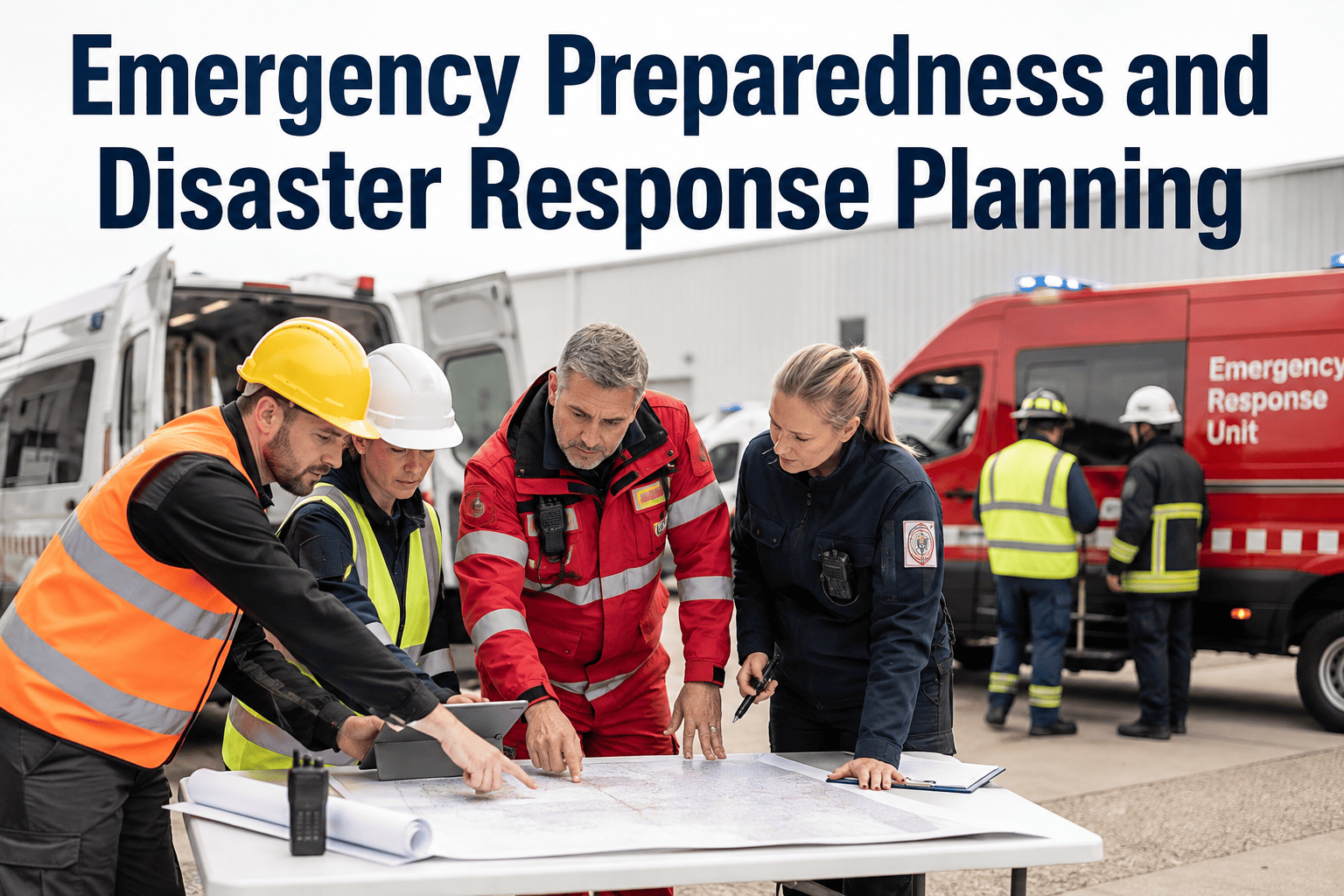
Tuesday, 3:45 AM: Weather service issues blizzard warning—8-12 inches expected within 6 hours across three counties. State DOT dispatch attempts to mobilize winter response fleet but discovers: 4 snowplows down for maintenance (delayed PM tasks), salt spreader control systems failing on 3 trucks (known issue, no parts ordered), 2 emergency trucks with expired inspections (can't legally deploy), and command vehicle GPS system offline (software update pending). Result: Delayed response by 90 minutes, 47-mile highway section uncleared during critical morning commute, 6 accidents attributed to road conditions, and intense public backlash. Post-incident review reveals all issues were preventable with systematic asset preparedness and risk-based maintenance prioritization.
State DOTs face unique emergency preparedness challenges: unpredictable weather events, aging infrastructure, public accountability, legislative oversight, and zero tolerance for response failures. Leading state DOTs achieve 90%+ emergency fleet readiness through systematic risk assessment, predictive maintenance, and AI-powered asset monitoring. Departments ready to transform emergency preparedness can explore how Oxmaint CMMS enables state-level emergency response optimization.
Critical Asset Risk Assessment Framework
Risk-based asset prioritization ensures limited maintenance resources focus on equipment critical to emergency response and public safety.
DOT Asset Risk Prioritization Matrix
| Risk Tier | Asset Category | Failure Impact | Maintenance Priority | Readiness Target |
|---|---|---|---|---|
| Tier 1: Critical | Winter response fleet (snowplows, salt trucks), emergency response vehicles, traffic signal systems, bridge inspection equipment | Direct public safety impact, potential fatalities, major service disruption, legislative/media scrutiny | 24/7 monitoring, predictive maintenance, immediate response to alerts, zero tolerance for PM delays | 95% available during season, 60-min mobilization |
| Tier 2: High | Highway maintenance trucks, pothole repair equipment, line striping machines, roadside mowing tractors | Service delays, public complaints, potential safety issues, reputation damage | Condition monitoring, scheduled PM, 48-hour repair SLA, strategic parts inventory | 85% available, 24-hour repair turnaround |
| Tier 3: Moderate | Administrative vehicles, facility equipment, shop tools, non-critical support assets | Operational inefficiency, minor delays, no direct public impact | Calendar-based PM, standard repair queue, basic tracking | 75% available, 72-hour repair acceptable |
Emergency Preparedness Checklist System
Systematic preparedness transforms chaotic emergency response into predictable, reliable mobilization through automated verification and documentation.
Winter Storm Preparedness
- ✓ All snowplows inspected, PM completed, documented (target: 100% by Oct 15)
- ✓ Salt spreader systems tested, calibrated, control systems verified
- ✓ Plow blades measured, replaced if <40% life remaining
- ✓ Hydraulic systems pressure-tested, hoses replaced per age schedule
- ✓ Emergency lighting tested, backup power systems verified
- ✓ Salt stockpile at 120% of 5-year average winter consumption
- ✓ Critical spare parts: plow cutting edges (10% fleet), hydraulic hoses (5% fleet), spreader chains (3 per location)
- ✓ Emergency repair kits pre-staged at 5 strategic locations
- ✓ Operator training refreshed, new hires certified
- ✓ Route assignments confirmed, GPS programmed
- ✓ Communication systems tested (mobile radios, tracking apps, dispatch)
- ✓ Emergency contact lists updated, backup operators identified
Emergency Response Preparedness
- ✓ All emergency vehicles operational, inspections current, fuel >50%
- ✓ Traffic control equipment accessible, batteries charged, inventory verified
- ✓ Emergency generators tested monthly, fuel rotated quarterly
- ✓ Communication equipment functional, backup systems ready
- ✓ Incident response vehicles: <30 min deployment target validated weekly
- ✓ Crew call-out lists current, contact info verified monthly
- ✓ Mutual aid agreements active, contact points confirmed
- ✓ Emergency supplies pre-positioned (signs, cones, barricades, lighting)
Infrastructure Inspection Preparedness
- ✓ Inspection vehicles/trucks in service, certifications current
- ✓ Under-bridge inspection units operational, safety systems tested
- ✓ Inspection equipment calibrated (measurement tools, NDT equipment, cameras)
- ✓ Certified inspectors: credentials current, training hours documented
- ✓ All bridges scheduled per FHWA requirements (24-month max interval)
- ✓ Critical bridges: 12-month intervals, scheduled 45 days in advance
- ✓ Fracture-critical members: annual inspection, specialized team assigned
- ✓ Underwater inspections: 60-month cycle, dive teams contracted
Reimagine Government & Public Works Efficiency Through Predictive Maintenance
Predictive maintenance shifts DOTs from reactive crisis management to proactive asset optimization, preventing 70-85% of emergency response failures.
| Approach | Reactive Maintenance (Traditional) | Predictive Maintenance (Modern) |
|---|---|---|
| Philosophy | Fix it when it breaks | Fix it before it breaks |
| Winter Prep | Rush inspections in October, discover problems too late, scramble for parts, deploy unreliable fleet | Monitor all year, identify issues in July-August, order parts in September, deploy 95%+ ready fleet |
| Emergency Response | Hope critical equipment works when needed, discover failures during mobilization, scramble for alternatives | Know equipment status real-time, proactive alerts 30-60 days early, backup plans automated |
| PM Scheduling | Calendar-based (same date annually), often delayed if equipment needed, inconsistent completion | Condition-based (when needed), usage-driven (odometer/hours), AI-optimized timing, 98%+ completion |
| Parts Management | Order when needed, expedite shipping (premium cost), frequent stockouts, emergency procurement | AI predicts needs 60-90 days ahead, bulk ordering (cost savings), strategic inventory, minimal expediting |
| Cost Profile | High emergency repair costs ($3K-$8K per incident), frequent breakdowns (12-18 annually), overtime labor | Lower planned maintenance costs ($800-$1.5K per service), rare breakdowns (2-4 annually), regular hours |
| Public Perception | Criticized for response failures, equipment breakdowns visible, legislative scrutiny frequent | Recognized for reliability, proactive communication, data-driven budget justification |
Predictive Maintenance Technologies for DOTs
IoT Sensors & Telematics
- GPS tracking: Real-time location, route verification, utilization monitoring
- Engine diagnostics: Fault codes, oil pressure, temperature, RPM patterns
- Fuel monitoring: Consumption rates, idle time, efficiency trends
- Usage tracking: Hours operated, cycles completed, seasonal patterns
AI-Powered Analytics
- Failure prediction: Machine learning identifies patterns indicating imminent failure
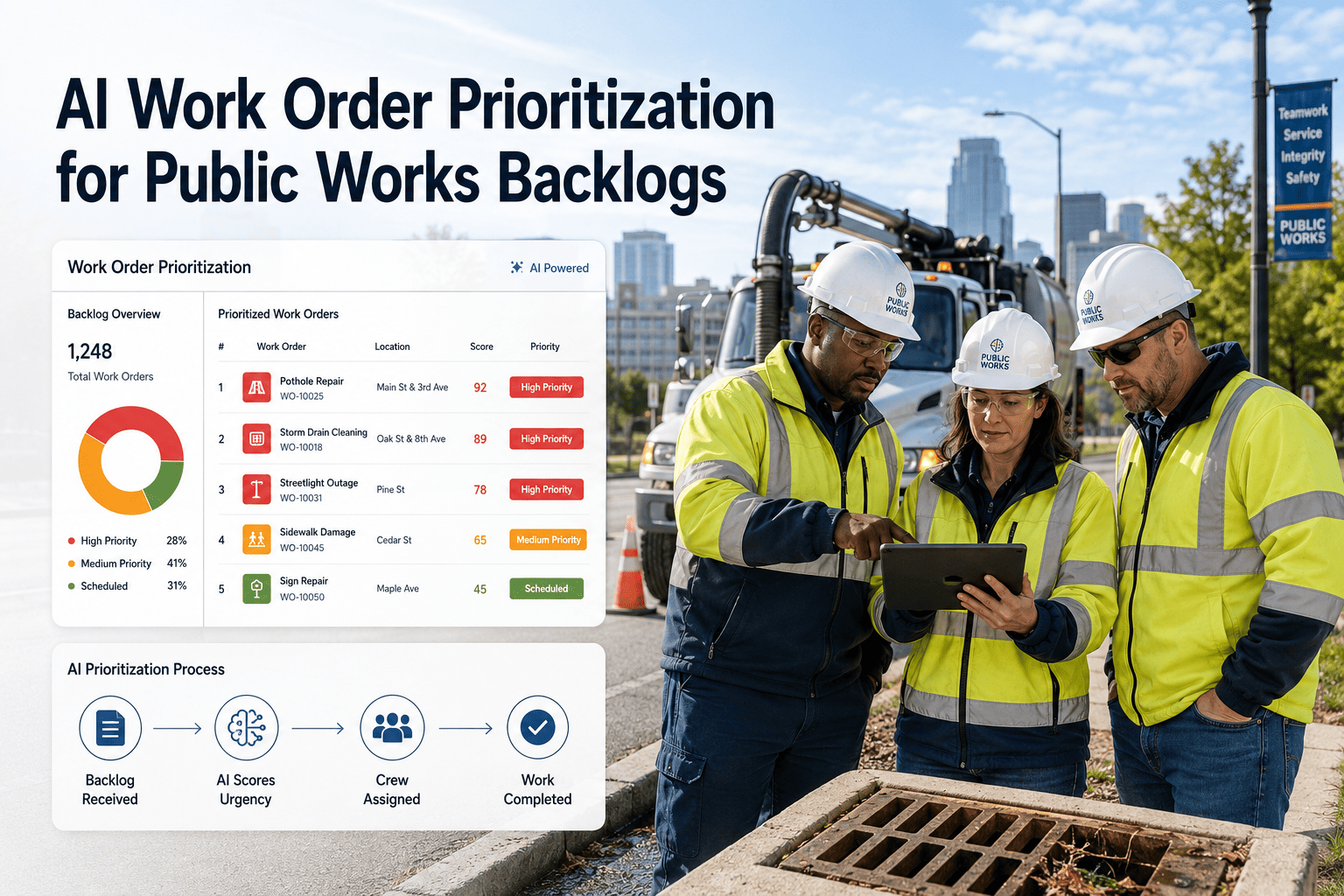
- Optimal PM timing: AI determines best maintenance windows based on usage, weather, workload
- Parts forecasting: Predict part needs 60-90 days ahead for bulk ordering
- Fleet optimization: Recommend vehicle reassignments, retirement schedules, replacement priorities
Mobile Work Orders
- Field inspections: Operators complete daily vehicle checks via mobile app
- Issue reporting: Photo/video evidence, GPS-stamped, instant notification to maintenance
- Barcode tracking: Scan vehicle, view history, complete PM checklist digitally
- Offline capability: Works without connectivity, syncs when signal restored
Automated Alerts & Escalation
- Tiered alerting: Operator → Supervisor → Fleet Manager → Director based on urgency
- Seasonal prioritization: Critical equipment alerts escalate faster during peak season
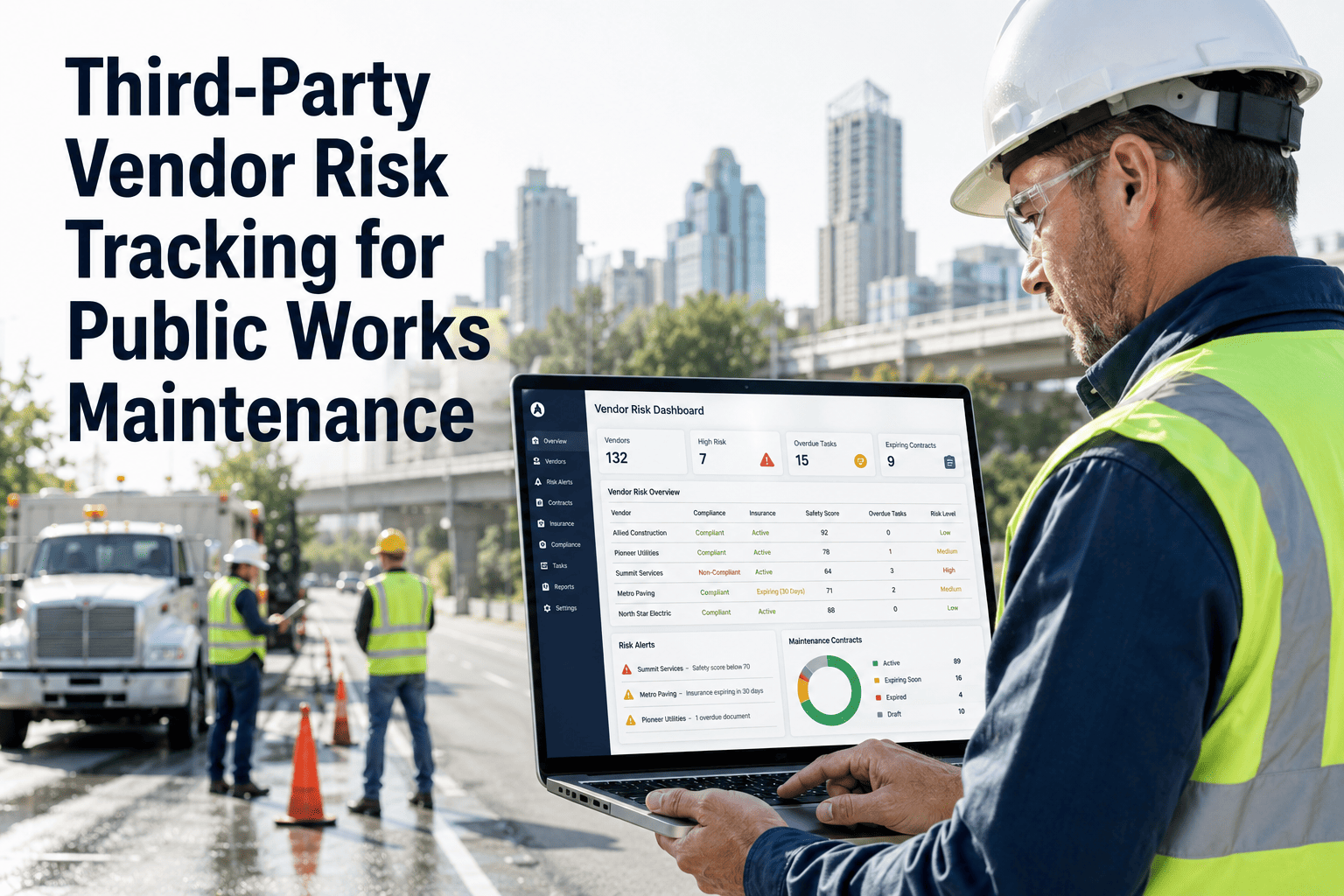
- Compliance warnings: 90/60/30-day alerts for expiring inspections, certifications
- Parts inventory: Low stock alerts with supplier direct ordering integration
From Reactive to Predictive — A Government & Public Works Operating Model with AI
AI-powered operating models transform state DOTs from reactive maintenance departments into predictive asset management organizations.
Foundation building:
- Document current state: asset inventory, maintenance history, failure patterns
- Deploy IoT sensors on Tier 1 critical assets (winter fleet, emergency vehicles)
- Configure CMMS with asset hierarchy, PM schedules, parts inventory
- Establish baseline metrics: fleet availability, breakdown frequency, PM compliance, response times
- Collect 60-90 days operational data for AI training
AI deployment:
- AI algorithms activated using historical failure data + sensor inputs
- First predictive alerts generated: "Snowplow 14 - hydraulic pressure declining, failure likely 40 days"
- Mobile work orders deployed to field operators for daily inspections
- Automated PM scheduling based on usage patterns, seasonal demands
- Parts forecasting system recommends bulk orders 90 days before winter season
System refinement:
- AI accuracy improves through validation: Initial 72% → Month 12: 89% prediction accuracy
- Expand IoT sensors to Tier 2 assets (highway maintenance, line striping)
- Integrate weather forecast API for proactive storm preparation
- Implement automated emergency preparedness verification 14 days before predicted weather events
- Train staff on predictive insights interpretation, proactive maintenance culture
Mature operations:
- AI self-optimizes PM schedules based on multi-year patterns
- Predictive parts ordering reduces inventory costs 25-35% while improving availability
- Multi-year asset replacement planning driven by condition data, not just age
- Budget justification supported by data: "Asset X requires replacement - predicted failure in 18 months"
- Legislative reporting automated: compliance metrics, cost efficiency, public safety improvements
AI Operating Model Benefits
See Predictive Maintenance in Action for State DOTs
Watch a live demo showing how AI predicts equipment failures, automates emergency preparedness verification, and transforms winter fleet management. Bring your maintenance team.
Real-World State DOT Results
Midwest State DOT (3,200-mile highway system)
Mountain State DOT (High-elevation winter operations)
12-Month Implementation Roadmap
Q1: Foundation (Months 1-3)
- Complete asset inventory (all vehicles, equipment, critical parts)
- Import historical maintenance data (past 3 years failure patterns)
- Configure risk tiers (Tier 1/2/3 classification per framework)
- Deploy IoT sensors on 25% of fleet (prioritize Tier 1 winter assets)
- Train 5-10 key staff on CMMS, mobile apps
Q2: Activation (Months 4-6)
- Activate AI predictive algorithms (60+ days data collected)
- Expand IoT to 75% of fleet (all Tier 1 + critical Tier 2)
- Launch mobile work orders for operators and technicians
- Implement automated PM scheduling based on usage patterns
- First winter prep verification (if Q2 = Jul-Sep timeframe)
Q3: Optimization (Months 7-9)
- Complete IoT deployment (100% Tier 1, 80% Tier 2, 30% Tier 3)
- Refine AI algorithms based on validation feedback
- Integrate weather forecasting for proactive storm preparation
- Implement automated emergency preparedness verification
- First winter season operating under predictive model
Q4: Continuous Improvement (Months 10-12)
- Post-winter season review: analyze performance, refine processes
- Multi-year planning: use condition data for 3-5 year asset replacement forecasting
- Legislative reporting: prepare annual metrics showing improvement
- Staff culture shift: predictive mindset embedded, proactive maintenance normalized
- Expand to additional asset classes (bridges, traffic signals, facilities)
Frequently Asked Questions
Transform Your DOT's Emergency Response Preparedness
Move from reactive crisis management to predictive asset preparedness. Join state DOTs achieving 90%+ emergency fleet readiness through AI-powered risk assessment, automated preparedness verification, and systematic predictive maintenance.
Start with 90-day pilot: Deploy IoT on critical winter assets, document baseline, prove ROI before full rollout. Risk-free approach delivers measurable results.