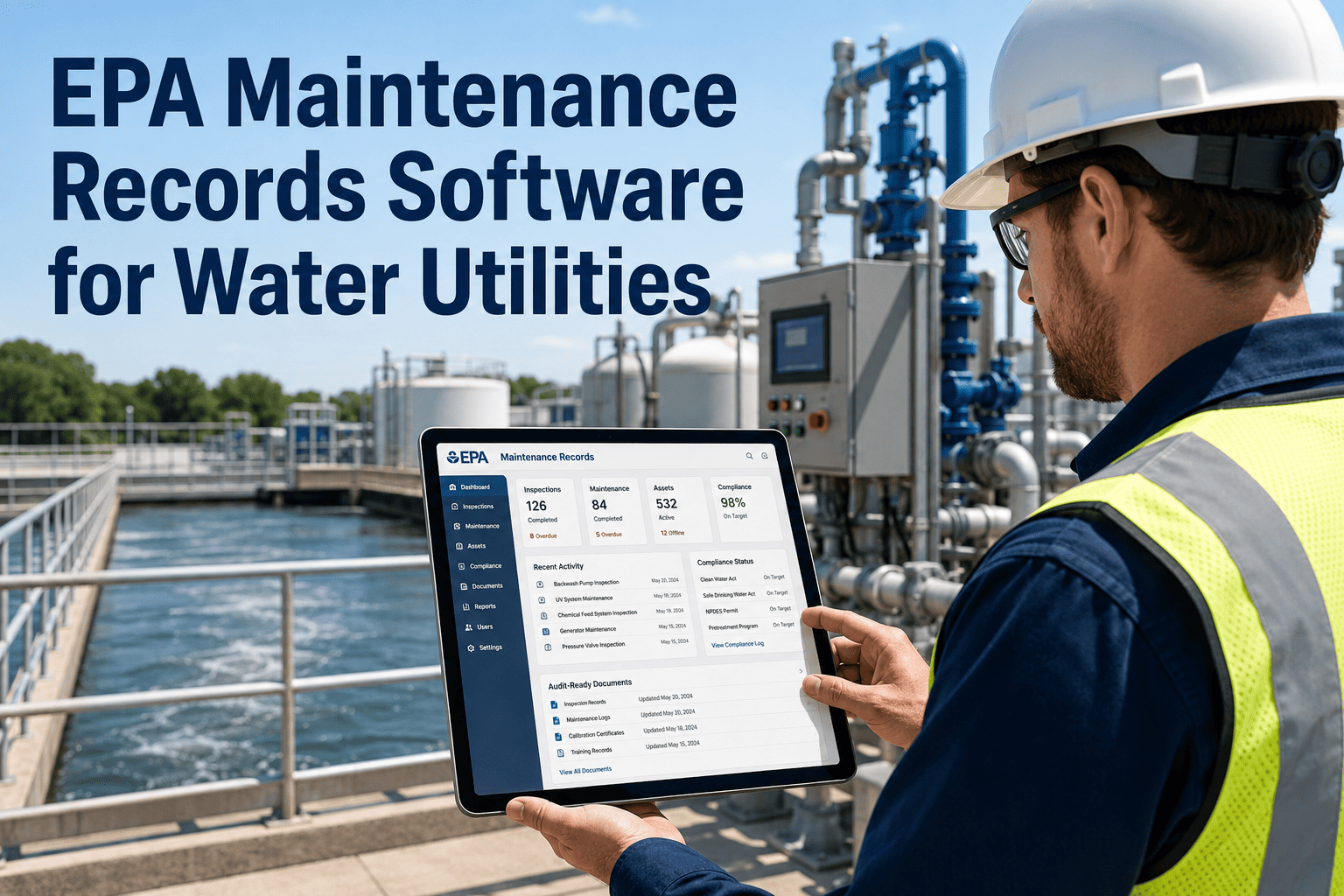
Water utilities operate under a documentation burden that has no equivalent in private sector maintenance. Every pump inspection, every valve replacement, every chlorination system service, and every corrective action taken on a treatment asset must be traceable to a date, a technician, and a verified outcome — not because an internal manager asked for it, but because federal and state regulators require it under the Safe Drinking Water Act, Lead and Copper Rule revisions, and facility-specific NPDES permits. EPA maintenance records software for water utilities organizes this documentation into a single searchable system that produces audit-ready reports when regulators arrive, rather than requiring staff to assemble evidence from filing cabinets under a two-week deadline.
Water Utilities · EPA Compliance · Checklist
EPA-Ready Maintenance Records for Water Utilities
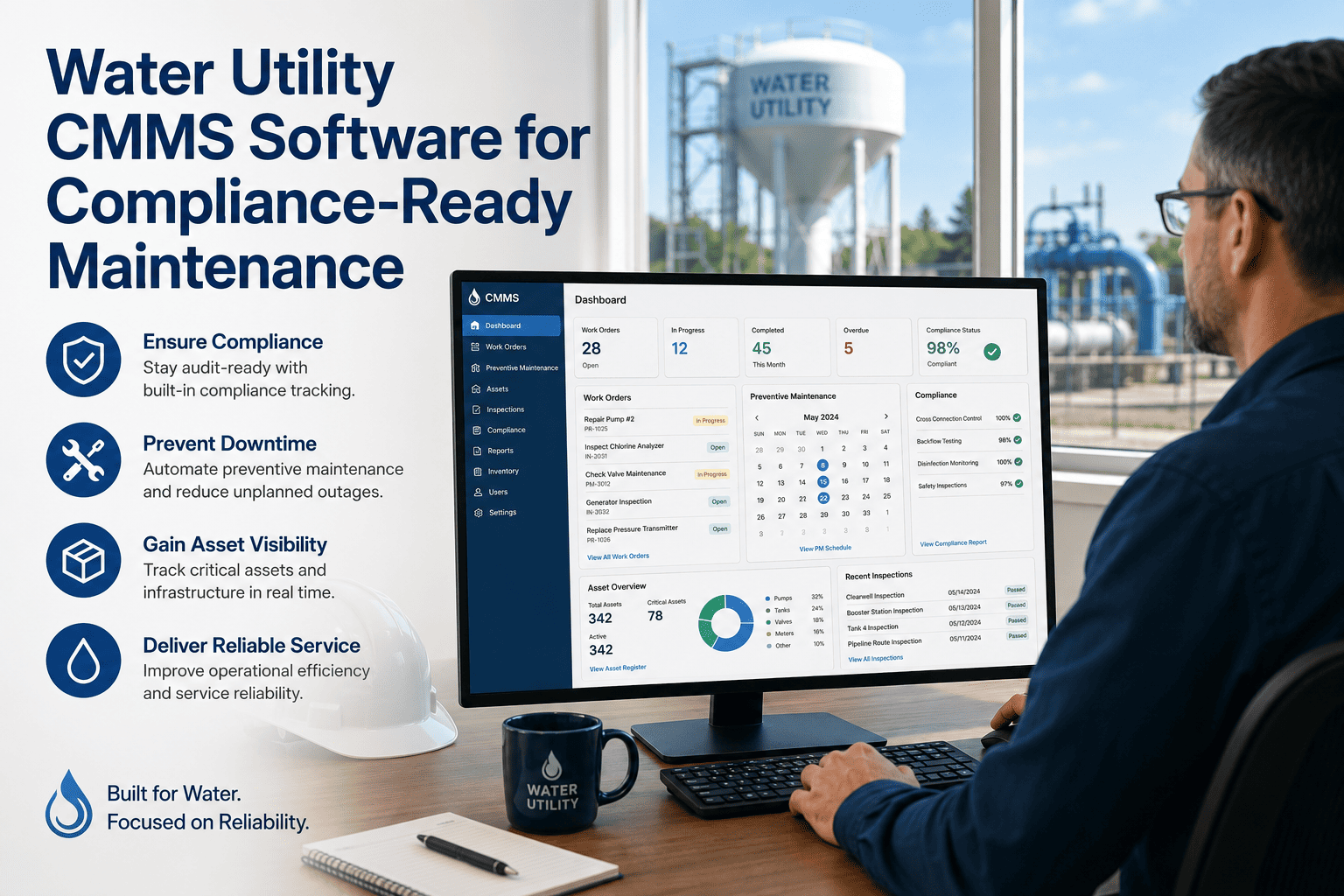
Keep every inspection, asset service, and corrective action organized and audit-ready. Oxmaint gives water utility teams a single system for maintenance documentation, compliance tracking, and regulator reporting — without paper binders or fragmented spreadsheets.
Audit Readiness Score
Inspection records complete
Corrective actions closed
Asset history searchable
Technician signatures on file
2 PMs due this week
$25K+
Per-day fine for SDWA violations where documentation gaps are found during EPA enforcement actions
73%
Of water utility compliance deficiencies involve incomplete maintenance or inspection records, not actual equipment failures
6 min
Average time to generate a complete EPA-format maintenance report in Oxmaint for a specified asset or date range
Documentation Checklist
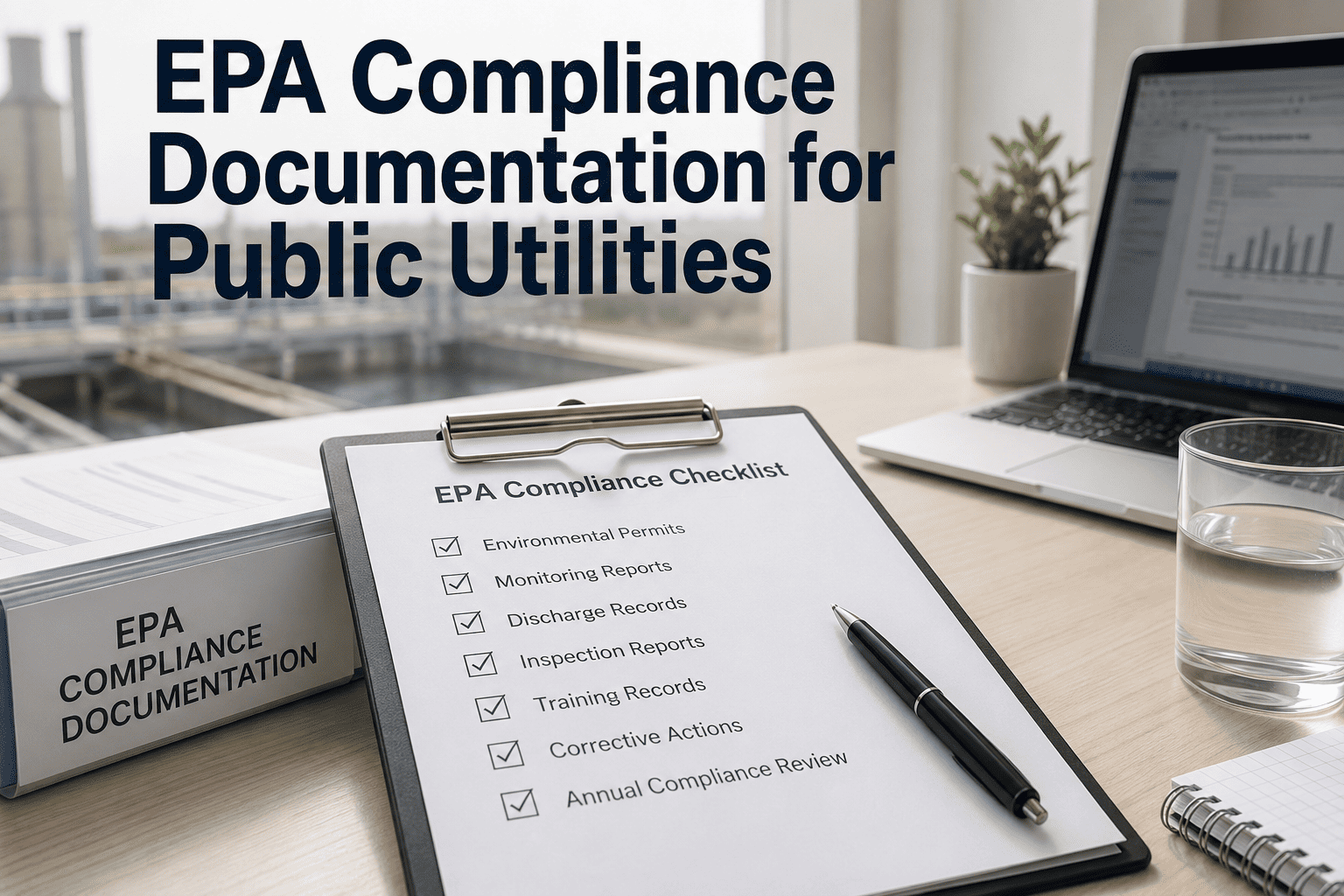
EPA Maintenance Records Checklist for Water Utilities
Use this checklist to assess whether your current record-keeping meets the documentation requirements most frequently cited in EPA sanitary surveys and state drinking water audits.
Treatment Assets
Chlorination system service records with chemical dose log and technician sign-off
UV disinfection lamp replacement log with serial number and hours-at-replacement
Filtration media inspection and backwash cycle records for 24 months minimum
Coagulation and sedimentation equipment PM records with turbidity readings
Chemical feed pump calibration records for all chemical addition points
Pumping & Distribution
Pump station inspection logs with motor runtime, amperage, and discharge pressure
Pressure zone boundary valve inspection and exercise records
Hydrant flushing program records with location, flow rate, and residual chlorine
Backflow preventer test records by certified tester with device ID and pass/fail
Water storage tank inspection records with sediment, coating, and structural notes
Corrective Actions & Events
Corrective action work orders with root cause, action taken, and closure date
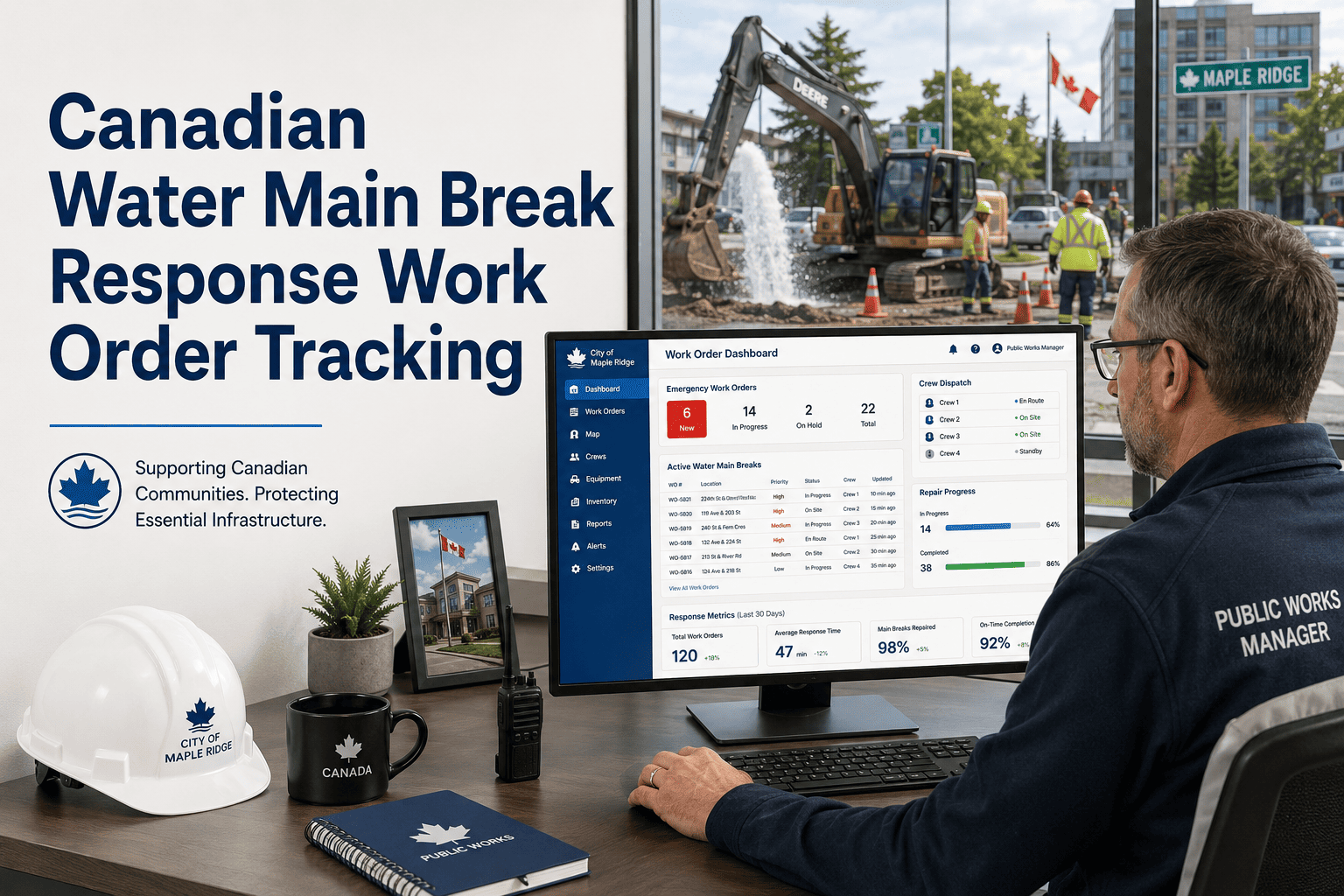
Main break response records with location, duration, water loss estimate, and repair method
Boil water advisory trigger events with notification timeline and corrective action chain
Cross-connection control program records including survey results and follow-up actions
Lead service line inventory updates and premise plumbing inspection records per LCR revisions
How Oxmaint Organizes Water Utility Records
From Work Order to Audit Report — Automatically
| Record Type |
How Oxmaint Captures It |
EPA Regulation Addressed |
Retention Period Supported |
| Treatment equipment PM |
Scheduled work orders with mandatory checklist fields and technician sign-off |
40 CFR Part 141 — Surface Water Treatment Rule |
10 years |
| Chemical feed records |
Dose log entries linked to asset with time, quantity, and operator ID |
40 CFR Part 141.74 — Monitoring Records |
3 years |
| Backflow preventer tests |
Inspection work order with tester certification upload and pass/fail result |
State Cross-Connection Control Programs |
5 years |
| Corrective actions |
Auto-generated CA work order from failed inspection, linked to original finding |
40 CFR Part 141 — Public Notification Rule |
3 years |
| Storage tank inspections |
Inspection checklist with photo upload and condition rating by zone |
AWWA D100 / State storage requirements |
5 years |
| Lead service line records |
Asset registry entry with material classification, inspection date, and replacement status |
Lead and Copper Rule Revisions (2024) |
12 years |
See It Working
See How Oxmaint Handles Your EPA Documentation Burden
Book a 30-minute demo. Bring your last sanitary survey finding list — we'll show you exactly where each gap would be closed in Oxmaint before your next inspection.
Expert Perspective
What Water Utility Operations Leaders Say
State inspectors don't come to find equipment failures. They come to find paperwork failures. I've seen utilities with excellent physical infrastructure fail a sanitary survey because they couldn't produce a five-year-old backflow test record, or because their corrective action log showed an open item from 18 months ago. A CMMS that closes the corrective action loop automatically and keeps records searchable for a decade is worth more than any equipment upgrade for compliance purposes.
Thomas Adeyemi
Water Systems Director · Municipal Water Authority · 22 years drinking water regulation
★★★★★
The Lead and Copper Rule revisions have added a material tracking dimension that most water utilities are not prepared for. Every service line material classification, every premise plumbing inspection, and every replacement action now needs a complete paper trail tied to a specific address and asset. Utilities using spreadsheets for this are going to face enforcement exposure within the next two inspection cycles. A proper asset registry in a CMMS is the only scalable solution.
Book a demo to see Oxmaint's LCR asset tracking module.
Nadine Ostrowski
Environmental Compliance Manager · Regional Water District · 16 years EPA regulatory affairs
★★★★★
Common Questions
What Water Utilities Ask About Oxmaint
Can Oxmaint store maintenance records for the multi-year retention periods required by EPA?
Yes. Oxmaint maintains records with configurable retention settings at the record type level — so treatment equipment PM records are retained for 10 years, chemical feed logs for 3 years, and lead service line records for 12 years, all in line with federal requirements. Records are stored with full audit trail integrity, meaning they cannot be edited or deleted after completion without a change log. Your system administrator can configure retention periods to match state-specific requirements that exceed federal minimums.
Sign up free to configure your retention settings.
How does Oxmaint support the Lead and Copper Rule Revised requirements for service line inventories?
Oxmaint includes an asset registry module where each service line can be catalogued with address, material classification (lead, galvanized, unknown, or non-lead), inspection history, and replacement status. As premise plumbing inspections are completed, the findings update the asset record automatically. The system generates inventory reports in a format aligned with the EPA's LCRR inventory submission requirements, showing material breakdown by zone and tracking the replacement progress required under the 10-year service line replacement mandate.
Can we give state regulators or EPA inspectors direct read access to our Oxmaint records during an audit?
Oxmaint supports secure read-only access grants that can be configured for specific time windows and record categories. An auditor can be given access to view all inspection records for a specific asset, date range, or regulation category without being able to modify any records. Alternatively, you can generate comprehensive PDF audit packages covering the exact period and asset scope requested by the regulator — sortable by asset, inspection type, or corrective action status — and export them without granting system access. This is the format most state primacy agency inspectors prefer for scheduled reviews.
What happens in Oxmaint when an inspection fails — how does it create the corrective action record EPA requires?
When a technician marks any inspection item as a failed condition, Oxmaint automatically generates a corrective action work order with the specific failed item documented, the asset and location linked, and the original inspection record attached as evidence. The corrective action work order is tracked through assignment, execution, and closure — with each step timestamped. The completed corrective action is then linked back to the original inspection finding, giving auditors a single-record view of the deficiency, the action taken, the person responsible, and the date closed. This chain exactly matches the corrective action documentation standard EPA sanitary surveys look for.
Book a demo to see the corrective action workflow.