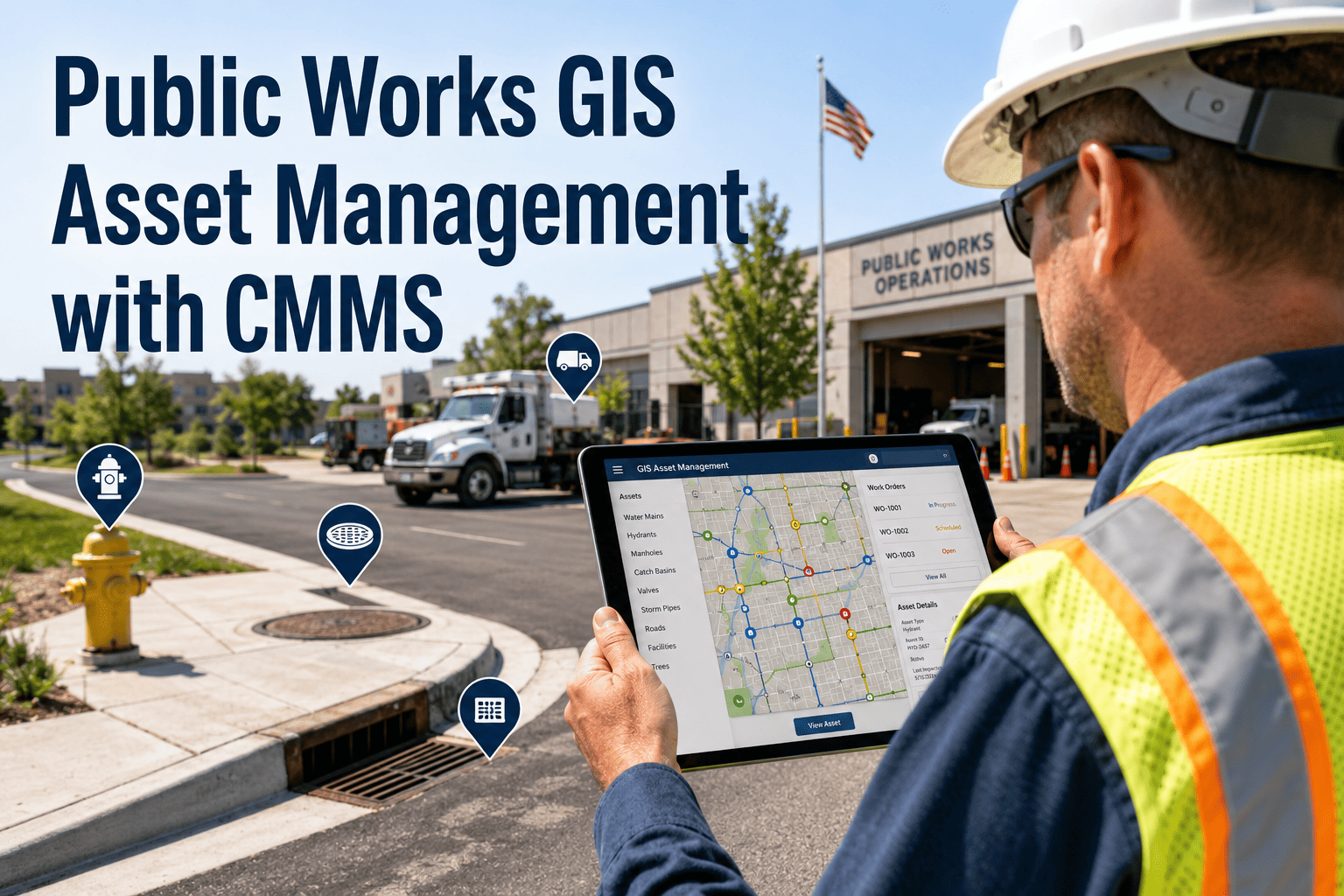
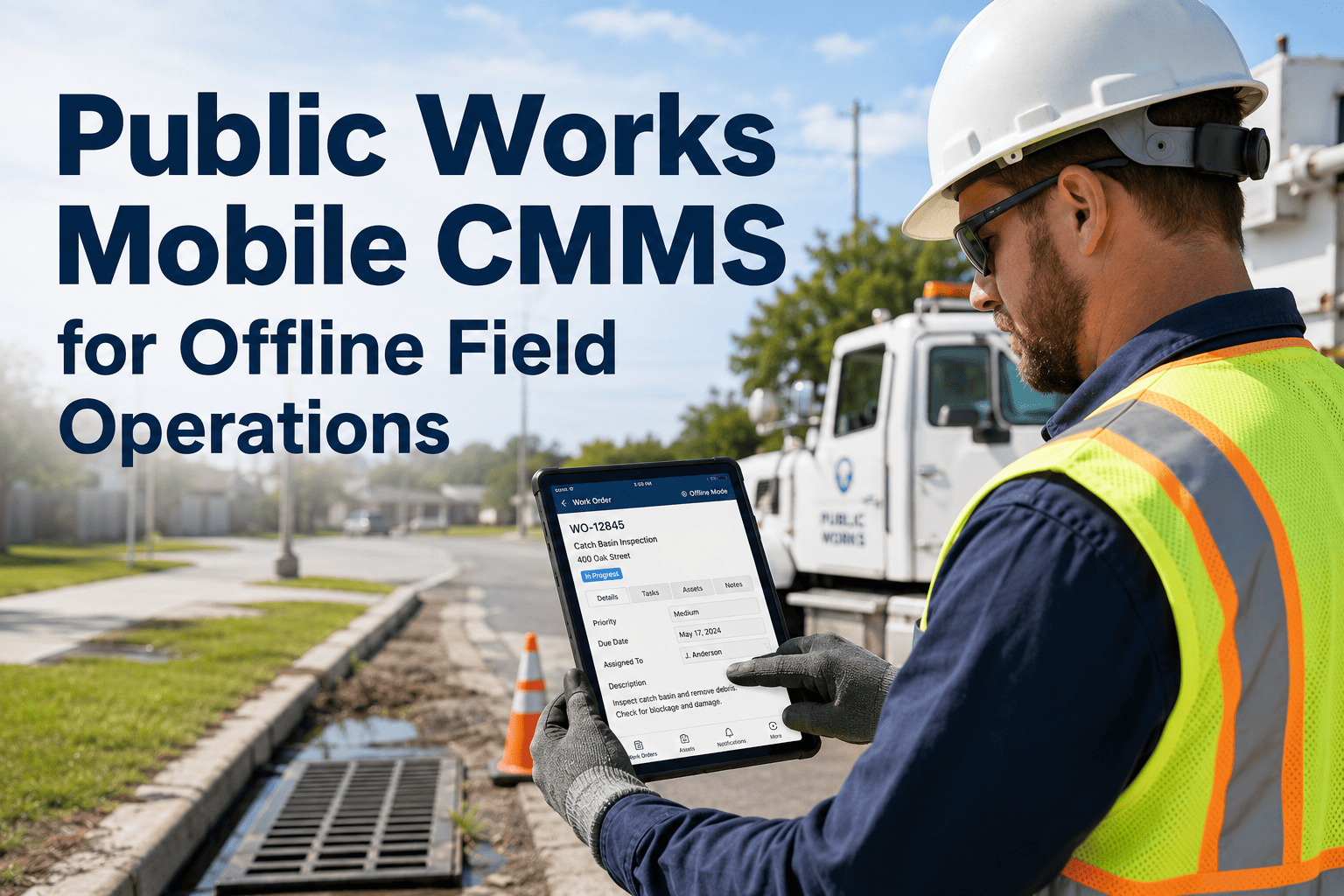
Culvert failures during flood events are rarely sudden — they are the result of missed inspections, unlogged debris accumulation, and structural deterioration that went unrecorded for seasons. OxMaint gives public works teams a mobile inspection workflow that captures condition, photo evidence, and corrective work orders at every culvert in the network — before the next rain event exposes the gap. Book a demo to see how road authorities are digitizing their culvert inspection programmes.
Climate Resilience · Inspection Management
Flood-Prone Road Culvert Inspection Workflow for Public Works
A structured, mobile-first inspection process for culverts in flood-risk road networks — with GPS-verified condition records, photo evidence, and automatic work order generation for every defect found.
The Failure Chain
How Unrecorded Culvert Defects Become Road Closures
Missed Inspection
Culvert not inspected before rain season. Debris accumulation, scour, or headwall cracking goes unrecorded.
No Work Order
Without a documented defect, no corrective work order is created. Repair crew is never dispatched.
Blockage at Peak Flow
Debris accumulated in barrel blocks 60–80% of flow capacity. Water overtops road carriageway.
Road Closure
Emergency closure, emergency contractor callout, and potential structural failure assessment. Average cost: $28,000–$95,000 per incident.
Inspection Checklist
Culvert Inspection Checklist — Pre-Flood Season
Structural Condition
Hydraulic Capacity
Scour and Erosion
Documentation Required
Condition Grading
Culvert Condition Grade Reference Table
| Grade | Condition | Description | Required Action | Priority |
|---|---|---|---|---|
| 1 | Good | No defects, full hydraulic capacity, no scour | No action — re-inspect next cycle | Routine |
| 2 | Satisfactory | Minor debris, hairline cracks only, 90%+ clear bore | Schedule cleaning within 90 days | Low |
| 3 | Fair | Partial blockage, minor structural cracks, limited scour | Work order within 30 days, re-inspect after | Medium |
| 4 | Poor | Major blockage, structural damage, active scour | Emergency work order — repair within 7 days | High |
| 5 | Critical | Imminent failure risk, barrel collapse or severe undermining | Road closure assessment, immediate structural review | Critical |
Digitize your culvert inspection programme before the next flood event.
OxMaint turns this checklist into a mobile inspection form assigned to your inspectors — GPS-confirmed, photo-documented, and automatically generating work orders for every defect graded 3 or above. No paper, no re-entry, no missing records.
Expert Review
What Public Works Professionals Say About Digital Culvert Inspections
5 / 5
We manage over 400 culverts across a road network with 280 kilometres of flood-risk routes. Before we moved to OxMaint, inspection records were on paper forms that came back to the office and sat in a pile until someone had time to enter them. After two major flood events where culvert blockages contributed to road closures, the council required us to demonstrate a proactive inspection programme with documented evidence. OxMaint let us build a database of every culvert as an asset, assign pre-season and post-event inspection rounds, and show the auditors a GPS-mapped record of every inspection completed — that level of documentation simply was not possible with paper.
RB
Robert Brannigan, CEng
Principal Engineer, Highway Structures, County Highways Authority · 20 yrs public works
5 / 5
The work order automation is the part that changed how we operate. Previously an inspector would find a blocked culvert, write a note, hand it to the supervisor, and then maybe a work order would be created three days later. With OxMaint, the inspector grades the culvert a 3 or above and the work order is auto-generated with the GPS location, photos, and condition description already attached. The repair crew gets a notification the same day. We cleared a backlog of forty-two culvert defects in the first three months just by making the reporting instant rather than manual.
KM
Karen McAllister
Drainage Asset Manager, Metropolitan Council · 13 yrs drainage and highways FM
Frequently Asked Questions
Culvert Inspection Workflow — Common Questions
How does OxMaint handle culvert assets spread across a large road network?
OxMaint supports geospatial asset records where each culvert is stored as a named asset with GPS coordinates, road reference, upstream catchment area, pipe diameter, material type, and installation year. Inspectors are assigned inspection rounds by geographic zone or road corridor, and the mobile app guides them through the culvert list with each asset's last inspection date and previous condition grade visible before they begin. For road authorities managing hundreds or thousands of drainage assets across large networks, the bulk import tool allows an existing asset register in CSV or GIS export format to be loaded in a single step. Book a demo to see how large road network registers are set up.
Can OxMaint generate the inspection evidence required for insurance and flood risk audits?
Yes. OxMaint produces a timestamped, GPS-confirmed inspection record for each culvert that includes the inspector's name, condition grade assigned, pass/fail results per checklist item, photo evidence, and any work orders raised for defects found. This output meets the documentation standard required by flood risk auditors, insurance carriers covering road network infrastructure, and government oversight bodies reviewing drainage asset management programmes. For post-flood-event reviews, the system can generate a report showing inspection history for every culvert in a defined flood-affected corridor — demonstrating which assets were inspected, when, and what condition they were found in. Start your free trial to see the report format.
How frequently should flood-risk culverts be inspected under standard highway drainage guidance?
Under CIRIA guidance and most highway authority drainage asset management frameworks, culverts in flood-risk catchments should receive a principal inspection at least every two years, with routine drive-by or visual inspections annually and a specific pre-season inspection before the autumn and winter flood risk period. High-risk culverts — those on roads with no alternative route, culverts crossing embankments, or culverts in fast-eroding channels — should be inspected annually as a minimum with post-event inspections after any significant rainfall. OxMaint's PM scheduling supports custom inspection cycles per asset criticality, so high-risk culverts automatically receive more frequent inspection assignments than lower-risk drainage structures in the same network.
Does OxMaint work offline for culvert inspections in remote or rural areas?
Yes. OxMaint's mobile app operates fully offline for inspection completion, photo capture, condition grading, and work order creation. In rural road networks where mobile signal is unreliable or absent, inspectors download their assigned inspection round before leaving the depot. All data — GPS location, checklist results, photos, and any work orders raised — is stored on the device and syncs automatically when connectivity is restored. The original GPS coordinates and timestamps from the field are preserved in the sync, so the audit record reflects when and where the inspection actually took place rather than when the data was uploaded. This is particularly important for post-flood-event inspections where auditors need to confirm inspectors were physically on-site at the right time.
Culvert Inspection · OxMaint Public Works
Stop Managing Flood Risk on Paper Inspection Forms
Every culvert in your flood-risk network is a scheduled asset. OxMaint turns your inspection programme into a GPS-verified, photo-documented, work-order-generating mobile workflow — with the audit trail built in from day one.