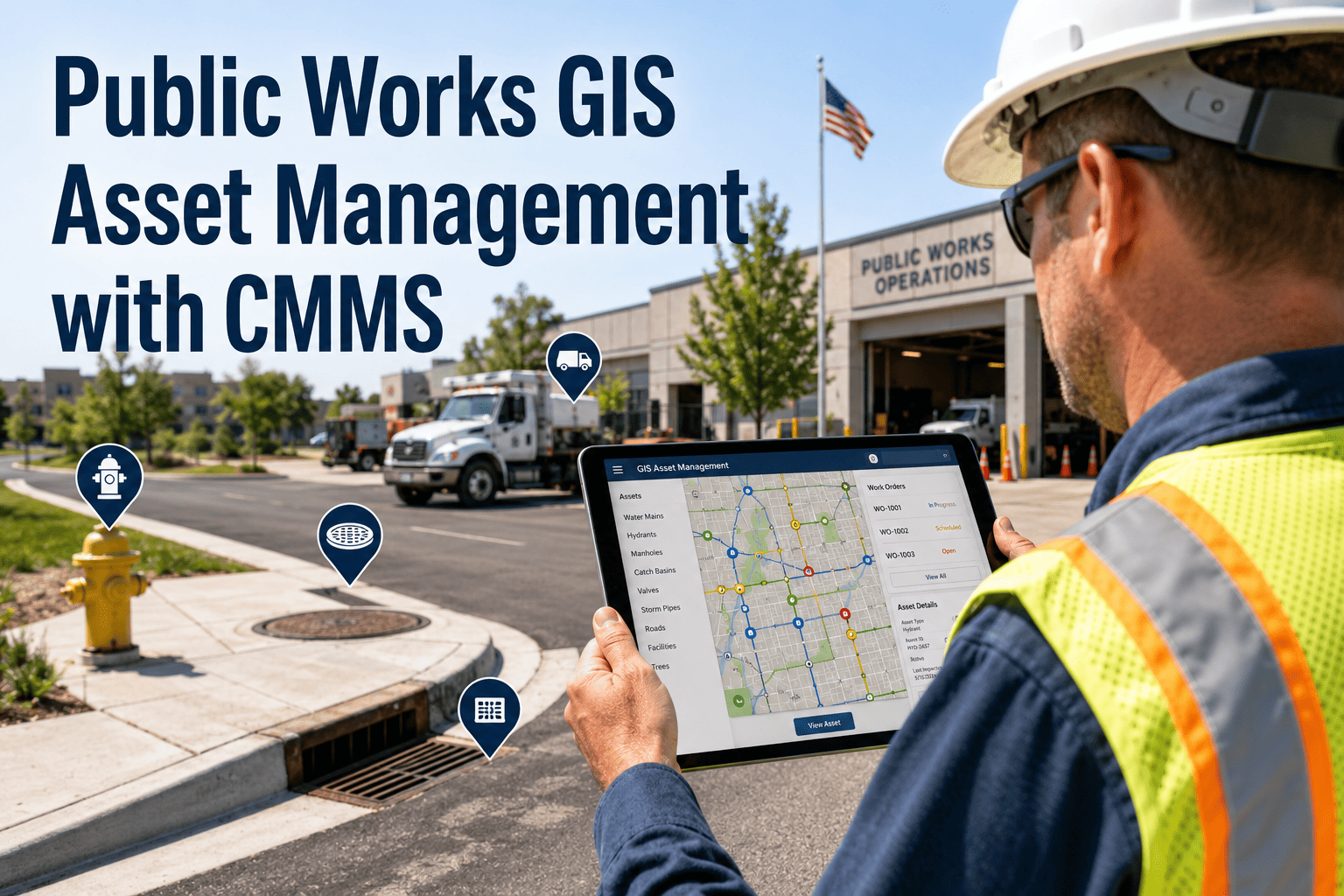
Municipalities that inspect catch basins quarterly and clear sediment before it reaches 50% capacity experience 85% fewer surface flooding events than those that respond only after problems are reported. That difference does not come from better equipment — it comes from a disciplined digital inspection workflow that ensures every drain, basin, culvert, and outfall is documented on schedule, year-round. This playbook is built for public works directors and stormwater managers who want to move from reactive flood response to a proactive, MS4-compliant inspection program. OxMaint is the digital inspection and CMMS platform that turns this playbook into automated work orders, GPS-stamped field records, and an audit trail your MS4 permit reviewers can see without searching.
Inspection Management · Municipal Stormwater
Extreme Rainfall Stormwater Maintenance Playbook for Municipalities
EPA NPDES MS4 permits require documented inspection programs for every stormwater structure you own. Non-compliance penalties run $10,000–$75,000 per violation. This playbook gives you every checklist, interval, and documentation standard your program needs.
MS4 Permit Reminder: EPA Clean Water Act Section 402(p) requires documented inspection and maintenance of all stormwater structures. Missing or incomplete documentation can trigger civil penalties and consent orders under 40 CFR Part 122.
What Extreme Rainfall Does to Stormwater Infrastructure
Stormwater infrastructure designed for mid-20th-century rainfall intensity is routinely overwhelmed by today's storm events. The failure cascade is predictable: sediment-loaded catch basins reduce inlet capacity, undersized culverts create backpressure, and outfall structures that haven't been inspected since the last storm remain partially blocked. When the next heavy event arrives, the system fails — not because of the storm, but because of what accumulated between storms.
Sediment accumulates in catch basins between storms
Inlet capacity drops — minor rainfall causes pooling
Heavy rain event overwhelms reduced-capacity inlets
Surface flooding damages roads, properties, vehicles
Emergency contractor, legal liability, MS4 violation: $15K–$75K+ per event
The Complete Municipal Stormwater Inspection Checklist
Use this checklist for every inspection cycle. Each item should be completed with a photo record, GPS stamp, condition rating, and technician sign-off in OxMaint's mobile app — meeting MS4 documentation requirements from the moment the inspection is recorded.
Pre-Storm Preparation
Inspect all catch basins in flood-risk zones — clear any sediment above 50% depth
Verify all inlet grates are secure and free of debris blockage
Confirm outfall structures are unobstructed and energy dissipators intact
Check detention and retention basin water levels against normal pool elevation
Confirm all known problem structures have been logged and corrective WO raised
Post-Storm Inspection (Within 48 Hours)
Inspect all basins in flood-affected zones; photograph sediment depth and visible damage
Check all outfalls for illicit discharge — log any oil sheen, unusual color, or odor
Document pavement settlement or sinkholes near stormwater structures
Inspect open channels and swales for erosion, debris accumulation, and bank damage
Log all findings in OxMaint with GPS coordinates, photos, and corrective action required
Quarterly Routine Inspection
Inspect all catch basins — record sediment depth as % of sump capacity
Check pipes and culverts for joint separation, root intrusion, or visible deterioration
Assess detention basin embankments for erosion, animal burrows, or slope instability
Survey green infrastructure and bioswales for vegetation health and infiltration function
Conduct dry-weather outfall screening per MS4 IDDE requirements
Annual Compliance Inspection
Complete full structural survey of all stormwater structures with condition rating
CCTV inspection of underground pipe segments showing surface distress indicators
Review and update Stormwater Management Program (SWMP) documentation
Prepare MS4 annual report data from OxMaint inspection records export
Verify all stormwater signage is in place and public education activities documented
Automate Your Stormwater Inspection Program
OxMaint auto-generates inspection work orders on your chosen schedule, routes them to field inspectors with checklists attached, and captures GPS-stamped photo evidence — ready for MS4 reporting with no additional effort.
Inspection Frequency by Asset Type and Risk Level
| Asset Type |
Standard Interval |
High-Risk / Post-Event |
MS4 Minimum |
Trigger for Emergency Inspection |
| Catch Basins / Inlets |
Quarterly |
Monthly + post-storm 48hr |
Annual |
Sediment depth exceeds 50% of sump; pooling observed |
| Outfall Structures |
Quarterly |
Post-storm within 48hr |
Quarterly (IDDE dry weather) |
Illicit discharge detected; blockage or structural damage |
| Culverts |
Semi-annual |
Post-storm for flood zone culverts |
Annual |
Road surface settlement; known blockage or debris event |
| Detention Basins |
Quarterly |
Post-storm within 48hr |
Annual |
Water above normal pool 48hr after storm; embankment erosion |
| Open Channels / Swales |
Quarterly |
Monthly in high-sediment periods |
Annual |
Bank erosion, vegetation loss, or flow obstruction observed |
| Underground Pipes |
Every 5 years (CCTV) |
If surface distress detected |
As needed per permit |
Sinkhole, pavement settlement, or joint failure at surface |
| Green Infrastructure / BMPs |
Quarterly |
Post-construction year 1: monthly |
Annual |
Infiltration failure, vegetation die-off, or erosion visible |
How OxMaint Digitizes Your Stormwater Program
01
Asset Register for Every Stormwater Structure
Register every catch basin, culvert, outfall, basin, and pipe segment in OxMaint with GPS location, structure type, design capacity, and last-cleaned date. Your entire stormwater network becomes searchable, mappable, and schedulable from a single platform.
02
Auto-Generated Inspection Work Orders
Set your inspection intervals once. OxMaint auto-generates inspection work orders for each structure on schedule and routes them to the responsible inspector. Post-storm inspection triggers can be configured to automatically dispatch high-risk zone inspections within 48 hours of a qualifying rain event.
03
Mobile Inspection with GPS and Photo Evidence
Inspectors complete digital checklists on their phones with condition ratings, sediment depth measurements, and required photos. Every inspection record is GPS-stamped, timestamped, and tied to the specific structure — creating the exact documentation trail required by MS4 permit reviewers.
04
MS4 Annual Report Ready Export
When your annual MS4 report is due, OxMaint generates a complete inspection count, illicit discharge log, and maintenance record export for the reporting period. Report preparation time drops from weeks to hours — and every figure is backed by timestamped field records.
Expert Review
The most common reason municipalities fail MS4 permit inspections is not that the work wasn't done — it is that the work cannot be proven. A catch basin that was cleaned six months ago but has no record, no photo, and no technician signature might as well have never been serviced from a regulatory standpoint. Digital inspection management closes this gap completely. When every field action generates a GPS-stamped, photo-documented, signed record automatically, compliance becomes a byproduct of normal operations — not a separate documentation effort that happens three weeks before the audit.
Stormwater Compliance Manager — Municipal Public Works
Frequently Asked Questions
What documentation does OxMaint produce to satisfy MS4 permit inspection requirements?
OxMaint generates GPS-stamped, photo-documented, technician-signed inspection records for every stormwater structure in your register. Each record includes the inspection date, structure ID, condition rating, observations logged, and any corrective action triggered. For annual MS4 reporting, OxMaint exports a date-ranged inspection summary showing total inspections completed, structures inspected by type, and any illicit discharge incidents logged — the exact dataset required for the annual report submission. Set up your stormwater asset register at
app.oxmaint.ai.
How does OxMaint handle post-storm inspection dispatch after a heavy rainfall event?
OxMaint allows you to create a post-storm inspection work order template that can be manually triggered — or configured to dispatch automatically to your high-risk zone inspectors immediately following a qualifying rain event. The template pre-populates the checklist, assigns the inspector, and timestamps the dispatch — ensuring your 48-hour post-storm inspection window is met and documented without requiring a supervisor to manually create and assign each work order after every storm.
Can OxMaint track which stormwater structures need cleaning based on sediment depth readings?
Yes. When an inspector logs a catch basin sediment depth reading above the 50% sump capacity threshold during an inspection, OxMaint automatically raises a corrective work order for cleaning and routes it to the appropriate crew. The structure's asset record is updated to reflect the pending action, and the cleaning work order is tracked to closure — creating a complete cycle of detect, dispatch, clean, and document for every structure that triggers the threshold. This prevents structures from accumulating to flood-causing levels between routine inspection cycles.
Book a demo to see the inspection-to-corrective-WO flow.
What is the cost of an MS4 permit violation and how does OxMaint reduce that risk?
EPA NPDES MS4 permit violations can result in civil penalties of $10,000 to $75,000 per violation per day under 40 CFR Part 122, as well as consent orders that impose ongoing compliance obligations and monitoring requirements on the municipality. OxMaint reduces this risk by ensuring every required inspection is scheduled automatically, completed with verifiable documentation, and stored in a searchable audit trail. In the event of a permit review or enforcement inquiry, your public works team can produce a complete inspection history for any structure in minutes rather than hours or days.
Stop Flooding. Start Documenting. Stay Compliant.
OxMaint gives municipal stormwater teams digital inspection workflows, auto-scheduled work orders, GPS-photo evidence, and MS4 audit-ready reporting — all in one platform.
Most municipalities are live on OxMaint with their full stormwater asset register and first inspection cycle running within 10 working days. No IT project. No manual form redesign. Just the inspection program your MS4 permit already requires — finally running the way it should.