When a public works department emergency-purchased $94,000 in water main repair parts from a single vendor without competitive bids—because the purchasing coordinator "didn't have time" during a crisis—the state auditor's finding wasn't just a footnote. The municipality faced a $47,000 disallowed cost, a public reprimand, mandatory corrective action, and six months of enhanced oversight that slowed every subsequent purchase to a crawl. The vendor's pricing, it turned out, was 34% above the cooperative purchasing contract the city already held but nobody checked. This isn't anedge case—it's the predictable outcome when procurement operates on institutional memory instead of documented procedures. Every municipality needs a procurement manual that field staff actually follow, purchasing thresholds that trigger the right process automatically, and contract management that captures the savings taxpayers deserve. Talk to our team about building procurement workflows that protect your agency and your budget.
Complete Compliance Guide — 2026 Edition
Federal Grant Compliance for Municipal Infrastructure 2026
FHWA, EPA, and NERC requirements, documentation, and reporting to maintain eligibility, avoid penalties, and maximize funding for public works projects.
IIJA / BIL
Infrastructure Investment
FEMA / BRIC
Disaster Resilience
SRF
State Revolving Funds
$1.2TTotal federal infrastructure funding available
35%Grants audited for compliance
100%Documentation requirement for reimbursement
$450KAvg. penalty for major non-compliance
The High Cost of Non-Compliance
Federal grants are not "free money." They come with stringent strings attached—from Buy America provisions to Davis-Bacon wage rates and NEPA environmental reviews. A single missed report or undocumented expenditure can trigger a clawback of millions of dollars, leaving the municipal general fund to cover the deficit. Compliance isn't just about following rules; it's about protecting the financial solvency of your infrastructure projects. Book a Demo.
Common Compliance Failures
Procurement Violations
42%
Failing to follow 2 CFR 200 procurement standards (Uniform Guidance). Sole-sourcing without justification or missing required contract clauses.
Penalty: Disallowed costs (100% loss)
Reporting Gaps
35%
Late or incomplete quarterly/annual performance reports. Missing data on project milestones, budget expenditures, or outcome metrics.
Penalty: Funding suspension + audit
Unallowable Costs
28%
Charging expenses not approved in the grant budget or outside the period of performance. Using grant funds for general operating expenses.
Penalty: Repayment + interest
Asset Mismanagement
18%
Failing to track equipment purchased with grant funds. Missing inventory tags, location data, or maintenance records for federally-funded assets.
Penalty: Equipment forfeiture risk
Environmental (NEPA)
12%
Starting construction before environmental clearance is issued. Ignoring mitigation requirements for wetlands, historical sites, or endangered species.
Penalty: Project stop-work order
Agency-Specific Requirements: A Matrix
Each federal agency has unique compliance drivers. Understanding the specific demands of FHWA, EPA, and FEMA is critical for navigating the bureaucratic landscape effectively. Your compliance strategy must be tailored to the funding source.
Federal Highway Administration
Focus: Roads, Bridges, Trails
✓ Buy America (Build America, Buy America Act)
✓ Design standards (AASHTO/MUTCD)
✓ Davis-Bacon prevailing wage certification
Strict oversight on materials sourcing and labor. Requires meticulous documentation of steel/iron origins.
Environmental Protection Agency
Focus: Water, Sewer, Stormwater
✓ Environmental Information Document (EID)
✓ American Iron and Steel (AIS) provisions
✓ Fiscal sustainability plans (Asset Management)
SRF loans often require a fully funded asset management plan and rate study as conditions of the award.
Federal Emergency Management Agency
Focus: Disaster Recovery, Mitigation
✓ Cost reasonableness validation
✓ Benefit-Cost Analysis (BCA) for mitigation
✓ Detailed damage assessment documentation
✓ Duplication of Benefits (DOB) verification
Requires precise tracking of labor, equipment hours, and materials linked specifically to disaster incident periods.
Department of the Treasury (ARPA/SLFRF)
Focus: Broadband, Water, Sewer
✓ Obligation and expenditure deadlines
✓ Project eligibility justification
✓ SAM.gov reporting quarterly
✓ Subrecipient monitoring
✓ Equity and labor reporting
Flexible but deadline-driven. Funds must be obligated by end of 2024 and expended by end of 2026.
Automate Grant Compliance Tracking
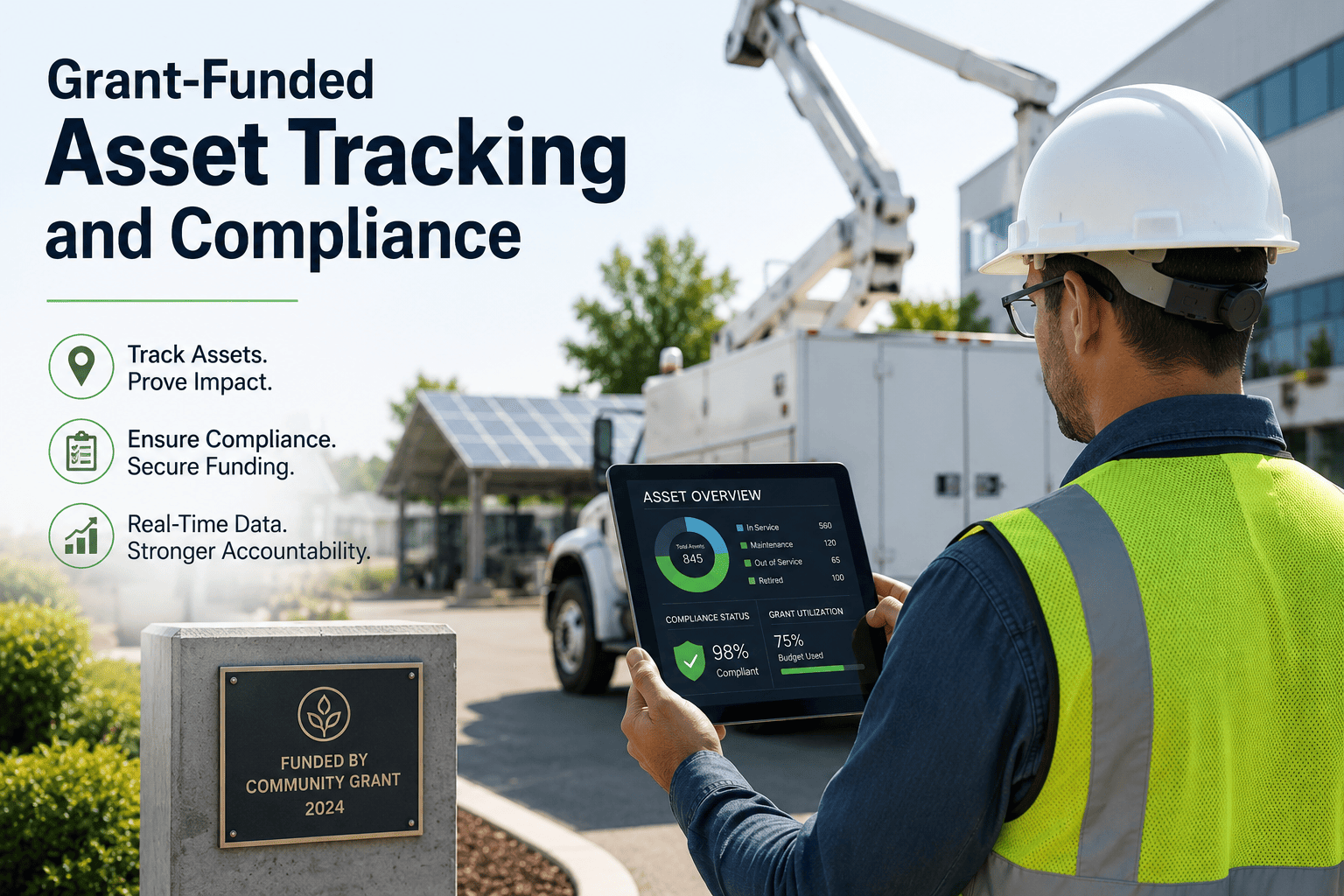
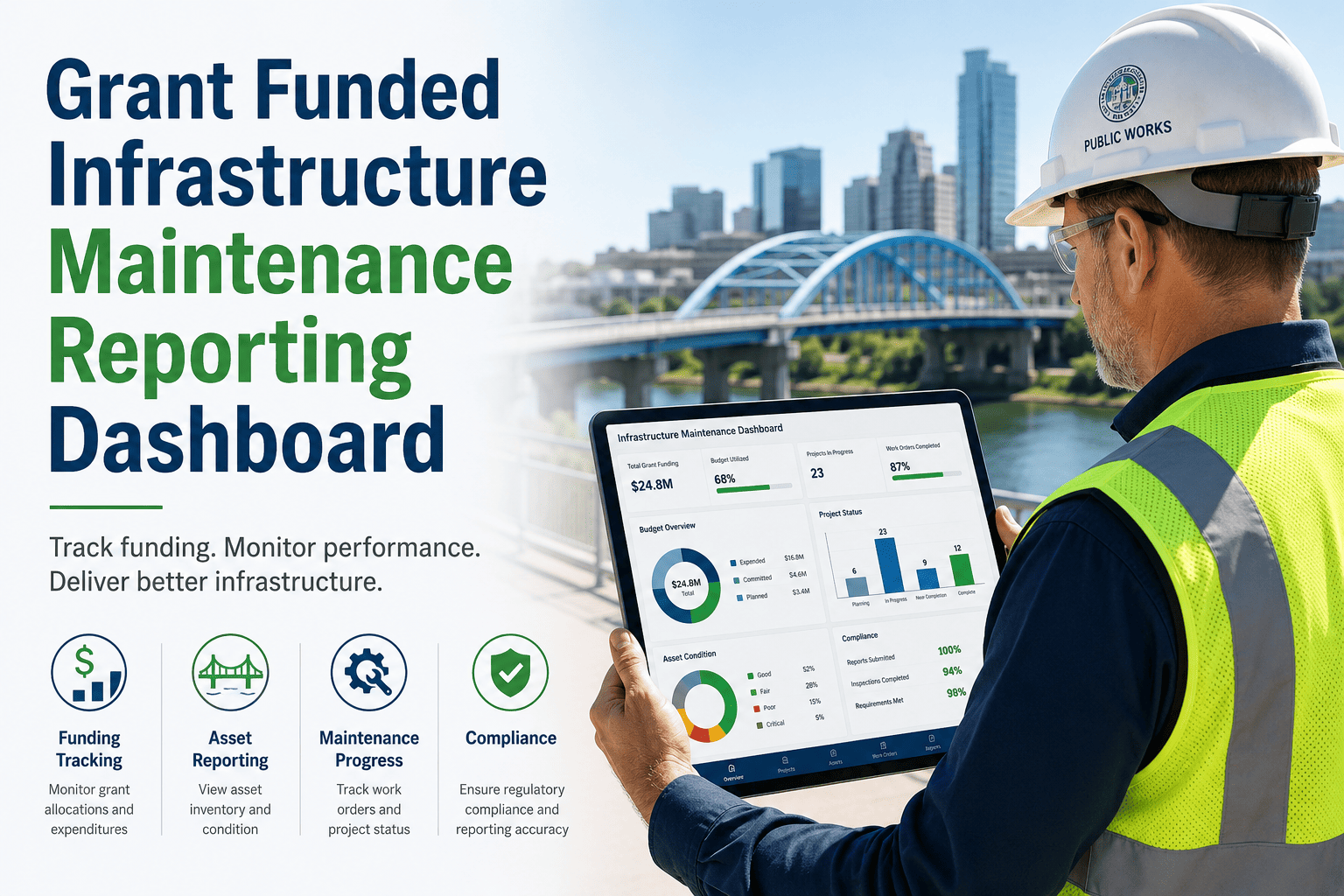
Oxmaint's CMMS tracks federally-funded assets, maintenance activities, and costs, generating the audit-ready reports you need to satisfy FHWA, EPA, and FEMA requirements effortlessly.
Documentation Best Practices
In the world of federal grants, the mantra is simple: "If it isn't documented, it didn't happen." Auditors start with your paperwork. A digital system of record is the only way to manage the volume of data required for multi-year infrastructure projects. Book a Demo.
Essential Compliance Documentation
Procurement File
Must Include:
RFP/Bid solicitation documents
Proof of publication/advertisement
Bid tabulation and scoring sheets
Non-debarment verification (SAM.gov)
Common Pitfall:
Missing independent cost estimate
Conflict of interest forms unsigned
Contract missing federal clauses
No rationale for method of selection
Procurement is the #1 audit finding area.
Financial Records
Must Include:
Invoices keyed to grant budget lines
Proof of payment (cancelled checks/EFT)
Timesheets signed by supervisor
General ledger transaction detail
Common Pitfall:
Commingling grant funds with general funds
Charging sales tax (unallowable)
Lack of separation of duties
Indirect costs calculated incorrectly
Separate grant funds in your GL immediately.
Asset Management
Must Include:
Asset registry (Description, Serial #, Cost)
Source of funding (FAIN #)
Title holder and % of federal participation
Location and condition assessment
Common Pitfall:
Failure to conduct bi-annual physical inventory
Disposing of assets without approval
Using assets for non-approved purposes
No maintenance logs
Digital asset tracking is mandatory for 2 CFR 200.
Grant Lifecycle Management
Compliance is a continuous process that spans the life of the grant—from the initial award to the final closeout years later. Missing a step in the middle can jeopardize the entire project.
Compliance Lifecycle
Key milestones for grant managers
01
Pre-Award / Application
UEI registration active. Risk assessment completed. Budget narrative aligns with scope. Assurances signed. Match funding confirmed and committed by council resolution.
Planning
02
Award & Setup
Grant agreement executed. Financial accounts established. Internal controls documented. Kick-off meeting with federal program officer. Subrecipient agreements drafted if applicable.
Active
03
Performance & Reporting
Quarterly financial (SF-425) and progress reports submitted. Drawdowns processed via federal payment systems (ASAP/ECHO). Procurement actions executed per federal rules.
Ongoing
04
Monitoring & Audit
Single Audit (if >$750K expended). Desk reviews by agency. Site visits. Corrective action plans for any findings. Asset inventory verification.
Critical
05
Closeout & Retention
Final reports submitted within 120 days. Unused funds de-obligated. Equipment disposition requested. Records retained for 3 years (or longer per agency).
Final
Streamline Your Grant Reporting
Don't scramble at the end of the quarter. Oxmaint keeps your data organized and accessible, making federal reporting and single audits stress-free.
Expert Perspective: The Compliance Advantage
"
Municipalities often view grant compliance as a burden, but I see it as a strategic advantage. When you have rock-solid compliance systems—clear procurement policies, automated asset tracking, and real-time financial reporting—you become a 'low-risk' grantee. Federal agencies want to give money to cities that can manage it. We've seen cities with clean Single Audits win competitive grants over larger cities simply because they had the systems in place to execute. Compliance isn't just about keeping the money; it's about positioning yourself for the next round of funding.
— Federal Grant Administrator, 15 years experience
100%
Retention of grant funds with proper documentation
3x
Higher success rate for "Low Risk" auditees in competitive grants
$0
Disallowed costs in last fiscal year for Oxmaint users
24/7
Audit readiness with digital records
Investing in compliance infrastructure is investing in your community's future. By digitizing your operations with a system like Oxmaint, you ensure that every federal dollar is accounted for, every asset is maintained, and your municipality remains eligible for the funding needed to build critical infrastructure. Start your free trial today.
Secure Your Funding with Systemic Compliance
Oxmaint provides the digital backbone for federal grant compliance—tracking assets, maintenance, and costs in one unified platform. Be audit-ready, every day.
Frequently Asked Questions
What is the "Uniform Guidance" (2 CFR 200)?
The Uniform Guidance is the set of federal rules (2 CFR Part 200) that governs how federal grants are administered. It consolidates previous OMB circulars into a single document covering administrative requirements, cost principles, and audit requirements. All municipal recipients of federal funds must comply with these rules for procurement, financial management, property management, and reporting.
What triggers a "Single Audit"?
A Single Audit is required if a non-federal entity (like a municipality) expends $750,000 or more in federal grant funds during its fiscal year. This includes funds received directly from federal agencies and funds passed through state agencies. The audit reviews both financial statements and compliance with major program requirements.
Can we use grant funds to buy maintenance software like Oxmaint?
Often, yes. Administrative costs or indirect costs can frequently be used for software that supports the management and compliance of the grant-funded program. Specifically, asset management software is often an eligible expense under infrastructure grants (like SRF or BIL) because it ensures the long-term sustainability of the assets being built. Always check your specific grant agreement and budget narrative.
What is "Build America, Buy America" (BABA)?
BABA requires that all iron, steel, manufactured products, and construction materials used in federally funded infrastructure projects be produced in the United States. This applies to awards obligated on or after May 14, 2022. Municipalities must collect certifications from manufacturers and contractors proving domestic origin to maintain compliance.
How long do we need to keep grant records?
Per 2 CFR 200.334, financial records, supporting documents, statistical records, and all other non-federal entity records pertinent to a federal award must be retained for a period of three years from the date of submission of the final expenditure report. However, if any litigation, claim, or audit is started before the expiration of the 3-year period, the records must be retained until all findings are resolved. Some agencies or states may have longer retention requirements (e.g., 5 or 7 years).