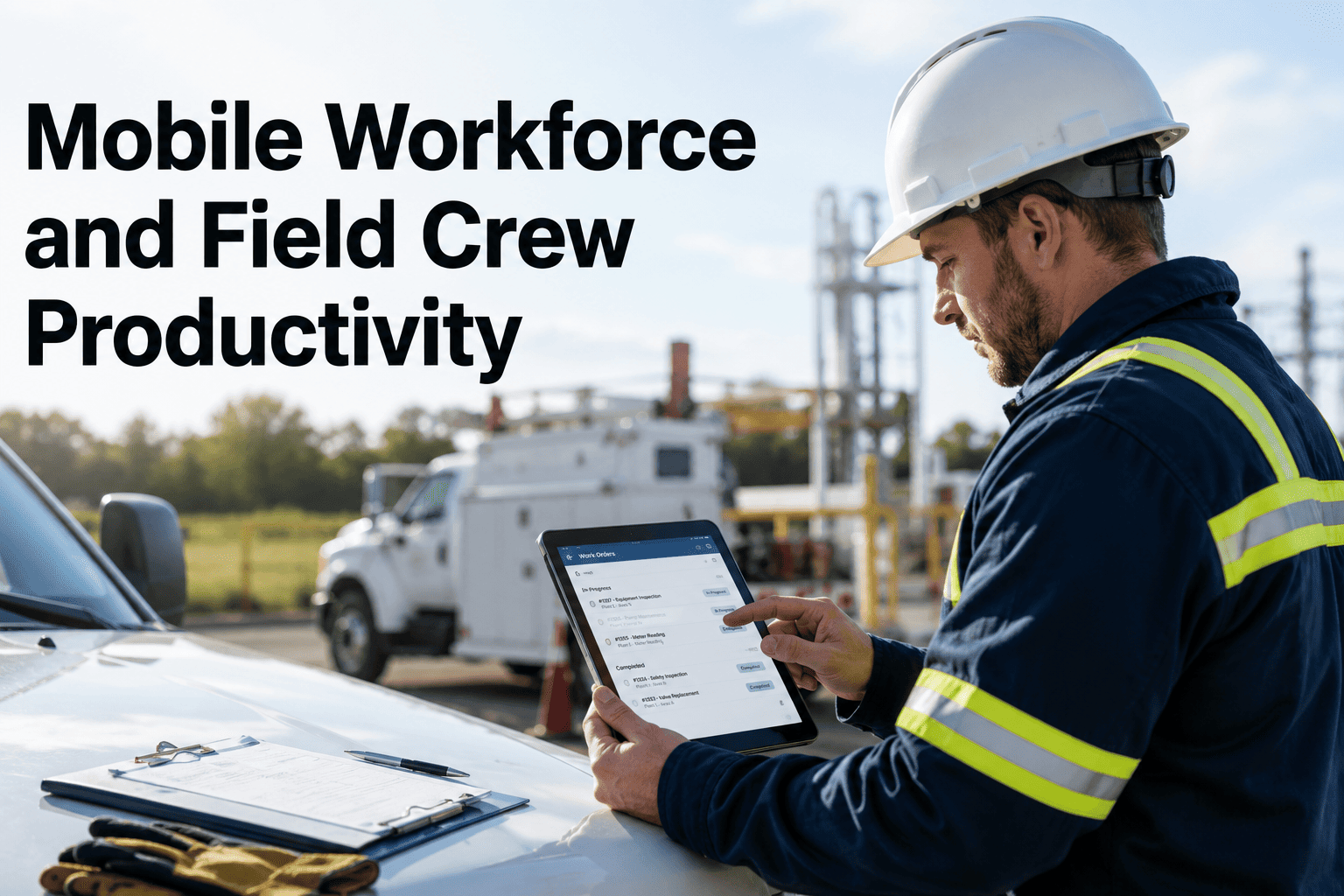
Mobile workforce and field crew productivity in public works typically hovers at just 30–40% wrench time, meaning crews spend the majority of their day on windshield time, paperwork, and parts chasing rather than turning wrenches. For a municipal field crew of 20 technicians earning an average loaded rate of $55/hour, recovering even two productive hours per person per week translates to over $114,000 in reclaimed labor value annually. The biggest single lever for lifting public works field crew productivity toward 55–65% wrench time is deploying a mobile CMMS that eliminates paper work orders, optimizes routing, and integrates GIS asset data directly into the technician's hands. OxMaint's AI-powered platform is built to do exactly this — and you can Start Free Trial today to see the impact on your own operations.
Where Did Your Crews' Day Go?
Most public works field crews lose 4–5 hours per shift to deadhead routing, paper work orders, and parts scavenging. A mobile workforce management platform recovers that lost time — fast.
Why Mobile Workforce Productivity in Public Works Stalls at 30–40%
Field crew productivity in government and municipal operations has been historically difficult to measure — let alone improve. Without a mobile maintenance system, public works directors rely on clipboards, radio dispatch, and end-of-day paperwork that obscures where time actually goes. The result is a field workforce that feels busy but operates at a fraction of its potential capacity.
The percentage of a public works field technician's shift spent on actual hands-on maintenance without a mobile CMMS.
Of an 8-hour shift, nearly 1.75 hours is consumed by manual work-order completion, duplication, and data entry back at the yard.
The target wrench-time benchmark for public works mobile crews after implementing mobile work orders and route optimization.
Loaded labor cost wasted per technician per year when field crew efficiency remains stuck at 35% wrench time.
Where Public Works Field Crews Lose Time Every Day
Before you can improve field crew efficiency in public operations, you have to quantify the leaks. Below is a breakdown of where an average 8-hour municipal field shift goes when crews rely on paper, radio dispatch, and siloed asset records.
| Activity | Hours / Shift | % of 8-Hr Shift | Root Cause |
|---|---|---|---|
| Windshield / deadhead travel | 1.8 hrs | 22.5% | No route optimization; sequential dispatch |
| Paperwork & work-order duplication | 1.5 hrs | 18.8% | Manual forms re-entered into spreadsheets |
| Parts lookup & scavenging | 0.9 hrs | 11.3% | No real-time inventory visibility |
| Waiting for assignment / clarification | 0.6 hrs | 7.5% | Radio-only dispatch, no mobile job context |
| Actual wrench time | 3.2 hrs | 40.0% | Remainder — the only value-producing time |
A 15-person public works mobile crew losing 4.8 hours per tech per day burns over $685,000 in annual loaded labor. OxMaint recovers 1.5–2.5 of those hours by digitizing the entire workflow — from dispatch to close-out.
How to Calculate Field Crew Productivity Gains from a Mobile CMMS
Public works directors evaluating a mobile workforce platform need a defensible ROI model. The formula below isolates the recovered labor value of moving from paper-based processes to a mobile CMMS — independent of any downtime or asset-life benefits.
This figure excludes additional savings from reduced overtime, fewer repeat repairs, extended asset life, and avoided compliance penalties — all of which a mobile CMMS like OxMaint also drives.
How OxMaint Lifts Public Works Mobile Crew Productivity
OxMaint is an AI-powered CMMS and EAM platform engineered for maintenance and reliability teams — including municipal field crews. These four capabilities directly attack the biggest drains on mobile workforce productivity in public works.
Mobile Work Orders — Zero Paper
Technicians receive, update, and close work orders on any phone or tablet — with photos, parts used, and labor hours captured at the source. No end-of-day data entry.
GIS-Integrated Asset Tracking
Every asset — hydrant, valve, sign, lift station — is mapped and linked to its full maintenance history. Crews navigate to the exact asset and see prior repairs instantly.
Route-Optimized Dispatch
OxMaint groups work orders by geo-proximity and priority, so dispatchers send crews on efficient sequences instead of cross-town zig-zags across the municipality.
Real-Time Parts Inventory
Crews see stock levels at every storeroom and vehicle before they roll. No mid-job parts scavenging, no return trips, no delayed close-outs.
How to Deploy a Mobile Workforce Platform in Public Works — 90-Day Timeline
Switching from paper and spreadsheets to a mobile CMMS doesn't require a multi-year IT initiative. Most public works agencies are live on OxMaint within 60–90 days. Here's the proven phased rollout.
Asset Import & GIS Mapping
Upload asset registers, import GIS layers, and configure work-order templates. OxMaint's onboarding team handles data migration from spreadsheets, legacy CMMS, or GIS exports — no IT staff required.
Pilot Crew & Mobile Rollout
Deploy the OxMaint mobile app to one field crew (5–8 technicians). Run paper + digital in parallel for two weeks, then cut over. Capture feedback and refine dispatch workflows.
Full Department Launch
Extend to all crews and divisions. Activate route optimization, predictive maintenance triggers, and real-time dashboards for directors. Begin measuring wrench-time lift against baseline.
Paper-Based vs. Mobile CMMS for Municipal Field Crews
The shift from reactive, paper-driven operations to a mobile-first public works model is not incremental — it is transformational. Here is what changes on Day 1 of going live.
Before — Paper & Radio
- Dispatch reads work orders over radio; techs write details on dashboards
- Crews drive across town with no route sequencing
- Asset history lives in filing cabinets or individual memories
- Parts counts are guesses until someone checks the shelf
- End-of-week data entry backlog; reports 7–14 days stale
- No photos or documentation of completed work
After — OxMaint Mobile CMMS
- Work orders push to mobile devices with full job context and asset history
- Route optimization sequences jobs by proximity and priority automatically
- Every asset's complete maintenance log is one tap away in the field
- Real-time parts inventory visible across all storerooms and vehicles
- Live dashboards update as crews close tickets — zero data-entry lag
- Photos, signatures, and checklists attached to every closed work order
"We moved 22 field techs from paper to OxMaint in under two months. Our wrench time jumped from 38% to 57% in the first quarter — and our director finally has real-time visibility into what every crew is doing right now."
Ready to Recover 1.5–2.5 Hours Per Tech, Every Day?
See how OxMaint's mobile CMMS transforms your public works field crew productivity — live on your assets.
Mobile Workforce & Field Crew Productivity — Frequently Asked Questions
Answers to the most common questions public works directors ask when evaluating a mobile CMMS for their field crews.
What is wrench time and what is a good benchmark for public works field crews?
Wrench time is the percentage of a technician's paid shift spent on direct, value-producing maintenance work — not travel, paperwork, or waiting. For public works field crews without a mobile CMMS, the typical benchmark is 30–40%. With a mobile workforce platform like OxMaint, agencies routinely reach 55–65% wrench time by eliminating paper processes, optimizing routes, and providing real-time asset data.
How does a mobile CMMS improve field crew productivity in government operations?
A mobile CMMS improves field workforce productivity by pushing digital work orders to technicians' phones, eliminating manual paperwork, integrating GIS asset data, optimizing daily routes, and giving crews real-time parts visibility. Most public works agencies see 1.5–2.5 hours of recovered time per technician per day within the first 90 days. You can see it in action — Book a Demo with our team.
How long does it take to implement a mobile workforce platform in a municipal agency?
Most public works departments go live on OxMaint within 60–90 days. Month one covers asset import and GIS mapping; month two is a pilot crew rollout; month three extends to all crews and divisions. OxMaint is cloud-hosted and configured by our onboarding team, so no internal IT staff or infrastructure is required. Agencies with clean asset data can launch even faster.
Can field crews use a mobile CMMS in areas without cell service?
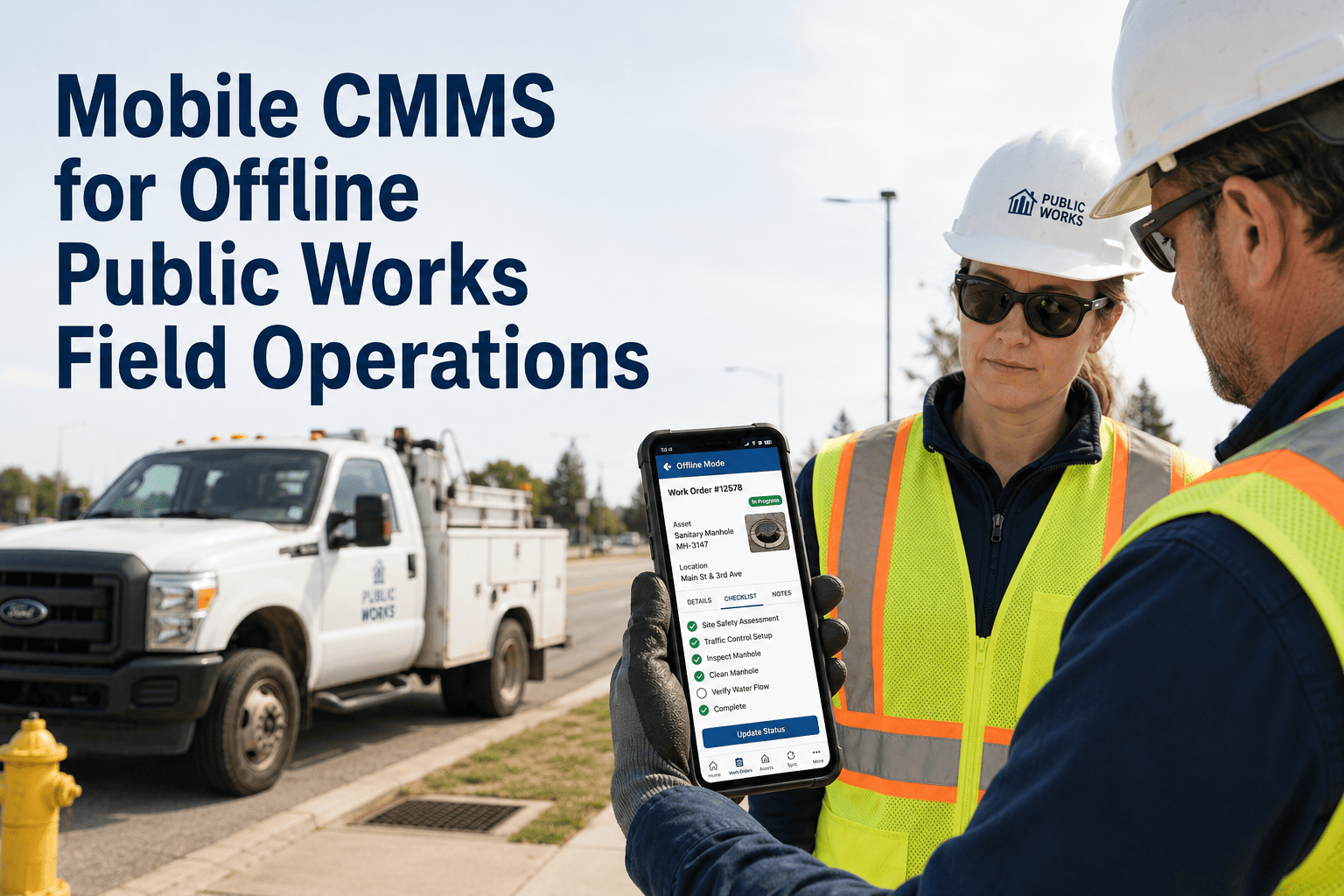
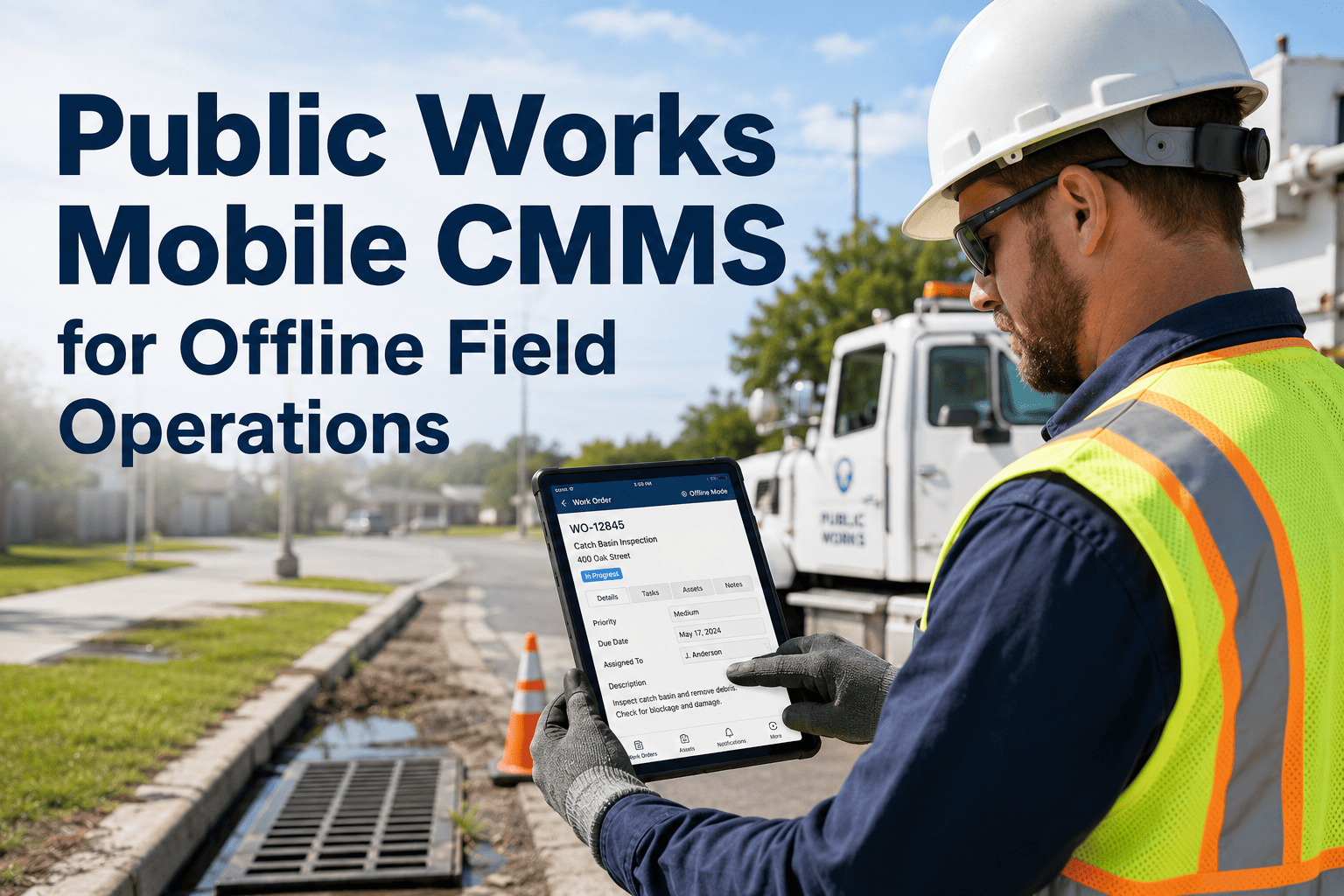
Yes. OxMaint's mobile app is offline-first — technicians can view, update, and close work orders, capture photos, and log parts usage without a connection. All data syncs automatically to the central platform the moment the device reconnects. This is critical for public works crews working in remote areas, underground, or inside concrete structures.
What is the ROI of a mobile CMMS for public works field crews?
A 20-person field crew recovering 1.8 hours per technician per day at a $55/hr loaded rate generates over $455,000 in annual reclaimed labor value. Most agencies achieve payback in under three months. Additional savings come from reduced overtime, fewer repeat repairs, extended asset life, and improved compliance documentation. Start your Start Free Trial to measure the baseline on your own operations.
Stop Losing Hours to Paper and Windshield Time
Join the public works agencies lifting field crew productivity to 55–65% wrench time with OxMaint.
Free 14-day trial · No credit card