Every spring, public works crews fill thousands of potholes, and many of those repairs fail within weeks. The cause is rarely effort. It is usually a mismatch between the repair method, the weather, the road and the materials on the truck. FHWA report FHWA-RD-99-168 compared common pothole repair procedures, and cities can use its lessons to choose methods deliberately. This guide shows how a municipal maintenance management system can record the method used on every repair and turn that record into better decisions.
Why Pothole Repairs Fail: Root Causes Crews See Every Year
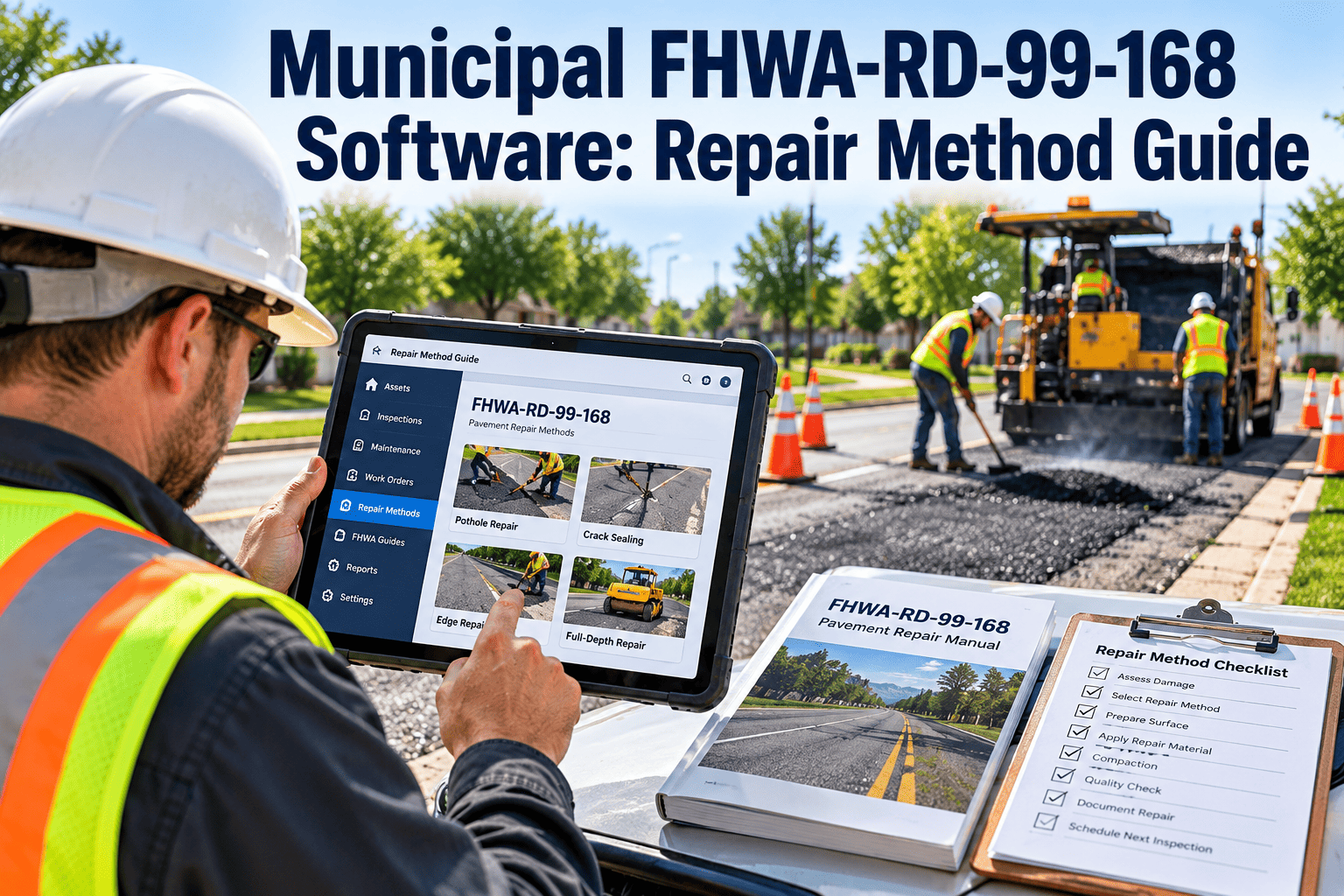
The FHWA study is widely cited because it tested several procedures in the field and compared how they performed over time. Published guidance generally favors methods that prepare edges and compact material, while accepting quicker methods when conditions are poor.
- Review the report itself when setting local standards, and confirm its details against your own climate and traffic.
- Treat the methods as a menu, not a single best answer.
- Measure your own results, because local materials and crews matter.
The Four Repair Methods Compared
Throw-and-roll
- Place patch mix directly into the hole
- Compact with the wheels of the truck
- Fastest and cheapest per pothole
- Best for winter and emergency response
Spray injection
- Blow out debris and water with air
- Spray binder, then inject aggregate and emulsion
- Cover with dry aggregate, with no compaction
- Efficient for crews with the equipment
Semi-permanent
- Square the edges and remove loose material
- Clean, tack the sides and fill with mix
- Compact with a roller or plate
- Good balance of cost and durability
Full-depth
- Saw-cut and remove failed pavement and base
- Repair or replace the underlying layers
- Place and compact new asphalt in lifts
- Used where the structure itself has failed
Record the Method on Every Pothole Work Order
Choosing a Method: A Decision Guide for Crew Leaders
| Condition | Throw-and-Roll | Spray Injection | Semi-Permanent | Full-Depth |
|---|---|---|---|---|
| Cold, wet winter weather | Often the practical choice | Works if the equipment is available | Harder in standing water | Usually deferred |
| Mild, dry spring weather | Use for temporary needs | Strong option | Strong option | Consider for failed areas |
| High-volume arterial road | Temporary only | Consider | Preferred over temporary fixes | For structural failures |
| Low-volume residential street | Acceptable short term | Efficient for many holes | Good value | Only for severe areas |
| Cluster of potholes with cracking | Short-lived | Limited | Individually repaired | Likely best fit |
Questions to ask before the crew starts
- Is the hole isolated, or part of a wider failing area?
- Is water present, and can it be removed?
- Is this a temporary stopgap or a repair expected to last through the season?
- Are hot mix, cold mix or emulsion materials available today?
- Can traffic control be set up safely for the time the method requires?
What Data to Capture on a Pothole Work Order
Street, nearest address or GPS point, estimated length, width and depth.
Which of the four methods, product used, quantity and source batch if known.
Air temperature, wet or dry surface and whether water was present in the hole.
Crew size, equipment, minutes on site and traffic control used.
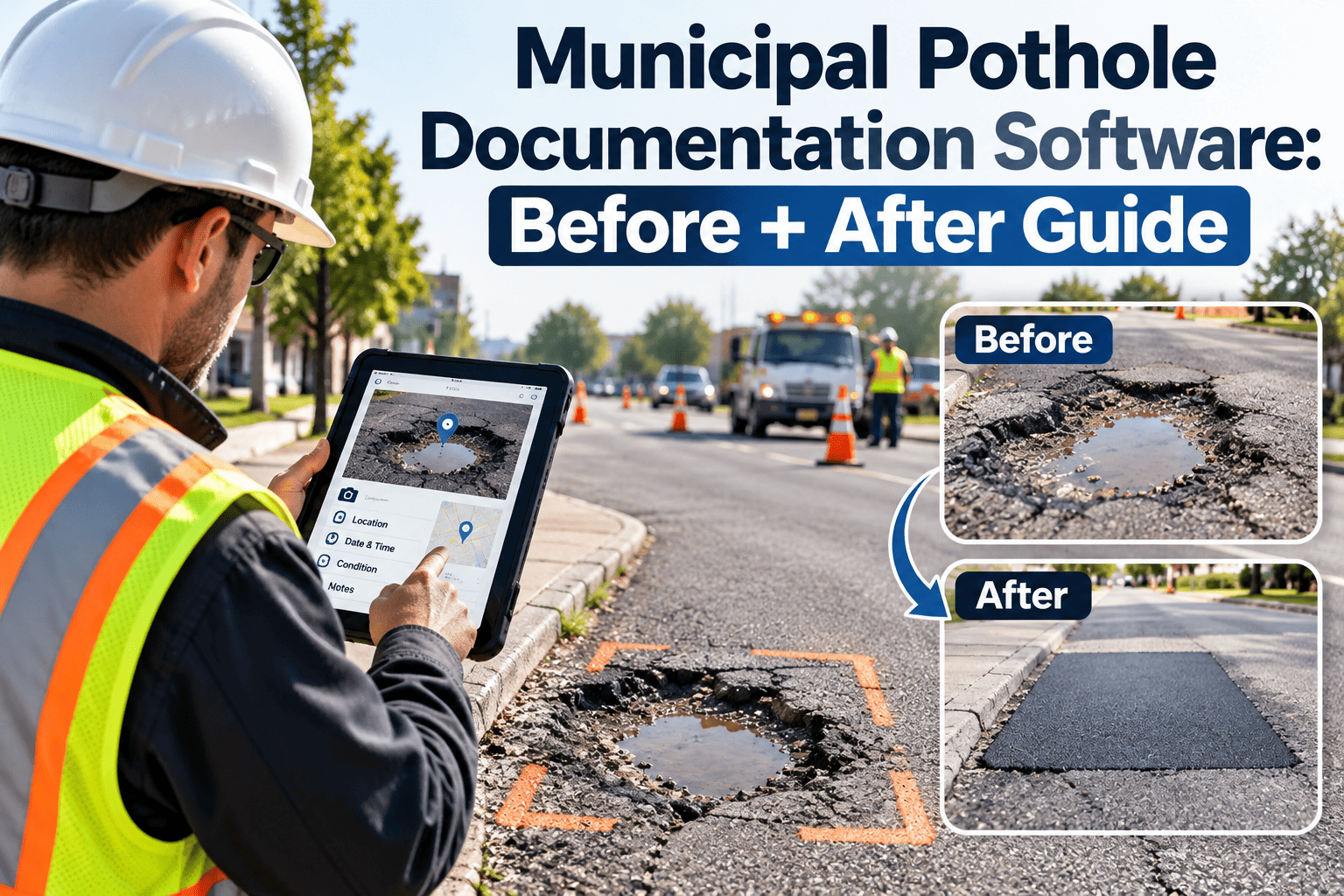
Before and after images, which also support citizen response and claims review.
Measuring Performance: Repeat Repairs Tell the Real Story
A cheap repair that fails twice is more expensive than a better repair done once. Tracking repeat visits to the same location by method shows which approach is truly cost-effective in your climate.
- Flag any location repaired more than once in a season for engineering review.
- Compare outcomes by crew and material batch to find process issues.
- Use results to adjust your decision guide each year.
Before and After: From Reactive Patching to a Managed Program
- Method chosen by habit or truck contents
- Complaints logged separately from repairs
- No view of repeat failures by location
- Budget requests rely on anecdotes
- Method selected using a clear decision guide
- Requests, work orders and costs in one record
- Repeat failures flagged automatically
- Budget requests supported by method and cost data
A Seasonal Pothole Program Calendar
Equipment and Materials Readiness
- Maintain spray injection trucks, compressors, heaters and rollers on a preventive maintenance schedule so they run when potholes peak.
- Track hot mix, cold mix and emulsion inventory with reorder points ahead of the season.
- Record equipment hours and breakdowns to plan replacements before the busy period.
- Store cold mix according to the supplier guidance to avoid hardened or contaminated material.
- Keep signs, cones and arrow boards in a checked state for every crew.
Safety and Traffic Control for Pothole Crews
- Use traffic control plans suited to the road class and speed, following local and national guidance.
- Choose methods with shorter exposure time where traffic risk is high, then plan a follow-up repair.
- Record near misses and incidents in the same system as work orders.
- Provide high-visibility apparel and attenuators where required by policy.
- Review job hazard checklists with crews before each shift.
How Oxmaint Fits the Municipal Pothole Workflow
Oxmaint is a CMMS built around work orders, asset records and reporting. For pothole programs, it gives crews and supervisors a shared record of what was done and where.
Starting Small: A 30-Day Rollout
- Define the four methods as work order types or required fields.
- Build a short mobile form with location, method, material and weather.
- Train one crew first and review their entries after the first week.
- Add before and after photos once the form is used consistently.
- Run a repeat repair report at thirty days and share it with supervisors.
Patch Materials: What to Record and Why It Matters
| Material | Typical Use | Handling Point | Record on the Work Order |
|---|---|---|---|
| Hot mix asphalt | Semi-permanent and full-depth repairs | Must be placed and compacted before it cools | Plant, load time, placement temperature if measured |
| Cold mix asphalt | Throw-and-roll and temporary winter repairs | Storage and product type affect workability | Product name, lot or bag count, storage location |
| Asphalt emulsion and aggregate | Spray injection repairs | Equipment settings and aggregate dryness matter | Emulsion type, aggregate source, quantity used |
| Tack coat | Bonding patch material to the hole sides | Apply evenly and allow it to set as directed | Product, application method and quantity |
Which Potholes First: A Simple Severity Guide
Common Mistakes in Pothole Programs
- Filling holes full of water or ice and expecting the patch to bond.
- Repeating temporary repairs on the same location instead of escalating to a permanent fix.
- Skipping edge preparation because the crew is behind on the route list.
- Letting cold mix sit in uncovered piles until it hardens or absorbs moisture.
- Recording only the number of potholes filled, not the method or the outcome.
- Running spray injection equipment without preventive maintenance until it fails in peak season.
Handling Citizen Requests and Claims
Residents report potholes by phone, app and email, and some submit damage claims. A single record from request to repair makes responses faster and more consistent.
Date, location and description logged against a request number.
Size and severity recorded, with photos if possible.
Priority set and the work order assigned to a route or crew.
Method, materials and completion time captured and photographed.
The resident can be updated, and the record supports any claim review.
Budget Conversations: Use Method Data, Not Anecdotes
- Show the number of repeat repairs by street and method, so councils can see where temporary fixes keep returning.
- Compare labor and material cost for each method alongside how long repairs lasted.
- Identify roads where full-depth repair or resurfacing would end the cycle of patching.
- Report response times by priority to demonstrate service levels.
- Use equipment downtime and repair costs to support replacement requests for aging trucks.
Who Owns Each Part of the Process
Dispatcher
Crew leader
Supervisor
Fleet mechanic
Cold-Weather Operations: Keeping Winter Repairs Under Control
Winter potholes are the hardest to fix well, yet they generate the most complaints. A clear cold-weather routine helps crews respond quickly without losing track of what needs a better repair later.
- Tag every winter temporary repair so it appears on a spring follow-up list.
- Record air temperature and surface conditions, since they explain many early failures.
- Pre-position cold mix and traffic control supplies at depots near problem corridors.
- Check heaters, hoses and compressors on patch trucks before each cold snap.
- Review route assignments after each freeze-thaw cycle, because new potholes appear in clusters.
Training Crews to Choose Methods Consistently
- Walk crews through the four methods and the decision guide using local photos.
- Agree on minimum steps for each method, such as clearing debris and compacting.
- Use the mobile form so the method choice is recorded before the work begins.
- Hold a short monthly review of repeat repairs and discuss what could have been done differently.
- Update the guide each season when results show a method performing better or worse than expected.
Reports Every Public Works Director Should Be Able to Pull
- Potholes repaired by month, method and crew, with average time on site.
- Repeat repairs within a set period, grouped by street segment and original method.
- Material usage and cost per method compared with the budget for the season.
- Open requests by age and priority, so overdue items are visible to supervisors.
- Patch truck and roller downtime, with repair cost and preventive maintenance compliance.
- Locations flagged for resurfacing or full-depth repair based on repeated patching.
- Crew productivity trends that separate real improvement from seasonal swings in pothole volume.
- Photo-backed records for any location that appears in a claim or council inquiry.
- A year-over-year view of total repairs, so changes in winter severity are not mistaken for program performance.