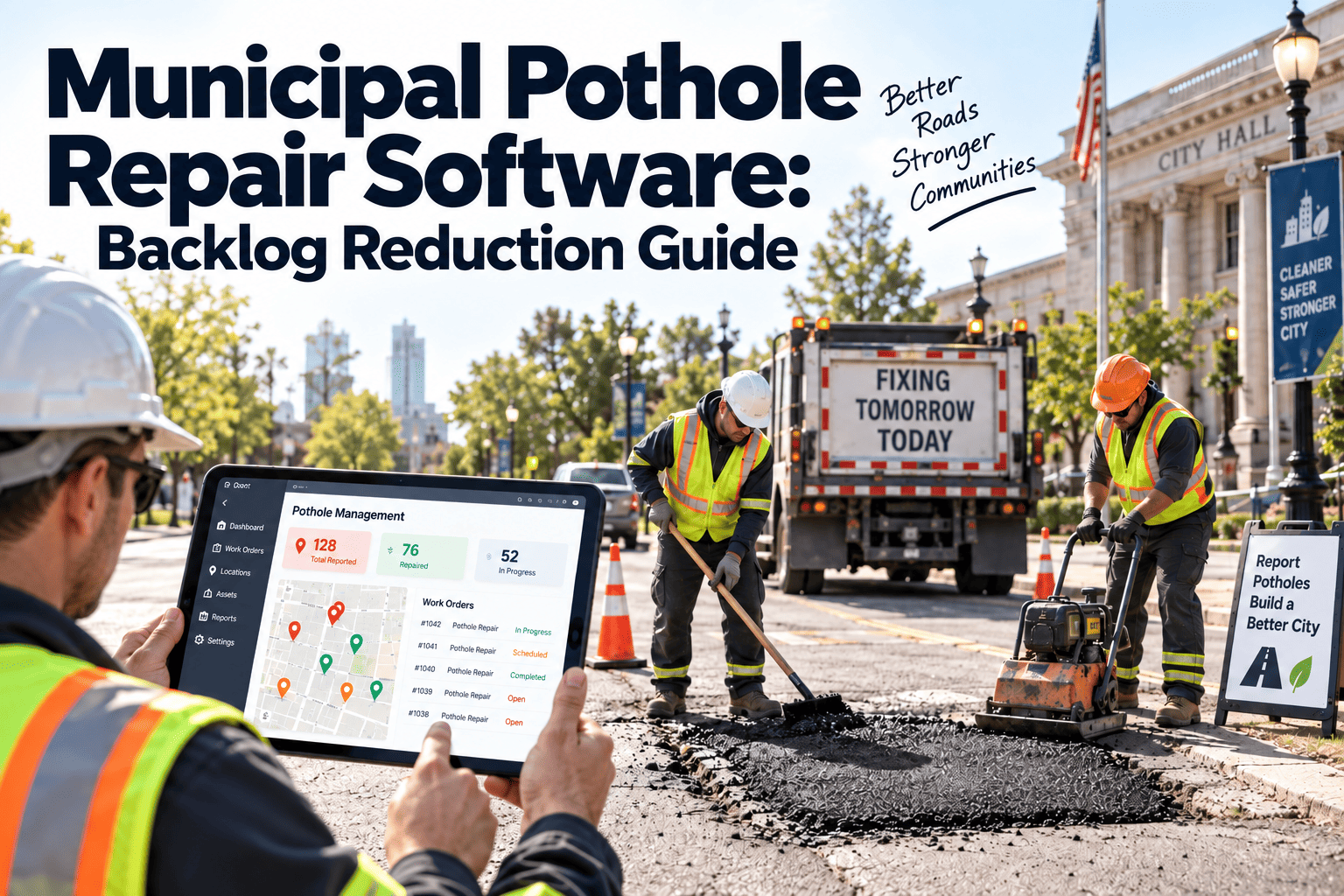
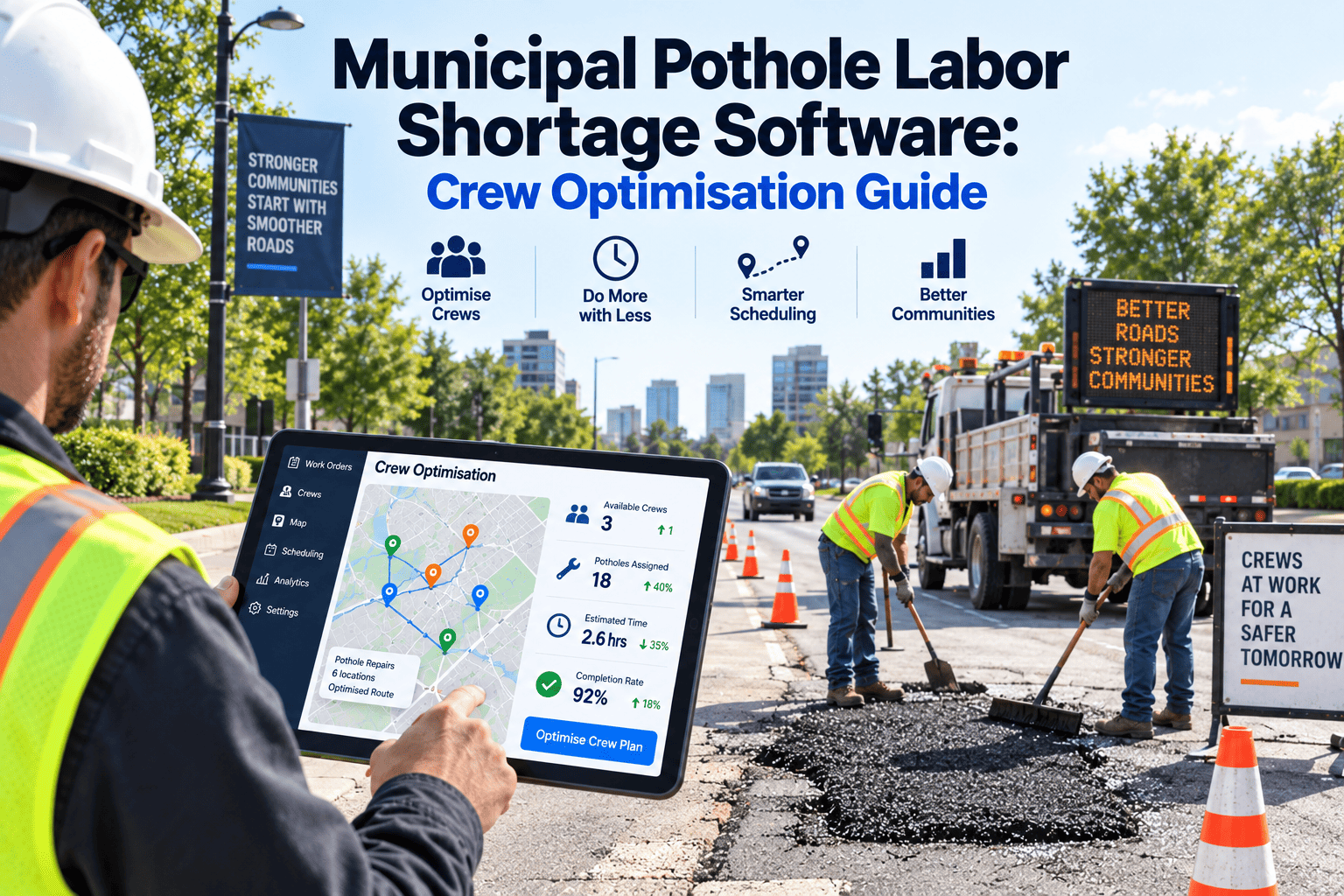
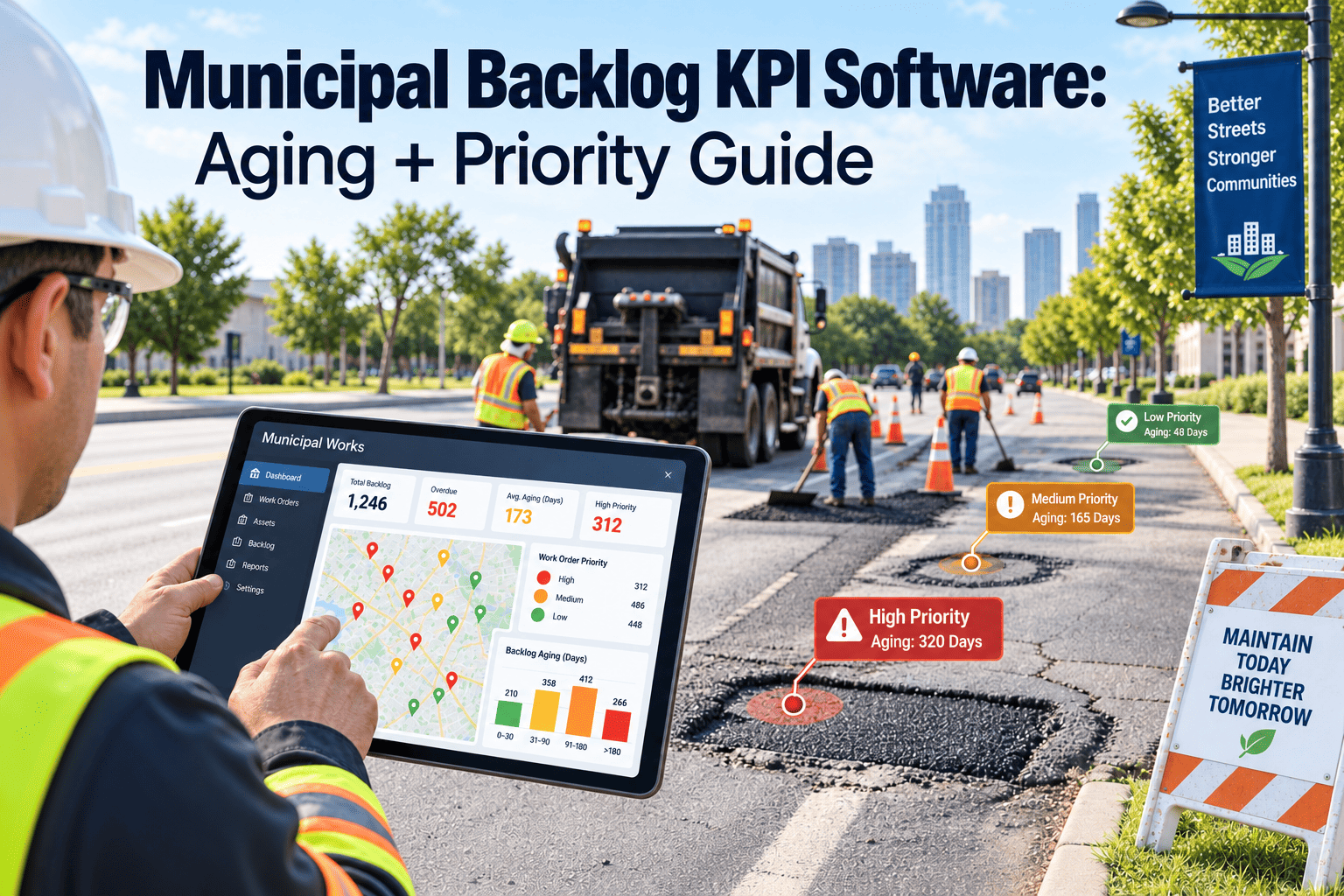
Every freeze-thaw cycle turns a hairline pavement crack into a pothole, and every spring, public works departments face the same predictable surge — hundreds of citizen reports arriving faster than crews can patch them, each one logged in a different system, some duplicated three times by different residents reporting the same hole. The gap between how fast potholes form and how fast a city can dispatch, patch, and verify them is a workflow problem before it is a paving problem, and it's one a properly configured municipal maintenance system is built to close.
Public Works · Street & Roadway Maintenance
Municipal Pothole Repair Software: A Backlog Reduction Playbook
How cities and counties move from a spring pothole surge that outpaces crews to a managed detection-to-verification workflow — cutting repair turnaround, reducing duplicate reports, and building the repair record that protects the city in a claims dispute.
3–5x
jump in pothole-related service requests typical during the first month after a hard freeze-thaw cycle
2–5
days a cold-patch repair holds before it needs revisiting, versus weeks for a hot-mix repair
30%+
of pothole service requests in many cities are duplicates of an already-logged location
24–48h
common target response window for high-traffic or high-risk pothole reports
Why Pothole Backlogs Grow Faster Than Crews Can Clear Them
Potholes form when water penetrates pavement cracks, freezes, expands, and fractures the surface as traffic loosens the weakened material — a cycle that repeats every time temperatures swing across freezing, which is exactly why the worst backlogs hit in late winter and early spring across the freeze-thaw belt. The maintenance challenge is rarely the repair itself; a trained crew can patch a standard pothole in under twenty minutes. The challenge is knowing where every pothole is, which ones are worse than others, and whether the last crew that visited actually fixed it.
The Backlog Compounding Effect
1A crack forms and goes unreported through a dry stretch of weather
2A freeze-thaw cycle widens it into a pothole within days
3Multiple residents report the same hole through different channels — phone, 311 app, email, council office
4Without deduplication, crews either waste a trip on a repeat visit or the report sits uncounted behind duplicates
The Real Cost of an Unmanaged Pothole Program
Pothole damage is one of the most common sources of municipal claims — vehicle damage, tire and wheel claims, and in some jurisdictions cyclist injury claims all hinge on whether the city can prove it knew about a hazard, when it was reported, and when it was fixed. A repair program with no timestamped record of report, dispatch, and completion leaves the city defending claims with memory instead of documentation.
Six Pain Points Every Public Works Director Recognizes
Duplicate reports flooding the queue
The same pothole logged by five different residents through five different channels, each treated as a new, unrelated request unless someone manually cross-checks location.
No severity triage
A hairline crack and a wheel-swallowing hole on a school bus route both land in the same undifferentiated queue, worked in report order instead of risk order.
Crews dispatched without route logic
Repairs assigned by whoever reported first rather than by geographic proximity, burning fuel and labor hours driving back and forth across the same district.
Cold-patch fixes with no follow-up trigger
Temporary cold-patch repairs applied in winter with no scheduled return visit once hot-mix asphalt plants reopen for the season, so "temporary" quietly becomes permanent.
No proof of repair for claims defense
A resident files a vehicle damage claim months later and the city has no timestamped record of when the hazard was reported or when it was closed out.
No portfolio view of street condition
Pothole density data never rolls up into a street-level condition picture, so resurfacing budgets get set without knowing which corridors are failing fastest.
A Detection-to-Verification Workflow That Actually Closes the Loop
Pothole Repair Workflow — Report to Verified Close-Out
1
Intake & Dedup
Reports from 311, mobile app, or staff patrol are geo-matched against open requests to merge duplicates automatically
2
Severity Triage
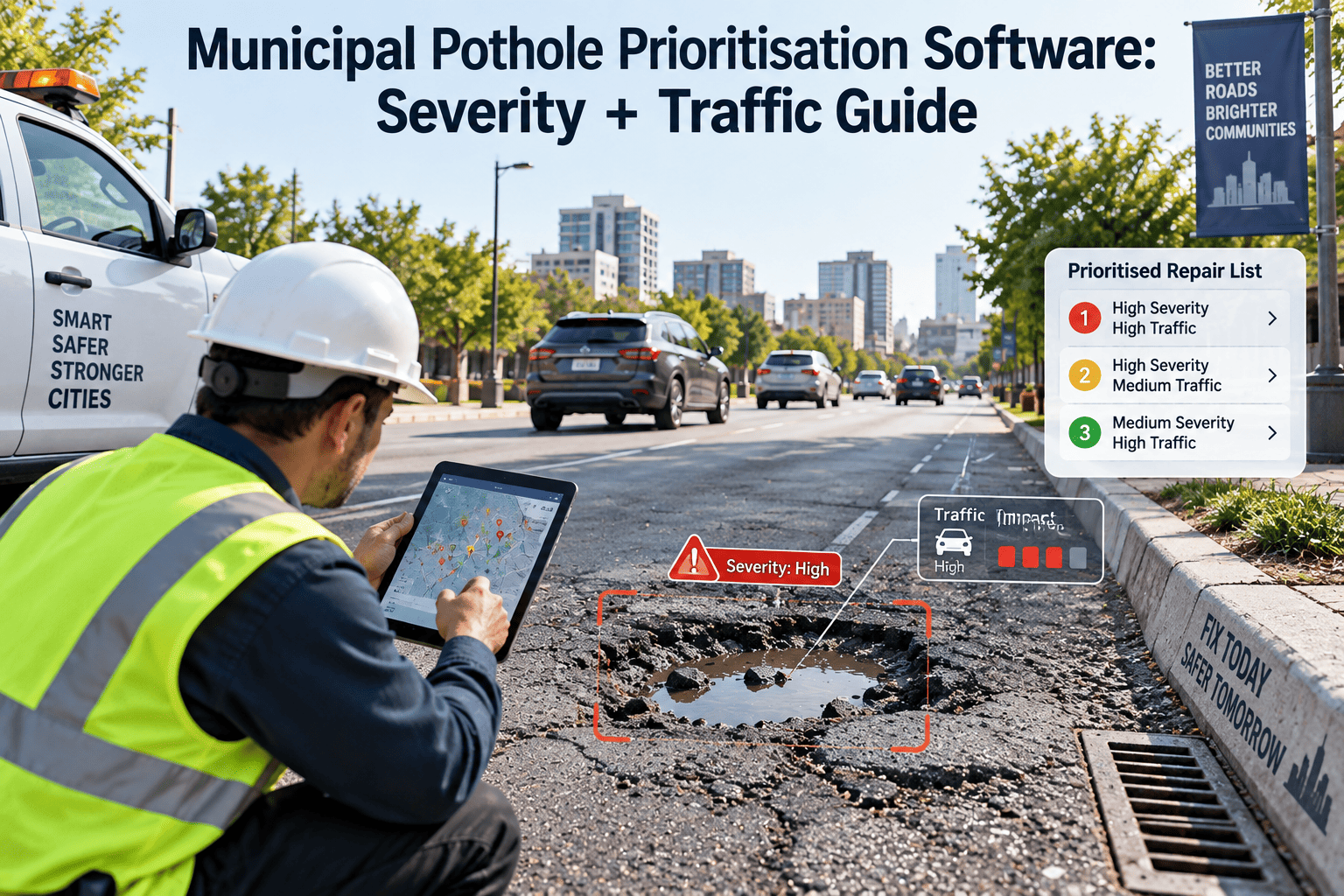
Location context — arterial road, school zone, transit route — combines with reported size to set repair priority
3
Route Dispatch
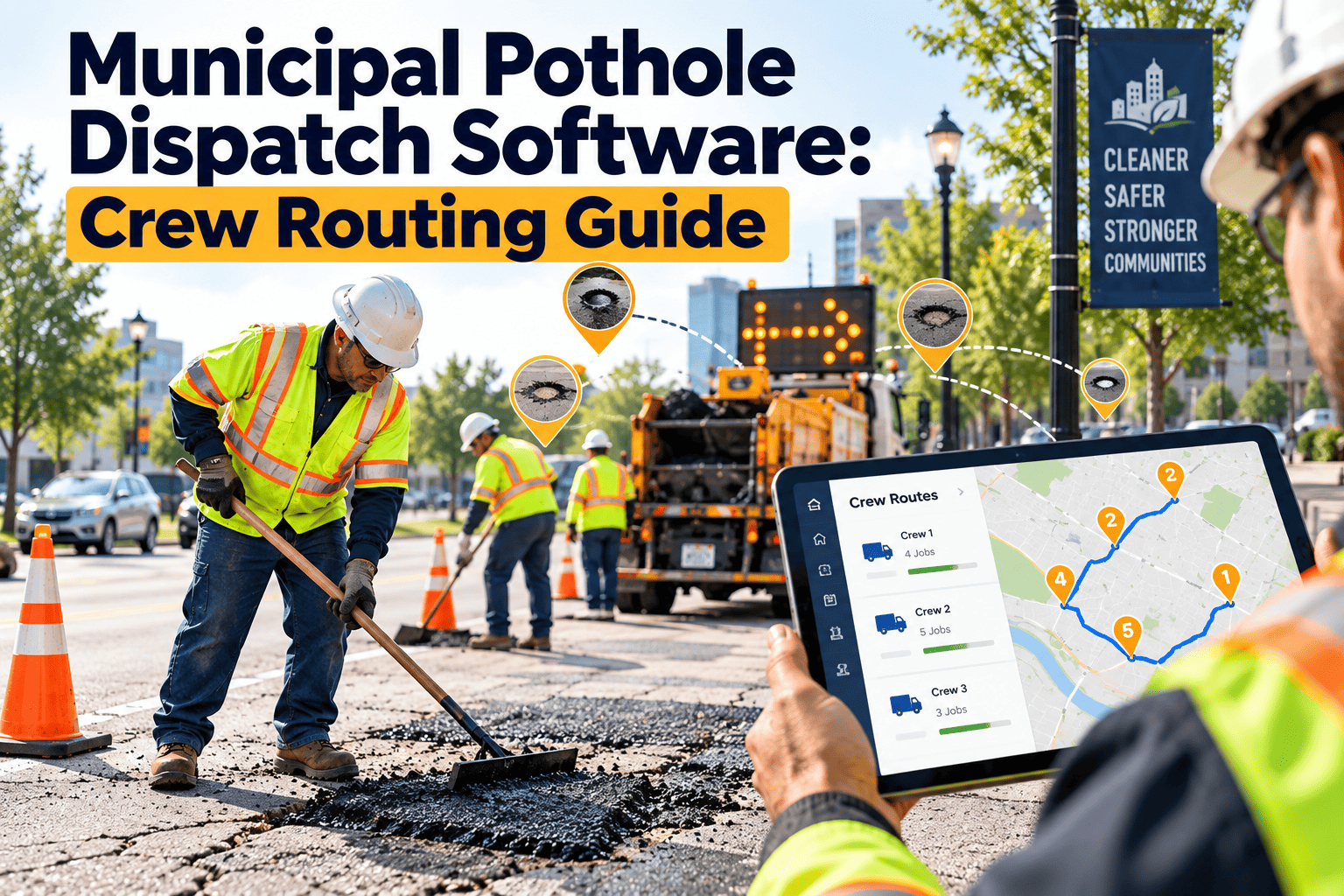
Open work orders are grouped by geography so crews clear a district in one pass instead of crisscrossing the city
4
Field Completion
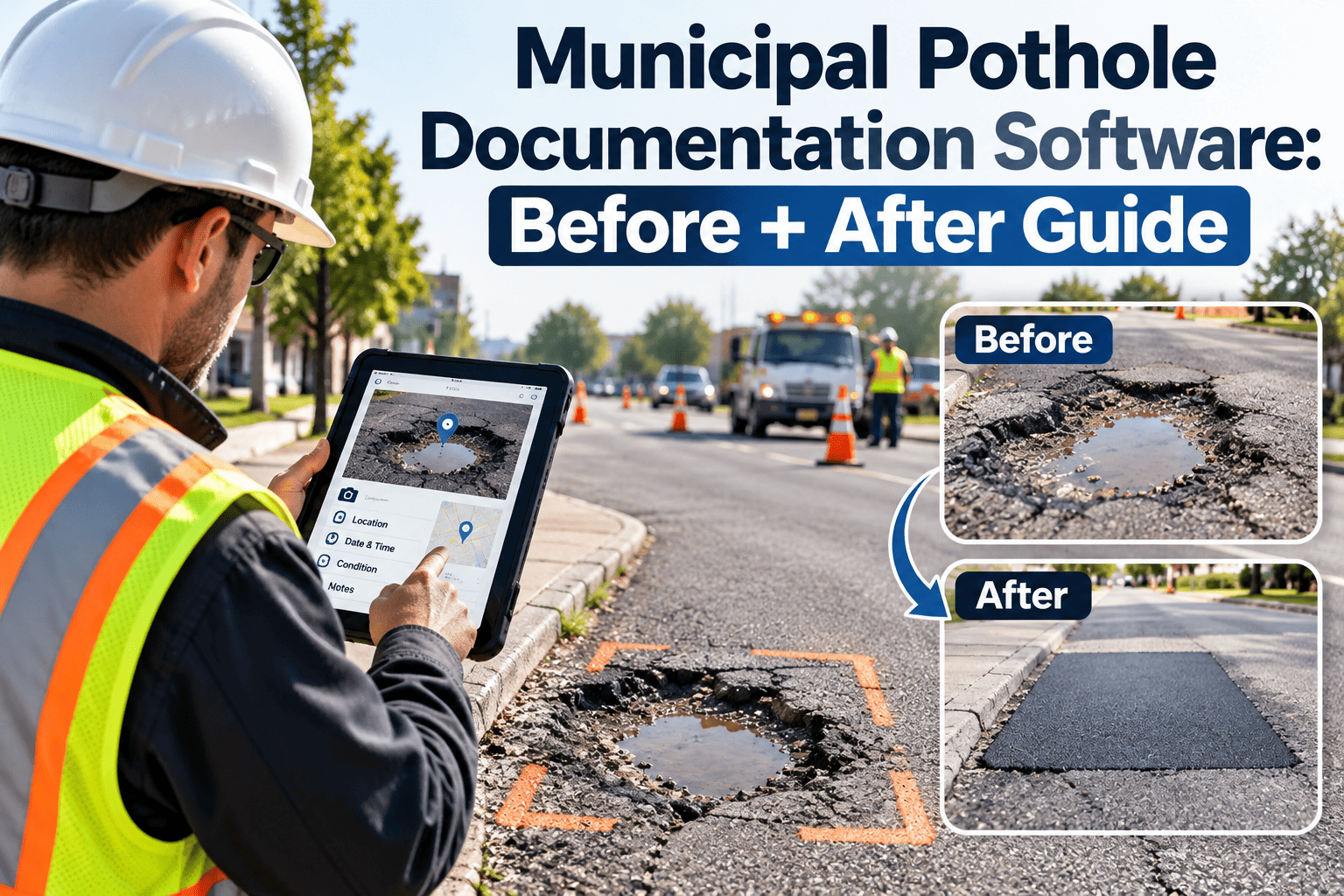
Crews log repair type — cold patch or hot mix — materials used, and before/after photos directly from the mobile app
5
Verified Close-Out
Cold-patch repairs auto-flag for a follow-up hot-mix visit; the reporting resident receives an automatic status update
Cold Patch vs. Hot Mix: Why the Workflow Has to Track the Difference
Cold-patch asphalt is the only material most crews can apply in freezing temperatures, and it is explicitly a temporary fix — typically holding for days to a few weeks under traffic before it needs replacing with a permanent hot-mix repair once plants are running. A repair program that logs "pothole patched" without distinguishing which material was used has no way to know which repairs are quietly failing and need to reappear on next month's route.
Manual Tracking vs. a Structured CMMS Workflow
See a pothole workload dashboard built from your city's actual street network.
Walk through intake, dedup, dispatch, and follow-up tracking in a live session.
Spring Surge Readiness Checklist
Duplicate detection is active before the first hard freeze-thaw cycle of the season, not added mid-surge
Priority routes — school zones, transit corridors, emergency response routes — are flagged for expedited triage
Crews are grouped into geographic zones with route-optimized daily work orders
Every cold-patch repair automatically generates a scheduled hot-mix follow-up visit
Before and after photos are required fields on every closed work order
Resident-facing status updates are automated so 311 call volume doesn't spike from status-check calls
Pothole density by street segment feeds into the annual resurfacing prioritization list
Turning Repair Data Into a Resurfacing Case
Individually, each pothole repair is a minor work order. Aggregated by street segment over a season, that same data becomes evidence — a corridor generating repeat patches every freeze-thaw cycle is telling the city its base pavement has failed and patching is no longer cost-effective. Public works directors who can show a council member a heat map of repeat-repair streets have a far stronger resurfacing budget case than one built on subjective judgment.
Building the Program Without Adding Headcount
None of this requires more crews — it requires the existing crews spending less time on duplicate trips, unrouted driving, and reconstructing repair history after the fact. Oxmaint's work order and mobile field tools are built to handle exactly this intake-to-verification cycle, so a spring surge becomes a managed queue instead of a scramble.
Frequently Asked Questions
How do cities reduce duplicate pothole reports without ignoring resident complaints?
Duplicate detection matches new reports against open work orders by location, so every resident still gets a confirmation, but crews only see one work order per hazard, not five.
Why does a cold-patch repair need a follow-up work order?
Cold patch is a temporary fix that typically fails under continued traffic within days to a few weeks, so without an automatic follow-up trigger the same pothole silently reopens and gets reported as new.
What documentation actually protects a city in a pothole damage claim?
A timestamped chain from initial report through dispatch to verified completion, ideally with photos, is what demonstrates the city responded within a reasonable window rather than leaving a known hazard unaddressed.
Can this workflow integrate with our existing 311 system?
Most municipal maintenance platforms accept reports from a 311 system or citizen app as an intake source and manage dispatch, routing, and close-out from there;
book a demo to review your specific setup.
How should we prioritize potholes when the backlog is already large?
Weight by road classification and traffic volume first — arterial roads, school zones, and transit routes ahead of low-traffic residential streets — rather than working strictly by report order.
Clear the Spring Surge Before It Buries Your Crews
Deduplicate reports, route by geography, and close the loop on every cold-patch repair — with a documented record for every hole your city fixes.