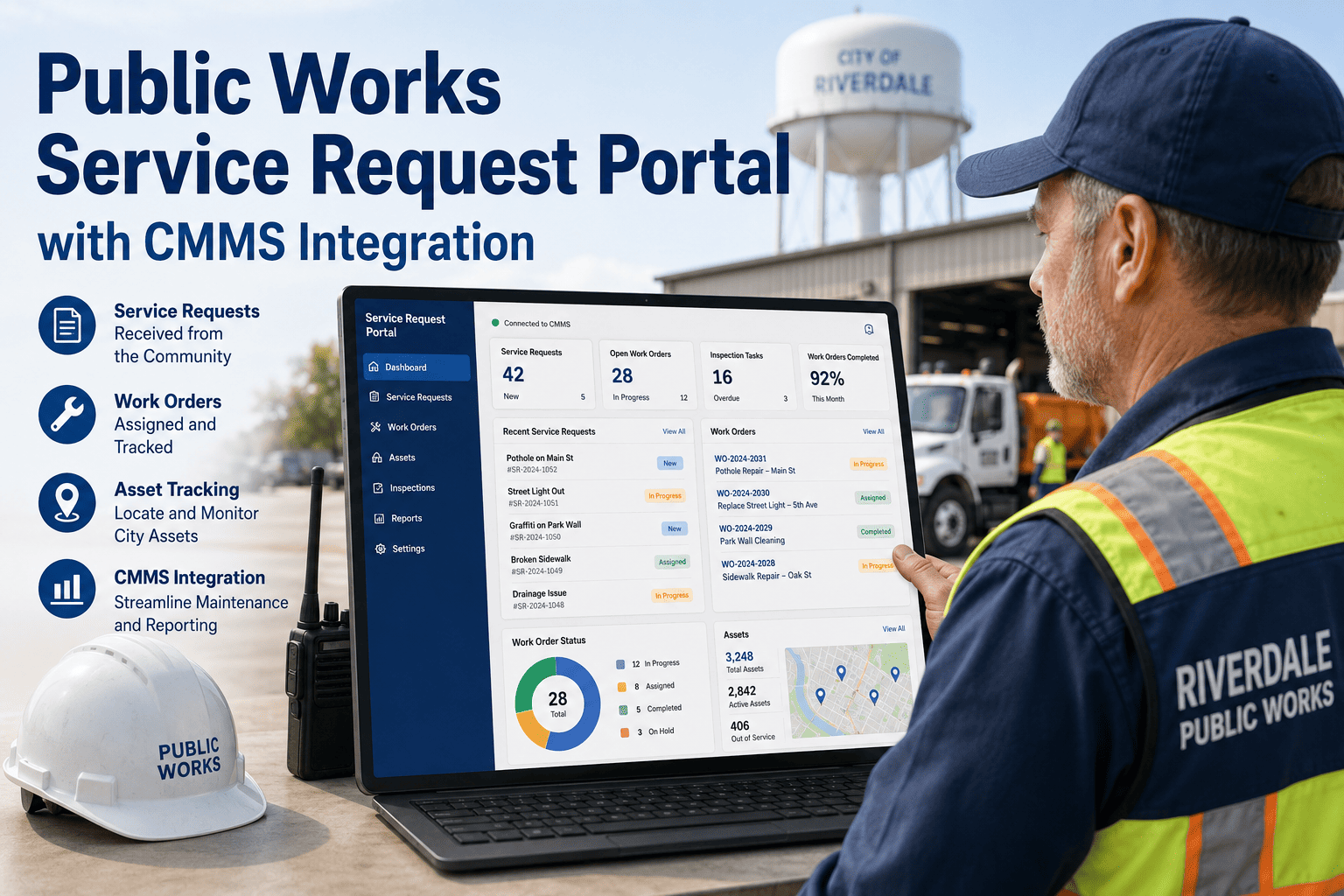
Municipal Maintenance Request Management: Digital Solutions
By Taylor on February 9, 2026
Last Tuesday at 7:14 AM, a resident called your public works department to report a pothole on Main Street. The receptionist scribbled the address on a sticky note, placed it in a supervisor's inbox, and moved on. By Thursday, the note had migrated under a stack of purchase orders. By the following Monday, the same resident called again—this time angry, posting photos on social media with the caption "Day 6, still waiting." Meanwhile, three other residents had independently reported the same pothole through email, voicemail, and a council member's office, generating four duplicate records that nobody connected. The repair finally happened on Day 11, costing the city not just the $340 patch job, but a $28,000 vehicle damage claim from a driver who hit the pothole on Day 8. This story repeats thousands of times annually across municipalities that lack digital maintenance request management—costing communities millions in delayed repairs, duplicate effort, liability exposure, and eroded public trust. Schedule a consultation to explore how digital request management transforms citizen service delivery.
Digital Solutions for Municipal Operations
Municipal Maintenance Request Management
Citizen portals, mobile apps, automated routing, and real-time status tracking that improve response times, transparency, and accountability across every department
phone calls, emails, walk-ins, and social media reports
11 daysAvg. response without digital system
2.3 daysAvg. response with digital management
78%Citizen satisfaction improvement
$4.7MAnnual liability savings from faster response
60%Reduction in duplicate requests
100%Request traceability & audit trail
24/7Citizen submission access
Why Traditional Request Systems Fail Municipalities
Phone-based and paper-based maintenance request systems weren't designed for the volume, speed, and accountability that modern citizens expect. When a resident reports a streetlight outage through a phone call that becomes a sticky note that becomes a work order three days later, every step introduces delay, data loss, and zero visibility. Citizens can track a pizza delivery in real time but can't find out if anyone even received their pothole report. The result is a trust deficit that no amount of public relations can repair. Start Free Trial.
The Hidden Costs of Manual Request Management
01
Lost & Duplicate Requests
35%
of citizen reports are duplicates that waste dispatcher time, while 12% are lost entirely between intake and assignment
02
Invisible Status
Zero
visibility for citizens or council members—generating repeat calls, social media complaints, and political pressure on staff
03
Misrouted Work Orders
28%
of requests routed to the wrong department initially, adding 3-5 days of delay before the correct crew even sees the issue
04
Liability Exposure
$4.7M
average annual claims cost for mid-size cities from delayed hazard repairs—potholes, broken sidewalks, fallen tree limbs
05
No Performance Data
N/A
impossible to measure response times, department workload, seasonal trends, or SLA compliance without a digital trail
06
Staff Burnout
40%
of dispatcher time spent answering "what's the status?" calls rather than processing new requests or coordinating crews
The Digital Request Lifecycle: From Report to Resolution
A modern municipal maintenance request system transforms the citizen-to-resolution journey into a seamless, trackable, and accountable workflow. Every request—whether submitted through a mobile app, citizen portal, phone call, email, or social media—enters a single digital pipeline where it's categorized, prioritized, routed, tracked, and documented automatically. No sticky notes. No lost voicemails. No "we never received that report."
Request-to-Resolution Digital Workflow
Every phase tracked, timed, and transparent
1
Citizen Submits Request
Mobile AppWeb PortalPhone/311Email
Photo upload, GPS location auto-capture, category selection, severity self-assessment. Confirmation with tracking number sent instantly.
2
AI Triage & Auto-Routing
CategorizationDeduplicationPriority Scoring
System auto-classifies request type (pothole, streetlight, sewer, tree, etc.), merges duplicates, assigns priority, and routes to the correct department in under 60 seconds.
3
Work Order & Crew Dispatch
CMMS IntegrationGPS Dispatch
Request converts to a work order with asset linkage, location pin, photos, and history. Nearest available crew receives mobile assignment with optimized routing.
4
Field Execution & Documentation
Mobile CompletionPhoto Verification
Crew completes repair with GPS-stamped before/after photos, materials used, labor hours, and condition assessment. All data syncs to CMMS in real time.
5
Citizen Notification & Feedback
Auto-NotificationSatisfaction Survey
Citizen receives automatic completion notification with before/after photos. Satisfaction survey link closes the feedback loop. Complete audit trail preserved.
See the Digital Request Lifecycle in Action
Watch how Oxmaint transforms citizen reports into tracked, routed, and resolved work orders with complete transparency—from mobile app submission to before/after photo documentation.
Modern residents expect multiple ways to report issues—and they expect every channel to deliver the same speed, tracking, and accountability. A digital request management platform unifies all intake channels into a single queue so that a mobile app submission, a 311 phone call, and an email all generate identical, trackable, routable work orders. No channel gets preferential treatment and no report falls through the cracks.
Map-based reporting, account tracking, history view, council district overlay
Phone / 311 Center
22% of submissions
Dispatcher enters into same system, auto-categorize, instant tracking number, callback scheduling
Email & Social Media
8% of submissions
Auto-parsed into request queue, keyword classification, auto-response with tracking link
All channels feed into a single unified queue—eliminating duplicates, ensuring equal treatment, and creating one complete audit trail regardless of how the citizen reported the issue.
Automated Routing & SLA Performance
The moment a request enters the system, intelligent routing engines classify it by type, assign priority based on safety impact and regulatory exposure, and dispatch it to the correct department—all without human intervention. Service Level Agreements define maximum response and resolution times for every request category, and the system escalates automatically when deadlines approach.
SLA Performance by Request Category
Automated tracking ensures every request meets its resolution target
Emergency Hazards
97%
Target: 4-hour response
Downed wires, sinkhole, water main break, signal failure
Safety / High Priority
93%
Target: 24-hour response
Deep pothole, broken sidewalk, missing sign, blocked drain
Standard Service
90%
Target: 5-day resolution
Streetlight out, graffiti, overgrown ROW, park bench repair
Scheduled / Cosmetic
87%
Target: 15-day resolution
Landscaping, painting, minor cosmetic, seasonal requests
Before & After: The Transformation in Numbers
The contrast between manual request management and a digital system isn't incremental—it's transformational. Every metric that matters to citizens, council members, and operations directors improves dramatically when requests are digitized, automated, and tracked end-to-end.
Manual Systems vs. Digital Request Management
Average Response Time
11 days
→
2.3 days
Request Tracking Capability
None
→
Real-Time
Duplicate Request Rate
35%
→
4%
Citizen Satisfaction Score
34%
→
89%
Lost / Unresolved Requests
12%
→
0.3%
Annual Liability Claims
$4.7M
→
$1.1M
Council Inquiry Response
2-3 days
→
Instant
Transform Your Request Management Today
Join municipalities using Oxmaint to digitize citizen requests, automate routing, track SLA compliance, and deliver the transparency that builds community trust.
Intelligent request routing eliminates the most frustrating bottleneck in municipal service delivery—the misrouted work order. When a sewer backup report lands on the Parks department desk, everyone loses: the citizen waits longer, the wrong department wastes time, and the right department doesn't know the problem exists. Auto-routing by request category ensures first-touch accuracy.
The single most powerful feature of digital request management isn't the routing engine or the mobile app—it's the transparency. When a citizen can see that their pothole report was received at 7:14 AM, assigned to a crew at 8:02 AM, and scheduled for repair tomorrow—that visibility eliminates 80% of the angry callback calls, social media complaints, and council inquiries that consume staff time. We went from fielding 200+ status inquiry calls per week to fewer than 30. Our dispatchers now spend their time dispatching, not defending. And council members can look up any request instantly instead of calling the director's office. That transparency is what rebuilt public trust in our department.
— Director of Public Works, City of 85,000 residents
85%
Reduction in status inquiry calls
3.2x
Faster council inquiry resolution
92%
Citizen satisfaction with transparency
$680K
Saved in staff time annually
The municipalities succeeding with digital request management share common characteristics: leadership that views citizen service as a core competency, technology that connects every intake channel to a single trackable workflow, and a culture where transparency and accountability are embraced rather than feared. If you're ready to explore what this looks like for your community, our team can help design the solution. Schedule a consultation to build your digital request management program.
Give Your Citizens the Service They Deserve
Oxmaint transforms municipal maintenance requests from lost sticky notes into tracked, routed, and resolved work orders with real-time citizen visibility, automated SLA management, and complete audit documentation.
How do citizens track the status of their maintenance requests?
Every citizen who submits a request—through any channel—receives a unique tracking number and a link to a real-time status page. The status page shows the current phase (received, assigned, in progress, completed), the assigned department, estimated resolution date, and any updates from field crews. Push notifications via the mobile app and email alerts notify citizens automatically when their request changes status—from assignment through completion. Citizens can also add comments, upload additional photos, and rate their satisfaction when the request is resolved. For phone-submitted requests, dispatchers provide the tracking number verbally and can send a text message link to the status page.
Can the system handle the volume of requests during emergencies or storm events?
Yes. Modern platforms are cloud-based and auto-scale to handle surge volumes—municipalities report 10-15x normal request volume during major storm events without system degradation. During emergencies, the system supports batch triage mode where dispatchers can rapidly categorize and prioritize hundreds of requests using map-based views. Emergency-specific request categories (downed trees, flooding, power outage) can be activated on demand, and automated public updates keep citizens informed without individual responses. Geographic clustering identifies the hardest-hit areas for crew deployment prioritization.
How does automated routing handle requests that span multiple departments?
Multi-department requests are assigned a primary owner and secondary supporting departments. For example, a report of a tree root lifting a sidewalk routes to Forestry as primary (root removal) with Engineering as secondary (sidewalk repair). The system creates linked work orders for each department with shared visibility—both departments see each other's status and timeline. Escalation rules ensure the secondary department's work order activates automatically when the primary task is completed, preventing handoff delays.
What reporting capabilities are available for council members and city managers?
The platform provides real-time dashboards and scheduled reports at multiple levels: by department, by ward/district, by request category, by time period, and by SLA performance. Council members can access a district-specific view showing all open and completed requests in their ward with average response times, top issue categories, and citizen satisfaction scores. City managers see cross-department scorecards comparing SLA performance, workload distribution, seasonal trends, and year-over-year improvement. All reports are exportable for council presentations, and automated weekly summaries can be emailed to leadership on any schedule.
How does this integrate with our existing CMMS, GIS, and 311 systems?
Oxmaint provides bidirectional API integration with major municipal platforms—CMMS (Cityworks, Lucity, Cartegraph), GIS (Esri ArcGIS), 311 systems (SeeClickFix, PublicStuff), and ERP/financial systems. Citizen requests automatically generate work orders in the CMMS with asset linkage from the GIS. Completion data flows back to the citizen-facing status portal. For municipalities using standalone 311 platforms, Oxmaint can function as the work order and field execution layer that connects citizen intake to crew dispatch, completion, and documentation—bridging the gap that most 311 systems don't cover.