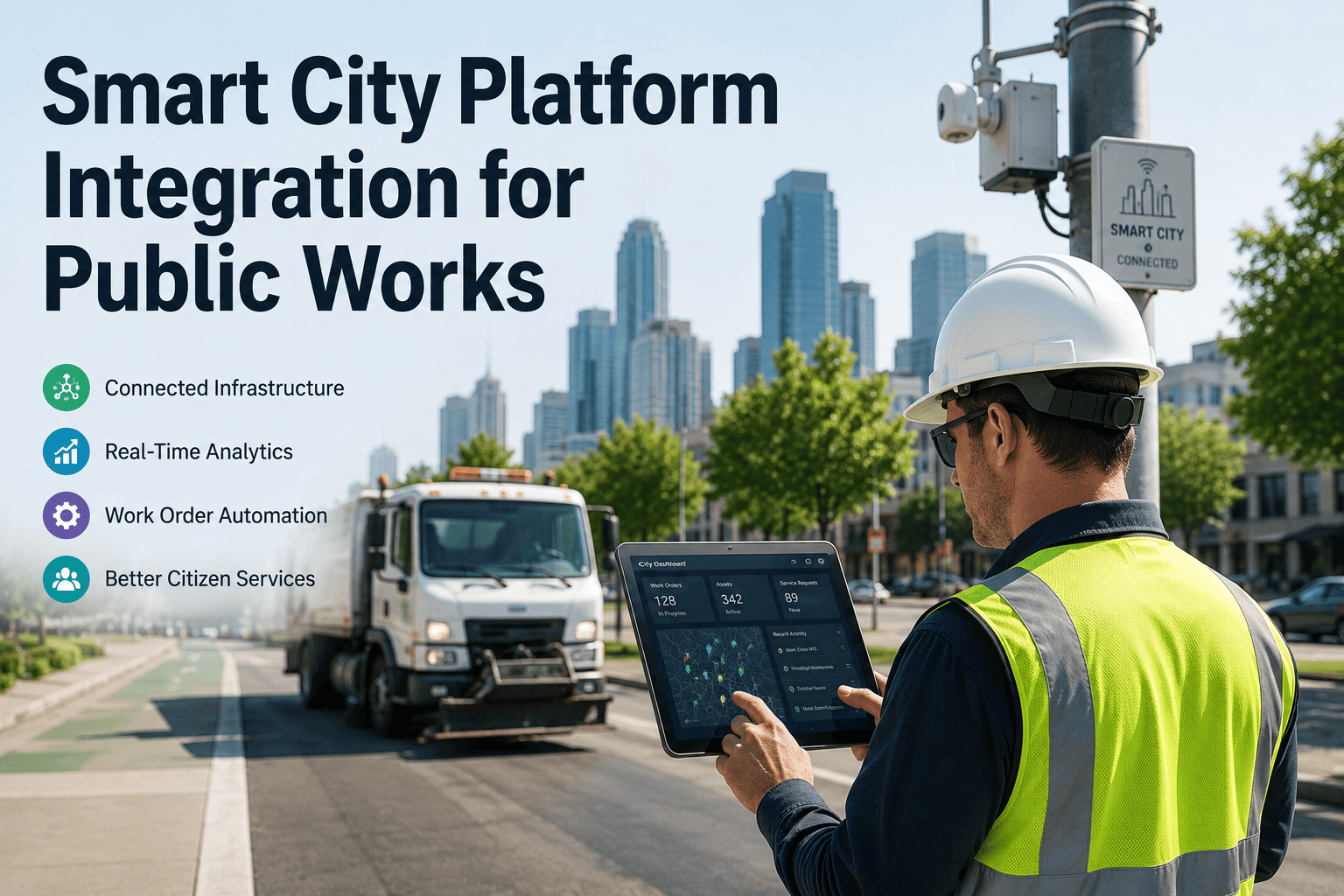
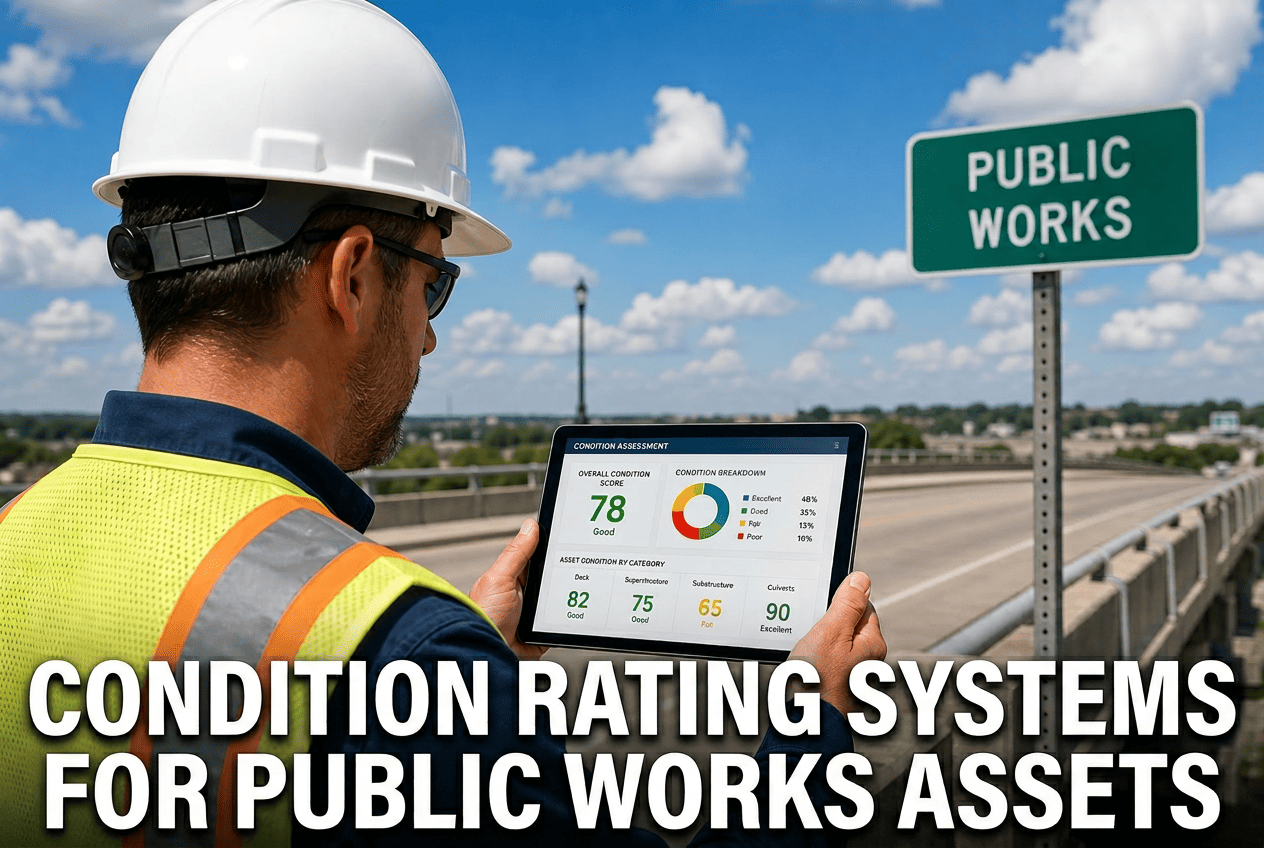
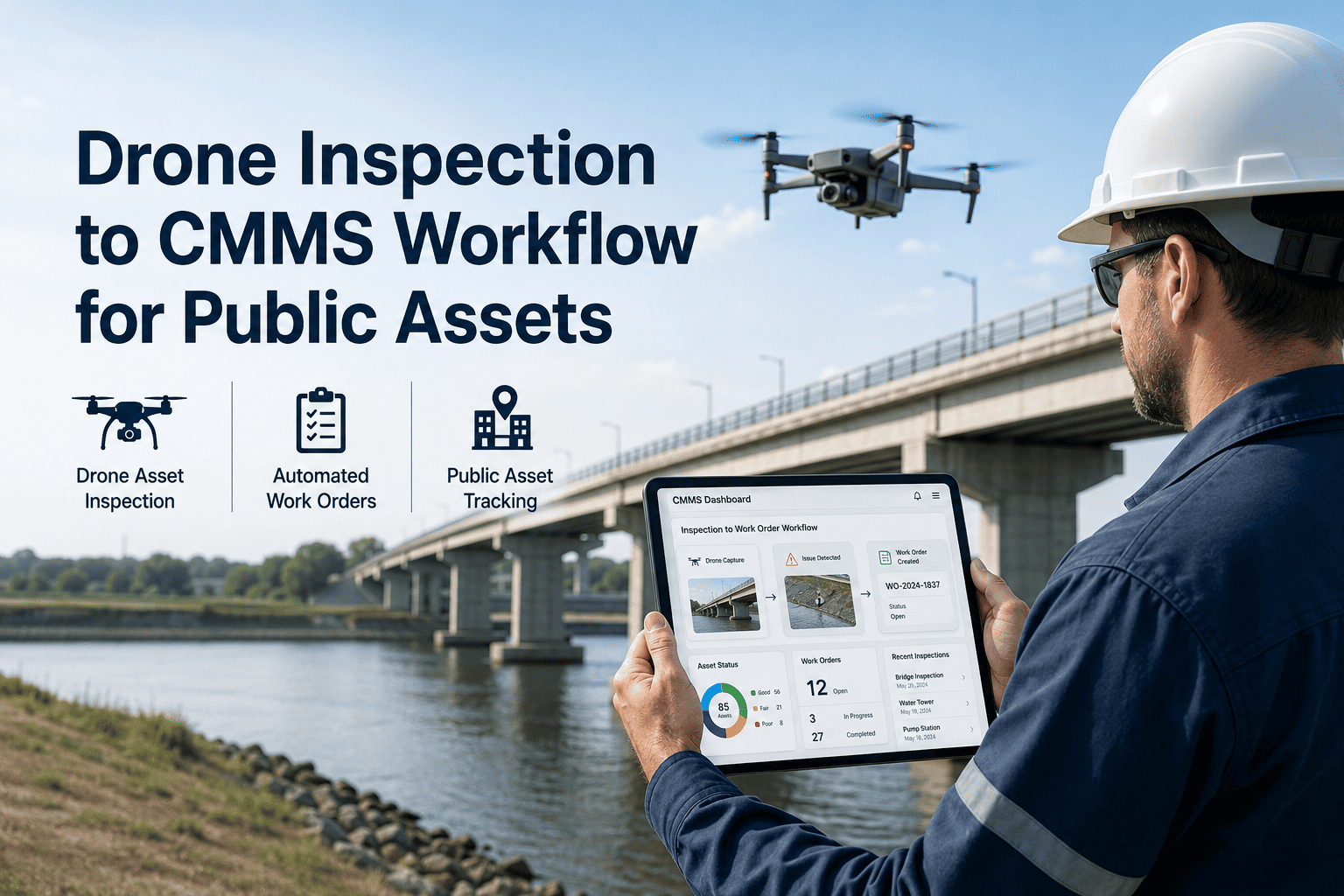
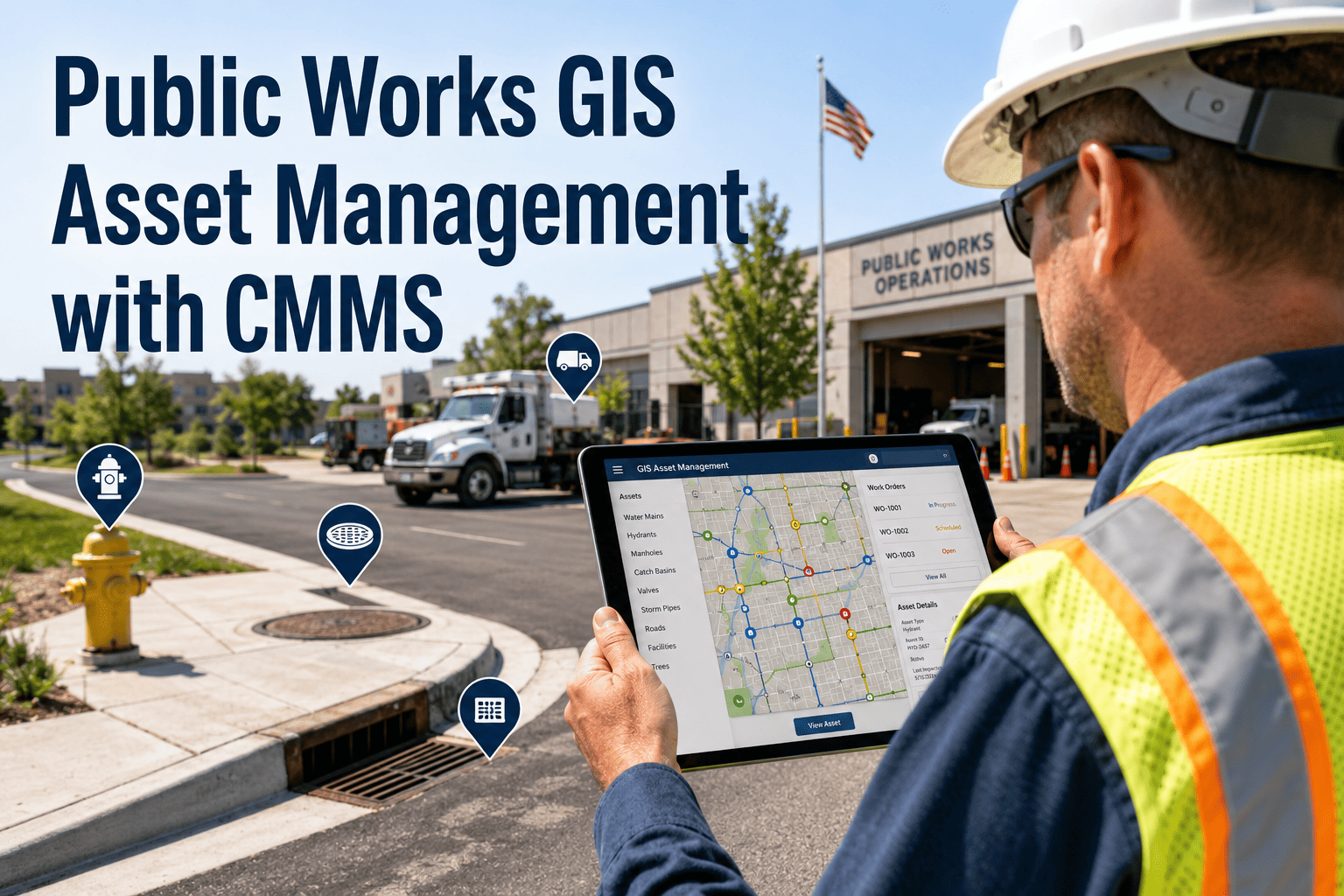
When a mid-sized American city's water main ruptured at 2:47 AM on a Tuesday, the cascade of failures that followed exposed every weakness in its disconnected infrastructure management. The SCADA system monitoring water pressure had flagged anomalous readings 11 days earlier, but the alert sat in a silo that nobody in the public works department checked. A street sweeping robot had driven over the buckling pavement above the weakening main three times that week—its onboard accelerometer data showing pavement deflection that deviated from baseline—but that telemetry was locked in the robotics vendor's cloud dashboard. Traffic signal controllers at the intersection above the main had logged intermittent ground-fault errors for a month—moisture infiltrating conduit from the leaking pipe—but those alerts went to the electrical department, not water utilities. The data to predict this failure existed across four separate systems in three city departments. Nobody connected it. The rupture flooded a commercial district, closed an arterial road for nine days, and cost the city $4.1 million in emergency repairs, business interruption claims, and accelerated pavement restoration. This is not a hypothetical—it is the predictable consequence of operating a 21st-century smart city with 20th-century maintenance silos.
A Smart City IoT Robot Integration platform unifies robot fleet telemetry, fixed infrastructure IoT sensors, SCADA system alerts, and AI analytics into a single maintenance intelligence layer that detects cross-system failure patterns before they cascade into emergencies. Instead of each department managing its own sensors and robots in isolation, the platform correlates data across water, transportation, parks, and public safety to identify the compound signals that predict infrastructure failures. Oxmaint CMMS sits at the centre of this architecture, aggregating IoT telemetry from every connected municipal asset, auto-generating prioritised work orders, and delivering cross-department analytics that turn raw sensor data into coordinated maintenance action. Talk to our team about building the connected maintenance layer your smart city infrastructure demands.
Reduction in emergency infrastructure repairs
Faster cross-department failure correlation
Average annual savings for connected municipalities
Why Connected Maintenance Is a Municipal Imperative
Modern cities are deploying IoT sensors and robotic systems at unprecedented scale—traffic signal controllers, water pressure monitors, air quality sensors, structural health monitors on bridges, autonomous street sweepers, robotic mowers in parks, drone inspection fleets, and SCADA-connected pump stations. Each system generates valuable maintenance telemetry. But when that data stays locked in departmental silos, the city loses the compound intelligence that only cross-system correlation can deliver. A vibration anomaly on a water main, pavement deflection data from a robot, and electrical faults at a nearby traffic signal are meaningless in isolation—but together, they predict a pipe rupture weeks before it happens. The CMMS is the only platform positioned to aggregate these signals across departments and convert them into coordinated preventive action.
Oxmaint CMMS HubAggregate · Correlate · Dispatch
Robot Fleet Telemetry
Sweepers, Mowers, Inspectors, Litter Bots
Traffic & Signal IoT
Controllers, Cameras, Loop Detectors
Water & Sewer SCADA
Pressure, Flow, Pump Status, Level
Structural Health Monitors
Bridges, Tunnels, Retaining Walls
Environmental Sensors
Air Quality, Noise, Weather Stations
Drone Inspection Data
Visual AI, Thermal, LiDAR, Multispectral
The platform architecture connects six data domains—robot fleet telemetry from autonomous sweepers, mowers, and inspection units; traffic and signal IoT from controllers and cameras; water and sewer SCADA from pump stations and pressure monitors; structural health sensors on bridges and tunnels; environmental monitoring stations; and drone inspection imagery—into Oxmaint's unified AI correlation engine. This engine identifies compound failure patterns across departments, predicts cascading infrastructure risks, and auto-generates cross-department work orders that arrive with full context. Book a demo to see the platform in action.
Integration Maturity: From Siloed to Unified
Most municipalities operate with completely disconnected maintenance systems across departments. The integration maturity matrix below helps city managers assess their current state and chart a path toward the unified smart city maintenance intelligence that prevents cascading infrastructure failures.
HIGHCross-Dept IntegrationLOW
UNIFIED (AI-CORRELATED)
Cross-system failure pattern detectionAI-driven predictive work ordersSingle CMMS for all departmentsDigital twin city model
Cascading failures prevented before symptoms
CONNECTED (DATA-SHARED)
Shared data lake across departmentsCross-department alert routingRobot + fixed sensor integrationCentralised dashboards
Data visible but correlation still manual
DEPARTMENTAL (SILOED IoT)
Dept-specific sensor systemsSeparate CMMS per departmentRobot data in vendor cloudsNo cross-department visibility
Each department optimises independently
MANUAL (NO IoT)
Paper-based work ordersScheduled inspections onlyNo sensor telemetryReactive emergency response
Failures discovered by citizen complaints
LOWAutomation & AI LevelHIGH
Implementation Roadmap: From Pilot to City-Wide
Deploying a unified smart city maintenance platform is not a single procurement—it is a phased integration programme. Municipalities that succeed start with two or three high-value departments, prove cross-system correlation value, and then expand to the full municipal asset portfolio. The following roadmap reflects best practices from successful smart city CMMS implementations.
Months 1-2
Cross-department asset inventory
IoT sensor & robot fleet audit
Data silo mapping & API assessment
Discovery Phase
Months 3-5
CMMS platform configuration
SCADA & IoT API integration
Robot telemetry feed connection
Integration Setup
Months 6-9
2-3 department pilot operations
Cross-system correlation testing
Automated work order validation
Staff training & adoption
Pilot Execution
Months 10-14
ROI documentation & council report
Expand to all municipal departments
AI predictive model deployment
Citizen-facing service dashboards
Scale Phase
Year 2+
City-wide digital twin integration
Capital planning optimisation
Continuous AI model refinement
Regional smart city collaboration
Optimisation
Start With Two Departments, Scale to the Entire City
Oxmaint helps municipalities deploy connected maintenance in phases—starting with your highest-value cross-department integration and expanding as AI correlation proves its value. See how our platform unifies robots, sensors, and SCADA into coordinated maintenance intelligence.
Connected Maintenance Performance Dashboard
Measuring the impact of a unified smart city maintenance platform requires tracking both operational efficiency gains and cross-department coordination improvements. The following KPIs represent the metrics that matter most to city managers, CIOs, and elected officials evaluating smart city ROI. Schedule a demo to see live dashboards.
Municipal assets streaming live telemetry to CMMS
Multi-system failure patterns identified by AI this month
Predicted failures corrected before service disruption
Work orders created automatically from IoT/robot alerts
Average time from IoT alert to completed repair
Net savings vs siloed maintenance + emergency response
Expert Perspective: The Case for Unified Municipal Maintenance
"
We had seven CMMS platforms across five departments. Water had one. Streets had another. Parks ran spreadsheets. Traffic signals were managed by the electrical division with their own vendor portal. Every department thought their maintenance programme was working fine—because they only saw their own data. When we unified everything into a single platform, the first thing that happened was terrifying: we discovered 340 assets that existed in no system at all. The second thing was transformative: AI started finding patterns between departments that no human could see. A traffic controller logging ground faults in the same corridor where water SCADA showed pressure drops and the street sweeper robot reported pavement anomalies. Three departments, three unrelated alerts. One prediction: water main failure in 14 days. We fixed it in three days for $12,000 instead of the $400,000 emergency it would have become. That one catch paid for the entire platform.
— Chief Innovation Officer, City of 450,000 population, Smart City Programme Lead
340
Ghost assets discovered with no maintenance record
14 days
Advance warning on cross-system failure prediction
$12K vs $400K
Planned repair vs emergency response cost
The convergence of IoT sensors, autonomous robots, SCADA systems, and AI analytics represents the most significant transformation in municipal infrastructure management since cities first computerised their operations. Municipalities that unify their maintenance intelligence today will operate safer, more efficient, and more resilient infrastructure networks for decades. Those that maintain departmental silos will continue to chase cascading failures, absorb emergency repair costs, and expose citizens to preventable service disruptions. Start your free trial and begin the transition from siloed to unified smart city maintenance.
Build a Smarter, More Resilient City
Oxmaint connects robot fleets, IoT sensors, SCADA systems, and AI analytics into a single municipal maintenance platform. Auto-generate cross-department work orders, track every connected asset in real time, and prevent the cascading failures that cause service disruptions and million-dollar emergencies.
Frequently Asked Questions
How does Oxmaint integrate with existing SCADA and IoT systems?
Oxmaint connects to existing municipal SCADA systems (water, sewer, stormwater pump stations) via standard industrial protocols including OPC-UA, MQTT, and REST APIs. For IoT sensor networks (traffic controllers, structural health monitors, environmental stations), the platform accepts data via MQTT brokers, LoRaWAN network servers, and cloud-to-cloud API integrations. Robot fleet telemetry from autonomous sweepers, mowers, inspection drones, and litter bots connects through vendor APIs or direct MQTT streams. No rip-and-replace is required—Oxmaint layers on top of existing systems as an aggregation and correlation engine, preserving all current departmental investments while adding unified visibility.
What municipal departments benefit from connected CMMS integration?
Every department that operates physical infrastructure benefits: Public Works (roads, bridges, stormwater, fleet maintenance), Water and Sewer Utilities (treatment plants, distribution networks, pump stations), Transportation (traffic signals, streetlights, parking systems), Parks and Recreation (autonomous mowers, irrigation, playground equipment, trail maintenance), Facilities Management (municipal buildings, HVAC, elevators), and Public Safety (communication towers, emergency vehicle fleet). The highest-value integrations typically start with water/sewer SCADA and transportation IoT, where cross-system failure correlation delivers the fastest ROI.
Sign up for Oxmaint to explore multi-department integration capabilities.
How does AI cross-system failure correlation work?
The AI correlation engine continuously ingests telemetry from all connected systems and builds baseline behavioural models for each asset and geographic corridor. When anomalies appear in multiple systems within the same geographic area or on interconnected infrastructure, the engine calculates compound failure probability. For example: declining water pressure in a corridor + pavement vibration anomalies from a robot + electrical ground faults at a nearby traffic controller = high probability of water main deterioration. The system assigns a severity score, maps the predicted failure area, and auto-generates a coordinated work order that routes to the appropriate departments simultaneously—with full context from every contributing data source.
How does the platform manage robot fleet maintenance alongside fixed infrastructure?
Oxmaint treats robots as both data sources and maintainable assets. When an autonomous sweeper streams pavement condition telemetry, that data feeds into road maintenance intelligence. Simultaneously, the sweeper's own health data—blade wear, battery degradation, sensor calibration status, motor current draw—feeds into robot fleet maintenance workflows. The same CMMS that generates a pothole repair work order from the sweeper's road scan data also generates a blade replacement work order for the sweeper itself. This dual-role management eliminates the common problem of robot fleets degrading because their maintenance is managed in a separate vendor system that nobody in the city checks.
What is the ROI timeline for a connected municipal CMMS platform?
Most municipalities see measurable ROI within the first pilot phase (6-9 months). Primary savings come from: prevented emergency repairs through cross-system prediction (single prevented water main failure = $200K-$500K saved), eliminated duplicate inspections across departments (15-25% efficiency gain), reduced asset downtime through predictive maintenance (30-50% fewer unplanned outages), extended asset life through optimised maintenance timing, and reduced citizen complaints through proactive service. For a city of 100,000-500,000 population, annual savings typically range from $2M-$6M against a platform investment of $200K-$400K, yielding an 8-15x return.
Book a demo to model ROI for your specific municipal portfolio.