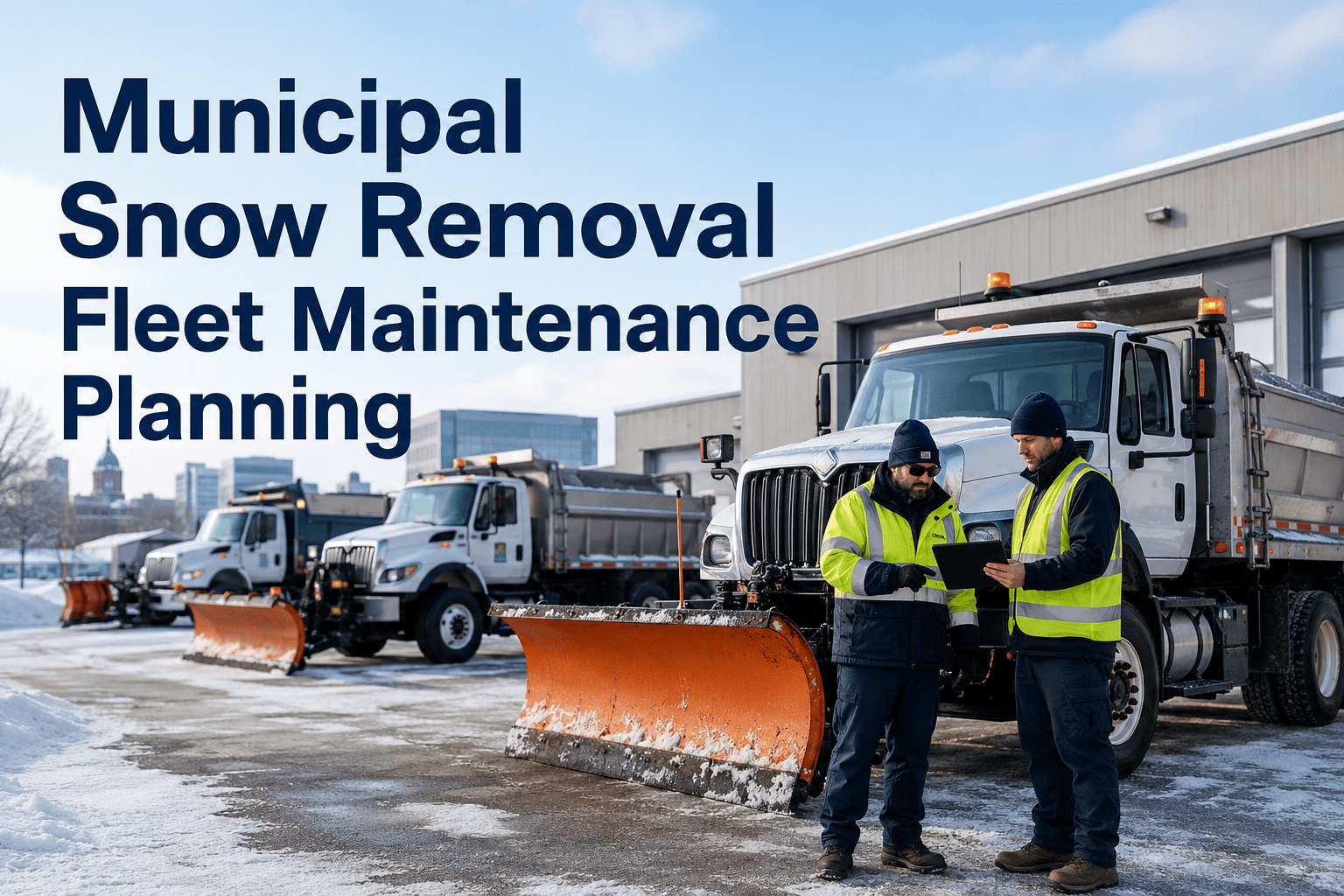
A snowplow that breaks down mid-storm is not just a maintenance failure — it is a public safety failure. When a city's snow removal fleet goes into service for the first major storm of the season with deferred pre-season maintenance and no digital work order system tracking fleet readiness, the consequences range from extended road clearing times to complete equipment failures on the coldest nights of the year. This blog covers the practical framework for municipal snow removal fleet maintenance planning — what pre-season preparation looks like, how work order management keeps a mixed fleet of plow trucks, spreaders, and loaders operational throughout a demanding winter, and what seasonal data tells operations managers about fleet health going into the following year.
Seasonal Operations · Fleet Maintenance Planning
Municipal Snow Removal Fleet Maintenance Planning
The complete guide to keeping your city's plow fleet reliable through the season — from pre-winter readiness checks to mid-storm breakdown protocols and end-of-season data capture.
$2.3B
Annual municipal snow removal expenditure in the US
40%
Of fleet breakdowns preventable with pre-season maintenance
600hrs
Average seasonal operating hours for a heavy plow truck
The Three Windows That Define Snow Fleet Maintenance
Effective snow removal fleet maintenance does not happen uniformly throughout the year — it is structured around three operational windows, each with distinct maintenance priorities, work order volumes, and documentation requirements. Understanding the rhythm of these windows is the foundation of a maintenance program that keeps equipment ready when the storms arrive.
Complete readiness work orders for every unit. No equipment enters winter service without a closed pre-season work order on file. This window exists to eliminate every known deferred maintenance item before operations begin.
Daily post-shift inspections, breakdown response work orders, and between-storm preventive maintenance cycles. The goal is maximum fleet availability — minimizing time between breakdown and return to service.
Full corrosion treatment, hydraulic system rebuilds, blade and cutting edge replacement, and de-icing system service. Season work order data informs the following year's budget and fleet replacement decisions.
Pre-Season Readiness: What Every Unit Needs Before Winter Operations
Pre-season maintenance is the highest-leverage maintenance window for snow removal fleets because it is the only period when every unit can be worked on systematically without operational pressure. The readiness checklist below reflects standard pre-season maintenance requirements for municipal plow trucks, tandem salt spreaders, and loader-mounted plows. OxMaint's work order management generates this checklist as a templated work order for each asset class, assigned to the responsible technician, with completion required before the unit's seasonal readiness status is marked green.
| System |
Plow Truck |
Tandem Spreader |
Loader/Motor Grader |
| Engine and Drivetrain |
Oil/filter, belts, coolant flush, fuel filter |
Oil/filter, PTO clutch inspection |
Full fluid service, final drive inspection |
| Hydraulics |
Plow lift cylinder seals, fluid flush, hose inspection |
Spread control hydraulics test |
Full hydraulic service, cylinder rod inspection |
| Electrical |
Plow wiring harness, lights, spreader controller |
Spinner motor, auger motor, controller test |
Lighting, beacon, cab heating system |
| Cutting Edge / Blade |
Cutting edge thickness measurement — replace if under minimum |
N/A |
Blade edge and cutting angle verification |
| De-Icing System |
Pre-wet system flow test, nozzle inspection |
Anti-icing system calibration, tank inspection |
N/A |
| Corrosion |
Frame and plow underbody corrosion protection application |
Hopper and spinner corrosion treatment |
Undercarriage corrosion inspection and treatment |
Generate Pre-Season Readiness Work Orders for Your Entire Fleet in Minutes
OxMaint's work order templates let you create a complete pre-season readiness work order for every unit in your snow fleet — assigned, tracked, and closed before the first storm. See how fleet readiness management works in a live demo.
In-Season Work Order Management: The Daily Operations Cycle
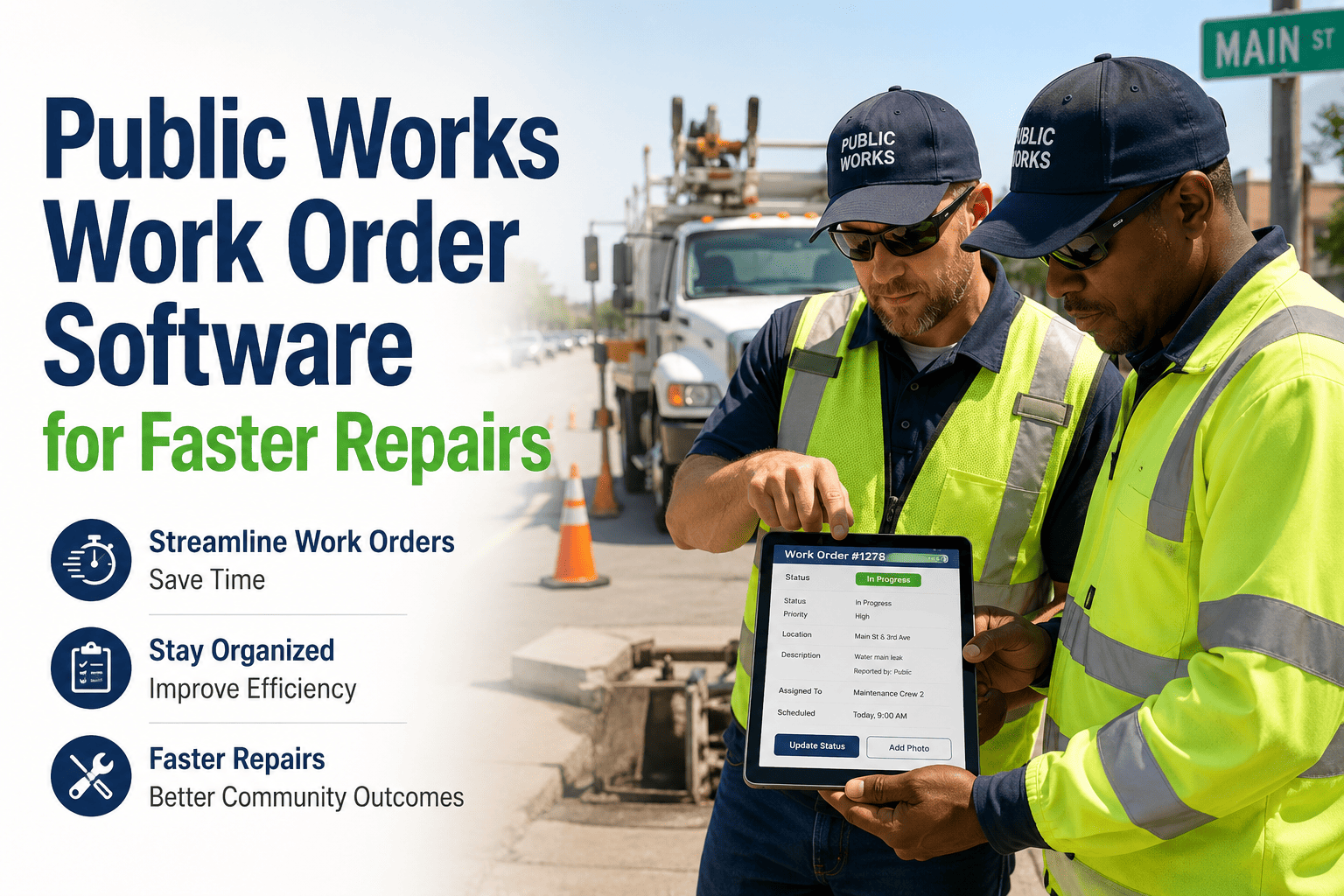
During the operational season, snow removal fleet maintenance runs on a compressed daily cycle driven by storm schedules. When equipment runs for 12–16 hours during a major storm event, post-shift inspections must happen before the unit returns to service — not when time permits. OxMaint's mobile work order system supports this pace by giving operators and supervisors a fast, structured way to document equipment condition at shift end and generate maintenance work orders for any identified issues before the vehicle is released for the next storm response.
PM
Post-Mission
Operator submits post-shift mobile inspection — fluid levels, hydraulics, blade condition, warning systems
Any defects flagged generate immediate work orders assigned to shop crew
SH
Shop Response
Shop technicians receive mobile work orders with defect details and required parts
Critical defects trigger supervisor notification and return-to-service hold flag
CL
Clearance
Work order completion required and supervisor-approved before unit is cleared for next deployment
Fleet readiness dashboard updates in real time — operations center sees available unit count
DP
Deployment
Storm response dispatch works from real-time fleet availability list in OxMaint
Every deployment event logged against the unit's seasonal operating hour record
Expert Review
Fleet Operations Manager
Municipal Public Works, Winter Operations, 17 Years
The worst thing that happens in a snow operation is not the storm itself — it is the phone call at 2am telling you a plow is down on a primary arterial and the city's main hospital access route isn't getting cleared. Every one of those calls is a pre-season or between-storm maintenance failure that had a warning sign somewhere in the maintenance record. The problem is that when those records live in spreadsheets or on paper forms, the warning sign doesn't connect to a work order, and the work order doesn't connect to a completion record. When you can pull up a unit's maintenance history in real time and see that its hydraulic hose was flagged two weeks ago and the work order is still open, you can make the call before the breakdown happens. That visibility is what changes the operational picture.
Post-Season Data That Improves Next Year's Fleet
The post-season period is when most fleets capture the maintenance and performance data that should be driving fleet management decisions — but rarely do so in a structured way. OxMaint's seasonal reporting aggregates every work order, breakdown event, and operating hour record from the completed winter season into the operational analytics that answer the most important fleet management questions heading into the next budget cycle.
| Operational Question |
OxMaint Data Source |
Decision It Informs |
| Which units had the highest breakdown rate? |
Emergency work order count per asset, in-season |
Fleet replacement priority and capital budget request |
| What is the real maintenance cost per unit per season? |
Parts cost + labor hours per work order, summed by unit |
Lease vs own analysis, fleet size optimization |
| Which routes had the most equipment failures? |
Breakdown events geotagged to route assignments |
Route assignment by unit condition and capability |
| How many hours did each unit operate vs planned? |
Deployment logs vs service capacity hours |
Fleet readiness modeling for future storms |
| Which parts are consuming the most budget? |
Parts usage by category across all winter work orders |
Parts stocking strategy and supplier contract terms |
Frequently Asked Questions
How does OxMaint handle fleet readiness tracking when equipment is shared between departments?
Shared fleet assets — trucks that serve as plow vehicles in winter and utility vehicles in other seasons — are common in municipal public works operations. OxMaint manages this through asset assignment workflows that track the current operational context of each unit, so maintenance records, work orders, and readiness status are always associated with the correct operational mode. When a shared vehicle transitions from summer utility use to winter plow configuration, OxMaint can trigger a seasonal readiness work order automatically and update the asset's equipment profile to reflect its plow-ready configuration.
The platform also supports multi-department asset sharing with department-specific visibility controls, so snow operations supervisors see their fleet status without being exposed to unrelated maintenance records from other departments.
Book a demo to discuss your fleet structure.
Can operators submit post-shift inspections from the cab without returning to the shop?
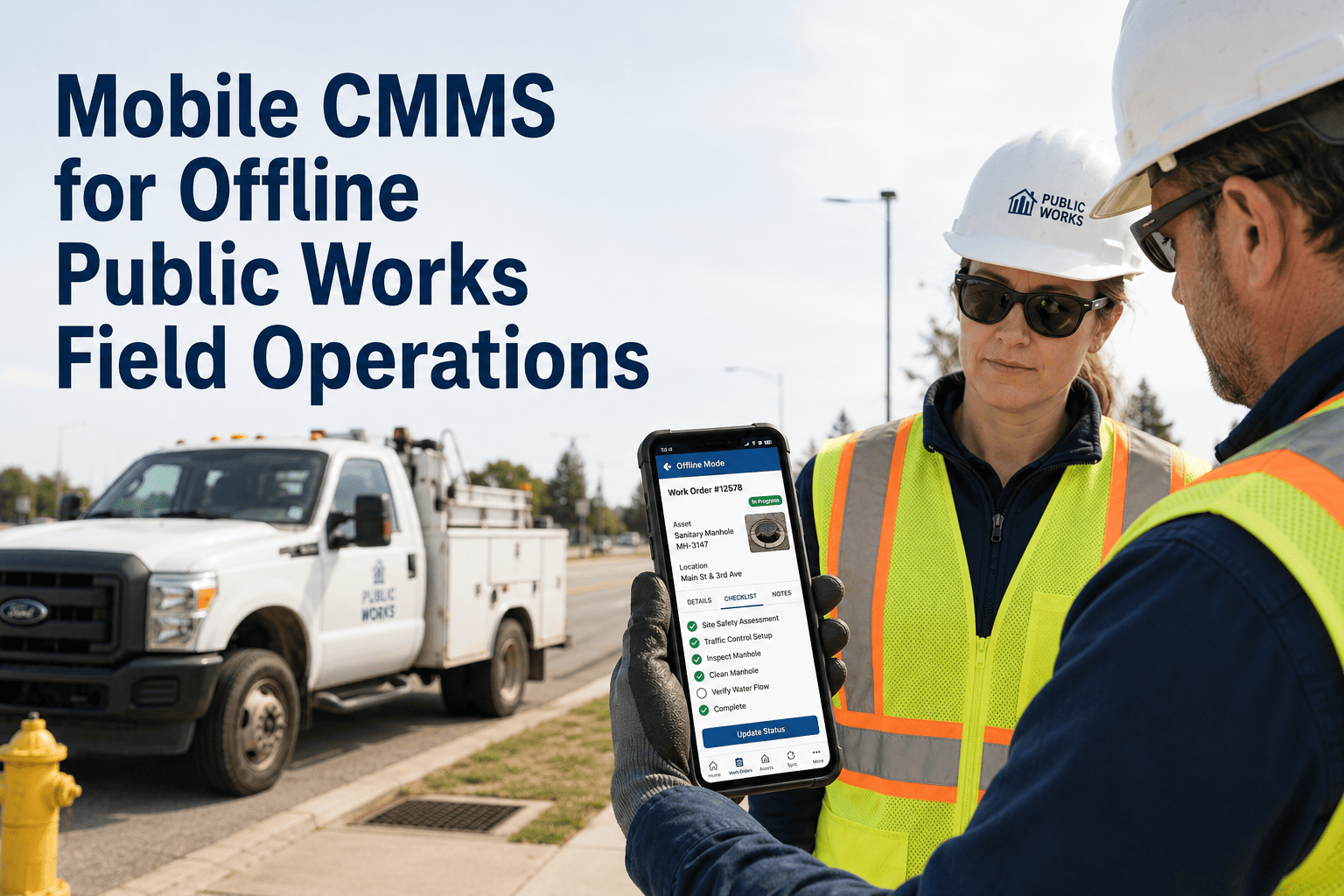
Yes — OxMaint's mobile app is designed for field-first use, including vehicle cab submission. Operators can complete post-shift inspection checklists on a smartphone or tablet, capture photos of any observed defects, and submit the inspection report from anywhere with cellular or WiFi connectivity. The app also supports offline data capture with sync on reconnection — relevant for operators in areas with intermittent connectivity. When an operator flags a defect, the work order is created immediately in the system and appears in the shop crew's work queue in real time, so shop staff can begin parts preparation before the vehicle returns to the yard. This removes the end-of-shift paperwork bottleneck that causes inspection forms to be completed inaccurately or skipped entirely when operators are fatigued after long storm shifts.
See the mobile workflow in a live demo.
How does OxMaint help justify snow fleet capital budget requests to city councils or county boards?
Fleet replacement and capital equipment requests to governing bodies are most successful when supported by concrete operational data rather than age-based rules alone. OxMaint generates the asset-level maintenance cost history, breakdown frequency reports, and reliability metrics that demonstrate why a specific unit has exceeded its cost-effective service life — converting a subjective judgment call into a data-supported capital justification. The platform also supports total cost of ownership modeling that shows the maintenance cost trend over the past three to five seasons for each unit in the fleet, making it straightforward to identify units where annual maintenance spend has crossed the economic threshold for replacement.
Start building your fleet cost history or
speak with our public works team about capital planning workflows.
What should municipalities include in their between-storm maintenance protocol during active winter operations?
Between-storm maintenance windows are often the only opportunity during the operational season to perform scheduled preventive maintenance that addresses issues identified in post-shift inspections but did not rise to an immediate return-to-service hold. An effective between-storm protocol in OxMaint includes reviewing all open work orders from post-shift inspections, prioritizing any with pending return-to-service flags, completing scheduled oil service and hydraulic fluid checks that fall within the current operating hour interval, and documenting any cutting edge or blade wear measurements against replacement thresholds. The specific interval triggers should be configured in OxMaint based on your fleet's OEM service specifications and the aggressive duty cycle that winter operations impose — typically 30–40% shorter intervals than standard on-highway service recommendations.
Book a demo to see how winter-specific maintenance intervals are configured in the platform.
Your Snow Fleet Readiness Starts With the Right Work Order System
OxMaint gives public works fleet managers the pre-season readiness tracking, in-season work order management, and post-season data analytics to run a snow removal program that holds up when the weather doesn't. Talk to our public works team about your fleet size, mix, and operational season.