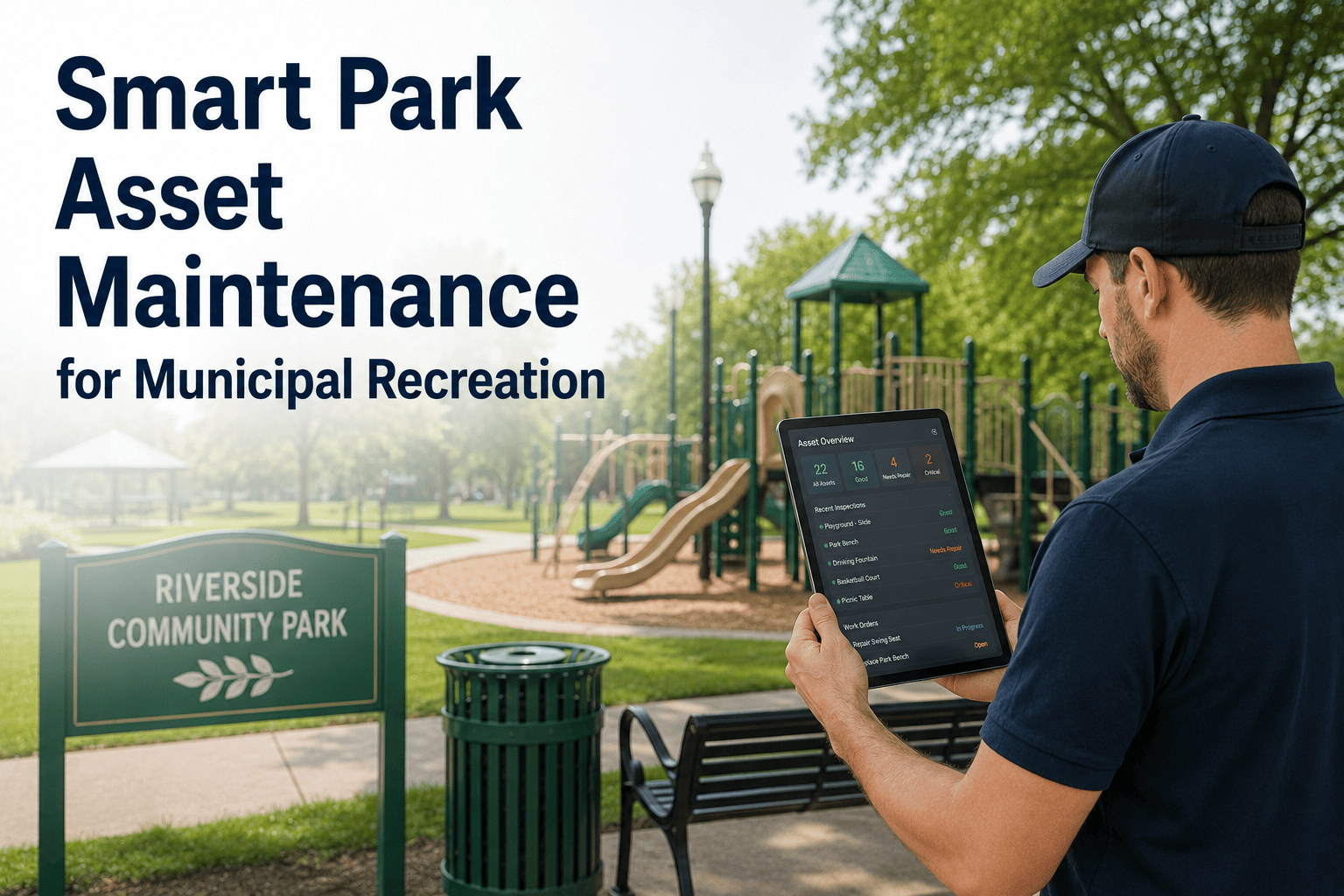
When a municipal pool pump fails in the middle of a July heatwave, or a community center's boiler dies just before a winter seniors program, the impact goes beyond a closed facility. Public trust is damaged, revenue-generating programs are cancelled, and community wellness is compromised. For parks and recreation directors managing diverse portfolios—from aquatic centers and sports complexes to playgrounds and pavilions—the challenge isn't just maintaining equipment; it's ensuring safe, accessible spaces for the community while navigating tight budgets and high public visibility.
The parks and recreation landscape is evolving. Aging infrastructure, ADA compliance mandates, and increasing demand for sustainable operations are forcing departments to modernize. By 2026, data-driven facility management is expected to be the standard for accredited agencies, yet many departments still rely on reactive maintenance cycles and paper work orders that drain resources.
For facility superintendents, the path to sustainability requires a strategic shift from "fixing what breaks" to "predictive stewardship." This comprehensive guide provides the actionable framework your agency needs to build a resilient, efficient parks and rec operation. Discover how digital facility workflows transform recreation services.
Understanding Critical Parks & Rec Asset Categories
Effective facility operations begin with precise categorization of assets based on their service criticality, safety impact, and usage intensity. A high-traffic splash pad operates under different demands than a remote trail bridge, and applying a uniform maintenance strategy leads to wasted resources and critical safety gaps.
Parks teams must segment their portfolio to align maintenance intervals, safety inspections, and capital planning with the specific demands of each recreational asset. Failing to do so results in budget leakage on low-priority mowing while high-liability playground equipment deteriorates.
Safety Critical Assets
- Playgrounds & Surfacing
- Aquatic Centers & Splash Pads
- Sports Field Lighting
- Bleachers & Grandstands
Revenue Generating
- Community Centers
- Rental Pavilions
- Athletic Complexes
- Golf Course Irrigation
Infrastructure & Amenities
- Restroom Buildings
- Maintenance Shops
- Parking Lots
- Fencing & Signage
Open Space
- Trails & Bridges
- Natural Areas
- Stormwater Ponds
- Tree Canopy
The Complete Parks Maintenance Workflow Checklist
Building a resilient parks management program requires systematic attention to preventive maintenance, safety inspections, vendor coordination, and capital planning. This checklist covers the critical elements parks directors must address to ensure public safety and fiscal responsibility. Schedule a walkthrough of digital parks workflow implementation.
Preventive Maintenance (PM) Management
Trigger maintenance events for pool opening/closing, winterization, and sports field prep based on calendar dates
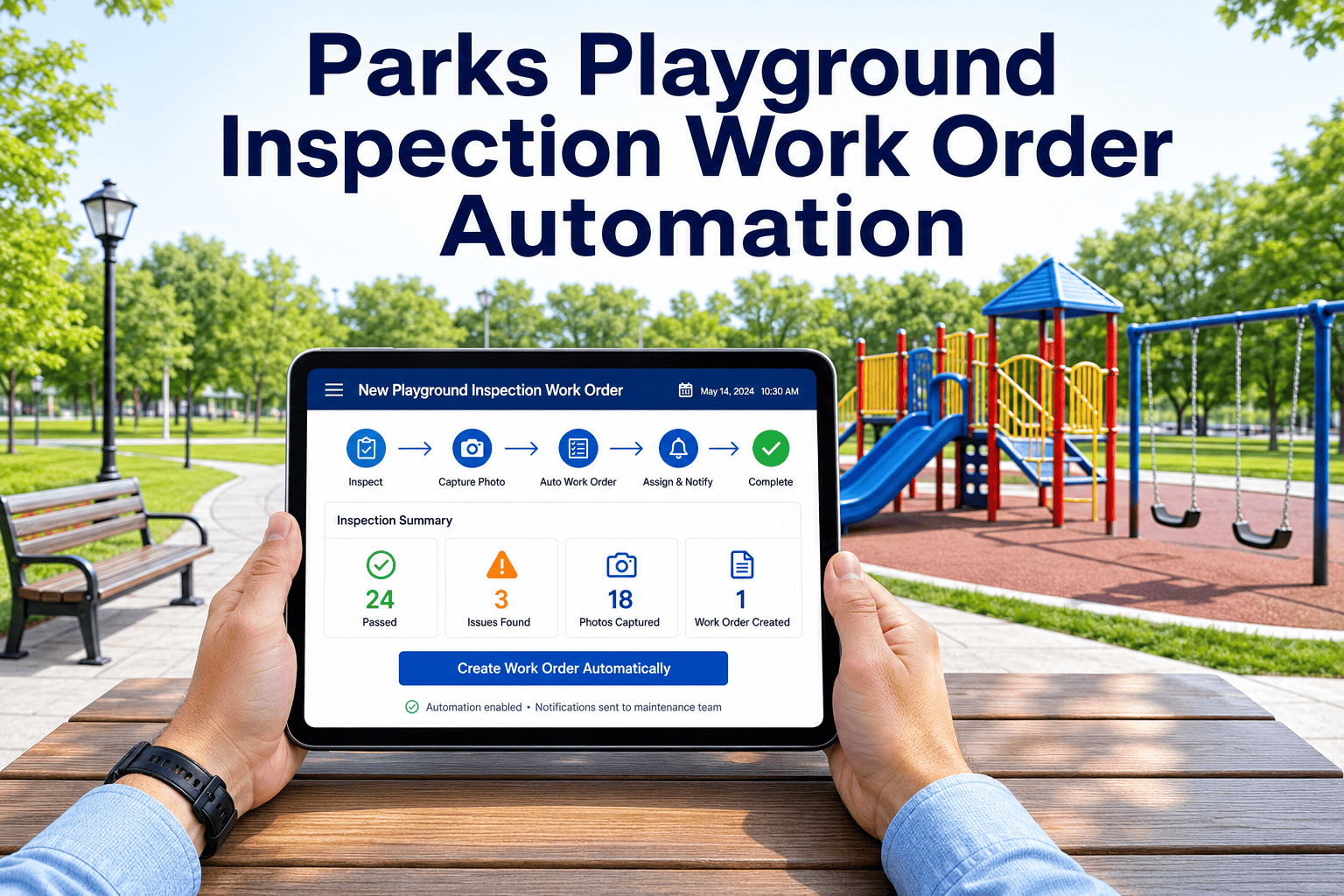
Define specific inspection points for playground equipment (CPSI standards) to ensure consistent safety across all parks
Schedule aeration, fertilization, and overseeding based on field usage data and agronomic best practices
Automate service reminders for mowers, tractors, and utility vehicles based on hours of operation
Schedule fire extinguisher checks, elevator inspections, and backflow preventer testing to meet code requirements
Work Order & Request Management
Provide a simple mobile-friendly portal (QR codes in parks) for citizens to report graffiti, broken equipment, or cleanliness issues
Automatically route work orders to the correct district supervisor based on park location coordinates
Require "before and after" photos for graffiti removal and vandalism repairs to document work and support restitution
Create work orders specifically for event set-up/tear-down to capture the true cost of supporting rentals and festivals
Empower grounds crew with offline-capable mobile access to work orders and asset maps in remote park areas
Vendor & Inventory Management
Track performance of landscaping, janitorial, and trade contractors against contract SLAs directly in the system
Track critical spares (irrigation heads, swing seats, pool chemicals) to prevent downtime during peak seasons
Record fertilizer, pesticide, and pool chemical application amounts for environmental compliance and budget tracking
Automate alerts for expiring vendor insurance to ensure liability protection for public works projects
Link work orders to purchase requests to track total cost of ownership per park and asset
Capital Planning & Asset Lifecycle
Maintain live condition data on all amenities to forecast replacement needs and support master planning
Generate 5-10 year capital improvement plans (CIP) based on asset age, condition, and maintenance history
Track labor, materials, and contractor costs to determine when to replace vs. repair equipment
Use maintenance data to ensure equitable resource distribution across different neighborhood parks
Integrate with GIS to provide map-based asset location for efficient routing and inventory verification
Safety & Compliance
Digitize CPSI inspection forms (CPSI) to document compliance with ASTM/CPSC standards and reduce liability
Digital logging of hourly/daily pool chemical readings to meet health department regulations
Document inspection and remediation of accessible routes, ramps, and amenities to ensure inclusivity
Track tree inspections and pruning history to mitigate risk of falling branches in high-traffic areas
Link vandalism or accident reports to specific assets to identify hotspots and support security planning
Integrated Parks Management Architecture
Modern parks management relies on a connected ecosystem where data flows seamlessly between field crews, administration, the public, and assets. When a swing breaks, it triggers a chain reaction: public report, work order creation, parts allocation, repair verification, and safety certification. This integration eliminates the silos of paper processes where safety hazards persist unnoticed.
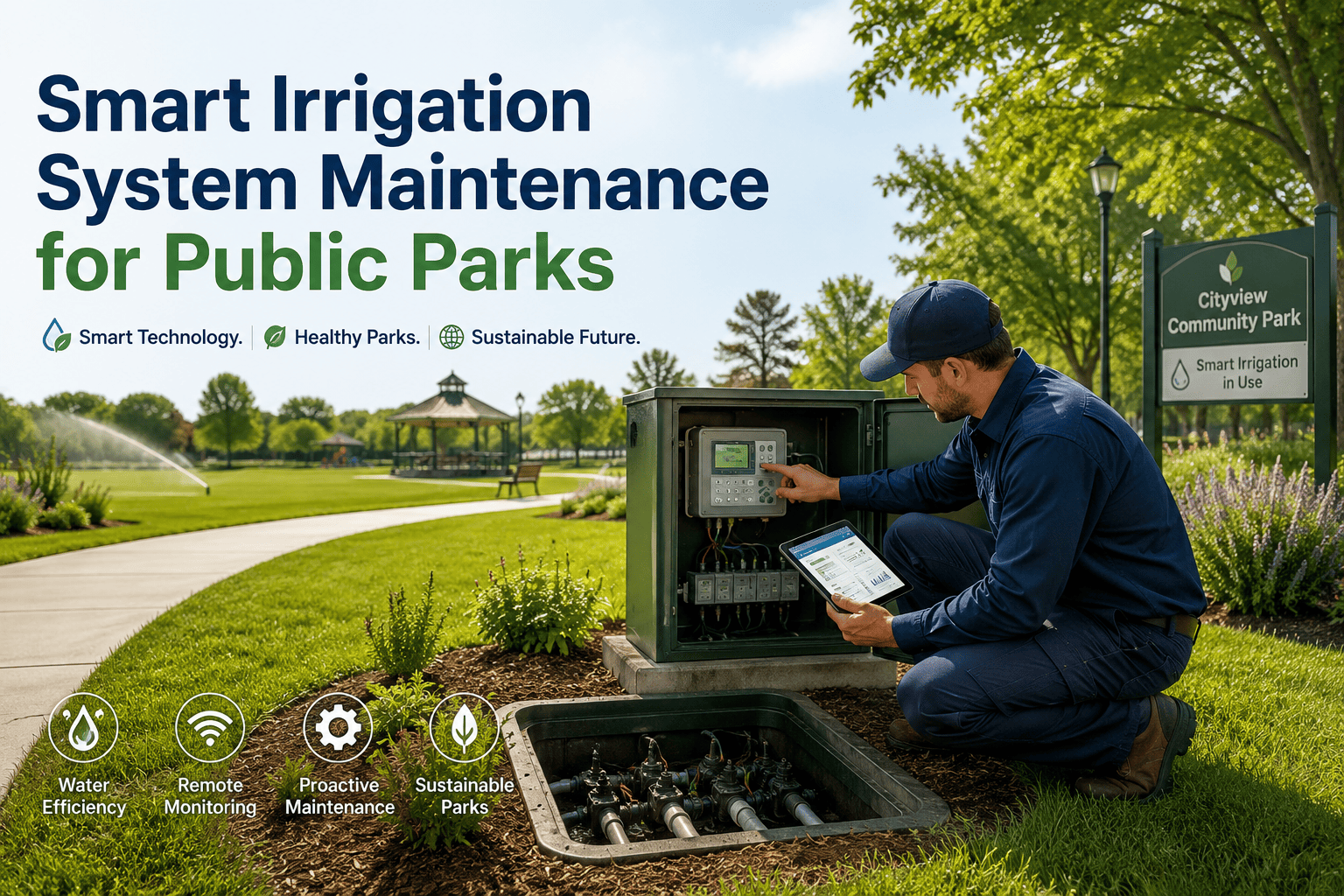
The integration between Smart Irrigation systems and CMMS enables "smart" groundskeeping. Instead of a scheduled manual check, the system detects a leak or flow fault and automatically generates a work order for the irrigation tech, saving water and labor. Explore smart parks integration capabilities.
Key Performance Indicators for Parks Excellence
You cannot improve what you do not measure. Effective parks operations require tracking KPIs that reveal the true condition of the system and the efficiency of the maintenance team. These metrics should be visible on real-time dashboards for supervisors and compiled into annual reports for park boards and city councils.
Total maintenance cost normalized by park acreage. Essential for comparing efficiency across different park types (active vs. passive).
Percentage of preventive maintenance tasks completed on time. High compliance prevents asset deterioration and safety incidents.
Percentage of mandatory safety inspections (playgrounds, pools) completed on schedule. Critical for liability defense.
Average time from request submission to completion. Measures responsiveness to citizen and staff requests.
Total maintenance hours spent supporting rentals and events. Crucial for accurate fee setting and cost recovery.
Average condition rating of assets based on regular inspections. Used to prioritize capital replacement projects.
Regulatory Compliance and Risk Mitigation
Parks and recreation agencies operate in a high-liability environment. From playground safety standards to pool health codes, digital record-keeping is the primary defense against lawsuits and regulatory fines. Request a parks risk assessment.
Industry Perspective on Parks Management Modernization
Parks and recreation departments are often the face of local government, yet they frequently operate with outdated tools. The most successful agencies are those that leverage technology to stretch their budgets and prove their value. By capturing data on every task—from emptying trash cans to repairing HVAC units—directors can tell a compelling story about resource needs.
The integration of mobile technology is a game-changer for field crews. Groundskeepers and maintenance staff cover vast areas; giving them the ability to receive work orders, check parts inventory, and log inspections from a tablet in the field drastically improves efficiency. It eliminates the 'windshield time' of driving back to the shop for paperwork.
Furthermore, the ability to link maintenance data to capital planning is critical. When you can show a clear history of rising repair costs for a specific community center, the argument for renovation funding becomes objective and data-backed, rather than anecdotal.
Conclusion: Stewardship Through Innovation
Parks and recreation facility management is about more than mowing grass and cleaning pools. It is about stewardship—preserving the community's shared spaces, ensuring safe environments for play and wellness, and demonstrating fiscal responsibility. With infrastructure aging and expectations rising, the efficiency gains from digital transformation are essential for modern agencies.
Effective parks operations require a holistic approach: proactive preventive maintenance to ensure safety, rigorous data collection to inform master planning, and streamlined workflows to maximize staff productivity across distributed sites. The tools to achieve this—integrated CMMS, IoT, and mobile apps—are now accessible to departments of all sizes.
By moving from reactive firefighting to predictive stewardship, parks directors can deliver better amenities, improved safety, and transparent fiscal accountability. The result is a park system that serves the community reliably, and an operation that stands up to the scrutiny of any board review.
The future of parks management is connected, data-driven, and efficient. Agencies that embrace these principles today will define the standard for community recreation tomorrow. Begin building your connected parks system today.
Frequently Asked Questions
How does a CMMS help with CAPRA accreditation?
CAPRA accreditation requires documented evidence of management plans, safety inspections, and systematic maintenance. A CMMS like Oxmaint provides a centralized digital repository for all this evidence. You can easily pull reports on inspection completion rates, maintenance schedules, and asset lifecycles to satisfy specific standards regarding facility and equipment management, saving hundreds of hours during the accreditation review process.
Can the system work for both buildings and grounds?
Yes. Oxmaint is designed to handle diverse asset types within a single platform. You can create custom asset categories (e.g., "HVAC," "Turf," "Playgrounds," "Vehicles") each with their own specific preventive maintenance checklists and data fields. This allows a single department to manage a recreation center boiler, a soccer field irrigation system, and a fleet of mowers all in one place.
Does the mobile app work in parks with poor cell service?
Yes. Oxmaint's mobile app includes offline functionality. Field crews can download their work orders and inspection routes for the day, perform their tasks, take photos, and log data while in remote areas without signal. The app automatically syncs all data back to the cloud once the device re-connects to cellular or Wi-Fi, ensuring no data is lost.
How can we track vandalism and graffiti costs separately?
You can set up specific work order types or problem codes for "Vandalism" or "Graffiti." When crews repair the damage, they tag the work order accordingly. This allows you to run specific reports on vandalism-related labor and material costs, which can be used to justify requests for security cameras, lighting, or police patrols in affected areas.
Is it difficult to train seasonal staff on the software?
The system is designed with usability in mind. For seasonal staff, you can configure limited-access roles that simplify the interface, showing them only their assigned tasks and simple checklists. The mobile app is intuitive, similar to consumer apps, requiring minimal training. Most seasonal workers can be up and running in less than 30 minutes, ensuring consistent data collection even with high staff turnover.