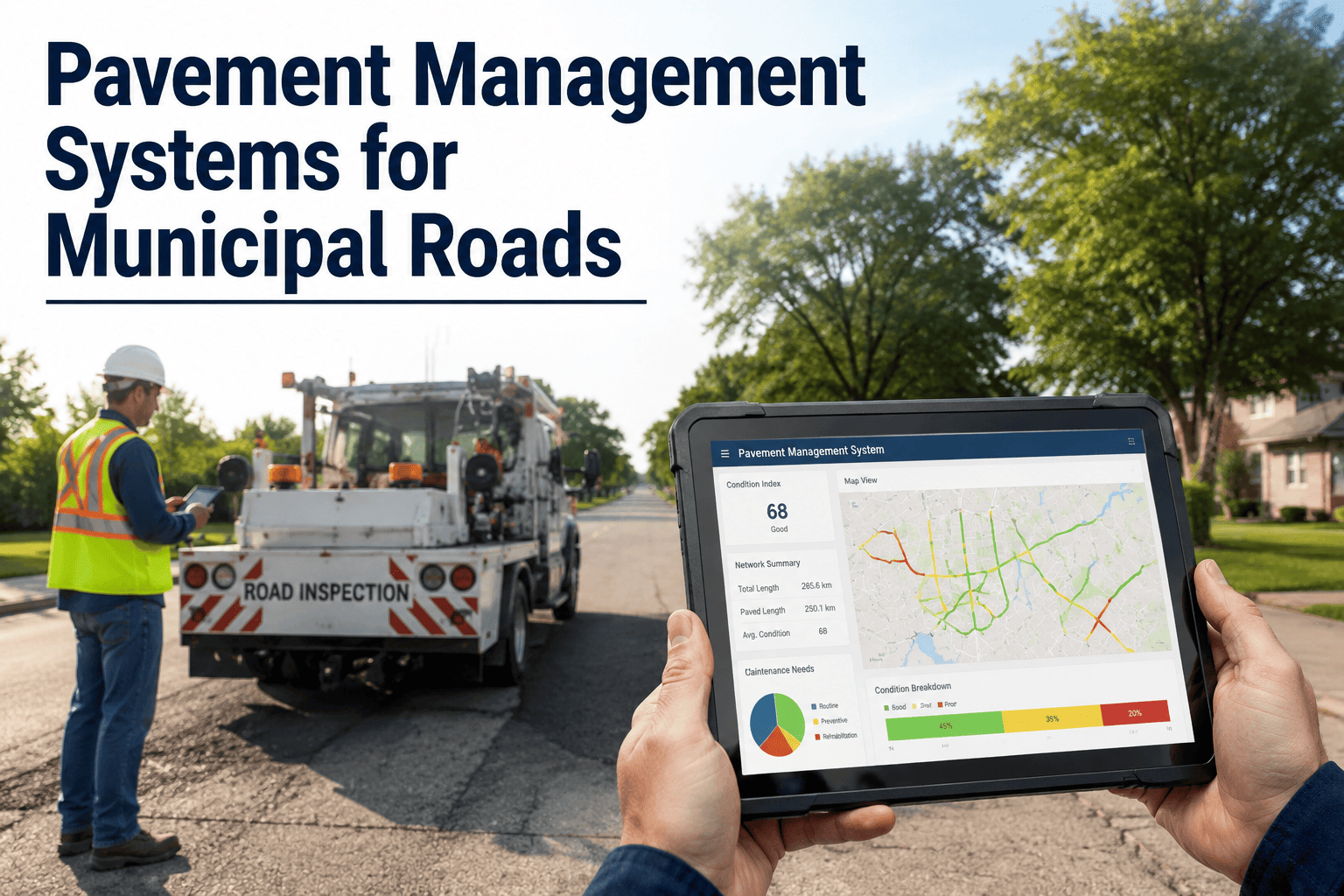
Every public works engineer knows the meeting. You ask council for a paving budget and someone says, "we just paved Main Street, why are there potholes on Oak?" The honest answer is uncomfortable: Oak was cheap to save two years ago, and now it needs a full rebuild that costs twenty times more. That gap between a one-dollar crack seal today and a ten-dollar overlay tomorrow is the entire problem a pavement management system solves. A PMS replaces complaint-driven, worst-first paving with a data-driven answer to three questions: which road to treat, which treatment to use, and when. Start a free trial with Oxmaint to build a defensible pavement program for your network.
The Trap
Why "Worst-First" Paving Drains the Budget
Worst-First (Reactive)
The whole budget goes to reconstructing a handful of failed roads that residents complain about loudest. Meanwhile dozens of good roads — savable for a few dollars a yard — slide past the point of cheap repair. Network PCI falls year after year even as spending rises.
Preservation-First (PMS)
The right treatment goes to the right road at the right time. Cheap preservation keeps good roads good, so fewer roads ever reach costly reconstruction. Network PCI holds steady or climbs, and every dollar stretches across far more lane-miles.
The road network is usually the single most valuable asset a city owns, often worth hundreds of millions of dollars. Managing it by complaint instead of condition quietly consumes that value. The counterintuitive truth non-engineers miss: a road at PCI 70 deteriorates slowly, but the same road at PCI 55 begins a rapid decline that multiplies repair cost.
The Core Metric
PCI: One Number From 0 to 100 That Drives Every Decision
86–100
Excellent / GoodRoutine preservation. Crack seal, fog seal. Roughly 1–3 dollars per square yard. Highest ROI money you will spend.
71–85
GoodPreventive treatments. Slurry, chip seal, micro-surfacing. Applied every 5 to 12 years to reset the clock cheaply.
56–70
SatisfactoryThe critical decision window. Schedule preventive work now or watch cost accelerate. Thin overlay, targeted patching.
41–55
FairProgram rehabilitation. Mill-and-fill overlay, roughly 15 to 20 dollars per square yard. Preservation window has closed.
0–40
Poor / FailedReconstruction or full-depth reclamation. 40 to 100+ dollars per square yard. The most expensive outcome of waiting.
PCI is standardized under ASTM D6433, developed by the U.S. Army Corps of Engineers, so a PCI of 72 in Vermont means the same as a 72 in Arizona. That makes it the shared language for comparing roads, competing for grants, and defending a budget. The commonly cited network target is PCI 70 — the line above which most roads stay serviceable with cheap preventive work.
The Economics
Why a Dollar Today Beats Twenty Dollars Tomorrow
First 75% of life
Condition drifts down from PCI 100 to 70 slowly. This is the long, cheap window where preservation resets the clock for a few dollars per yard.
Last 25% of life
Condition plummets from PCI 70 to failure fast. The intervention window is narrow and unforgiving, and every deferred year multiplies the bill.
Documented by the FHWA and multiple state DOTs: preventive treatment at high PCI costs about 5 to 8 dollars per square yard, while reconstruction runs 40 to 100+ dollars — 10 to 20 times more. Every dollar spent on preservation at PCI 85+ saves 6 to 10 dollars in future reconstruction. That is the whole case for a PMS in one line.
Turn PCI Data Into a Ranked, Fundable Paving Plan
Oxmaint stores condition surveys per segment, tracks PCI trends, and models multi-year treatment scenarios against your budget — so you walk into council with a defensible plan, not a wish list. The right road, the right treatment, the right year.
How It Works
The Five Stages of a Pavement Management System
1
Inventory the Network
Divide the road network into segments and build a register of every one — length, width, surface type, and traffic level.
2
Survey Condition (PCI)
Score each segment 0 to 100 by cataloging distress type, severity, and extent under ASTM D6433, using automated or manual surveys.
3
Model Deterioration
Calibrate local deterioration curves from your own PCI history to predict how fast each segment declines under your climate and traffic.
4
Match Treatment to PCI
Apply decision-tree logic: preservation for good roads, rehab for fair, reconstruction only where unavoidable. Right treatment, right time.
5
Optimize the Budget
Run multi-year scenarios to find the mix that holds network PCI highest for the money available, then report it for funding approval.
The Payoff
What a PMS Delivers for a Municipality
25–30yr
Pavement Life
Optimized treatment timing pushes achievable life well past the 15 to 20 years typical of reactive-only maintenance.
10–20x
Cost Avoided
Preservation at high PCI costs a fraction of the reconstruction it prevents, freeing budget for more lane-miles.
PCI 70+
Network Held
A steady or rising network PCI proves the program works and keeps most roads in the cheap-to-maintain zone.
Grant
Ready Data
Standardized PCI records and GIS condition maps make grant applications and council presentations defensible on sight.
Frequently Asked Questions
Pavement Management: Common Questions
What network PCI should we aim for?
The commonly cited target is 70 — the boundary above which most roads stay serviceable with preventive and routine treatments instead of structural rehab. Many networks already sit below it.
Track your network PCI in Oxmaint.
How often should we survey pavement condition?
Most agencies update PCI every three years, though high-traffic or freeze-thaw roads may justify annual checks since distress can appear in as little as three to four years under harsh conditions.
What is the difference between PCI and IRI?
PCI is a visual and structural index cataloging cracks, rutting, and potholes — it diagnoses what is wrong. IRI measures ride roughness. PCI drives treatment selection; the two answer different questions.
Can automated surveys replace manual inspection?
Best practice is hybrid: automated surveys for annual network-level updates, with targeted manual verification on high-priority or ambiguous sections where distress interactions still need a trained eye.
Book a session to set up your survey workflow.
Why not just fix the worst roads first?
Because worst-first burns the entire budget rebuilding a few failed roads while savable good roads slide into failure. Preservation-first keeps far more of the network in serviceable condition for the same money.
Stop Chasing Potholes. Start Managing a Network.
Oxmaint turns PCI surveys, treatment history, and budget scenarios into one defensible pavement program — the right road, the right treatment, the right year. Walk into your next budget meeting with data instead of apologies.