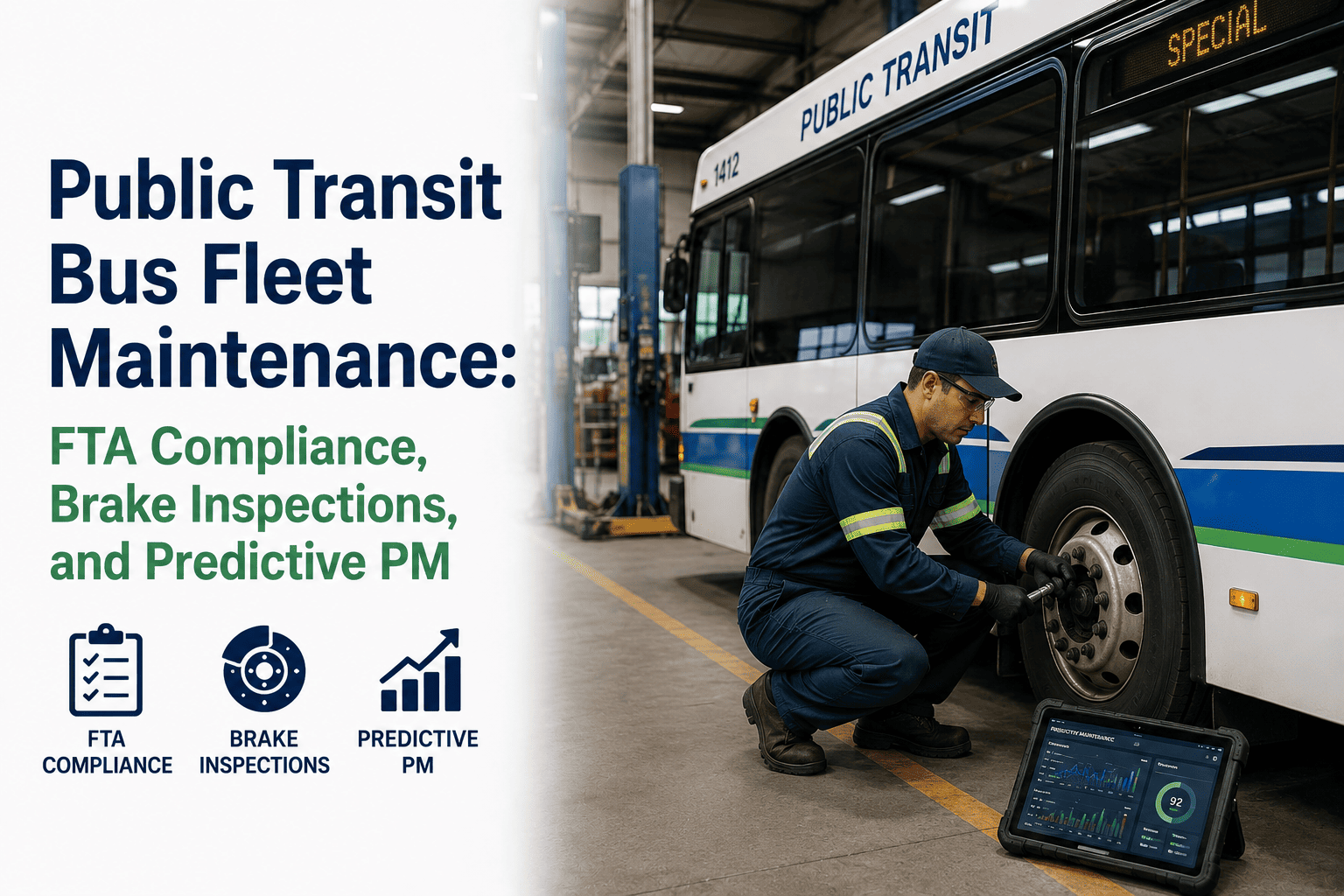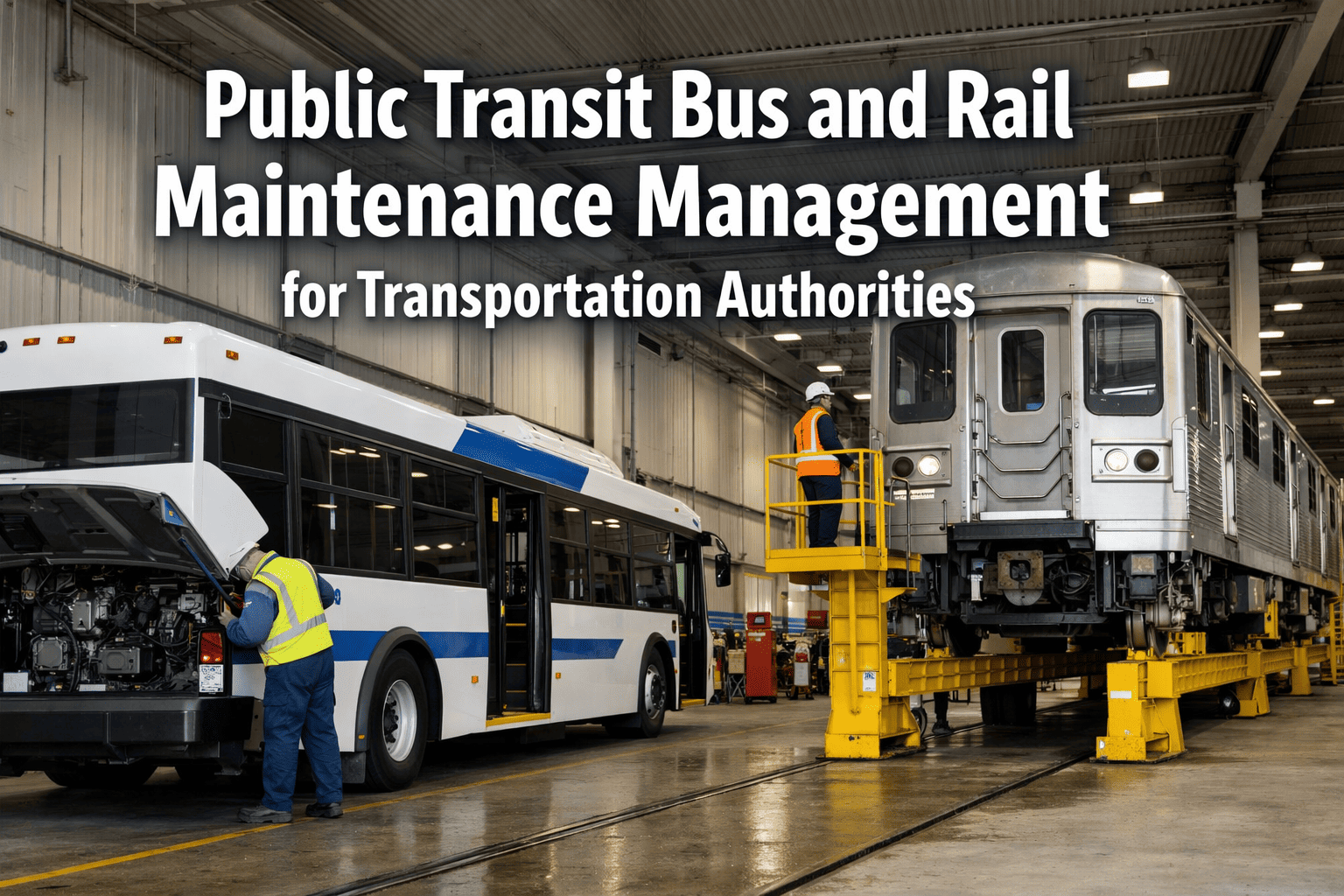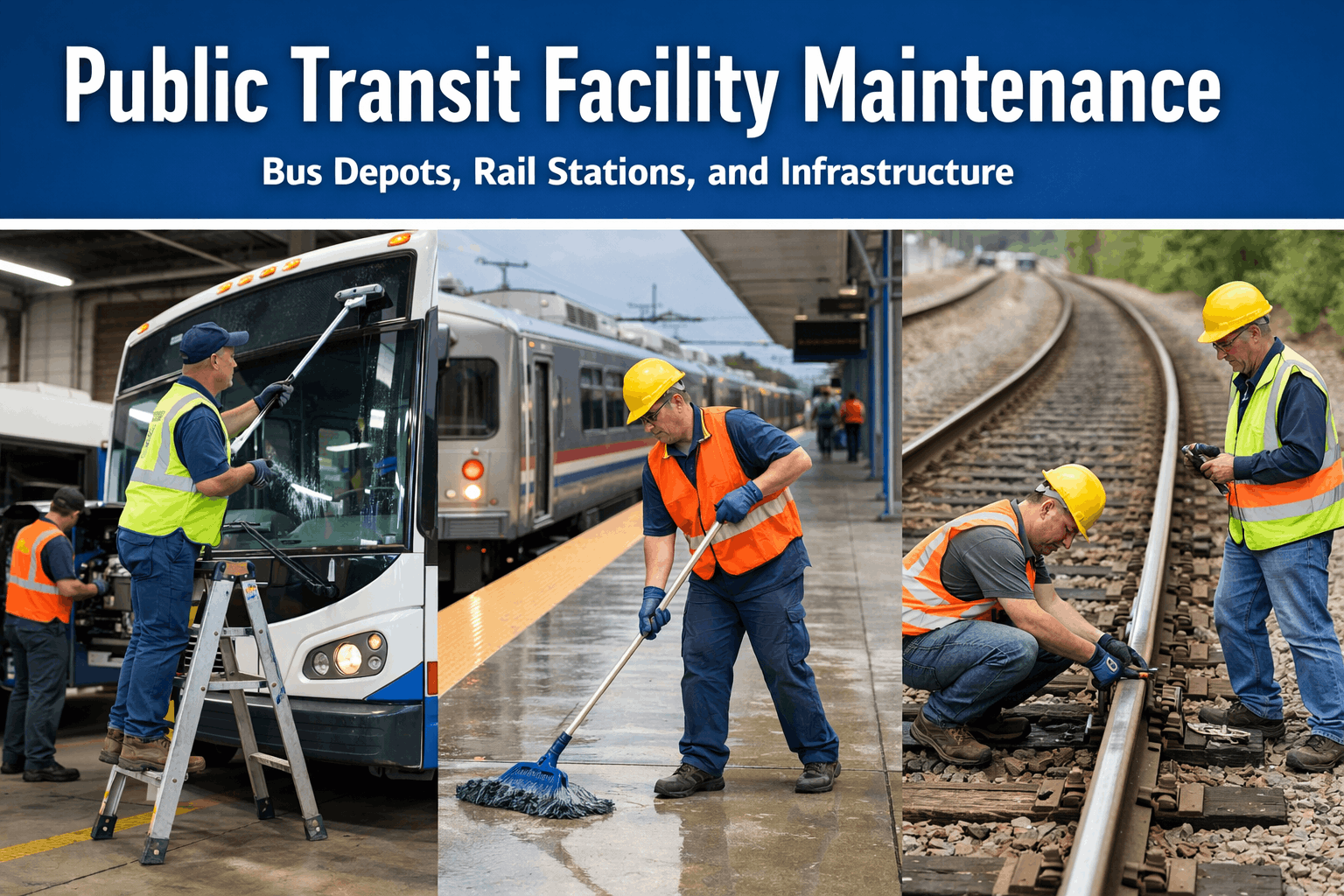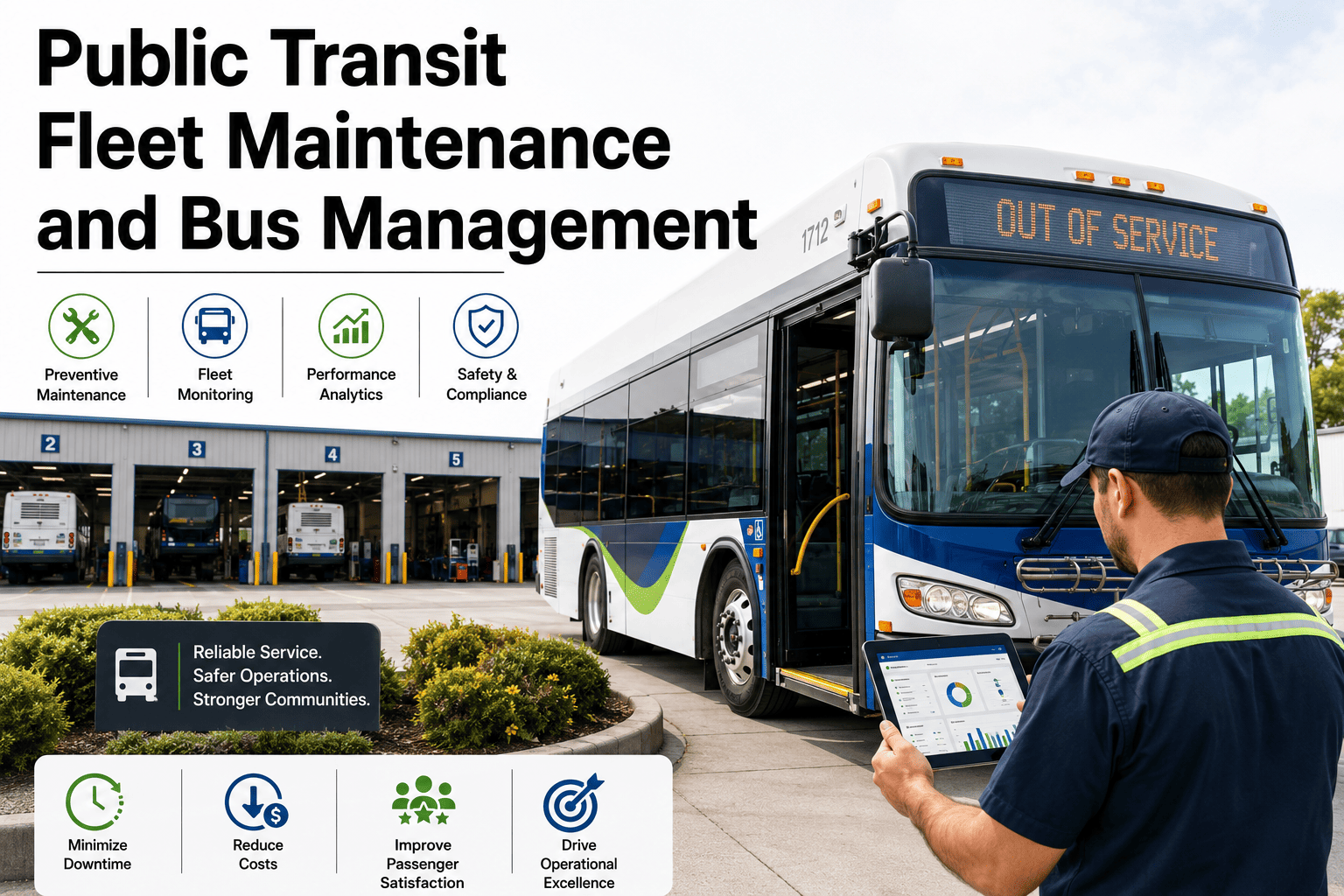
Public transit fleet maintenance is the discipline that keeps buses safe, compliant, and on schedule — and it is governed by Federal Transit Administration (FTA) State of Good Repair standards that demand documented, data-driven asset management. When a transit agency delays preventive maintenance or loses visibility into work-order history, Mean Distance Between Failures drops, road calls spike, and ridership erodes. This guide walks through building a transit fleet maintenance program that meets FTA reporting expectations, extends vehicle life through mid-life overhauls, and leverages a CMMS like OxMaint to turn reactive shops into reliability-driven operations — you can Start Free Trial today or read on for the full framework.
Transit Fleet Reliability
Every missed PM is a missed run. Is your fleet ready when the schedule demands it?
Riders expect buses on time, every time — and FTA State of Good Repair reporting expects proof. Build a public transit maintenance program that delivers both, with documented PM compliance, predictive failure alerts, and full asset history at your fingertips.
The Cost of Reactive Maintenance
Why Public Transit Fleet Maintenance Is the Backbone of Service Reliability
For transit agencies, maintenance is not a back-office cost center — it is the single largest determinant of whether a bus shows up on time. The FTA reports that the nation's transit backlog exceeds $105B in deferred maintenance, and fleets operating without a structured transit maintenance program typically experience 30–50% more road calls than peers with disciplined PM schedules. Each unplanned failure pulls a bus from service, triggers a spare (if one exists), and erodes the rider trust that drives fare revenue.
Consider a mid-sized agency running 180 buses. If even 5% of the fleet is out of service on any given day due to unplanned failures, that is nine buses missing their runs — potentially stranding thousands of riders across a morning peak. The cost compounds: overtime for emergency repairs, expediting fees for parts, operator downtime, and the long-term rider attrition that follows unreliable service. A CMMS-driven transit fleet maintenance program flips this dynamic by catching failures before they happen and documenting every action for FTA compliance.
FTA Compliance & State of Good Repair
How to Build a Transit Fleet Maintenance Program That Meets FTA Reporting
FTA's State of Good Repair (SGR) framework requires transit agencies to inventory assets, assess condition, and prioritize investments using risk-based decision-making. A defensible transit maintenance program documents every inspection, repair, and PM event with timestamps, technician signatures, parts consumed, and failure codes — exactly the audit trail OxMaint generates automatically.
Catalog Every Revenue Vehicle
Record VIN, fleet number, engine type, emissions tier, purchase date, and cumulative mileage for each bus. OxMaint's asset registry tracks these fields plus warranty status, mileage-based PM triggers, and full maintenance history in one searchable record.
Score Each Asset Against SGR Benchmarks
Assign condition ratings (1–5) based on inspection data, MDBF trends, and age. OxMaint's analytics dashboard surfaces assets approaching the FTA's "marginally deficient" threshold so you can prioritize capital and maintenance spend before failures occur.
Build Mileage- and Time-Based PM Cycles
Define A, B, C, and D inspection tiers (e.g., 5K, 15K, 30K, 60K miles) with checklists for each. OxMaint auto-generates work orders when a bus approaches its PM trigger — eliminating the spreadsheet tracking that lets inspections slip.
Generate FTA-Ready Audit Trails Automatically
Every work order in OxMaint captures technician, date, labor hours, parts, and failure codes — exportable for SGR reporting, NTD submissions, and internal audits without rebuilding data in spreadsheets.
Preventive Maintenance Checklist
Transit Bus Maintenance Checklist: PM Tiers Every Fleet Should Run
A tiered PM structure is the foundation of bus maintenance in public transit. Below is a standard four-tier framework adapted from common transit agency practices — OxMaint lets you digitize each tier as a repeatable checklist that triggers automatically based on mileage or calendar intervals.
- Engine oil and filter change
- Tire pressure and tread depth inspection
- Brake pad and rotor wear check
- Fluid levels (coolant, DEF, transmission)
- Exterior lighting and stop-arm function
- Steering and suspension component inspection
- Battery load test and terminal cleaning
- HVAC system performance and filter check
- Exhaust system leak inspection
- Wheel bearing repack / inspection
- Transmission fluid and filter service
- Coolant system flush and thermostat test
- Air compressor and dryer service
- Drive axle fluid change
- Frame and underbody corrosion inspection
- Full brake system overhaul (pads, drums, slack adjusters)
- Engine diagnostic scan and DPF regeneration
- Alternator and starter load test
- Radiator and charge-air cooler inspection
- ADA lift / ramp cycle test and certification
Lifecycle Economics
Bus Rebuild vs Replace: The Mid-Life Overhaul Decision
A heavy-duty transit bus costs $500K–$750K new. At the 7–8 year mark — typically around 250,000–300,000 miles — agencies face a critical decision: invest $150K–$250K in a mid-life overhaul (engine, transmission, drive axle, body refurbishment) or retire the vehicle and buy new. The right call depends on structural frame condition, maintenance cost per mile trends, and remaining useful life — all of which should be quantifiable from your CMMS data.
| Factor | Rebuild (Mid-Life Overhaul) | Replace (New Bus) |
|---|---|---|
| Upfront cost | $150K–$250K | $500K–$750K |
| Additional service life | 5–7 years / 200K mi | 12–15 years / 500K mi |
| Maintenance cost per mile (post-action) | $0.85–$1.10 | $0.45–$0.65 |
| Emissions / fuel-efficiency upgrade | Limited — original tier retained | Full upgrade to latest standards |
| Warranty coverage | 12–24 months on overhauled components | 3–5 years comprehensive |
| Downtime during action | 6–10 weeks | 2–4 weeks (delivery & commissioning) |
OxMaint makes this decision data-driven rather than gut-driven. By tracking lifetime maintenance cost per mile for each asset, the platform flags buses whose repair costs are trending above the replacement threshold — so you can build a defensible capital plan for your board and the FTA.
How OxMaint Helps
How OxMaint Powers Your Transit Fleet Maintenance Program
OxMaint is an AI-powered CMMS and EAM platform built for maintenance and reliability teams — purpose-built to eliminate the paper, spreadsheets, and tribal knowledge that plague most transit shops. Here is how it maps directly to the challenges of public bus maintenance:
Automated PM Scheduling
Mileage- and time-based triggers auto-generate work orders for A/B/C/D inspections — no missed PMs, no manual tracking. Agencies cut overdue PMs by up to 90% in the first 90 days.
Predictive Failure Analytics
AI models analyze MDBF trends, repair frequency, and parts consumption to predict component failures 2–6 weeks in advance — enabling planned repairs during scheduled downtime instead of road calls.
FTA-Ready Audit Documentation
Every work order captures technician, timestamp, labor hours, parts, and failure codes — exportable for SGR and NTD reporting in one click. Cut audit prep from days to hours.
Spare-Parts Inventory Optimization
Real-time stock levels with auto-reorder points ensure critical parts (filters, brake pads, alternators) are always in stock — eliminating 60%+ of parts-related downtime delays.
A 180-bus transit agency spending $4.2M annually on maintenance was running 18% of PMs late and averaging 2,800 MDBF. After implementing OxMaint's automated PM triggers and predictive analytics, the agency cut late PMs to under 3% within four months, raised MDBF to 4,100, and reduced annual road-call costs by an estimated $340K — a payback period of under five months on the platform subscription.
See OxMaint on your buses — book a 30-minute demo
Walk through a live transit fleet setup: PM schedules, work-order automation, FTA reporting, and predictive analytics — configured for your agency's vehicles and routes.
Frequently Asked Questions
Public Transit Fleet Maintenance: Common Questions
What is a transit fleet maintenance program and why does it matter?
A transit fleet maintenance program is the structured system of preventive inspections, corrective repairs, and asset lifecycle management that keeps buses safe and in service. It matters because it directly drives service reliability — fleets with disciplined PM programs see 30–50% fewer road calls — and because FTA State of Good Repair reporting demands documented evidence that vehicles are maintained to standard. Start Free Trial to see how OxMaint automates the entire program.
How does FTA State of Good Repair affect transit bus maintenance?
FTA SGR requires transit agencies to inventory revenue vehicles, assess their condition on a defined scale, and use risk-based prioritization to allocate capital and maintenance funding. Agencies must demonstrate through documentation — work orders, inspection records, condition ratings — that assets are being maintained to a state of good repair or have a plan to reach one. OxMaint generates this documentation automatically from every maintenance event.
How often should transit buses receive preventive maintenance?
Most transit agencies use a four-tier PM cycle: A-checks every 5,000 miles or 30 days, B-checks at 15,000 miles or 90 days, C-checks at 30,000 miles or 6 months, and D-checks at 60,000 miles or annually. Exact intervals vary by manufacturer specifications, duty cycle, and environment — OxMaint lets you set custom triggers per asset and auto-generates work orders when thresholds are reached.
When should a transit agency rebuild vs replace a bus?
The decision hinges on cost per remaining mile: if the overhaul cost divided by projected remaining miles is less than the new-bus cost divided by expected life miles, rebuilding is the better financial choice. Typically, a mid-life overhaul at 250,000–300,000 miles ($150K–$250K) extends service 5–7 years at a lower cost per mile than replacement — but only if the frame and structural components are sound. Book a Demo to see how OxMaint's lifecycle analytics surface this decision automatically.
What is Mean Distance Between Failures (MDBF) and what is a good target?
MDBF measures the average miles a bus travels between unplanned failures or road calls — it is the core reliability metric for transit fleets. Top-quartile agencies achieve 4,000+ MDBF, while reactive fleets often sit below 2,500. OxMaint tracks MDBF by asset, route, and fleet segment in real time, so managers can identify problem buses and intervene before reliability drops.
Stop chasing road calls. Start preventing them.
Join transit agencies using OxMaint to cut unplanned downtime 30–50%, eliminate paper work orders, and build an FTA-ready audit trail — all in one AI-powered CMMS platform.
Free 14-day trial · No credit card