Public Transit Facility Maintenance: Bus Depots, Rail Stations, and Infrastructure
By Taylor on February 27, 2026
Last winter, a major metropolitan transit authority experienced a cascading failure at its primary downtown rail hub. An escalator outage on a sub-level platform created a severe passenger bottleneck during rush hour. Because the station's maintenance management system was entirely siloed from the operations center, the escalator repair ticket sat in a queue while a secondary elevator on the same concourse was taken offline for scheduled preventive maintenance. The result was a total loss of ADA-compliant access for thousands of commuters, a dangerous crowd surge, and severe media backlash. The root cause was painfully simple: nobody had implemented a unified maintenance strategy that coordinated transit passenger facility status, ADA compliance requirements, and real-time operational impact. The station's assets were essentially managed as isolated units sharing the same physical space — a recipe for operational chaos that cost the agency significant public trust and thousands in emergency overtime fees.
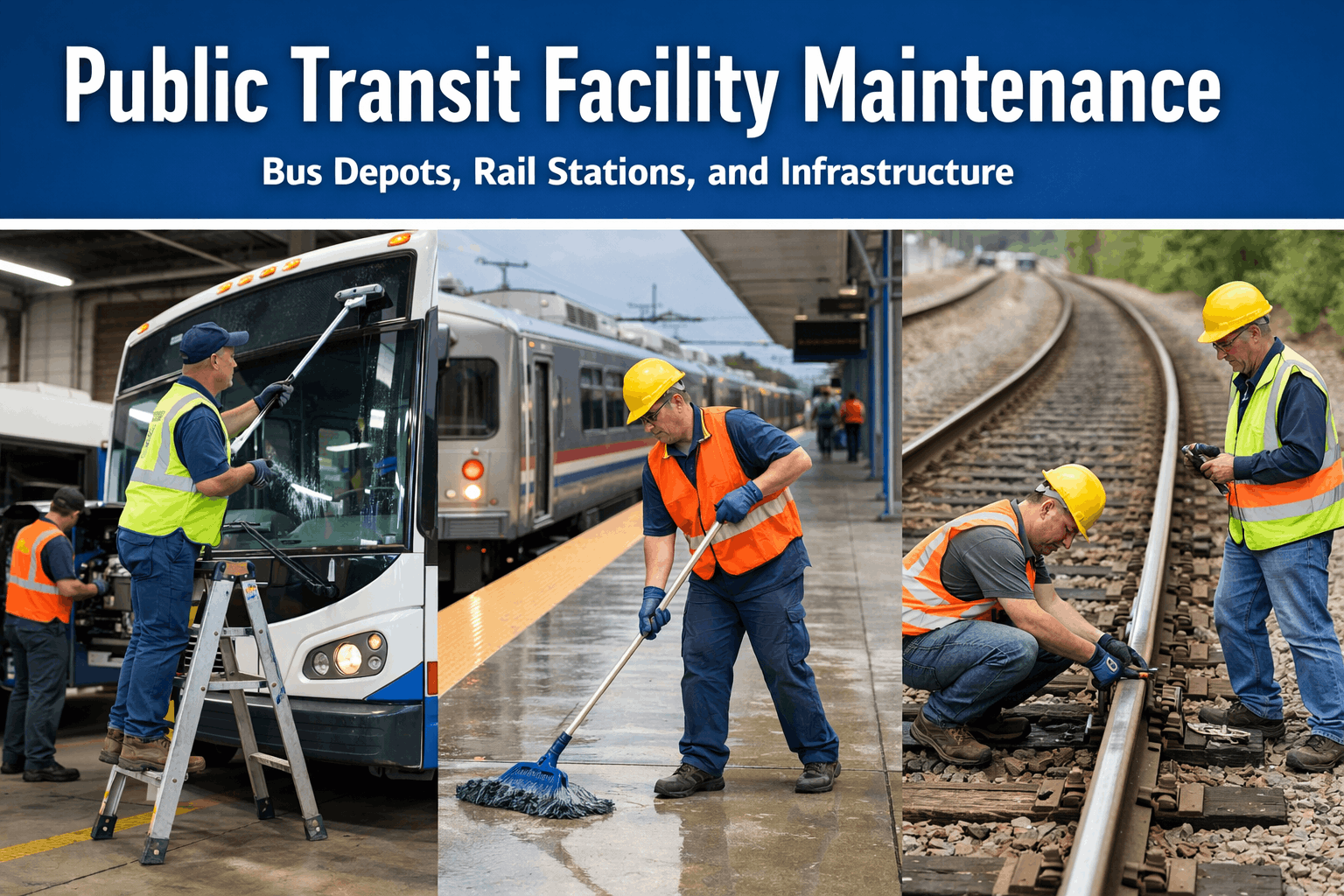
Public transit agencies maintain complex facilities — bus depots, rail stations, platforms, escalators, fare systems, and passenger amenities. Without proper coordination architecture, repairs overlap, critical ADA infrastructure remains offline, and preventive maintenance creates self-inflicted service disruptions. Oxmaint CMMS synchronises transit facility maintenance scheduling with operational reality — tracking escalator health, elevator ADA compliance, bus maintenance facility operations, and coordinated vendor workflows to ensure every asset in the network operates as part of a unified, safe transit system. Start your free trial today.
Transit Facility Operations 2026
The State of Public Transit Facility Maintenance
70%
of transit stations experience conflicting maintenance schedules that negatively impact passenger flow and ADA access
45%
of escalator and elevator downtime caused by reactive repairs that CMMS-driven preventive monitoring would prevent
80%
reduction in transit station safety incidents when facility diagnostics feed directly into CMMS-managed workflows
Source: Public Transportation Maintenance & Station Safety Audits 2024-2025
Modern public transit infrastructure demands maintenance architectures that go far beyond simply fixing what is broken. A robust CMMS provides the foundation — unified asset tracking prevents conflicting work orders, shared dashboards enable spatial awareness of outages, and lifecycle management enforces safe operational states — but only if the facility management infrastructure itself is monitored, maintained, and integrated into the agency's daily operations.
The Transit Facility Maintenance Lifecycle
Deploying coordinated maintenance systems in public transit operations follows a structured lifecycle. Each phase — from bus depot inventory to autonomous escalator monitoring — requires workflows that treat transit passenger facilities as interconnected ecosystems alongside the rolling stock themselves.
CMMS-Integrated Transit Facility Framework
From depot architecture to optimized passenger station operations
01
Facility Architecture & Asset Mapping
Define maintenance zones per station, configure shared priority hierarchies, establish critical ADA asset topology, map vendor management authority
02
Depot Deployment & CMMS Registration
Register each escalator, elevator, and fare gate as CMMS assets, configure preventive maintenance schedules, establish safety compliance baselines
03
Coordinated Operations & Monitoring
Facility manager orchestrates conflict-free repairs, CMMS monitors ADA compliance health, auto-generates work orders for passenger safety anomalies
04
Infrastructure Optimisation & Scaling
Analyse maintenance metrics, optimise vendor routes, expand rail infrastructure with zero-conflict onboarding, improve predictive maintenance from agency-wide trends
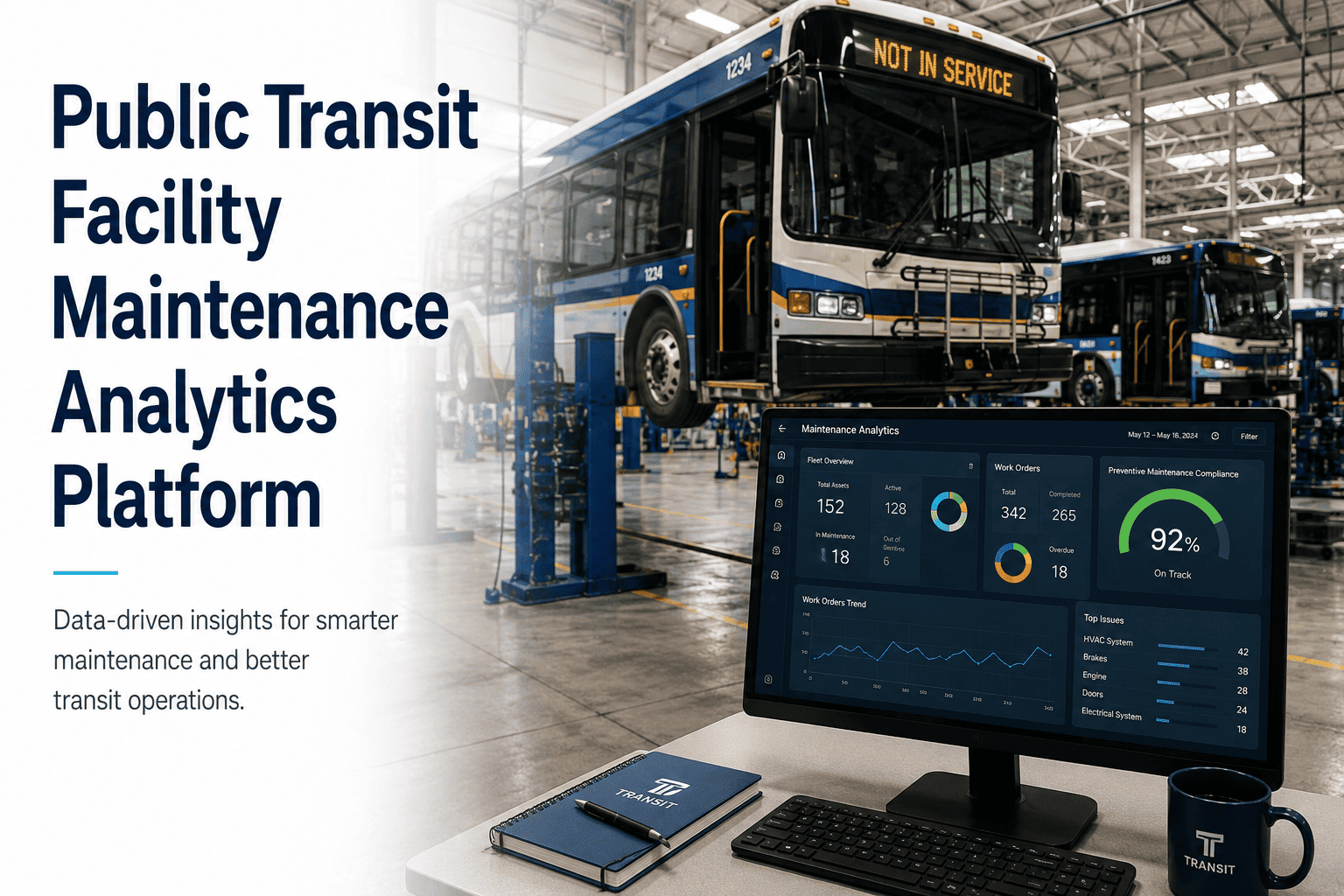
Implementing a unified CMMS that manages both the bus depots and the public-facing rail stations allows transit authorities to see one consolidated view of infrastructure health — individual escalator status, platform safety health, passenger amenity quality, and vendor performance integrity. Automated workflows ensure that a fare gate failure detected during morning service becomes a prioritised work order before the evening rush begins. Book a Demo.
Siloed vs. CMMS-Managed Transit Facilities
Public transportation agencies face a clear choice: manage facilities as isolated units and hope repairs don't conflict, or implement proper transit maintenance management with CMMS-coordinated scheduling of the infrastructure itself. The operational and financial differences are dramatic.
Isolated Facility Management vs. CMMS-Coordinated Operations
I
Isolated Facility Deployment
Contractors arrive simultaneously for conflicting repairs causing station congestion
No shared asset hierarchy — operators unaware of critical ADA outages
Escalator failures isolate passengers without alert or immediate recovery plan
Safety updates applied per-station with inconsistent compliance states
Duplicate maintenance efforts waste funds while critical infrastructure degrades
Passenger flow bottlenecks during peak hours due to uncoordinated closures
No agency-wide diagnostic visibility for capital planning
Chaotic, Unsafe & Wasteful
C
CMMS-Coordinated Operations
Zone-based scheduling prevents vendor collision across the station
Shared asset tree provides agency-wide awareness for ADA compliance
Escalator health monitored by CMMS with auto-dispatch alerting
Coordinated safety rollouts with compliance tracking and audit capability
Facility manager optimises preventive routes for complete coverage without overlap
Conflict-free station navigation through coordinated path planning
Agency-wide diagnostics feed CMMS for predictive capital scheduling
Coordinated, Safe & Efficient
The key differentiator is not the size of the transit network — it's whether the public transit CMMS treats the entire facility ecosystem as a maintained asset. Without CMMS-managed escalator health monitoring, ADA compliance auditing, and agency-wide vendor coordination, adding more stations creates exponentially more failure modes instead of linearly more capacity.
CMMS-Coordinated Transit Facility Impact
Measured improvements from public transit agencies with CMMS-managed facility coordination
92%
Conflict Avoidance Rate
Coordinated vs. Isolated Repairs
3.2x
Maintenance Efficiency
Optimised vs. Overlapping Vendor Routes
99.7%
ADA Compliance Uptime
CMMS-Monitored Elevators
100%
Safety Reporting Consistency
Coordinated Agency-Wide Audits
Transit Facility Coordination Maintenance Domains
Maintaining a coordinated public transit facility network requires attention to four primary infrastructure domains — ADA compliance health, safety and security integrity, passenger amenity coordination, and bus maintenance facility management. Each domain requires specific monitoring, testing, and CMMS workflow integrations to prevent the coordination failures that cascade into station bottlenecks, coverage gaps, and agency-wide safety incidents. Book a Demo.
Transit Facility Maintenance Domains
ADA Compliance & Accessibility
Monitor elevator, escalator, and ramp availability. Schedule preventive maintenance checks and state safety inspections. Auto-alert on outages that isolate passengers from transit services.
Safety & Station Integrity
Audit platform edge conditions, lighting levels, and fire suppression systems. Verify security camera coverage. CMMS tracks degradation drift and triggers remediation work orders.
Fare System & Amenity Coordination
Validate fare gate functionality and ticket machine uptime. Monitor HVAC comfort levels, digital signage accuracy, and restroom sanitation schedules. Detect stale information that causes passenger confusion.
Bus Depot & Rail Yard Maintenance
Coordinate heavy equipment rollouts across the depot with lift inspections, fluid management systems, and bay availability tracking. Prevent facility downtime that breaks rolling stock maintenance schedules.
ROI: Coordinated vs. Uncoordinated Transit Operations
Investing in proper public transit facility coordination infrastructure and CMMS-managed maintenance delivers substantial returns. Uncoordinated facilities generate passenger injury claims, wasted vendor hours, and emergency compliance fees. Coordinated facilities with CMMS-monitored infrastructure maximise safety, prevent overlapping closures, and extend facility operational life.
ROI: Uncoordinated vs. CMMS-Coordinated Transit Facility
Based on a 15-station municipal transit network over 24 months
Uncoordinated Facility Deployment
Safety Incident Claims$145,000
ADA Compliance Fines$92,000
Vendor Overlap Waste$78,000
Emergency Contract Fixes$180,000
24-Month Cost: $495,000
VS
CMMS-Coordinated Facility Operations
Coordination Architecture Setup$65,000
CMMS Platform + Integration$42,000
Facility Management Labour$36,000
Avoided Fines & Overtime($237,000)
Net Savings: $352,000
Public transportation agencies that invest in proper facility coordination with CMMS-managed maintenance see immediate benefits: fewer passenger injuries, complete ADA compliance, predictable station availability, and the diagnostic data needed to scale from 15 stations to 50 without exponential complexity growth.
Coordinate Your Transit Facilities with CMMS
Stop managing transit stations as isolated units. Oxmaint synchronises facility diagnostics with maintenance scheduling — monitoring ADA health, platform safety integrity, passenger amenity coordination, and bus depot consistency across your entire public transit operation.
Integrating facility maintenance into your CMMS is a progressive journey. It starts with basic station registration and escalator monitoring and evolves toward predictive transit maintenance management where the CMMS detects infrastructure degradation before it causes operational closures.
Degradation Trend PredictionAuto Work Order RebalancingCross-Station ScalingPredictive Elevator Maintenance
Start by registering every escalator, elevator, and fare gate as a CMMS asset. Establish diagnostic pipelines so facility health data flows into the same system that tracks all transit maintenance. As your team builds confidence, enable automated safety auditing, coordinated vendor rollouts, and predictive compliance health monitoring.
Unified Coordination Across Public Transportation Departments
Transit facility maintenance spans diverse operational departments — from rail operations and bus depots to station managers and external contractors. A unified public transit CMMS framework ensures every facility, regardless of department, operates on consistent coordination standards with shared maintenance visibility.
Unified Maintenance Coordination Across Departments
One CMMS for every transit facility and every infrastructure component
Bus Maintenance Facility
Rail Station Infrastructure
HVAC / Environmental
Station Escalator / Elevators
Fare Collection Systems
Platform Safety
Passenger Amenities
Vendor Management Nodes
Schedule Collision Prevention
CMMS tracks every vendor's zone assignment, maintenance rules, and station configuration — alerting on work order conflicts before they cause passenger bottlenecks.
ADA Health-to-Work-Order Pipeline
Elevator anomalies, escalator downtime spikes, and safety compliance drops auto-generate prioritised CMMS work orders with diagnostic data and remediation steps attached.
Cross-Department Station Reporting
Generate facility coordination health reports spanning all departments — elevator availability, safety uptime, vendor incidents, coverage metrics, and compliance in one unified dashboard.
Unify your transit facility maintenance managementGet Started →
By managing all transit passenger facilities and their maintenance infrastructure in one system, public transportation agencies gain system-wide visibility that enables smarter capital planning, prevents cross-department scheduling conflicts, and ensures every station component is maintained to the same safe standard. Book a Demo.
Scale Your Transit Facilities with Confidence
Join forward-thinking public transit agencies using Oxmaint to maintain transit facility infrastructure — bus depot operations, ADA compliance health, safety configurations, and coordinated vendor rollouts — ensuring every station operates as part of a unified, safe transit system.
What is transit facility maintenance management and why does it need CMMS?
Transit facility maintenance involves the upkeep of complex, highly utilized physical assets (bus depots, rail stations, escalators, elevators, platforms, and fare systems). Each of these components is infrastructure that can fail — escalators break down during rush hour, platforms degrade, HVAC systems fail, and ADA compliance is compromised. CMMS maintenance ensures these facility components are monitored, tested, and maintained with the same rigour applied to the buses and trains themselves, preventing service disruptions and ensuring passenger safety. Sign up for Oxmaint to see transit facility maintenance in action.
How does Oxmaint monitor transit station escalator health?
Oxmaint can integrate with modern escalator diagnostic systems or accept manual inspection inputs to track motor load, step chain wear, handrail speed, and operational uptime. The CMMS establishes baseline performance profiles for each escalator and auto-generates maintenance work orders when metrics deviate beyond configurable thresholds — or simply when scheduled preventive maintenance (PM) is due. Scheduled health checks including safety brake testing, step cleaning, and emergency stop verification are managed as recurring CMMS tasks.
What happens when ADA compliance drifts across a rail station?
ADA compliance drift is one of the most serious transit facility failure modes. It occurs when elevators go out of service, ramps degrade, or accessible fare gates fail without an immediate, coordinated response. The result is isolated passengers, legal liability, and loss of public trust. Oxmaint maintains a strict compliance registry for every station's ADA assets. If an elevator goes down, the CMMS immediately flags the compliance failure, dispatches high-priority remediation work orders, and can alert station managers to implement alternative passenger routing. Schedule a demo to see compliance auditing in action.
How are coordinated vendor repairs managed across a busy bus depot?
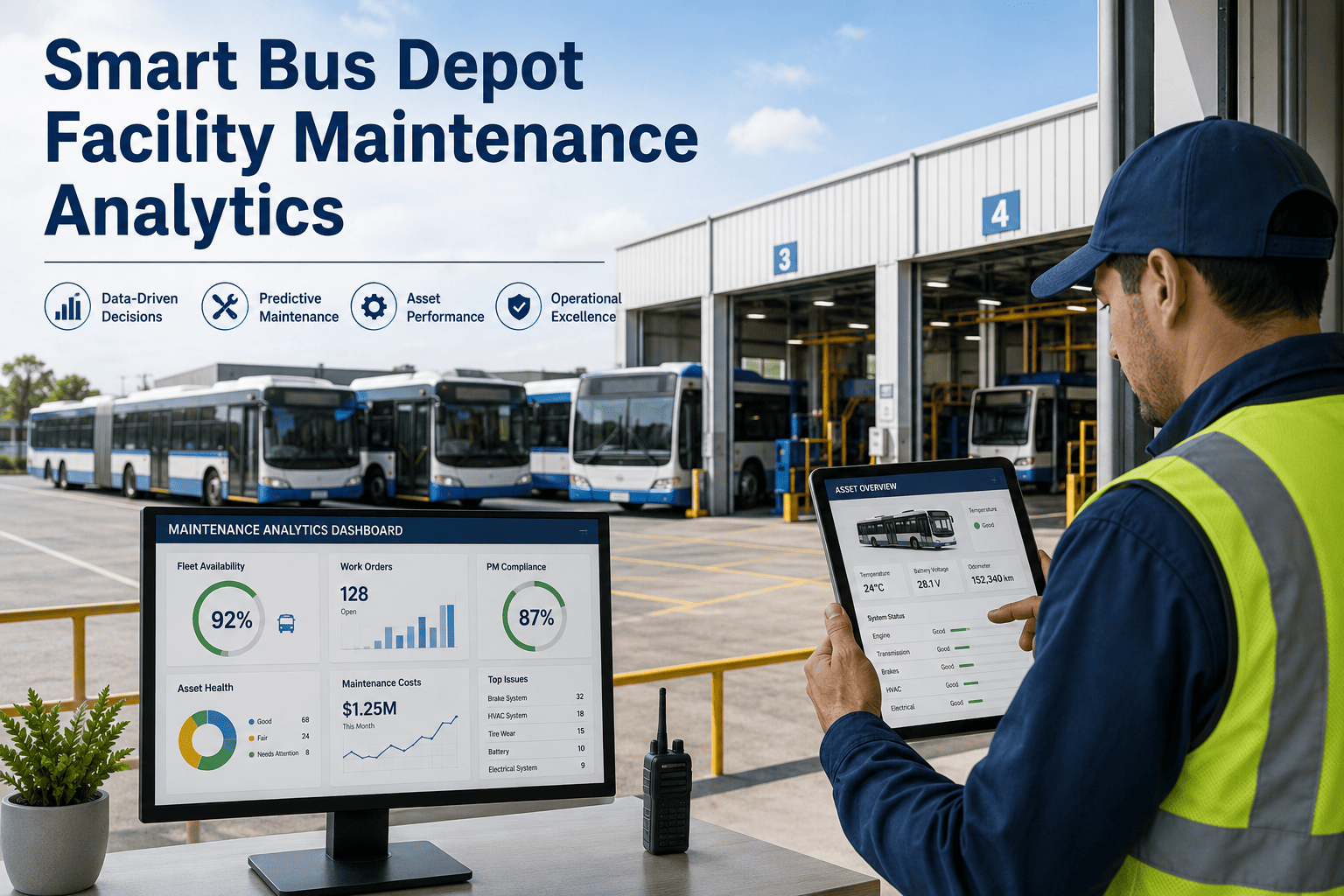
Uncoordinated vendor work is a leading cause of bus maintenance facility downtime. When electrical contractors, HVAC technicians, and lift inspectors all arrive at the same time, the depot floor becomes congested, and bus repairs are delayed. Oxmaint manages coordinated vendor rollouts by: (1) tracking contractor schedules and access requirements, (2) scheduling staged maintenance windows with conflict resolution logic, (3) monitoring bay availability to prevent bottlenecking, and (4) ensuring safety protocols are acknowledged before work begins.
Can Oxmaint manage transit facilities across multiple transport modes?
Yes. Oxmaint supports multi-modal public transit management where a single agency maintains bus depots, light rail stations, subway infrastructure, and ferry terminals. Each mode can maintain its own specific asset hierarchies, safety protocols, and maintenance schedules — while the CMMS enforces cross-agency coordination rules that prevent vendor scheduling conflicts, ensure shared infrastructure (like multi-modal hubs) is maintained to a common standard, and provide agency-wide facility health reporting.