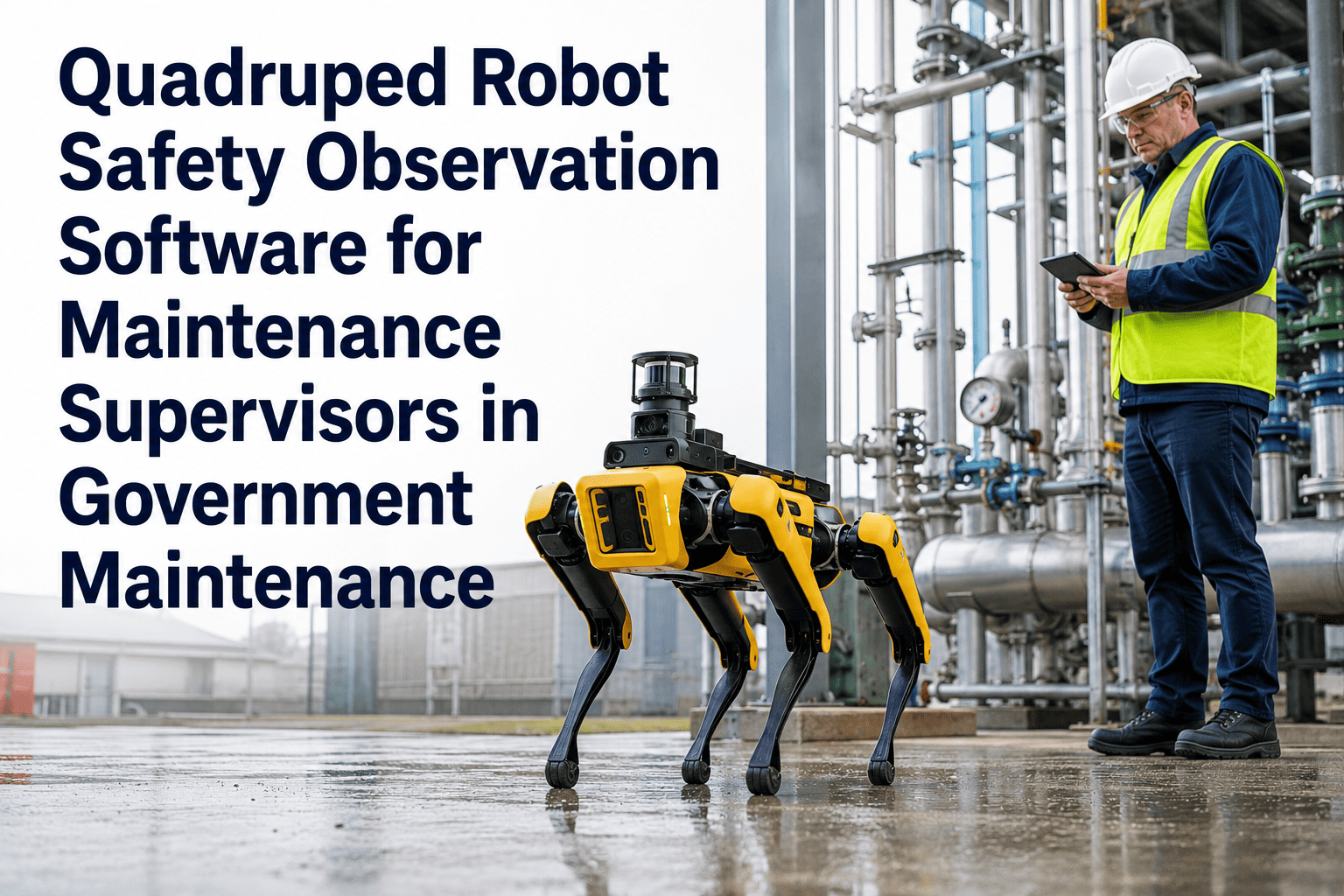
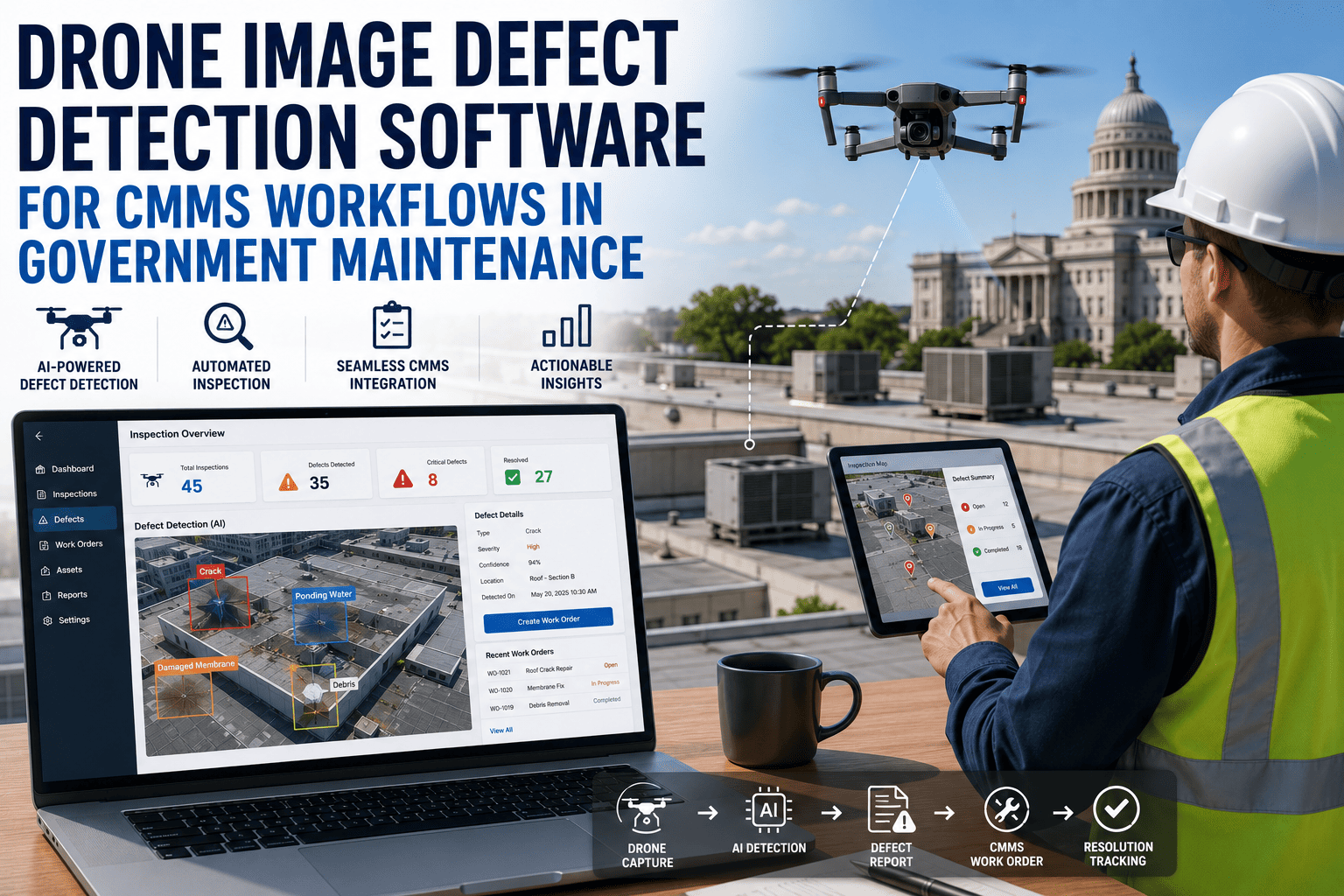
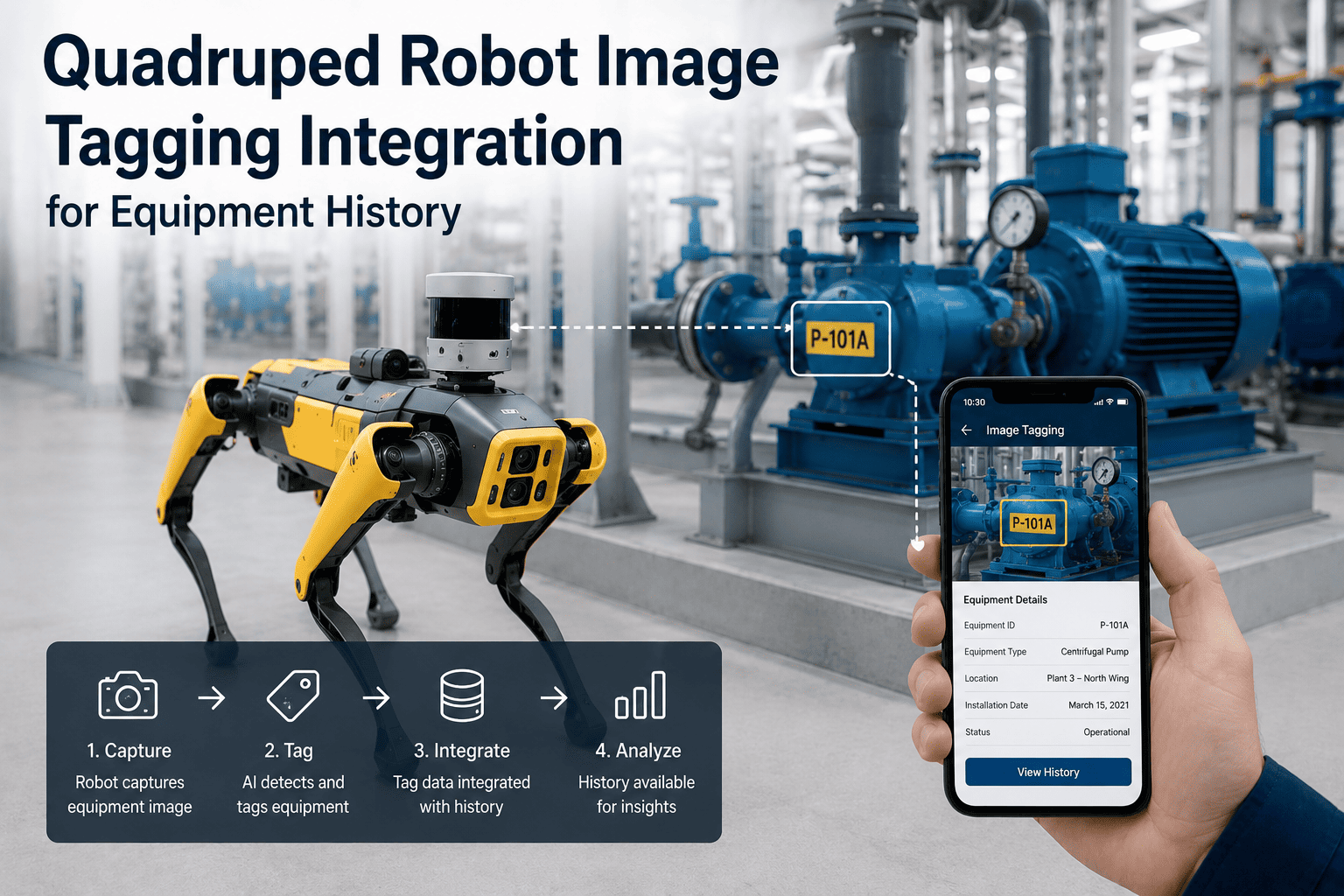
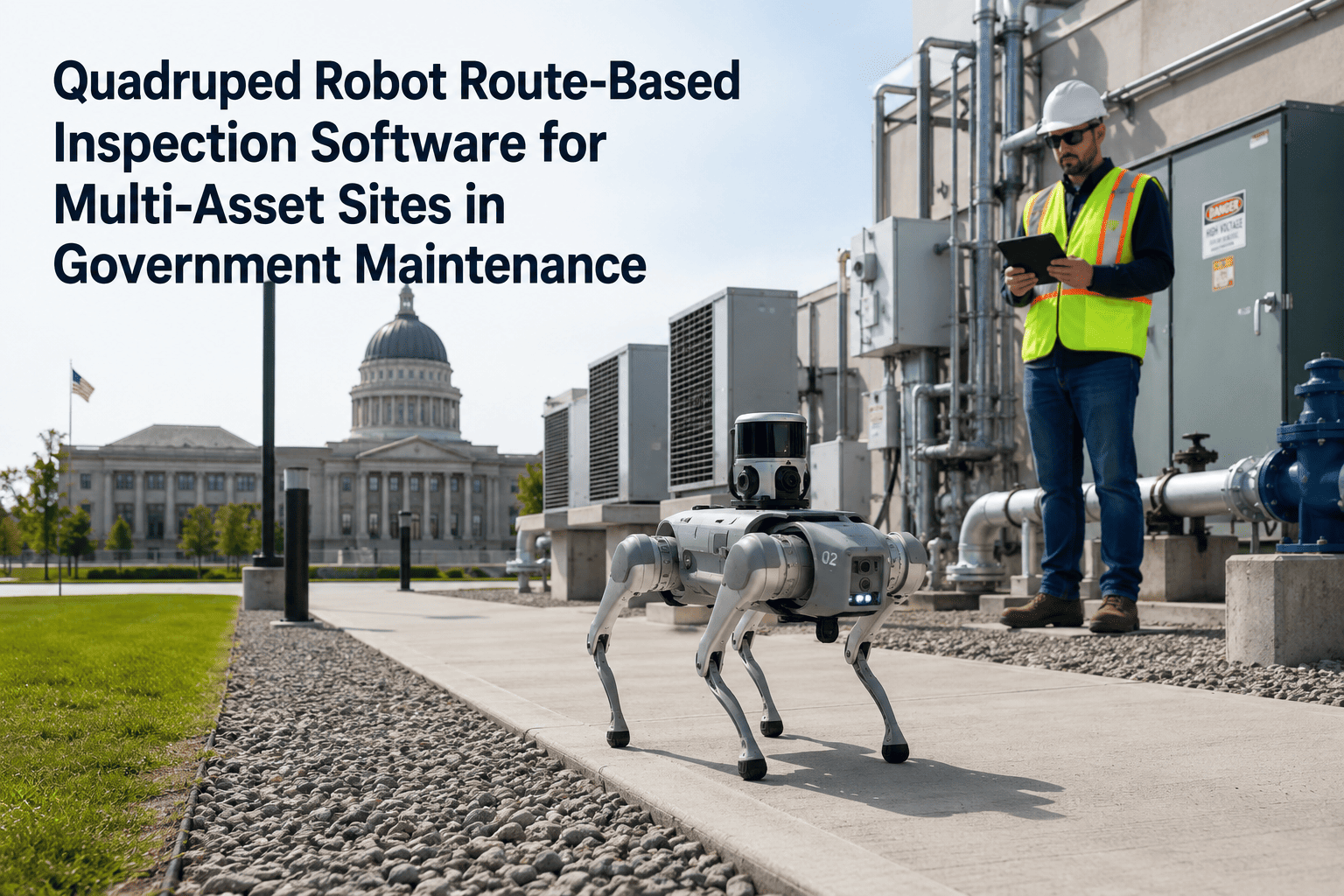
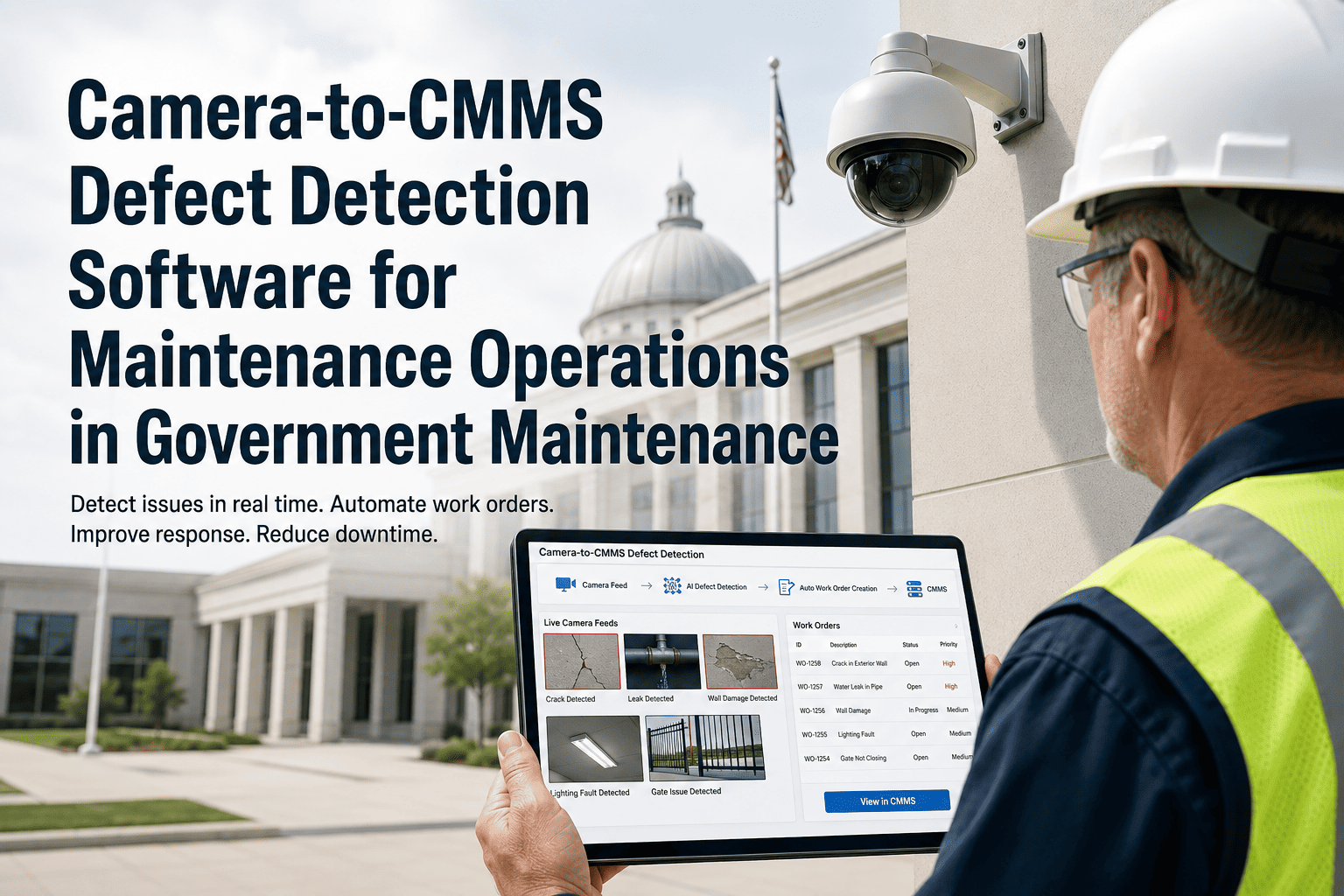
A maintenance supervisor responsible for a city's water infrastructure, public transit depots, and civic buildings cannot personally observe every safety hazard across dozens of sites in a single shift — but a quadruped robot can. Government maintenance teams deploying quadruped robot safety observation software integrated with CMMS are giving supervisors a real-time window into site conditions they previously only saw on incident reports. When a robot identifies an unsecured electrical cabinet, pooling water near a substation, or a compromised access ladder at 3 AM, Oxmaint's safety observation workflow logs the hazard, flags severity, generates a work order, and notifies the on-call supervisor — all before the morning crew arrives. For government maintenance supervisors accountable to both worker safety and public liability, this isn't automation for efficiency's sake; it's the foundation of a defensible safety program.
Safety Observation · Government · Maintenance Supervisors
Robot Safety Observation for Government Maintenance Supervisors
Give your supervisors a 24/7 safety observation system that never misses a hazard, auto-logs every observation, and routes safety work orders before incidents become reports.
78%
of government site safety incidents are preceded by observable hazards that went unlogged
6x
more safety observations per shift with robot patrol vs. supervisor walkthroughs alone
52 min
average time saved per supervisor per day when hazard logging is automated via CMMS
What Government Supervisors Actually Need from Safety Observation Software
Safety observation in government maintenance isn't a checkbox — it's a legal liability chain. Supervisors need evidence that hazards were identified, logged, escalated, and resolved. Robot-assisted observation with CMMS integration provides all four in a single automated workflow.
01
Hazard Identification at Scale
A supervisor can observe one site at a time. A robot patrol network covers every site on a fixed schedule — capturing conditions in confined spaces, elevated access points, and night-shift environments where human observation is impractical.
02
Structured, Searchable Safety Logs
Verbal hazard reports and paper forms create gaps that become liabilities in incident investigations. CMMS-logged safety observations are timestamped, asset-linked, and instantly searchable — providing the chain of evidence that protects agencies and supervisors.
03
Auto-Escalation to Work Orders
Identifying a hazard without generating a repair task is a compliance gap waiting to happen. Robot observations above severity thresholds auto-generate work orders in Oxmaint — closing the loop between identification and remediation.
04
Supervisor Dashboard Visibility
Supervisors need a real-time view of open safety observations, unresolved hazards, and approaching SLA windows — not a weekly paper summary. Oxmaint's supervisor dashboard surfaces this in a single view across all sites.
Safety Observation Categories Covered by Quadruped Robots
Observation Type
Robot Detection Method
Oxmaint Action
Severity Default
Liquid pooling / floor hazards
Visual + moisture sensor
Immediate work order + supervisor alert
High
Unsecured panels / access doors
Image recognition + position check
Flagged observation logged to asset
Medium
Thermal anomaly / heat signatures
Thermal camera scan
Priority work order + escalation notification
Critical
Structural cracks / surface degradation
Visual imaging + AI defect scoring
Condition record + scheduled repair WO
Medium
PPE compliance in restricted zones
AI visual classification
Supervisor notification + log entry
High
Emergency exit / egress obstruction
Route mapping + obstacle detection
Immediate alert + compliance log
Critical
The Supervisor's Safety Observation Workflow — Automated
1
Robot Patrol Detects Hazard
During a scheduled route, the quadruped robot identifies a safety observation — pooling fluid, open panel, thermal anomaly, or structural defect. Image and sensor data captured instantly.
2
Oxmaint Logs & Tags the Observation
The observation is logged in Oxmaint with asset ID, GPS location, timestamp, image evidence, and AI-assigned severity score. Zero manual entry required from the supervisor or inspection team.
3
Supervisor Alert Sent
High and critical severity observations trigger an immediate notification to the responsible supervisor — via the Oxmaint dashboard — with the observation image and asset details attached.
4
Work Order Auto-Generated
Observations meeting the remediation threshold automatically generate a maintenance work order — assigned to the correct crew, prioritized by severity, and linked to the safety observation log.
5
Compliance Record Closed
When the work order is completed, the safety observation record is closed with a repair timestamp — creating an end-to-end compliance trail from hazard detection to resolution.
Expert Review — Government Safety Compliance
Government maintenance supervisors carry personal liability for safety observations they should have made and didn't. The problem is geography — one supervisor cannot observe 30 assets across a municipal infrastructure network in a single shift. Quadruped robots solve the coverage problem; CMMS integration solves the documentation problem. When a safety observation is auto-logged with an image, timestamp, and work order trigger, the supervisor has a defensible audit trail regardless of whether they personally witnessed the hazard. That's the shift from reactive accountability to proactive protection.
Government Risk and Safety Manager, Metropolitan Infrastructure Authority
Give Your Supervisors 24/7 Safety Observation Coverage
Oxmaint connects robot safety observations to your maintenance workflow — auto-logging hazards, generating work orders, and building the compliance documentation your supervisors need to stay protected.
91%
of safety work orders generated automatically when robot observations feed into Oxmaint CMMS
3.8x
more safety observations logged per site per month vs. supervisor-led manual programs
Zero
missed safety audit items when Oxmaint auto-generates compliance records per observation
Frequently Asked Questions
How does robot safety observation software reduce supervisor liability in government maintenance?
When a quadruped robot logs a safety observation in
Oxmaint CMMS, it creates a timestamped, asset-linked record that proves the hazard was identified and escalated — regardless of whether a supervisor was physically present. This chain of evidence is critical in incident investigations, insurance claims, and regulatory reviews. Supervisors are protected because the documentation exists, is accurate, and is retrievable within minutes. The system also auto-generates work orders, proving that remediation was initiated promptly after detection.
Can safety observation software integrate with existing government safety reporting systems?
Oxmaint's API supports integration with government ERP, GIS, and safety reporting platforms. Safety observations logged by robot patrol can be synced to existing incident management systems or exported in structured formats for council and regulatory submissions. For agencies with legacy safety management software, Oxmaint can operate as the robot observation layer that feeds structured data upstream.
Book a demo to map the integration to your agency's current systems.
What types of government sites are best suited to quadruped robot safety observation?
Quadruped robots are most valuable on sites with mixed terrain, confined access points, or 24/7 operational exposure — water treatment facilities, transit depots, electrical substations, civic buildings with night-time risk, and large outdoor infrastructure like bridges or stormwater systems. These are exactly the environments where human supervisor walkthroughs are least consistent and safety gaps are most likely to develop between scheduled inspection rounds.
How quickly can a supervisor respond to a robot-detected safety observation?
High and critical observations trigger supervisor notifications in
Oxmaint within seconds of the robot logging the hazard. The notification includes the observation image, asset location, severity rating, and a direct link to the generated work order — so the supervisor can assess and escalate without leaving the dashboard. For agencies with on-call maintenance crews, this enables same-shift hazard remediation on critical observations, dramatically reducing the window of unresolved risk.
Protect Your Team. Pass Every Audit. Automate Safety Observation.
Oxmaint gives government maintenance supervisors a robot-powered safety observation system that logs every hazard, routes every work order, and builds the compliance record your agency needs — automatically.