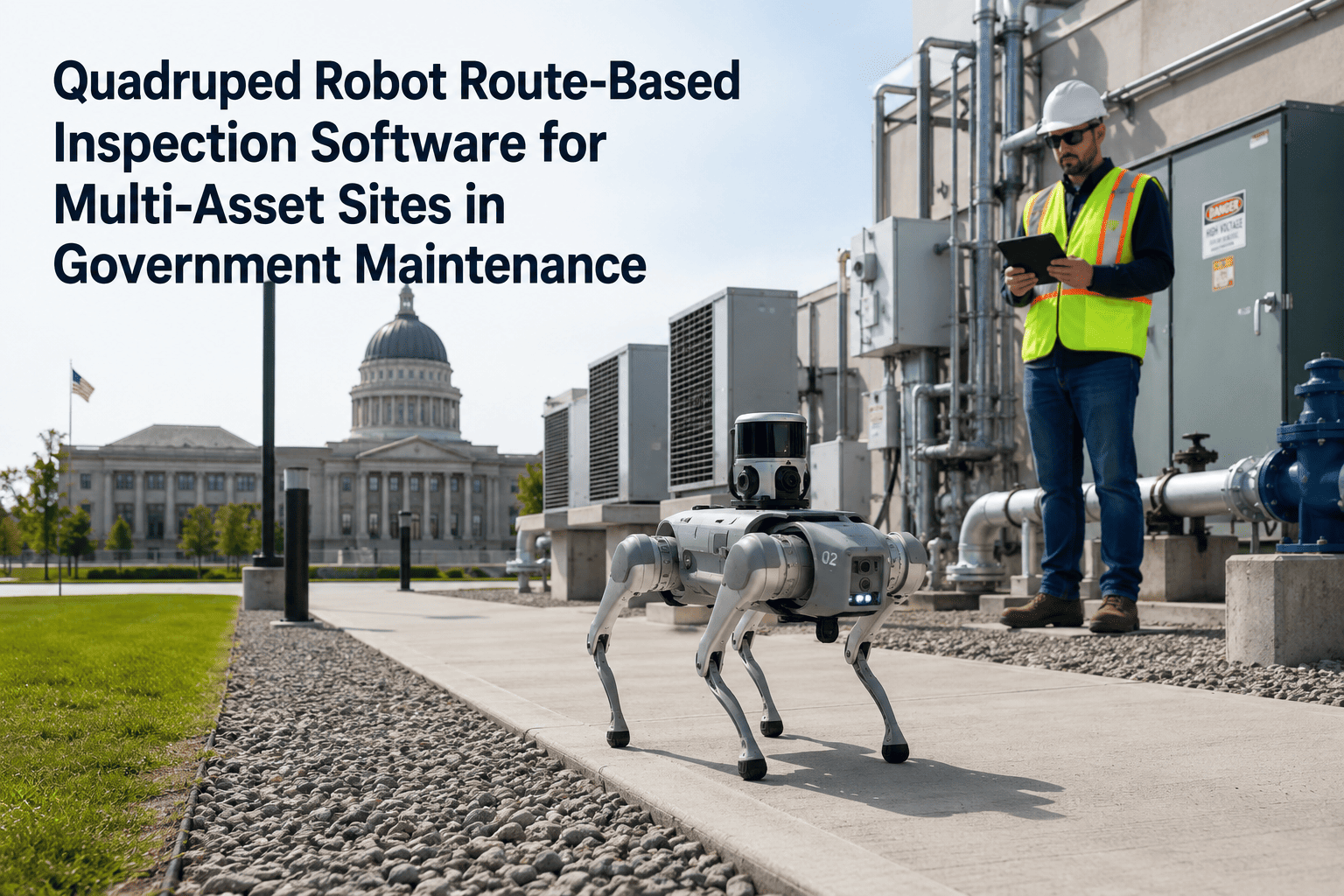
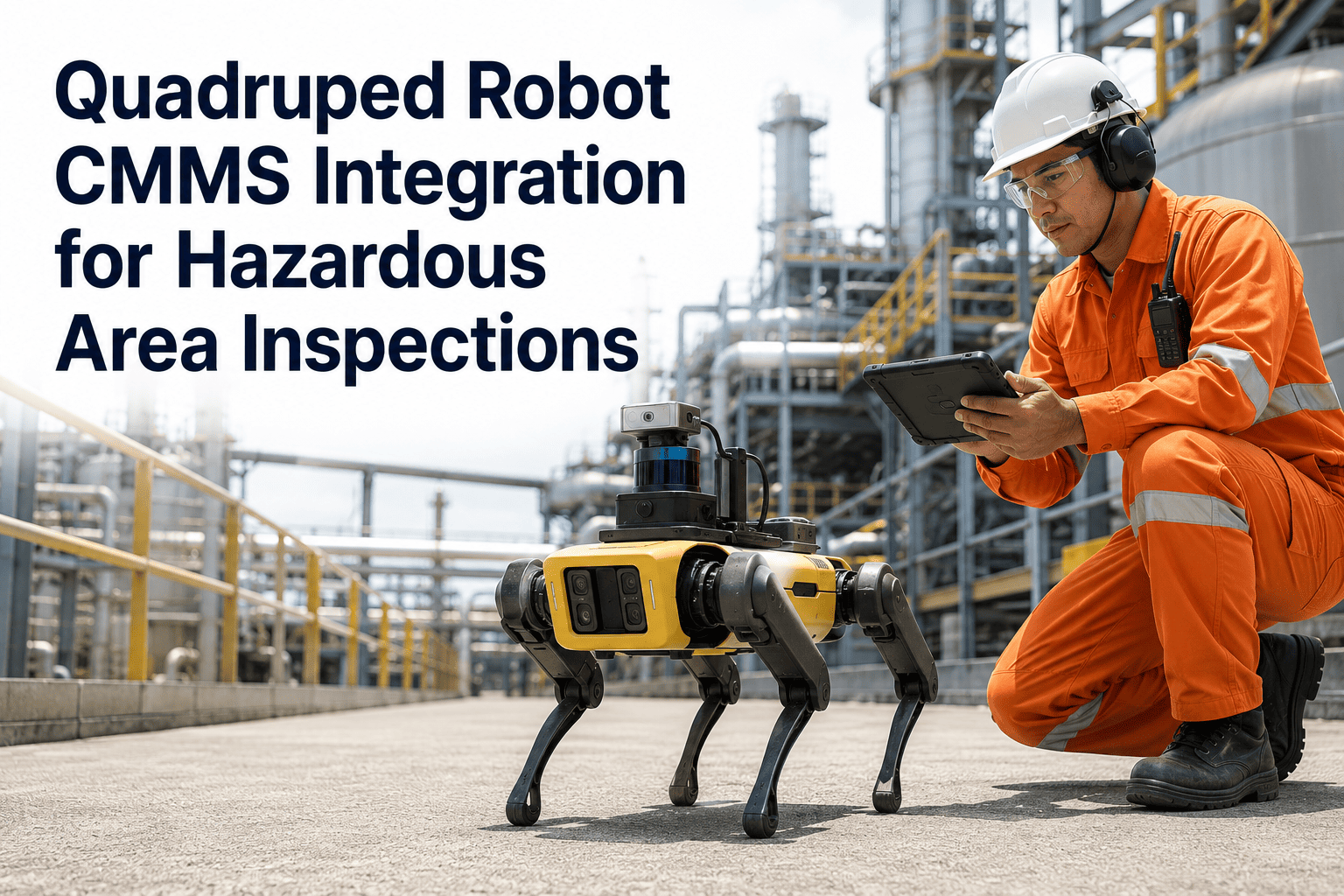
Managing multi-asset government sites — from water treatment plants to transit depots and civic campuses — demands inspection coverage that no human patrol team can sustain alone. Agencies using quadruped robot route-based inspection software integrated with CMMS are replacing paper-based walkthroughs with automated, timestamped asset condition records that feed directly into work order workflows. When a robot flags a cracked retaining wall or a leaking valve housing at 2 AM, Oxmaint's government CMMS converts that observation into an assigned repair task before the morning crew arrives. For public works directors accountable to council audits and citizen safety standards, route-based robotic inspection isn't a technology experiment — it's the operational backbone of modern municipal asset management.
Government Maintenance · AI Robotics · 2026
Quadruped Robot Route-Based Inspection for Multi-Asset Government Sites
How municipal maintenance teams use robot-driven route inspection and CMMS integration to standardize asset condition records, automate work orders, and pass every audit.
73%
of government asset failures occur between scheduled manual inspections
4.2x
more asset conditions logged per shift with robot routes vs. manual walkthroughs
68%
reduction in inspection gaps when routes are fixed and robot-executed
100%
digital audit trail per asset — every observation timestamped and technician-linked
Why Route-Based Inspection Fails Without Robotics
Government maintenance teams cover dozens of geographically dispersed assets — pump stations, bridges, substations, civic buildings — with shrinking staff. Fixed inspection routes assigned to human inspectors miss assets regularly due to shift gaps, coverage conflicts, and paper-form delays. Here is what goes wrong:
01
Route Coverage Gaps
Human inspectors prioritize visible or accessible assets. Confined spaces, elevated structures, and night-time areas are skipped — exactly where failures accumulate silently.
02
Inconsistent Condition Records
Paper-based inspection forms produce inconsistent condition descriptions across inspectors. Asset history becomes unreliable — making lifecycle planning impossible.
03
Delayed Work Order Generation
Observations sit in paper logbooks for days before becoming repair tasks. Minor defects worsen during the gap between identification and work order creation.
04
Audit Traceability Failures
Council audits and insurance reviews demand timestamped proof of inspection. Paper logs can't provide the chain of custody required for regulatory compliance.
How Quadruped Robot Route Inspection Works with CMMS
1
Route Programming
Maintenance supervisors define inspection routes in Oxmaint CMMS — each route maps specific assets, checkpoints, and condition parameters the robot must evaluate.
2
Autonomous Robot Patrol
The quadruped robot executes the route on schedule — navigating stairs, uneven terrain, and confined access points that wheeled systems cannot reach. Sensors capture condition data at every checkpoint.
3
Real-Time CMMS Data Feed
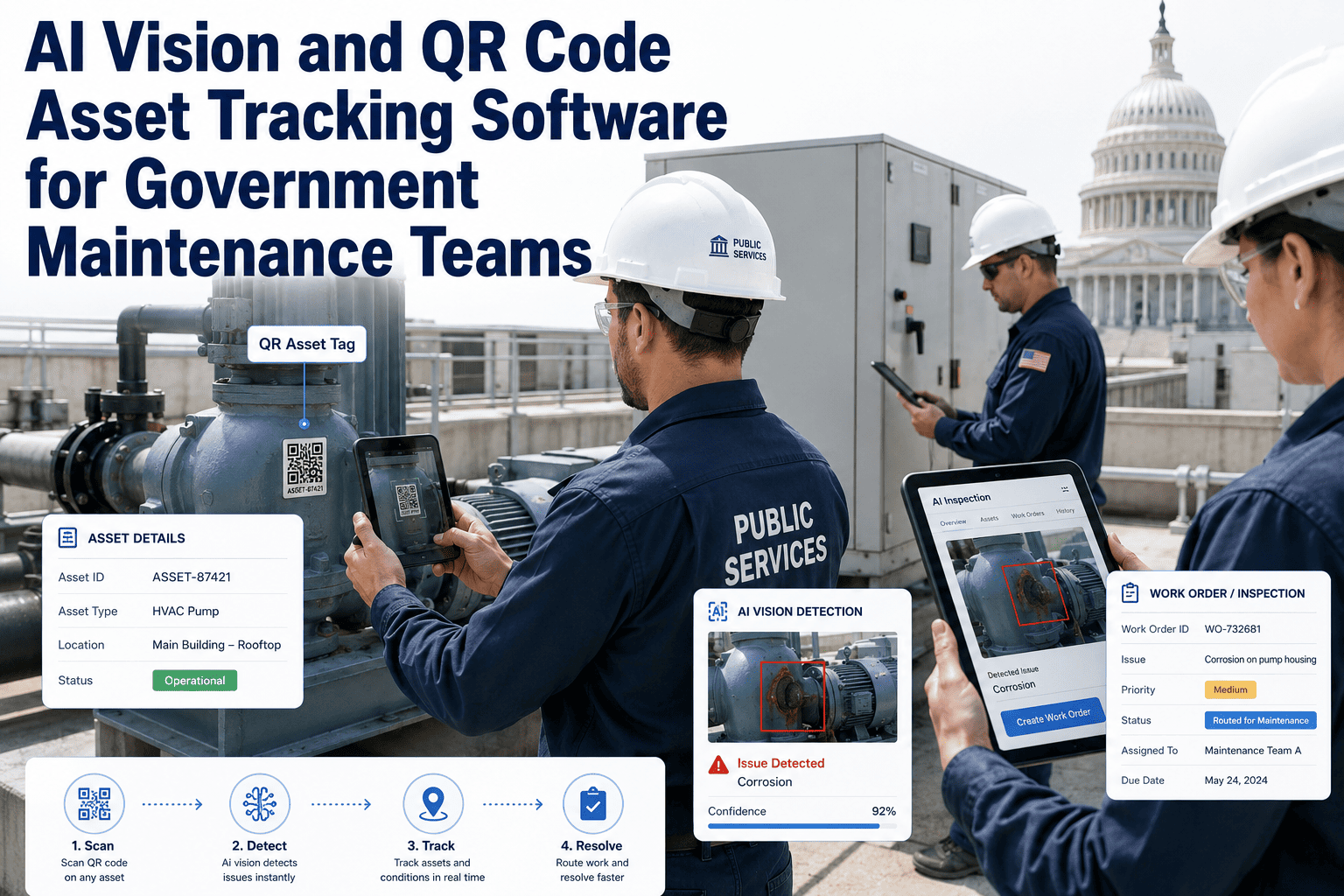
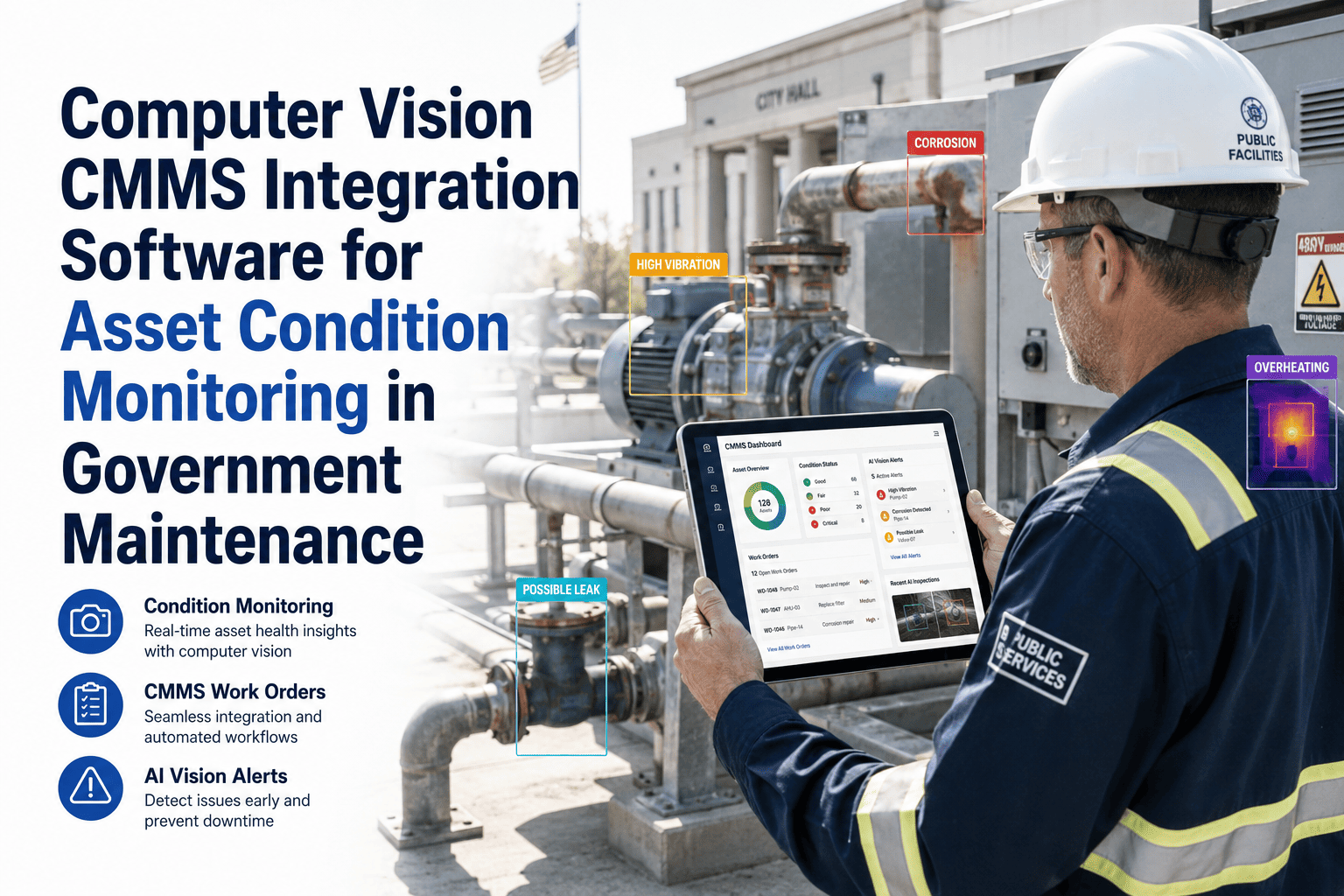
Condition observations, images, and anomaly flags stream directly into Oxmaint — tagged to the specific asset, GPS location, and timestamp. No manual data entry required.
4
Auto Work Order Generation
Anomalies above defined severity thresholds trigger automatic work orders — assigned to the correct maintenance crew, with priority ranking and asset history attached.
5
Compliance Record Archive
Every completed route generates a signed, timestamped inspection record stored in Oxmaint — instantly retrievable for audits, insurance reviews, and council reporting.
Asset Types Covered by Quadruped Robot Routes
| Asset Category |
Robot Capability |
CMMS Integration Outcome |
Inspection Frequency |
| Water & Sewer Infrastructure |
Pipe gallery navigation, leak detection sensors |
Auto WO on moisture anomaly detection |
Daily |
| Bridges & Overpasses |
Structural surface scan, crack imaging |
Condition record with photo evidence tagged to asset ID |
Weekly |
| Electrical Substations |
Thermal sensing, ground fault detection |
High-priority WO auto-generated on thermal spike |
Daily |
| Public Buildings & Civic Centres |
Multi-floor navigation, HVAC area scanning |
Condition log per floor zone — linked to PM schedule |
Bi-weekly |
| Stormwater & Drainage Systems |
Culvert entry, debris detection |
Blockage alert triggers cleaning crew dispatch |
Monthly |
| Transit Depots & Yards |
Perimeter patrol, surface crack detection |
Asset condition trend log — lifecycle planning input |
Weekly |
Expert Review — Municipal Asset Management
Route-based robotic inspection solves the single biggest problem in public works maintenance: the gap between when a defect appears and when a human sees it. Quadruped robots can execute fixed inspection routes around the clock, in weather and access conditions that halt human inspectors. When those observations feed directly into a CMMS like Oxmaint, municipal teams gain the kind of asset condition visibility that used to require triple the inspection staff. The audit trail alone makes this ROI-positive for any agency facing annual compliance reviews.
Director of Infrastructure Operations, Municipal Public Works Agency
Compliance Outcomes: Manual vs. Robot-Assisted Inspection
Manual Route Inspection
Routes completed only during staffed hours — night and weekend gaps are unmonitored
Paper condition records are inconsistent — no standard format across inspectors
Defect to work order lag averages 48–72 hours in paper-based teams
Audit evidence requires manual file retrieval — often incomplete
Coverage of confined or elevated assets depends on individual willingness
Robot Route + Oxmaint CMMS
Routes run 24/7 on defined schedules — zero coverage gaps regardless of staffing
Standardized sensor data per checkpoint — consistent condition records across all assets
Work orders auto-generated within minutes of anomaly detection
Full inspection history exportable instantly — always audit-ready
Robot accesses confined spaces, elevated areas, and hazardous zones safely
See How Oxmaint Connects Robot Inspections to Work Orders
Government maintenance teams use Oxmaint to receive robot inspection data, auto-generate work orders, and produce audit-ready compliance records — all in one platform.
3x
more assets inspected per shift with robot routes vs. manual walkthroughs
89%
faster work order creation when robot data feeds directly into CMMS
Zero
missed inspection checkpoints when robot routes are CMMS-scheduled
Frequently Asked Questions
How does quadruped robot inspection integrate with a government CMMS?
Oxmaint CMMS receives robot inspection data via API — each observation is tagged to a specific asset ID, GPS coordinate, and timestamp. Anomalies automatically generate work orders assigned to the relevant crew, closing the gap between detection and repair. Maintenance supervisors can monitor route completion status and asset condition trends from a single dashboard without manual data entry or paper-form processing.
Can robot inspection routes be customized for different government asset types?
Yes — routes in
Oxmaint are fully configurable per asset category. Water infrastructure routes can trigger on moisture anomalies; bridge routes capture structural imaging at defined scan points; electrical substation routes flag thermal spikes for immediate priority escalation. Each asset type has its own condition thresholds and work order routing rules, built directly into the CMMS inspection template.
Book a demo to see route configuration in action.
What compliance documentation does robot-assisted inspection produce?
Every completed inspection route in Oxmaint generates a timestamped, asset-linked compliance record — including robot sensor readings, condition images, anomaly flags, and work order references. These records are stored digitally and are instantly exportable for council audits, insurance reviews, and regulatory submissions. No manual filing or retroactive documentation is required — the compliance record is created automatically as the robot completes each checkpoint.
Is quadruped robot inspection cost-effective for mid-size municipal governments?
For agencies managing 50 or more assets across dispersed sites, robot-assisted inspection typically pays for itself within 12–18 months through reduced emergency repair costs, lower inspection labour overhead, and compliance fine avoidance. The key is ensuring robot observations flow directly into a
CMMS work order system — otherwise the inspection data produces reports without triggering repairs. Oxmaint provides that connection out of the box for government maintenance teams.
Automate Government Asset Inspection — From Robot Route to Work Order
Oxmaint connects quadruped robot inspection routes to your maintenance workflow — standardizing condition records, auto-generating work orders, and keeping your agency audit-ready at all times. No paperwork. No gaps. No missed assets.